Friday, January 31, 2025

Hitchcock: Content vs. Technique

Here's another bit of advice from Hitchcock while I get some writing done...


- Bill


Of course, I have my own books focusing on Hitchcock...

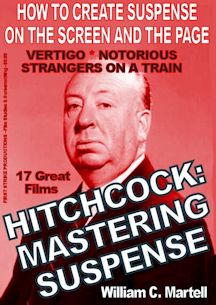
HITCHCOCK: MASTERING SUSPENSE


LEARN SUSPENSE FROM THE MASTER!

Alfred Hitchcock, who directed 52 movies, was known as the “Master Of Suspense”; but what exactly is suspense and how can *we* master it? How does suspense work? How can *we* create “Hitchcockian” suspense scenes in our screenplays, novels, stories and films?

This book uses seventeen of Hitchcock’s films to show the difference between suspense and surprise, how to use “focus objects” to create suspense, the 20 iconic suspense scenes and situations, how plot twists work, using secrets for suspense, how to use Dread (the cousin of suspense) in horror stories, and dozens of other amazing storytelling lessons. From classics like “Strangers On A Train” and “The Birds” and “Vertigo” and “To Catch A Thief” to older films from the British period like “The 39 Steps” and “The Man Who Knew Too Much” to his hits from the silent era like “The Lodger” (about Jack The Ripper), we’ll look at all of the techniques to create suspense!

Films Included: NOTORIOUS, SABOTAGE, STRANGERS ON A TRAIN, THE 39 STEPS, REBECCA, TO CATCH A THIEF, FRENZY, FOREIGN CORRESPONDENT, THE LODGER, THE BIRDS, TORN CURTAIN, SABOTEUR, VERTIGO, THE MAN WHO KNEW TOO MUCH (1934), THE MAN WHO KNEW TOO MUCH (1955), SUSPICION, and NUMBER SEVENTEEN. 17 Great Films!

Only 125,000 words!

Price: $5.99

Click here for more info!

OTHER COUNTRIES:


UK Folks Click Here.

German Folks Click Here.

French Folks Click Here.

Espania Folks Click Here.

Canadian Folks Click Here.

And....

HITCHCOCK: EXPERIMENTS IN TERROR


USA Readers click here for more info!

HITCHCOCK DID IT FIRST!

We all know that Alfred Hitchcock was the Master Of Suspense, but did you know he was the most *experimental* filmmaker in history?

Contained Thrillers like “Buried”? Serial Protagonists like “Place Beyond The Pines”? Multiple Connecting Stories like “Pulp Fiction”? Same Story Multiple Times like “Run, Lola, Run”? This book focuses on 18 of Hitchcock’s 52 films with wild cinema and story experiments which paved the way for modern films. Almost one hundred different experiments that you may think are recent cinema or story inventions... but some date back to Hitchcock’s *silent* films! We’ll examine these experiments and how they work. Great for film makers, screenwriters, film fans, producers and directors.

Films Examined: “Rear Window”, “Psycho”, “Family Plot”, “Topaz”, “Rope”, “The Wrong Man”, “Easy Virtue”, “Lifeboat”, “Bon Voyage”, “Aventure Malgache”, “Elstree Calling”, “Dial M for Murder”, “Stage Fright”, “Champagne”, “Spellbound”, “I Confess”, and “The Trouble with Harry”, with glances at “Vertigo” and several others.

Professional screenwriter William C. Martell takes you into the world of The Master Of Suspense and shows you the daring experiments that changed cinema. Over 77,000 words.

UK Folks Click Here.

German Folks Click Here.

French Folks Click Here.

Espania Folks Click Here.

Canadian Folks Click Here.

Friday, January 24, 2025

The French Hitchcock?


If you've seen INGLORIOUS BASTERDS, the movie playing at Shoshana's cinema that gets bumped for the Hitler Assassination Plan is called LE CORBEAU (THE RAVEN) - she has to take the letters off the marqee. The film was directed by Henri-Georges Clouzot, who is often called the French Hitchcock. Clouzot also directed a couple of my favorite films, WAGES OF FEAR and DIABOLIQUE. He is a great director - knows how to build tension to the breaking point. LE CORBEAU was only his second film, but it still works decades later.

LE CORBEAU is about an alof handsome young doctor in a village hospital who begins to get threatening letters signed by "The Raven". The letters accuse him of having an affair with an older doctor's pretty young wife... and of being an abortionist, who may even have been the one who knocked up all of the women he's accused of aborting. Because he wasn't born in the village, he's seen as an outsider... and when word gets out people believe these rumors.

The old doctor's wife also gets a letter from The Raven... and soon half the village are getting threatening letters accusing them of some rumored activity. The Raven knows *everyone's* secrets! Who can it be? The old cuckold doctor and young doctor basically must work together to find out who is The Raven. And there are some *great* suspects and a really shocking twist end. Actually, a double twist.


Though this is an early film of Clouzot's - not as suspenseful as DIABOLIQUE, it still packs a punch and has some very well drawn characters and it will keep you guessing until the end. The alof doctor is an interesting protagonist because he has a deep dark secret - and we think we know what it is and we are completely wrong. The character is a twist.

If you're curious about French films made during WW2 and during the Nazi Occupation, check this one out. Oh, and look between the lines for a message about living and working in Nazi Occupied France.

- Bill

Of course, I have my own books on Hitchcock...

HITCHCOCK: MASTERING SUSPENSE


LEARN SUSPENSE FROM THE MASTER!

Alfred Hitchcock, who directed 52 movies, was known as the “Master Of Suspense”; but what exactly is suspense and how can *we* master it? How does suspense work? How can *we* create “Hitchcockian” suspense scenes in our screenplays, novels, stories and films?

This book uses seventeen of Hitchcock’s films to show the difference between suspense and surprise, how to use “focus objects” to create suspense, the 20 iconic suspense scenes and situations, how plot twists work, using secrets for suspense, how to use Dread (the cousin of suspense) in horror stories, and dozens of other amazing storytelling lessons. From classics like “Strangers On A Train” and “The Birds” and “Vertigo” and “To Catch A Thief” to older films from the British period like “The 39 Steps” and “The Man Who Knew Too Much” to his hits from the silent era like “The Lodger” (about Jack The Ripper), we’ll look at all of the techniques to create suspense!

Films Included: NOTORIOUS, SABOTAGE, STRANGERS ON A TRAIN, THE 39 STEPS, REBECCA, TO CATCH A THIEF, FRENZY, FOREIGN CORRESPONDENT, THE LODGER, THE BIRDS, TORN CURTAIN, SABOTEUR, VERTIGO, THE MAN WHO KNEW TOO MUCH (1934), THE MAN WHO KNEW TOO MUCH (1955), SUSPICION, and NUMBER SEVENTEEN. 17 Great Films!

Only 125,000 words!

Price: $5.99


Click here for more info!

HITCHCOCK DID IT FIRST!

We all know that Alfred Hitchcock was the Master Of Suspense, but did you know he was the most *experimental* filmmaker in history?

Contained Thrillers like “Buried”? Serial Protagonists like “Place Beyond The Pines”? Multiple Connecting Stories like “Pulp Fiction”? Same Story Multiple Times like “Run, Lola, Run”? This book focuses on 18 of Hitchcock’s 53 films with wild cinema and story experiments which paved the way for modern films. Almost one hundred different experiments that you may think are recent cinema or story inventions... but some date back to Hitchcock’s *silent* films! We’ll examine these experiments and how they work. Great for film makers, screenwriters, film fans, producers and directors.

Films Examined: “Rear Window”, “Psycho”, “Family Plot”, “Topaz”, “Rope”, “The Wrong Man”, “Easy Virtue”, “Lifeboat”, “Bon Voyage”, “Aventure Malgache”, “Elstree Calling”, “Dial M for Murder”, “Stage Fright”, “Champagne”, “Spellbound”, “I Confess”, and “The Trouble with Harry”, with glances at “Vertigo” and several others.

Professional screenwriter William C. Martell takes you into the world of The Master Of Suspense and shows you the daring experiments that changed cinema. Over 77,000 words.

Click here for more info!

Bill

Wednesday, January 22, 2025

Showbiz Expo & Pot Expo

BLAST FROM THE PAST WEDNESDAY!

From 15 years ago:

I have no idea when the first Showbiz Expo was - and I’m too lazy to do the research - but it seems like soon after I arrived in Los Angeles 20 years ago, I went to my first Showbiz Expo. The old Expos were at the LA Convention Center and filled the place with the latest film equipment - with giant camera cranes in the parking lot and the latest 35mm cameras from Panavision indoors. Every company that did something related to the film biz was there - and when Script Magazine put out their first actual magazine version, we had a booth to announce it. In fact, in 1998 my book debuted at Showbiz Expo - I did autographs at the Hollywood Scriptwriter newsletter booth and at Script’s booth.


I used to love going to the show, often with my friend Jim, and we’d look at the cameras and cranes and steady-cam rigs and all of the other cool stuff and talk about how we would use it in *our* film. We got on all of the mailing lists, and knew which equipment company had the best deals this month, and what new gizmos came out between Expos. And there were some cool gizmos! A remote control helicopter with a camera attached that could get an aerial shot swooping down from the heavens to a house window... and then fly through the window and down that hallways to find the actor in some back room of the house. All one shot! There were guys who built miniatures, there were guys who did creature make up, there were stunt people and studios with standing sets and prop houses where you could rent a full sized version of the Lunar Excursion Module from the Apollo missions as well as all of the space suits that go with it. Expo was like a candy store for movie kids.

The problem for me ended up being Script Magazine became successful - as one of those first writers, and a guy who lived in Los Angeles, I became elected to run the booth. At first it was fun, but after a couple of years I was chained to that damned booth and didn’t get to see the show anymore. I do a slow burn kind of thing - I start out being nice and cooperative, then grumble a little under my breath, and finally just get pissed off. Script began assigning some of the other writers to time in the booth, and that was great because I could finally wander around the candy store again. And around that time, Showbiz Expo just stopped happening.

Attendance had been declining over the years - that damned internet became the place where people looked at all of the new equipment - and finally they just closed their doors.

Then, after almost a decade... they came back from the dead.

NEW EXPO

At the end of last year during that week between London and what was supposed to be Hong Kong, was Screenwriting Expo. I thought about doing classes for about a minute - then realized I’d be jet lagged and asleep on my feet. Which I was. But I decided to stop by and hang out for a couple of hours because some of you people would be there and it’s a chance to say hello in person. Except in my jet lagged state I took the subway and then rode my bike to the Convention Center... then followed the Expo signs inside to... Showbiz Expo! Hey, it came back! That’s not where I was going, but I was there so I figured I’d check it out. It was much smaller than before, but that gives it room to grow, right? After doing a walk through I goty back on my bike and rode to the hotel where they were holding the *Screenwriting* Expo and may have talked to some of you.

Only a few months later, they held the Showbiz Expo again, and I went *on purpose*.

Early registration is *free* - which is how it was in the good old days. The difference is that the good old days was a postcard you filled out, now you go online where you fill out *endless* forms. There is the main registration form... then you must go through every single class and seminar and panel and possible upcharge and check whether you want it or not. Plus - would you like a booth? Plus - would you like to display your headshot? Plus - would you like to put promotional materials in the swagbag? Plus - would you like to sign up for their online services listing for $5 a month? Plus....

After filling all of that out, I expected a free burrito or egg rolls or something. But I was into the event for free, so that’s cool.

A few days before the event I start getting robo-dialed pre-recorded reminders that it was coming up. Um, okay.

My friend Kris talked about car pooling, but parking is around $10 (it was actually $12) and I suggested the subway because it takes you a couple blocks away for $2.50 round trip. He wanted to drive, so I did a bike/subway thing so that I could ride the couple of blocks... and called Kris once I got there to tell him that the event was kind of small.

I walk into the Convention Center, following a crowd, and ended up at... some sort of Pot Expo! The main West Hall was Pot Fest 2010 or whatever... there were people in *bong costumes*! Welcome to California! Wait, I thought Showbiz Expo was in West Hall? Well, it was in the little room. I go to the small hall where I’m sent to a line for pre-registered. I am always prepared - and have my computer print out with the bar code in my hand. There is this guy behind me - and old guy - who starts a conversation with some people in the section of the line to our right - ahead of us by a turn. Then he hops the rope, and is now ahead of me. I swear he did not know those people. Anyway - he gets to the front of the line a turn before me, and has to search his pockets for his print out. That kind of stuff pisses me off. Sorry, I feel better now that I’ve vented.

Anyway, I get to the front of the line and the guy scans my print out and tells me to go to computer terminal number 7. I tell him I have preregistered, he says he knows, go to computer #7. I go to computer #7 and there is my name and info... but I have to go through every single class and seminar and everything else again and say I don’t want to take them. Hey, maybe I’ve changed my mind, right?

Most of the classes are aimed at actors, but there are two screenwriting things - one on pitching and one on The Modern Spec Script... which claims that NORTH BY NORTHWEST was a spec. Um, no. Assignment. An *original* screenplay, but not a spec. When I see stuff like that I worry that if they get that wrong, what else are they getting wrong? I again decide not to take the class and find out what they get wrong.
After going through all of those pages a second time, I hit the button and am sent to a printer station where they give me my badge. This is worse than the DMV!

I show my badge and go in... and it’s small. In fact, this was the little annex room they had all of the screenwriting vendors in back in the old days. Where I was stuck for 8 hours every day for 3 days a decade ago. Now, this room is everything. In fact, it’s kind of less than everything - because the back of the room is a bunch of empty tables and a couple of bored dudes behind one of those rolling hotel bars. Oh, and behind them there is a curtain with some tables set up for networking. Networking you have to pay for (one of the checkboxes on the computer).

Most of the stuff seems designed for actors - which is okay. There was a “headshot row” - the right aisle was a table where you could pay to put your headshots and every acting school in Los Angeles (there are a million of them - if you know any actors, you know they take class after class after class and talk about them constantly. “Have you done Meisner?” “Yes, from six different instructors. It really came in handy when I did my scenes study class.” “I’m going to do one of those when I finish this on camera audition class.” “I think next up for me is Stage Movement.” “I did Camera Movement, do you think it’s much different?” “Of course, why else would they have two classes?” The class pushing the hardest seemed to be The Science Of Acting, which had a book and everything.

On the left side of the room they had an Indie Film Aisle where you could rent a TV/DVD combo showing your movie or movie trailer with postcards in front. Who these post cards were for, I do not know. Hard to imagine a film distrib wandering past, seeing the trailer for one of these films, and wanting to buy it. This seemed like a crazy longshot kind of thing. Why not find some better way to bring filmmakers and distribs together?

Movie Magic and Final Draft & Script and Writers Book Store were there, but that was about it for screenwriters. There were a few equipment places with some cool steady cam type rigs and some lights and a grip truck. Plus the most luxurious porta-poties I have ever seen - there are people in New York with apartments smaller than these toilets. Plus a Winnebago screening room conversion and a place that makes fake snow that had ice skating chicks demonstrating and next to it a bunch of confetti cannons that were getting stuff all over the floor that janitors were sweeping up. Oh, no carpet on the floor - I guess that would have cost too much. I did a couple of rounds, talked to Zach at the Script/Final Draft booth, then went to the keynote speech...

Which was not a keynote speech at all, but a panel on the joys of voice over acting. I split after about 20 minutes.

The keynote speech was held in the same room where they had a free film fest, which I did not go to. Maybe I should have. Maybe that was the great thing at Expo.

The guy running a booth in a T shirt with his guy hanging out - and I mean really hanging out - was not the great thing at Expo.

I bumped into a fellow writer and talked shop, then left.

The Pot Expo was still packed as I walked out of the Convention Center, unlocked my bike and rode back to the subway to Universal City...

NEXT EXPO?

There’s nothing wrong with Showbiz Expo targeting actors - that seems like a good way to build it up. But they need to lose trying to sell classes to the people who already decided not to take them when they preregistered. They also need to spend some more time thinking about things that are not actors. I’m sure a director of photography who went thought it was mostly a waste of time. Just like with a screenplay, you have to know your audience. If you are writing a script for a niche audience, it needs to focus on that niche and what they want to see in a film... and also has to be something that can be made on a budget low enough that it can return a profit from that niche. If you are going after a broad audience your script can cost more to produce because more people will be interested in paying to see it... but you have to know what attracts that broad audience and provide that in your screenplay. The problem with Expo is that is was supposed to appeal to a broad audience (it was at the Convention Center and wasn't called "Actor's Expo") but seemed to mostly be targeting actors. That's like writing a big budget screenplay that only appeals to a limited audience... good luck selling that one.

As a screenwriter, I think they need to look closer at their classes and make sure they get someone who knows what a spec script is teaching them. (Hey, I’m available.) They can also find something to bring in screenwriters - something similar to their Headshot Aisle and their Indie Film Aisle. I know there are filmmakers out there looking for scripts - that kind of stuff pops up on Craigslist - why not find some way to do that at Expo? A variation on the pitch events at most screenwriting events, but one designed to bring indie filmmakers and writers together? And how about some hands-on classes for filmmakers - you have the companies with new equipment in the dealer's room - why not have them give a 1 hour class on using the equipment they sell? Same thing, by the way, for the screenwriting programs - how about a Final Draft class? Have The Writers Store round up a panel of folks with books who can do autographs before and after? Make the screenwriting elements into an *event* that can not be missed! Again - like a screenplay: you don't want to write a script that would become a movie that people will wait until it comes out on DVD to see, you want to write that script that they must see on opening weekend... and will stand in a stupid line and maybe even fill out the same damned computer form a second time.

And, just like with a screenplay, you have to establish stuff before you can pay it off. Maybe New Expo needs to build itself up for a few years before they attack you with a million upcharges and going through the forms twice? Have these vendor classes be FREE. If they asked me, I might do a free class as a way to distribute postcards for my website (which I brought - but they had no junk table to put them on). If you are selling the new version of a screenwriting software, wouldn't doing a class that shows all of the new do-dads be a great way to sell a few programs? This would bring people into the event, where you would have some classes you'd have to pay for - which would be more heavily attended because you have more people.

Why not run Expo like a movie - with department heads in charge of each job and have them come up with the coolest classes and contests and everything else that might attract people to the Expo? It seemed like this whole thing was run by actors who had no idea what a screenwriter or crew member or key creative person would want to see at an Expo... so they had some odd stuff that seemed a bit bogus.

And the keynote address? Um, that is all about star power. Also, all about a topical subject. Voice Over Acting is neither. Again, it's like writing a screenplay where the lead is boring. You want the most exciting and interesting character you can come up with, because people will come to see the movie if the character is cool, even if they are not played by a star. Hit Girl from KICK ASS is a good example. So, what is going on in the industry right now and who is the most famous person you can find to talk about that subject?

As with everything else, good idea but lacking a bit in execution.

Hey, it was free (except for the $2.50 subway ticket).

- Bill

Friday, January 17, 2025

Hitchcock: Suspense vs. Surprise

If it's Friday, this must be Hitchcock day on the blog! I'm squeezing in another Hitch interview segment...


And HITCH 20 will soon return for Season 4... Here's something to tide you over!


- Bill


Of course, I have my own books focusing on Hitchcock...

HITCHCOCK: MASTERING SUSPENSE


LEARN SUSPENSE FROM THE MASTER!

Alfred Hitchcock, who directed 52 movies, was known as the “Master Of Suspense”; but what exactly is suspense and how can *we* master it? How does suspense work? How can *we* create “Hitchcockian” suspense scenes in our screenplays, novels, stories and films?

This book uses seventeen of Hitchcock’s films to show the difference between suspense and surprise, how to use “focus objects” to create suspense, the 20 iconic suspense scenes and situations, how plot twists work, using secrets for suspense, how to use Dread (the cousin of suspense) in horror stories, and dozens of other amazing storytelling lessons. From classics like “Strangers On A Train” and “The Birds” and “Vertigo” and “To Catch A Thief” to older films from the British period like “The 39 Steps” and “The Man Who Knew Too Much” to his hits from the silent era like “The Lodger” (about Jack The Ripper), we’ll look at all of the techniques to create suspense!

Films Included: NOTORIOUS, SABOTAGE, STRANGERS ON A TRAIN, THE 39 STEPS, REBECCA, TO CATCH A THIEF, FRENZY, FOREIGN CORRESPONDENT, THE LODGER, THE BIRDS, TORN CURTAIN, SABOTEUR, VERTIGO, THE MAN WHO KNEW TOO MUCH (1934), THE MAN WHO KNEW TOO MUCH (1955), SUSPICION, and NUMBER SEVENTEEN. 17 Great Films!

Only 125,000 words!

Price: $5.99

Click here for more info!

OTHER COUNTRIES:


UK Folks Click Here.

German Folks Click Here.

French Folks Click Here.

Espania Folks Click Here.

Canadian Folks Click Here.

And....

HITCHCOCK: EXPERIMENTS IN TERROR


USA Readers click here for more info!

HITCHCOCK DID IT FIRST!

We all know that Alfred Hitchcock was the Master Of Suspense, but did you know he was the most *experimental* filmmaker in history?

Contained Thrillers like “Buried”? Serial Protagonists like “Place Beyond The Pines”? Multiple Connecting Stories like “Pulp Fiction”? Same Story Multiple Times like “Run, Lola, Run”? This book focuses on 18 of Hitchcock’s 52 films with wild cinema and story experiments which paved the way for modern films. Almost one hundred different experiments that you may think are recent cinema or story inventions... but some date back to Hitchcock’s *silent* films! We’ll examine these experiments and how they work. Great for film makers, screenwriters, film fans, producers and directors.

Films Examined: “Rear Window”, “Psycho”, “Family Plot”, “Topaz”, “Rope”, “The Wrong Man”, “Easy Virtue”, “Lifeboat”, “Bon Voyage”, “Aventure Malgache”, “Elstree Calling”, “Dial M for Murder”, “Stage Fright”, “Champagne”, “Spellbound”, “I Confess”, and “The Trouble with Harry”, with glances at “Vertigo” and several others.

Professional screenwriter William C. Martell takes you into the world of The Master Of Suspense and shows you the daring experiments that changed cinema. Over 77,000 words.

UK Folks Click Here.

German Folks Click Here.

French Folks Click Here.

Espania Folks Click Here.

Canadian Folks Click Here.

Wednesday, January 15, 2025

Scene Of The Week: CARRIE (1976)

There's a new documentary about Brian DePalma (does it surprise anyone that he's one of my favorite directors?) that purports that DePalma does not copy Hitchcock, he just speaks the same language. The language of cinema. That DePalma has made all kinds of movies - from comedies to horror to thrillers to dramas - and even though he's obviously a fan of Hitchcock, much of what critics see as Hitchcock in many of his films is just speaking the visual language of film. Of course you shoot it that way - you don't want to look illiterate, do you? You want to clearly communicate to the audience, right? Last week we looked at a clip from JAWS with techniques that were lifted from Hitchcock, but few people diminish Spielberg's talent for speaking the language of film, why do they always go after DePalma? Before we look at our scene from CARRIE, here's a look at DePalma's low budget horror flick SISTERS...


And now the CARRIE entry...

After last week’s very long take that was locked down in the back seat of the getaway car in GUN CRAZY, I thought it would be fun to look at kind of the opposite - a scene where the camera moves but the protagonist stays in the same spot... and this underappreciated shot from Brian DePalma’s CARRIE (1976). This was the first version of Stephen King’s first best seller to hit the screen, and so far the best. There was a TV version and a sequel/remake (RAGE) and now we are getting a remake by the talented Kimberly Peirce who directed one of my favorite indies BOYS DON’T CRY. I think she’s a great match for the material, and her version will end up different than DePalma’s because she has a different point of view...

Buy the dvd

But the DePalma film made him a star director (it was his *tenth* feature film!) And also made many cast members into stars. It was John Travolta’s *second* film (after THE DEVIL’S RAIN) and Piper Laurie’s return to the big screen after a *15 year* absence after her Oscar nominated performance as the love interest in THE HUSTLER opposite Paul Newman, and Amy Irving’s first movie, and P.J. Soles’ (ROCK AND ROLL HIGH SCHOOL, HALLOWEEN) first movie, and William Katt’s first movie, and Nancy Allen’s first movie, and Betty Buckley’s first movie, and Edie McClurg’s first movie. What’s interesting about all of these young actors is that they were cast in CARRIE after auditioning for another film... called STAR WARS. DePalma sat in on Lucas’ auditions and picked people for *his* film... yes, that means John Travolta and William Katt might have played Luke Skywalker!

Usually when we think of *Exposition* we think of Basil Exposition from the AUSTIN POWERS movies (or his cousin Prompter Exposition who always asks those leading questions so that someone can spend a couple of minutes of screen time talking on-and-on about what has happened and why it happened and any other story information the audience needs to know. “As a scientist, I’m sure you know that...” Boring stuff that often brings the story to a halt *and* ends up silly. Part of a screenwriter’s job is to find ways to hide exposition so that the audience has no idea they are getting the information. In the Dialogue Blue Book I look at some techniques like using conflict in the scene to disguise the exposition, but Lawrence D. Cohen’s screenplay for CARRIE uses *actions* to give us the necessary exposition. Instead of that verbal exposition dump, we get an intense emotional scene packed with information... and all in one shot!

This shot *begins* at Tommy (William Katt) and Carrie (Sissy Spacek)’s prom table after they have just decided to go ahead and vote for themselves as Prom King & Queen even though they don’t have a chance in hell of winning. That’s when Norma (P.J. Soles) picks up the ballots from the table, and we follow her as she picks up other ballots from other tables. We see how the ballots are collected from all of the kids at the prom, and then we see Norma kiss her boyfriend and drop the ballots on the floor behind him, telling him to kick them behind the wall, then she grabs *fake* ballots from his coat as she pulls away from him. We see how they switch the ballots so that Carrie and Tommy will end up winning. All of this information we get visually, through the actions of the characters. No one has to tell us that they are switching the ballots...

And so far no one has told us *why* they are switching the ballots. This builds mystery.

Then we follow Norma to the faculty table where the ballots will be counted, and then she knocks on the window under the stage where Chris (Nancy Allen) and Billy Nolan (John Travolta) are hiding... and Chris is holding on to a rope. This hands off the scene, and Nancy goes on as we hold on Chris and Billy for a moment. Chris pulls slightly on the rope, and we *follow the rope*... to the back of the stage where Sue Snell (Amy Irving) sneaks in and hides behind the stage. Sue feels the rope moving, and we follow the rope up to the rafters over the stage... and that bucket of pig’s blood directly over the King & Queen’s chairs on the stage, and then look past the bucket of blood - back to where the shot began - at Carrie and Tommy sitting at their table as their names are announced as King & Queen... and they head toward the stage.

We now know *why* the ballots were switched, and we also know what is about to happen. This creates tension and dread and suspense...

Carrie White, who begins this story in blood when she has her first period in the gym shower, and was doused over the head and face by a glass of water by her mother at the dinner table; now will be drenched with pig’s blood on prom night... and they’re all going to laugh at her. This creates emotions in the viewer - Carrie has gone from bullied weird girl in a sack dress to Cinderella prom queen... and now that her life seems to have turned around we don’t want anything bad to happen to her.

More exposition told visually. No one *tells us* what the plan to ridicule Carrie at the prom is, or how it will work. Instead we *see* the exposition. As the audience traces that rope to the bucket of blood, their terror builds. They wish they could find some way to stop the inevitable. Instead of some dry verbal exposition, we get an emotional experience.


I was looking for the earlier clip - a single amazing shot that shows the whole ballot-box stuffing scheme at the prom as Carrie and Tommy actually begin to have a relationship in the background, but that clip is nowhere to be found on YouTube. When I was looking for this shot on line, all of the clips available either began at the end of the shot or somewhere in the middle. It seemed as if no one realized this was all one single long take. The clip labeled “Full Prom Scene” started at the end of the shot! Another clip that was all about the camera work, managed to start in the *middle* of the shot! It’s as if no one noticed this was all one long take - they were too busy experiencing the story unfold. Finally I found a clip on YouTube that *linked* a clip of the actual entire prom scene, and I was able to start at the beginning of this shot (but had no way to end the clip). Here’s that clip of the whole prom - and it begins with a long slow take reminiscent of the ballroom shot from Hitchcock’s YOUNG AND INNOCENT. The purpose of the long takes is to slow down the pacing to create contrast and shock/excitement after the pig’s blood when the action and horror kick in. The same way we use long sentences to slow the tempo down and short sentences to quicken the pacing.

And in the next series of shots, Sue Snell will trace the rope to the rafters, realize what is going to happen, and try like hell to stop it. She becomes our surrogate in the scene. Her success would be our success, her failure becomes our failure. Here’s that scene:


Exposition doesn't need to be someone talking on-and-on to give us that dump of information, we can give the information to the audience visually... and make it emotional and exciting!

- Bill

Friday, January 10, 2025

Hitchcock: The Kuleshov Bikini & MARNIE

There is a musical version of MARNIE? MARNIE THE MUSICAL - Review!

Originally I was going to rerun the MARNIE entry with some rewriting to both expand the entry and focus on the similarities to the FIFTY SHADES OF GREY trilogy to celebrate the musical, but you'll have to look at Hitch explaining Kuleshov using a babe in a bikini instead of a bowl of soup.

Hitchcock explaining the Kuleshov Experiment using a hot babe in a bikini:


But here is the rape/sex/honeymoon night scene from MARNIE to prepare you for the last FIFTY SHADES movie, which hit video a few years ago....


NOTE: When Mark and Marnie are in the outer room, check out the specific shots and how they tell the story. We begin with Mark at eye level as he looks at Marnie's shadow moving around in the bedroom. By showing Mark looking and then showing what Mark is looking at, we *become* Mark at this point.

But when Marnie enters the room, Mark is shown from a slightly low angle, making him superior to the audience... he becomes powerful (while sitting down and not really moving). He has become dominant... while Marnie is shown from a distance, making her distant and unattainable. Every *angle* and *movement* of the camera is part of telling the story the way words are when writing a screenplay. This is basic cinematic language, but something that some directors don't seem to speak these days.

Boning up?

Once Mark goes into the bedroom, we get a great shot with Mark on one side of the frame and Marnie on the other, separated from each other. They have a verbal battle, and at this point they seem to be evenly matched (according to the shot). But then the shot *moves* in on Mark's face. When a shot gets closer to the subject, they become more important... more powerful. So this shot begins with two evenly matched people on opposite sides of some issue and then turns one into the more powerful (and aggressive) one. That's where it gets all FIFTY SHADES OF GREY...

We get some shocking implied nudity... and Marnie seems to go catatonic. When Mark puts his coat around her, we get an interesting combination of shots: Mark and Marnie from an overhead (Mark is powerless to make her respond to his kisses) to a low angle (he's going to *take* the power) and that's when we get...

That great shot where Marnie seems to float into bed. This shot would be replicated by the Coen Brothers in BLOOD SIMPLE.

If you are going to direct, you have to speak the language!

And here is Sean Connery discussing working with Hitch on MARNIE...


And here's Hitch discussing MARINE...


- Bill


Of course, I have my own books on Hitchcock...

HITCHCOCK: MASTERING SUSPENSE


LEARN SUSPENSE FROM THE MASTER!

Alfred Hitchcock, who directed 52 movies, was known as the “Master Of Suspense”; but what exactly is suspense and how can *we* master it? How does suspense work? How can *we* create “Hitchcockian” suspense scenes in our screenplays, novels, stories and films?

This book uses seventeen of Hitchcock’s films to show the difference between suspense and surprise, how to use “focus objects” to create suspense, the 20 iconic suspense scenes and situations, how plot twists work, using secrets for suspense, how to use Dread (the cousin of suspense) in horror stories, and dozens of other amazing storytelling lessons. From classics like “Strangers On A Train” and “The Birds” and “Vertigo” and “To Catch A Thief” to older films from the British period like “The 39 Steps” and “The Man Who Knew Too Much” to his hits from the silent era like “The Lodger” (about Jack The Ripper), we’ll look at all of the techniques to create suspense!

Films Included: NOTORIOUS, SABOTAGE, STRANGERS ON A TRAIN, THE 39 STEPS, REBECCA, TO CATCH A THIEF, FRENZY, FOREIGN CORRESPONDENT, THE LODGER, THE BIRDS, TORN CURTAIN, SABOTEUR, VERTIGO, THE MAN WHO KNEW TOO MUCH (1934), THE MAN WHO KNEW TOO MUCH (1955), SUSPICION, and NUMBER SEVENTEEN. 17 Great Films!

Only 125,000 words!

Price: $5.99

Click here for more info!

OTHER COUNTRIES:
(links actually work now)

UK Folks Click Here.

German Folks Click Here.

French Folks Click Here.

Espania Folks Click Here.

Canadian Folks Click Here.

And...


HITCHCOCK: EXPERIMENTS IN TERROR


Click here for more info!

HITCHCOCK DID IT FIRST!

We all know that Alfred Hitchcock was the Master Of Suspense, but did you know he was the most *experimental* filmmaker in history?

Contained Thrillers like “Buried”? Serial Protagonists like “Place Beyond The Pines”? Multiple Connecting Stories like “Pulp Fiction”? Same Story Multiple Times like “Run, Lola, Run”? This book focuses on 18 of Hitchcock’s 53 films with wild cinema and story experiments which paved the way for modern films. Almost one hundred different experiments that you may think are recent cinema or story inventions... but some date back to Hitchcock’s *silent* films! We’ll examine these experiments and how they work. Great for film makers, screenwriters, film fans, producers and directors.

Films Examined: “Rear Window”, “Psycho”, “Family Plot”, “Topaz”, “Rope”, “The Wrong Man”, “Easy Virtue”, “Lifeboat”, “Bon Voyage”, “Aventure Malgache”, “Elstree Calling”, “Dial M for Murder”, “Stage Fright”, “Champagne”, “Spellbound”, “I Confess”, and “The Trouble with Harry”, with glances at “Vertigo” and several others.

Professional screenwriter William C. Martell takes you into the world of The Master Of Suspense and shows you the daring experiments that changed cinema. Over 77,000 words.

UK Folks Click Here.

German Folks Click Here.

French Folks Click Here.

Espania Folks Click Here.

Canadian Folks Click Here.

Bill

Wednesday, January 08, 2025

The Man In The Mirror

BLAST FROM THE PAST WEDNESDAY:

From 2011...

A few years back I had a producer *very* interested in an action script of mine, so he wanted to meet with me at his offices on Wilshire. Now, these first meetings are similar to first dates – they like your work and want to enter into a business relationship with you, but want to make sure you're compatible. You're going to be spending time doing rewrites through pre-production and then production and maybe even post production – and if you may end up locked in a room together (with a bunch of assistants and other execs) arguing about the story, they want to make sure they can work with you and you don't smell bad. I think I mentioned in a Script Tip about the time I was up for an assignment – and they liked my work and another writer's work and met with both of us... and the other writer showed up sweaty and smelly and generally unkempt. My guess is that he'd done a hard night of partying the night before and not at his best... and I got the job. That was another project that never got made – an invisible credit. (I've also been the “smelly one” - I once had a meeting with a producer in Ah-nuld's building in Venice and got a flat tire on the way there, so I ended up late and greasy and dirty. Gas station bathrooms aren't the best place to clean up really greasy hands and sponge off your clothes. Even though I explained the situation, my fingers were crusty looking. I did not get that job).

So these first meetings are usually to size you up and generally discuss the script and the situation and see if you bring anything else to the table in addition to the script... or if there's some “leach” attached to the damned script that will cause them problems in the future. Sometimes they don't want to buy your script at all, but they have another project that needs a writer. And sometimes it's one of those first dates where you really hit it off... and then he just never calls you again – there was something going on behind the scenes and they may have *wanted* to buy your script or hire you for a project, but there was some political reason they couldn't do it. I've had situations where the company had two partners who were secretly fighting and because one really loved your script, the other had to hate it (even if they also loved it) just to screw with their partner. Been there a couple of times. Also *many times* been in the situation where the development executive loves your work but producer doesn't seem interested at all... or the other way around. You're there to “sell” the other half of the equation, and the fact is – that is sometimes impossible.


But the other thing that often happens at these meetings is that they ask you to do a free rewrite. Usually they say they are going to take the script to the studio or the cable network or whatever for funding and think the script could use another pass. Now I'm supposed to Just Say No to that, but if they have great notes that will actually improve the script, I'm probably going to do it. Everything depends on the notes. If the notes really do improve the quality of the script, I'd be a fool to say no. A better screenplay has a better chance of being made (or, at least, getting me paid). But if the notes will screw up the script or if they are trying to anticipate the studio of cablenet's notes, the answer is usually no. Not for free. If Ashok had asked me to put a sex scene in CRASH DIVE because HBO will want one, I'd have said no – that would ruin the script and since none of us are mind readers, we don't really know what HBO will want changed. Once the money is there – I'm an employee and I might have to add that sex scene (well, I did – after a great deal of debate), but I'm being *paid* to make that change. I wouldn't make it for free. And, just to show you how pointless it is to try to anticipate notes – though HBO *insisted* on the sex scene in CRASH DIVE, it never came up in STEEL SHARKS. That film has no sex scene at all – and it was all the same people involved! So unless the note is making an *artistic* improvement in the screenplay, you have to pay me first. And until I've been paid... it's *my* screenplay.

So, back to this producer and my action screenplay – he had some notes and was wondering if I might do a free rewrite to improve the chances of the studio giving him the money to buy my script. “What kind of changes did you have in mind?” “Well, I just don't believe this villain.” “Why not?” (others had really liked the villain – but maybe this guy had some notes to improve the character). “He's kind of a cliché, don't you think?” The villain in this script was a businessman who was egotistical and verbally abusive to his employees... and he'd screwed up a major business deal and turned to a criminal activity temporarily in order to make up for his financial loss... but he found himself *liking* the illegal work because it allowed him to screw the rules and do his own thing. He was kind of modeled after DeLorean... but as a bad guy who would rather kill than be caught. The producer continued, “Why couldn't he be something like a Middle Eastern terrorist or something?”

Hmm, the fallen businessman is cliché, but Middle Eastern terrorists are not? Was I missing something?

I explained that I wanted to get away from the Middle Eastern terrorist because they had become cliché, and asked him for the titles of some films with legit businessmen who had done something criminal... and found themselves liking it. (Okay, Craig T. Nelson in ACTION JACKSON.) But he didn't come up with that film or any other, it just “felt cliche” (but Middle Eastern terrorists didn't?).

Right about then, the producer's assistant came in with a message, and the producer *yelled* at him for interrupting our meeting, then proceeded to do many of the things the egotistical businessman had done in my screenplay... basically treating this guy like crap.

And it suddenly all made sense to me.

The reason why the producer didn't like the villain was because *he was just like him*!

And as he screamed at (and maybe threw things at) his assistant, I decided I would not make this change because it would not improve the script if the bad guys were a bunch of Middle Eastern terrorists... and they did not buy the screenplay (and I still own that sucker!).

But I realized one of the issues with screenplays not selling (or whatever) is that the characters or story make the producer uncomfortable... because he “resembles that remark”. There are characters and subjects and scenes that are difficult to get to the screen, not because they are taboo or non-commercial or some other reason... but just because someone on the food chain from script to screen sees their own flaws and wants that part removed.

A cousin to this are those things that *work too well*, and make the reader or producer or studio executive feel things they would rather not feel – so they want them out. Can you imagine the rape scene from DELIVERANCE making it all the way to the screen today? I don't think it would be cut because the audience might not like it, but because the executive would be really horrified by it – which is the intent of the scene.

And this made me wonder how many subjects and scenes and characters *I* avoid because they make me feel uncomfortable? How many *good things* do I leave out because they frighten me or expose me or make me feel things I would rather not feel? Would my scripts be better if I included those things? I have said before that a script should scare you – that it should be personal enough and real enough and deal with things that cut right into you. Emotional things, rather than bland things. But the first step to writing those things is to realize that you may be avoiding some subjects *because* they are painful or too personal or make you look bad. Instead – be brave and dive into those things. Here's the thing – we can't really control our subconscious, so those things are going to come out anyway. That producer had no idea what a freakin' dead giveaway it was when he wanted to change the egotistical businessman into a bunch of Middle Eastern terrorists.

I refused to do the free rewrite and did not sell that script or work with producer on any future projects... but I did learn something.

- Bill
eXTReMe Tracker