Thursday, November 27, 2025

THRILLER Thursday: Man In A Cage.

Man In A Cage.

The spider web fills the screen, it's Boris Karloff's THRILLER!


Season: 1, Episode: 18.
Airdate: January 17, 1961


Director: Gerald Mayer (the FATAL IMPULSE episode).
Writer: Maxwell Shane and Stuart Jerome, based on a novel by John Holbrook Vance.
Cast: Philip Carey, Diana Millay, Barry Gordon, Theodore Marcuse, Eduardo Ciannelli.
Music: Pete Rugolo
Cinematography: John L. Russell
Producer: Maxwell Shane.


Boris Karloff’s Introduction: “The frightened young man in the truck speeding away from death on a road in Morocco is Noel Hudson, and American. He fancies himself a soldier of fortune, running guns to a group of Arab nationalists. But now the adventure has turned to terror. Noel Hudson has goo reason to be terrified, there is some doubt that he will ever again be seen alive. Well what is the mysterious cargo that Noel is so frightened of? Sure as my name is Boris Karloff, you’ll learn the answer to that and many other mysteries in Morocco as you view THE MAN IN THE CAGE, from the novel by John Holbrook Vance. Our leading players are: Mr. Philip Carey, Miss Diana Millay, Master Barry Gordon, Mr. Theodore Marcuse, Mr. Al Ruscio, and Mr. Eduardo Ciannelli. Smuggling, murder and North African intrigue are the exciting ingredients in this Thriller.”

Synopsis: Noel Hudson (Guy Stockwell) is somewhere between Indiana Jones and Han Solo in a leather jacket and fedora, an American smuggler in Morocco. After delivering a shipment of guns, he is told at gunpoint that he’ll be taking a pair of boxes marked “soap powder” back to Tangier. He doesn’t want to take the mystery boxes, but they insist and even send one of their armed men with him. Noel is dead tired and wants to pull the old truck off the dirt road to sleep, but his armed passenger says he can sleep after they deliver the boxes. There’s a struggle in the truck cab, Noel twists the gun around and shoots his passenger by accident, dumps the body out of the truck and drives away into the night... never to be seen again. Both Noel and the truck completely vanish in the desert.


Just over 3 weeks later, successful businessman Darryl Hudson (Philip Carey) shows up in Tangier looking for his younger brother. When he checks into the hotel, a little Arab boy named Slip Slip (Barry Gordon giving the best performance in the episode while being just a little kid) helps him with the bags. Every one of the handful of extras in the hotel lobby looks obviously suspicious and listens in as Hudson checks in. There are no characters in this episode who act natural if there’s a chance to act shifty. Slip Slip tells Hudson that he helped his brother sometimes, and for a small price can show him where Noel’s apartment was.

The landlady (Danielle Aubry) tells Hudson that the apartment has been broken into a searched several times... and everything is in disarray. Hudson pokes around but can find no clues, and figures if there *were* clues they’ve been discovered and taken away by someone else. Hudson tells the landlady that he got a letter from his brother, and asks her if she can read the postmark. She can not. One thing Hudson does find is a picture of his brother and some blonde babe at the beach, which he pockets.

Back at the hotel, some Big Guy grabs Hudson at the front desk and says Mr. Upshaw wants to see him, and drags him into an alcove... where Upshaw (Theodore Marcuse) waits with his niece Ellen (Diana Millay). Upshaw was Noel’s “employer”, the fellow behind running the guns to Arab Nationalists... and he looks ethnic and speaks with some undefinable accent. But his daughter Ellen is blonde and looks and talks like she comes from Burbank. Upshaw wants to see the letter, Hudson refuses to show it to him. Upshaw says brother Noel split with his payment for the guns, and owes him a million bucks. Hudson manages to get out of there and heads to the hotel bar.


Everyone in this Tangier hotel bar seems to have come from New York City, judging by their accents. The Bartender says Noel was a regular at the bar, and some other New Yorker, a Car Salesman, says he hasn’t seen Noel for about 3 weeks. That’s when the Hot Girl from the beach photo sits down (Arlette Clark) another blonde in North Africa. What’s up with that? The Hot Girl says Noel stood her up 3 weeks ago, so she’s looking for a new boyfriend. Before Hudson can ask any more question, he gets a phone call from a Mystery Man (who actually looks like an Arab) and the Mystery Man says he has vital information about Noel, but of course can not give it to Hudson on the phone, so they must meet as Mystery Man’s apartment at 8pm tonight.

When Hudson gets there, Mystery Man has been tortured almost to death... bleeds all over Hudson’s suit... then Mystery Man jumps off his balcony to his death. When Hudson leaves the apartment, locals begin chasing him. Instead of getting an exciting chase, we cut to commercial.

After the commercial, Hudson is back in his hotel room trying to wash the blood out of his suit jacket when there’s a knock at the door. Inspector Le Boude (Eduardo Ciannelli) who questions him about Noel. Now, it seems as if the script may have built some suspense around the Inspector discovering the bloody suit jacket, but it’s fumbled so badly that no suspense is generated. The Inspector asks if Hudson talked to the dude who was tortured and Hudson says he didn’t and the Inspector tells him he’s gotta leave town in 48 hours and then leaves.


Hudson goes down to the hotel restaurant where he bumps into Upshaw’s blonde Burbankian niece Ellen, who tells him she’s supposed to use her womanly whiles to get her hands on that letter from Noel. She also spills the beans that the two cardboard boxes Noel was transporting back to Tangier for her uncle were filled her heroin. Hudson says his gun running brother would never transport heroin, that stuff kills people! But Ellen says it is true.

Slip Slip pulls Hudson away, saying he found a guy who knows where Noel is *now*. Hudson is taken to meet the guy in some office, and we recognize him as the Arab Nationalist guy who took possession of the guns and insisted that Noel take the two boxes of heroin back to Tangier as payment, Allah El Kazim (Al Ruscio) and his minon. They demand he hand over the letter from Noel, and when he refuses there is a 3 second knife and gun skirmish which ends in them searching Hudson and not finding the letter. Hudson says he mailed it to himself... so they take his passport (as ID to pick up the letter at the post office) and lock Hudson in a cage. Hey, you probably wondered when we’d get to the man in a cage part, right? Well, here it is!


Hudson gets out of the cage using a piece of rope and a branch and races to catch Allah El Kazim and his buddy before they can pick up the letter. Too late! But when Allah El Kazim and his buddy get into their product placement sedan in the post office garage, Hudson pops up from the back seat and takes their guns and the letter. He demands they give him information, and they tell him where Noel was last seen: a roadside hotel between the place where he delivered the guns and Tangier. Hudson then lets them read the letter... which has no actual information in it. Just a request for Hudson to send him enough money to fly back to the United States. So this letter from Noel that has been propelling the plot forward is actually pointless.

Hudson goes into the hotel bar, where everyone seems to be a New York City transplant and asks the Car Salesman guy if he can rent a car for tomorrow morning because he thinks he has a lead on where his brother Noel might be. Car Salesman guy says “sure” and that he’d like to go along and help.

When Hudson gets back to his hotel room, that blonde from Burbank is waiting for him for no apparent reason. He tells her he has a lead on Noel and has rented a car for tomorrow morning, she says “I have a car, let’s go now!” and they do.

At the roadside hotel, the desk clerk tells them that Noel spent a night there, sent the letter to Hudson from there, and also mailed these two boxes to his own address.


Hudson and Ellen the blonde Arab girl from Burbank drive back to Tangier, looking for the best place for someone to hijack Noel’s truck... why they never thought to do this much earlier in the story is a mystery. They find Noel’s truck at the bottom of a cliff. Noel dead behind the wheel. With zero emotions, Hudson says they need to get back to Tangier to find those two boxes of heroin!

Noel’s Landlady says, “Yeah, there were a couple of boxes mailed to Noel’s apartment, but I put them down in the basement rather than inside his apartment for no apparent reason except it would prevent all of those people searching the apartment from finding them.” Okay, she really didn’t say that... but it was something close. Hudson and the blonde Burbank babe go into the basement (do apartment building in Tangier even have basements?) and they find the boxes of heroin, and that’s when the Car Salesman shows up, because he’s the villain behind everything. The Car Salesman gets ready to kill Hudson and Burbank, when... the Inspector and a bunch of cops show up and save the day, because Slip Slip saw what was happening and called the cops. The end.


Review: Oh boy! After a few good episodes we return to the stinkers. It seems like every time they adapt a best selling novel on this show, it backfires. Here we probably had a big action packed foreign intrigue novel that got pared down for television until it’s a bunch of people acting suspicious in a hotel. Here it seesm like the novel might have been some wacky combination of THE MALTESE FALCON (that letter everyone is after, plus Marcuse playing some roadshow version of Sydney Greenstreet) and THE THIRD MAN (common man looking for killer of adventurous brother and in over his head). But the letter proves to be worthless, and our hero has *read* the letter and knows this. So the MacGuffin that moves the story forward has no value, and in the end no one really cares about it *or* the story. The main thing about a MacGuffin is that it needs to be the most important thing in the story. It’s what fuels the story. Here we have a lame MacGuffin and a lame story. Maybe in the novel the letter was more important and had a code or something, but here it’s just this false way to move the story forward. Bette Davis was after a more important letter...

The common man in a dangerous world element also doesn’t work, since the world here isn’t all that dangerous. Villains like Upshaw (Marcuse) politely leave when asked. Once they put him in that titular cage, he’s out in a minute. There is a real shortage of action for a story in this genre: even the fistfights are over in a flash. We end up with an episode filled with talking and people looking overly suspicious. The episode Mayer previously directed, FATAL IMPULSE, was a suspense episode that generated some real tension. Here he fumbles the scene with the bloody suit jacket and the Inspector... was this due to the director or was the scene just not written well on the page? Add to all of this Philip Carey is kind of an action guy, which undercuts the fish out of water element that Joseph Cotton had in THIRD MAN. You never feel that our hero is in any real danger.

The bigger issue for me was the lack of ethnic actors in the episode. It’s one thing to have only a couple of characters who looked like Arabs, but another to have so many characters obviously look and sound American and not even try an accent. Except for the stock footage, you’d think this whole episode *takes place* in New York City! This was obviously shot on the backlot, but even a movie like CASABLANCA had a cast that looked like they belonged in North Africa. Both of the women in this episode are *blonde* without a single ethnic looking woman in sight! The Bartender’s wife who we see in a couple of shots looks American. This works against the stock footage of Tangier, so that watching it you never believe it’s anywhere other than Studio City, California (which is where it was shot). Los Angeles was a cosmopolitan city back then, with plenty of actors who looked Arab... why not cast any of them?

No suspense, no clever lines, no twists, it’s just a completely bland episode.

Because we’re back to Rugolo doing the music, I wonder if this episode had been shot earlier and aired later? Maybe they made a bunch of novel adaptations, realized they didn’t work, and spread them out throughout the season so that we didn’t start the show with a bunch of stinkers?

I wish I could say next week’s episode is going to be better...

Bill

Buy The DVD!

Wednesday, November 26, 2025

Tarantino's Top 20 Spaghetti Westerns

From years ago...

Now that Tarantino's BASTERDS has blown up the box office, it seems like a good idea to look at his favorite Spaghetti Westerns... I'm sure you'd read my article on BASTERDS in Script Magazine and have seen the movie and maybe even seen the Italian film with the same title in order to compare. So what else is there left to do but look at his favorite Italian cowboy films?

Tarantino’s Top 20 Spaghetti Westerns.


1. The Good, The Bad and The Ugly


2. For a Few Dollars more


3. Django


4. The Mercenary / A Professional Gun


5. Once Upon a Time in the West


6. A Fistful of Dollars


7. Day of Anger


8. Death Rides a Horse


9. Navajo Joe


10. The Return of Ringo


11. The Big Gundown


12. A Pistol for Ringo


13. The Dirty Outlaws


14. The Great Silence


15. The Grand Duel


16. Shoot the Living, Pray for the Dead


17. Tepepa


18. The Ugly Ones


19. Django, Prepare a Coffin


20. Machine Gun Killers


Click on the DVD box for more information on the movies. The score for THE BIG GUNDOWN is one of my favorites, and the Django films are a lot of fun. One thing about all of these films is you start to wonder if Lee Van Cleef just moved to Italy and got rich - he ends up being in so many of these movies it's crazy.

Somewhere, there is a land where men do not kill each other. Somewhere, there is a land where...

Classes On CD - Recession Sale!
Blue Books are back!
- Sweet 17 Bonus - a Joe Eszterhas book!


- Bill
IMPORTANT UPDATE:

TODAY'S SCRIPT TIP: Symbolic Dialogue (and comedy) and 40 DAYS AND 40 NIGHTS.
Yesterday's Dinner: Something at Mel's Diner.
Movies: I've seen the genius of GI JOE and will soon comment on that.

Tuesday, November 25, 2025

Trailer Tuesday: Panic In The Streets (1950)

Still topical!

Directed by: Elia Kazan
Written by: Richard Murphy (BOOMERANG, COMPULSION), Daniel Fuchs (CRISS CROSS), based on a story by Edward & Edna Anhalt (SATAN BUG).
Starring: Richard Widmark, Barbara Bel Geddes, Paul Douglas, and the great Jack Palance and great Zero Mostel.


After seeing DAWN OF THE PLANET OF THE APES sunday night, with it's opening montage showing us news footage of the plague that wipes out almost all human life on Earth, I thought it would be fun to look at a film from the past with a different look at the plague. 1950's PANIC IN THE STREETS stars Richard Widmark as a CDC doctor... not a crazed killer or a snarky hit man! He's the good guy in this one. The film takes place in New Orleans, and was shot on location (unusual for this time period) but was directed by Elia Kazan, the dude who took advantage of the new method style of acting and married it to a documentary style of cinema with great results. Kazan's *next* film was A STREETCAR NAMED DESIRE and a few films after that he directed ON THE WATERFRONT, and then EAST OF EDEN. Though most of his films dealt with a social issue, he was working in a time where the easiest way to do that was in crime films like this one.

Our story starts when a guy is murdered... but he would have died anyway because he had the plague. The plague! Now it's a race-against-time search for the killer (Jack Palance)... who also has the plague and is *spreading it* with every person he touches. Doctor Widmark and Detective Paul Douglas have 48 hours to find Palance before creates a city-wide epidemic. This is a great idea because "patient zero" is someone who does not want to be found (because he's a killer).


There are chase scenes and shoot outs and fight scenes and a plane chasing a plague ship and... well, it's danged exciting. It's a thriller. But it also really gets into police vs. doctors vs. city politics vs. freedom of the press vs. the public good. Because this crisis - the killer roaming the streets with the plague - requires all kinds of difficult decisions - and as they argue in a speeding car whether they should kill this guy (because he's a menace to society) or make sure they don't kill him (because they need to know everyone he came into contact with) we get to examine the way society works - and why our version may not work.

We get to look at what's right, what's wrong, what works and what doesn't work. Should they give the press the story to possibly save lives... even though that will force the killer underground and they won't capture him in time? Is freedom of the press more important than capturing a criminal? The film really digs into issues.

It also digs into character - Widmark is a low paid government doctor who hides in his work, causing problems with his wife Barbara Bel Geddes and their kid. There are some great family issues going on during the crisis, including Widmark's decision *not* to get his family out of town as they get closer and closer to the crisis point. (Some of the detectives gets their families out of the danger zone). The film works as a pursuit film, a gangster film, a cop film, a social issues film, and a drama... and *won* Best Screenplay that year. It manages to get everything right.


Plus there are a great pair of scenes between Widmark and Douglas, where Douglas completely takes responsibility for something Widmark did - to the point of endangering his future. Because it's what Widmark wanted, he doesn't notice the sacrifice. Later, when he realizes what Douglas has done, he kicks himself a bit... then later makes everything right by taking responsibility for something Douglas has done - that could really screw up Widmark's future.

The locations are amazing: coffee packing houses, ships, rooming houses, waterfront warehouses, and suburban homes. In a time where movies were shot in the back lot, this film explores New Orleans while avoiding anyplace you've ever seen in a tourist video. We get the places people live and work and avoid the tourist traps. It's a great, gritty look at the city. And there is an attention to detail that makes even the action set pieces very personal.

This is a really well written thriller, and when Widmark explains to the cops how Palance could hop a plane and spread the plague nation-wide within a day, it's really frightening. That's what could happen in the late-40s... imagine what could happen today?

DAWN OF THE PLANET OF THE APES!

Bill

Friday, November 21, 2025

Fridays With Hitchcock:
Mike Leigh on REAR WINDOW


Mike Leigh and Hitchcock may both be British directors, but after that they are polar opposites - Hitch being all about precision and technique, Leigh being more about realism and almost the lack of technique to tell the story. But both know what it;s like to be working class people (Hitch’s father worked in a produce stall - check out FRENZY and SABOTAGE) - so their interests intersect with one of my favorite films REAR WINDOW. In 1997 the BBC did a series of interviews with directors and actors in honor of Alfred Hitchcock, and many of the interviews seem to be in a vault somewhere at the BBC, but a few are hidden away on a couple of websites including Mike Leigh’s look at REAR WINDOW, his thoughts on all of the people across the courtyard on that hot day. Those characters could be in a Mike Leigh movie. In my HITCHCOCK: EXPERIMENTS IN TERROR book I look at the fixed view experiment in this film, but also at the stories across the courtyard - and in this clip Leigh talks about the Miss Lonelyhearts story... which is heartbreaking.


Of course, I have a couple of books about Hitchcock, REAR WINDOW is in the one that is on sale today...

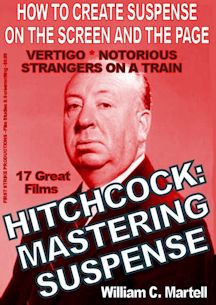
HITCHCOCK: MASTERING SUSPENSE


LEARN SUSPENSE FROM THE MASTER!

Alfred Hitchcock, who directed 52 movies, was known as the “Master Of Suspense”; but what exactly is suspense and how can *we* master it? How does suspense work? How can *we* create “Hitchcockian” suspense scenes in our screenplays, novels, stories and films?

This book uses seventeen of Hitchcock’s films to show the difference between suspense and surprise, how to use “focus objects” to create suspense, the 20 iconic suspense scenes and situations, how plot twists work, using secrets for suspense, how to use Dread (the cousin of suspense) in horror stories, and dozens of other amazing storytelling lessons. From classics like “Strangers On A Train” and “The Birds” and “Vertigo” and “To Catch A Thief” to older films from the British period like “The 39 Steps” and “The Man Who Knew Too Much” to his hits from the silent era like “The Lodger” (about Jack The Ripper), we’ll look at all of the techniques to create suspense!

Films Included: NOTORIOUS, SABOTAGE, STRANGERS ON A TRAIN, THE 39 STEPS, REBECCA, TO CATCH A THIEF, FRENZY, FOREIGN CORRESPONDENT, THE LODGER, THE BIRDS, TORN CURTAIN, SABOTEUR, VERTIGO, THE MAN WHO KNEW TOO MUCH (1934), THE MAN WHO KNEW TOO MUCH (1955), SUSPICION, and NUMBER SEVENTEEN. 17 Great Films!

369 pages packed with information!

Price: $5.99

Click here for more info!

OTHER COUNTRIES:

UK Folks Click Here.

German Folks Click Here.

French Folks Click Here.

Espania Folks Click Here.

Canadian Folks Click Here.

And...


HITCHCOCK: EXPERIMENTS IN TERROR


ON SALE!!! $2 OFF!

Click here for more info!

HITCHCOCK DID IT FIRST!

We all know that Alfred Hitchcock was the Master Of Suspense, but did you know he was the most *experimental* filmmaker in history?

Contained Thrillers like “Buried”? Serial Protagonists like “Place Beyond The Pines”? Multiple Connecting Stories like “Pulp Fiction”? Same Story Multiple Times like “Run, Lola, Run”? This book focuses on 18 of Hitchcock’s 53 films with wild cinema and story experiments which paved the way for modern films. Almost one hundred different experiments that you may think are recent cinema or story inventions... but some date back to Hitchcock’s *silent* films! We’ll examine these experiments and how they work. Great for film makers, screenwriters, film fans, producers and directors.

Films Examined: “Rear Window”, “Psycho”, “Family Plot”, “Topaz”, “Rope”, “The Wrong Man”, “Easy Virtue”, “Lifeboat”, “Bon Voyage”, “Aventure Malgache”, “Elstree Calling”, “Dial M for Murder”, “Stage Fright”, “Champagne”, “Spellbound”, “I Confess”, and “The Trouble with Harry”, with glances at “Vertigo” and several others.

Professional screenwriter William C. Martell takes you into the world of The Master Of Suspense and shows you the daring experiments that changed cinema. Over 77,000 words.

SALE: $3.99

UK Folks Click Here.

German Folks Click Here.

French Folks Click Here.

Espania Folks Click Here.

Canadian Folks Click Here.

- Bill

Thursday, November 20, 2025

THRILLER Thursday: A Good Imagination

Good Imagination.

The spider web fills the screen, it's Boris Karloff's THRILLER!


Season: 1, Episode: 31.
Airdate: May 2, 1961

Director: John Brahm
Writer: Robert Bloch adapts Robert Bloch
Cast: Edward Andrews, Patricia Barry, Ed Nelson, Britt Lomond.
Music: great whimsical score by Morton Stevens
Cinematography: Benjamin Kline
Producer: William Frye


Boris Karloff’s Introduction: “Crime and Punishment. That in a nutshell is our story for tonight. Except instead of a neurotic student and his nemesis, our play is about a beautiful wife with an intemperate taste in men... and her discerning husband whose reservations will stop at nothing, not even murder. This good man however is not an ordinary killer. He has flair, imagination, a good imagination. That’s the name of our play. And our players are: Patricia Barry, Ed Nelson, and Edward Andrews as the injured bookworm. Join us now as we watch this bookworm turn... to murder.”

Synopsis: Handsome Randy Hagen (William Allyn) sleeps in his luxurious bachelor apartment... and is awakened by a noise. A door slamming? He walks into his living room, which has been ransacked. What? “Louise?” Meek Frank Logan (Edward Andrews) pops up from behind a table, “Louise isn’t here, I’m her husband.” Randy wants to know what’s going on, Logan says it’s obviously a case of burglary. “You tried to steal my wife. How do you think I got in here? With that key that you gave her.” He holds up the key in a gloved hand and says he knew about them all along. Randy asks what he wants, Logan replies that he must not have a very good imagination. “It will appear as if burglars broke into your apartment and you were killed trying to defend yourself.” Randy says “Don’t shoot me!” and Logan replies that he doesn’t have a gun, carefully puts his glasses in his pocket and grabs a medieval mace off a display on the wall, chases Randy into the bedroom and beats him to death. Comes out, puts his glasses back on, picks up a fallen copy of “Crime And Punishment” and sets it on the table before he leaves.


Louise Logan (Patricia Barry) comes home from Randy’s funeral and finds Logan in the living room reading a book. He says he came home early from the book convention, it was dead. Logan does a great job of needling her, asking how well she knew him. Why she felt the need to go to his funeral. How he died. “He was the type you’d expect to be shot by a jealous husband,” Logan says... and his wife turns white. Then Logan hands her the key to Randy’s apartment, says he found it on her dresser but it doesn’t fit any of the doors in the house. Louise grabs the key and leaves...

Louise tells her lawyer brother Arnold (Britt Lomond) that she suspects Logan may have murdered Randy. Arnold doesn’t believe someone like Logan is capable of murder... he’s a bookworm! Arnold agrees to hire Private Eye Joe Thorp (Ken Lynch) to look into Randy’s murder off the record.

Thorp comes into Logan’s bookstore pretending to be a customer, but Logan outsmarts him and gets him to admit he’s a Private Eye. That’s when Thorp turns the tables and says maybe they can make a deal... Thorp knows Logan took a flight out here from the book convention on the night Randy was murdered... and took a flight back to the convention a few hours later. He demands $10k for his silence. Thorp will meet Logan at 8pm at brother in law Arnold’s fishing cabin... Arnold will be there at 9pm and Thorp will tell him everything if Logan doesn’t show up with the money.


9pm, Arnold shows up at the cabin... and finds Logan sitting inside. Logan pours Arnold a drink and explains that Thorp demanded $10k to keep his mouth shut, and Logan gave him the money. Arnold is shocked, “He just took the money and ran?” No, he’s out back in a boat waiting for you. Arnold downs the drink, and Logan takes him out back to the dock where Thorp sits in a boat... dressed in fishing clothes. Arnold accuses Logan of killing him, and Logan explains that he’s just unconscious from the drugs I put in his drink, and yours. Carefully takes off his glasses and puts them in his pocket, then puts semi conscious Arnold in the boat with Thorp, rows the boat to the middle of the lake and capsizes it... swimming back to shore.


After Arnold’s funeral, Logan buys a house in the country so that Louise can escape the memories of her brother’s death in that fishing accident. No one around for miles. Logan will be working in the city, but come to the country house for the weekends. She’s stuck there alone... no man for miles.

Knock on the door... it’s local hunky handyman George Parker (Ed Nelson) wondering if Louise needs any work done? One thing leads to another and...


Logan comes home unexpected. George pretends to be inspecting the fireplace for repairs and leaves... but Logan suspects.

At the end of the summer, Logan decides to sell the country house... and George and Louise hatch a plan to steal the money from the house sale and run away together.

Logan asks George to help him brick up a section of the basement where rats might congregate before they hand over the house to the new owners. George asks where Louise is, Logan says she went into town to get the money for the house sale. When George has finished bricking the section of the basement, Logan hands him a beer. George asks if Logan is going to have one, and he says he never drinks around firearms. Logan has a gun, plays with it, puts it in his pocket. Gives George another beer and they examine the wall. The mortar has set, Logan asks if George can hear that noise behind the wall. Like a mouse. Then Logan tells George that he and Louise have separated...


Logan tells George that Louise was alive when he put her in the section, but George killed her when he walled her up in the section. Hasn’t George read Poe’s “Cask Of Amontillado”? Oh, that’s right... George doesn’t read. But George *does* freak out and runs away, as Logan laughs!

That night Logan is reading in the living room... when Louise comes home. Twist! She says a state trooper stopped her on the road to check her I.D. but wouldn’t tell her why. Logan says he knows why and it has to do with George. He was supposed to come and wall up that section of the basement... but never showed. Logan had to do it himself... would she like to see?


On the way down to the basement, Logan says that he got a call from the police that George had burst into the police station and accused Logan of murdering Louise and walling her up in the basement. Logan told them his wife was in town, which is why the state trooper stopped her on the road. Obviously George has gone crazy. When Louise breaks down, Logan takes her to the wall... which now has the bricks removed. She thought he had bricked the wall himself. Logan carefully takes off his glasses, puts them in his pocket, and says he will... “My alibi will be set, and so will the cement.” He finished walling her in the basement when...

The police chief shows up... with George! They thought if George could see Mrs. Logan again, he’d snap out of this strange delusion he has that she’s bricked up in the basement. Can Logan bring his wife to the door???


Review: One of the great things that both THRILLER and HITCHCOCK did was often tell stories from the *villain’s* point of view. We get to be mean and nasty and evil for a half hour or an hour and then go back to being nice people afterwards. All of use have dark fantasies, and these shows allowed us to safely explore them (without actually bricking our spouse inside a wall). Villains always seem to have more fun than heroes, so it’s fun to pretend to be one for an hour.

And this is an *understandable* villain. We can relate to him. He’s clever and witty and well read (this began as a short story by Robert Bloch, so readers were the primary audience for the story), and always several steps ahead of everyone else. If we aren’t that person, we’d all like to be that person. And whether you are quoting Bugs Bunny or Vizzini from THE PRINCESS BRIDE most people are morons. Here we have a cheating gold digger wife who seems to never learn her lesson. One lover dies under mysterious circumstances and she just keeps bleeding her husband dry as she searches for another. The people Logan kills aren’t innocent by a long shot... and also aren’t very bright. What’s fun about this story is that Logan *warns* his future victims ahead of time using book references, but they aren’t readers so they fall into his traps. Had they been more clever and better read, they would probably have survived!


The script is filled with the clever wordplay that Bloch is famous for, as I mentioned in an earlier entry his short stories and novels are filled with lines like “He cut off her scream... and her head.” He dances with language, finding dark puns and finding words that connect two different thoughts. The dialogue in this episode is fun!

One of the great elements of this episode is the perfect crime at the end, which is like an intricate chess game and requires George to go to the police and accuse Logan of murder while Louise is still alive (and the police can find her). There’s a stageplay by Lucille Fletcher (SORRY, WRONG NUMBER) called NIGHTWATCH (first staged in 1972) which does something similar, turning the only person who might be suspicious of the missing victim into a crazy lunatic by having them witness a false murder and make accusations... which are easily proven false because the victim is still alive at that point. This is also used to some extent in Hitchcock’s VERTIGO and DePalma’s BODY DOUBLE where a witness tells the police about a *false murder*. This is a great device, and in this case not only helps Logan get away with the murder but also gets revenge on George by making him look crazy.

This is a fun, dark episode with some great suspense and a twist ending. Next week we have a charming story about a little girl and her best friend... who happens to be dead.

Bill

Buy The DVD!

Wednesday, November 19, 2025

Push To Open

From 2008...

Part of writing is understanding characters - understanding human nature - and I am stumped.

I am confused by people who don’t get it. One of the Starbucks I regularly write is kind of shaped like a T - with the seating area on the top of the T and the register at the bottom of the T. The bathrooms and some other things are actually at the bottom of the T - so the area between the counter and the back wall is *also* a passage to get to the bathrooms, and for Starbucks employees to get to the counter entrance, and for customers to look at the pastries... also, of course, for customers who have just ordered their coffees at the counter to get to the seating area at the top of the T. So, it’s *obvious* that the line can not block the passage. The first time I walked into this Starbucks, I could figure that out. In fact, *most* people can figure it out.


But obviously some people can’t figure it out. Today I am standing at the “next” position in a short line at this Starbucks with a gap in front of me so that people can pass... and this guy walks in, ignores the line, ignores me standing there with money in my hand, and blocks the passage by standing behind the customer at the register. Someone else in line said, “Excuse me, buddy, there’s a line” (I wanted to - but I’m usually the person who just grumbles to myself and lets the guy take cutsies) and the guy looks at the line, shakes his head, and *doesn’t move*... but when the customer in front of me is finished ordering - he *must* move so that they customer can get to the drink pick up place and the tables... and that’s when I step up to the register and kind of force the guy to stand in line. He’s pissed off...

But it’s not just the line at this Starbucks - there are all kinds of situations where some people don’t seem to get what everybody else figures out instantly. Why is that?

Another Starbucks has doors with handles on both the inside and outside - and it clearly says “Push” on the inside next to the handle. Yet, when I sit in that Starbucks writing, there’s always one or two people who pull on the handles. And when one door doesn’t open by pulling, they try the other door - pulling on that one. And they keep pulling despite the sign that says “push” and never even *try* to push the door open. When I pull on a door and it doesn’t open, I try pushing. In fact, most of the people who go through those doors and may not have noticed the (obvious) sign will push if pulling doesn’t work. But there is this percentage that will not push no matter what. It takes them forever to figure it out. It’s like - if they keep pulling on the door, maybe it will open.

What confuses me about this is that just by watching people open the door or standing in line or whatver - you can figure it out. Most people are paying attention and *do* figure it out, but that percentage that doesn't? How do they survive? Why don't they learn to observe all of the other people who manage to get the doors open? I can't imagine going through life struggling every time there's a door. And doors usually pull to open from poutside and push from inside - for emergency evacuations (fires, earthquakes, etc). So if you have spent your morning pushing on the PULL door, why don't you figure out the pattern? When you watch someone who refuses to even try pulling on the door with the big PULL TO OPEN sign confuses me. It's not like this is the one store in the world where the doors work differently - they all PULL TO OPEN. You would think after opening doors all morning they would have figured out by the afternoon... but Nope!

Everyone else figures out how the line works - they can see that there is a line (que) and people are standing in it, and stand behind the last person in line.

This isn't rocket science.

It's obvious to everyone else.

I have no idea how this applies to screenwriting (or characters) but I can’t figure out why these people can’t figure out those things that nobody else even has to think about. I don’t think they are stupid - the guy who took cuts in line was wearing a suit and a Rolex and looked like a successful business guy - probably not “mentally challenged”. I don't think he was being rude, he just didn't seem to be able to figure out simple things. Is there some form of intelligence that governs things like this? Can you be a brilliant businessman and not understand how a line works? Do some people lack the ability to process information?

- Bill
IMPORTANT UPDATE:

TODAY'S SCRIPT TIP: Plot Twists Are The Answer - and STAY vs. GET OUT!
Yesterday’s Dinner: One of those Starbucks Thanksgiving sandwiches - it was free.

MOVIES: ALL THE MONEY IN THE WORLD. Did Michelle Williams practice Katharine Hepburn's accent? Did Christopher Plummer study John Houston in CHINATOWN? Was that Kevin Spacey getting off the train in an early scene? The interesting thing about this film is that it's based on a true story about the richest guy in the world who refused to pay the ransom for his kidnapped grandson... and that's the premise. After that it's kind of a dry, just the facts story. The trailer makes it look like a suspense film, maybe with Michelle Williams kicking ass along with Marky Mark in order to get her son back. But much of it takes place in boardrooms where lawyers look over offers. One of the interesting things in adapting a true story is *how* you adapt it, what you decide is the important part of the story and what you leave out - and maybe what you create (was Marky Mark's character truth or fiction or composite?). I've done Script Tips on "casting a story" in a genre to take what might be a little dry and making it exciting... and here they didn't do that. This *could* have been a race against time thriller, with the decision by Getty not to pay the ransom as a big twist, and the machinations to get the grandson back as conflicts and twists with time running out. But they didn't take that path, here. They even downplay the emotions when it comes to the boy's mother - played by Williams. There is a scene near the middle of the film that could have been a big emotional twist - and seems to have maybe been written that way - but ends up filmed so "matter of fact" that it's just a scene.

The best scenes of the movie are when Williams and Plummer are on screen together, basically playing a high stakes chess game against each other with the boy's life in the balance. But that's just business. Which is maybe the issue here - there's a line Getty has about how emotions and even caring about *anything* is how you lose a business deal. You need to be cold. You need to be able to walk away. But the problem is - that ends up what the story is about. William's character doesn't get what is necessary to get her son back by *caring*, but by being cold and besting Getty at his own game. She becomes just as cold and calculating... and that may be intellectually interesting it's not very emotional. There *are* some exciting and emotional scenes - it's hard not to feel for the kid when the kidnappers, um, remove a body part as "proof of life", and the end sequence in the village which reminded me of that early scene in GODFATHER PART 2 builds some suspense (though not through techniques, more just because a kid is being hunted by killers) but the film often feels dry. A scene where Williams' character comes face to face with her ex-husband might have been about two strangers. In addition to the good scenes with Williams and Plummer, the scenes between the kid and the lead kidnapper character (who steals the show) work well. Plummer does a great job considering he's a last minute replacement in a pivotal role. It's a well made movie with good performances, but it's like reading a non fiction book that sticks to the facts... or one of Getty's pieces of "investment art".

Tuesday, November 18, 2025

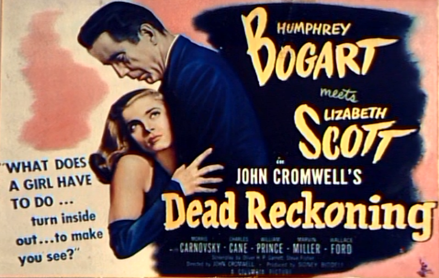
Trailer Tuesday: DEAD RECKONING (1947)

The story of a soldier looking for his friend...

DEAD RECKONING (1947)

Directed by: James Cromwell.
Written by: Oliver Garrett and Steve Fisher, and three more screenwriters including the producer.
Starring: Humphrey Bogart, Lizaberth Scott, Morris Carnovsky, Marvin Miller.
Produced by: Sidney Biddle .
Music by: Marlin Skiles.


Columbia Pictures noir films were an odd mixed bag. Where Warner Bros was gritty and real, Columbia was often glossy and trying their damnedest to look like MGM, just without the money or stars that MGM had. This could be a good thing when you had a noir film like GILDA which is about exotic night club singers and has a Gay subtext - the glossy look fit that story. It could also work when you had some crazy maverick like Orson Welles making a wacked out noir film like LADY FROM SHANGHAI. But to keep the lights on, Columbia often imitated RKO - making cheap genre films like the WHISTLER series (which I plan on looking at in the near future). So you never knew what you were going to get with this studio and the style didn’t always match the subject matter.

At times DEAD RECKONING seems like a soap opera with some shoot outs. Where a Bogart film like DARK PASSAGE from Warner Bros was gritty and real, DEAD RECKONING is glossy and seems to have way too much kissing. Also, at times it seemed to be made of leftover parts of much better movies. There's a scene from THE MALTESE FALCON, and a scene from OUT OF THE PAST and a scene from...

DEAD RECKONING was directed by the great James Cromwell (PRISONER OF ZENDA, SINCE YOU WENT AWAY) and is glossy and pretty to look at. Script by Oliver Garrett (DUEL IN THE SUN) and the great Steve Fisher (I WAKE UP SCREAMING and LADY IN THE LAKE) and some other guys. The script is kind of a mess - all over the place and making no sense at times. You get the feeling that it began as one story and was rewritten into another. I don’t know whether it began as a cheap genre film and then was turned into a soapy love story or vice versa. It does have some great snappy dialogue. It’s one of those Bogart films that you remember the good parts of and forget the strange parts of... until you see it on the big screen again. I don’t own this on DVD, and hadn’t seen it in decades before the screening.

Story starts with a beaten up Bogart confessing to a Priest - and flashback to the story with Bogart doing VO (the reason for the confession to the priest)... but we come out of flashback at end Act 2... and Bogart goes to kick ass in present time. Except - not as much ass-kicking as I wanted. Lots of kissing though - as if someone thought people went to Bogart movies to watch him kiss Liz Scott. That’s why I wonder what sort of rewrite process this went through - it’s got that DUEL IN THE SUN soap opera feel... and then some wild ass action that is pure Steve Fisher. And that VO is snappy and fun - which is probably also due to Fisher. He does great tough guy dialogue and monologues... and that might be a good reason to watch this film.

Bogart plays paratrooper Rip Murdock on his way by train with best bud "Professor" Johnny Drake (William Prince) to pick up Congressional Medals of Honor in Washington DC. Drake seems reticent to get a medal pinned on him by the President, which is odd. When he drops a gold Senior college pin on the train and Murdock picks it up to hand it back to Drake, he notices that the pin is from Yale... and has another man’s name on it. John Joseph Preston. Did Drake steal it from this Preston guy? Before they arrive in DC, Drake jumps off the train in Philly and disappears. Why? Murdock’s commanding officer orders him to find Drake and get him to the ceremony on time, and Murdock must turn detective to find his friend.

Murdock remembers the pin, calls Yale and gets the last known address for the name that was on the pin... a corrupt resort city on the Gulf of Mexico. By the way, this movie may also hold the record for phone booth scenes.

When he arrives at the local hotel, there is a reservation for him... and a note from Drake that says to wait for him. But Drake is a no show, and Murdock pokes around - discovering that an unidentified man was burned to a crisp in a suspicious single car accident. Drake? Murdock decides to investigate and get revenge for Drake’s murder...

Murdock goes to the morgue to look at the body - which has a melted gold blob like Drake’s Senior Pin from Yale - and bumps into local cop Kincaid (Charles Cane) who asks Murdock all kinds of questions, which he evades. But Murdock believes the body might be Drake’s and heads to the newspaper to look through back issues... and discovers that Drake was really John Joseph Preston... and was wanted for murder! He changed his name and enlisted in military to hide from the police!

“Dusty” Chandler (Liz Scott) - whose real name is "Coral" but Murdock will end up calling her "Mike" - was the woman whose husband Drake may have killed to hook up with... but there are also these mobsters who seemed to wander in from THE BIG SLEEP and some MALTESE FALCON femme-fatale scenes and other scenes from other movies and a story that goes all over the place... To be fair, Steve Fisher often has wacky plotting in his screenplays. HELL'S HALF ACRE and THE CITY THAT NEVER SLEEPS from 2019's Noir City Fest often seemed like he was making them up as he went along.

Murdock heads to the nightclub where she sings, to interview a bartender who was a witness to the Chandler murder (?) named Louis Ord (George Chandler - how confusing was this set when they were shooting?). Ord says that Drake gave him a letter for Murdock before he was killed in the car accident... and that's when crazy psycho club bouncer Krause (Marvin Miller) who is Moose Malloy on steroids, approaches. Ord says that he'll give Murdock the letter later. Somewhere in here are a couple of poorly dubbed songs from Dusty and Murdock stops his investigation to listen.... and later dances with Dusty. There's a freakin' brutal scene here where, after Dusty talks about how much she loved Johnny Drake, he tells her that he just saw Drake. Where? On a slap in the morgue. She misses a dance step or two. He tells her he had to break the news to her that way, so that he could gauge her reaction - he now knows that she didn't kill him. Then we get the scene from THE BIG SLEEP where Dusty and Murdock gamble together and after Dusty loses, Murdock wins big and have to go to the club’s owner to get the okay to get paid...

The club is owned by mobster Martinelli (Morris Carnovsky) who is a bad carbon copy of Eddie Mars in THE BIG SLEEP - a criminal who seems more like a business owner. Instead of a pair of comic relief henchmen like Mars had, Martinelli has a Krause. Martinelli gives Murdock and Dusty drugged drinks. Ord is the waiter who brings them, and tries to tell Murdock about the drinks in front of Martinelli and Krause - but Murdock realizes if he *doesn't* drink, Ord will be busted and he will never get the letter from Dead Drake. So he downs the drugged drink... and one of those pools of darkness from MURDER MY SWEET opens up and swallows him. Actually, the pools of darkness in this film have parachutes at night. Oh, and I forgot to mention that Murdock's catch-phrase is "Geramino!".

The next morning, Murdock wakes up in his hotel room with the corpse of Ord and Detective Kincaid knocking at his door. He manages to hide the body in a hotel laundry cart. The cops were tipped off that Murdock may have killed someone... and search his room finding nothing. But Kincaid stakes out the hotel lobby... and we get another phone booth scene as Murdock has Kincaid paged claiming to be a call from headquarters... so that Murdock can snag Dusty out of the lobby and go down to the hotel parking garage... where he puts Ord's body in the trunk of her car.

Murdock and Dusty have teamed up - which requires him to kiss Dusty a lot. Take the number of kissing scenes you would expect in a revenge movie and multiply by ten. Okay, now add two more.

Okay, that's an exaggeration. Here’s the thing about all of these kissing scenes - there may actually have been just as many kissing scenes in DARK PASSAGE (though I doubt it) but *those* kissing scenes were part of the story, part of what the characters would naturally do. In RECKONING they seem to just kiss whenever they are in the same room with each other. It’s like they were trying to make this into a love story by adding more kissing instead of actually having a love story subplot. They only kiss a handful of time, but they just kiss for no real reason and kind of unexpectedly and without motivation... and the camera lingers on the kisses. And this is his dead best friend's girlfriend who was married, so any kissing just seems wrong. Though I haven't counted the kisses in THE BIG SLEEP I only remember one at the end - maybe there was one at the gas station house, too... but that's only two. Here, they kiss for no apparent reason in the car, then there's a freakin' huge kiss a few minutes later, then a few more kissing scenes.

There's also a bit of dialogue that hasn't aged well, where Murdock thinks women should be miniaturized so that men can carry them around in their pockets and only make them full sized when men want them. "You know, the trouble with women is they ask too many questions. They should spend all their time just being beautiful."

There's a nice suspense scene here where (after kissing) they get pulled over by a cop for speeding... with dead Ord in the trunk. They have to talk their way out of a ticket - by saying they are newlyweds - which leads to a public display of affection (kissing) in front of the cop.

Murdock believes that Martinelli's goon Krause killed Ord and stole the letter and now that letter is in Martinelli's safe - it's actually more complicated than that, but we don't have 90 minutes. Murdock gets the name of a retired safe cracker through his connections and they visit him. The safe cracker's son just returned from the war, with a bunch of mementos like Japanese swords and German incendiary grenades. He teaches Murdock how to crack Martinelli's safe and gives him some incendiary grenades... and then Murdock and Dusty kiss some more.

After the kissing, Murdock breaks into Martinelli’s office to crack the safe and get the letter - which is purely a plot device. The safe is already busted open and the letter is gone and he smells Dusty’s perfume moments before *someone* knocks him out. When he wakes up, Martinelli and Krause are knocking him around to find out where the letter is. Where is Bette Davis when you need her? Murdock escapes... goes to the church where he confesses... and we are out of Act Two and into Act Three and some wild-ass action scenes including the use of napalm indoors (the grenades) - not recommended, by the way. "Scratch one hoodlum!"

The ending is so insanely convoluted that everyone was married to everyone else and everyone secretly killed everyone else and everyone was blackmailing everyone else. Seriously. Just pair up any two characters in this story and they were once married. Pair up any two characters and one of them killed the other. And everyone was blackmailing everyone else. If you though the plot of THE BIG SLEEP was confusing, this movie will make your head explode. Anyway, Dusty and Martinelli were married and she was also married to Chandler and was having an affair with Drake but now claims to be in love with Murdock... but before you can say THE MALTESE FALCON Dusty tries to kill Murdock and there’s a car crash and Dusty is fatally injured and Murdock gets to have a scene where he loves her but she dies in some weird soap opera scene.

One of the problems with DEAD RECKONING is the dialogue - something might be set up in one scene, and then the dialogue doesn't pay it back - when it seems obvious that's what was supposed to happen in this scene. I suspect the five screenwriters may have been working at cross-purposes - maybe one writing a crime film and the other writing a big soapy romance and the other three doing some version of either of those. It has big time tone problems - with some soap opera stuff and then some violent action scene. And the cute nicknames aren't that cute in this film, and many of the gags fall flat - with lots of glossy photography of kissing.

Now, when I was a little kid, I thought that kissing girls was for sissys. But the problem with the kissing in DEAD RECKONING is that it all seems so forced. Oh, and Scott's singing is so poorly dubbed you don't believe it for a second - unlike the Andy Williams (minus the bear) singing for Bacall in BIG SLEEP. Originally Rita Hayworth was to play the female lead in this flick, but she split to play the femme fatale in her husband’s movie LADY FROM SHANGHAI and they got stuck with Lizabeth Scott who looks *older* than Bogart and has no lip syncing abilities.

The weird thing about Lizabeth Scott is that I love her in other films - she’s the lead in one of my favorite films PITFALL and doesn’t seem like an older woman to Dick Powell. But here, for reasons I can’t figure out, she seems old - might be the wardrobe or the dialogue or maybe the problem is that Bogart’s character was *written* to be younger - a guy returning from WW2 is likely to be in his 20s so maybe the character was written young and Scott was supposed to be an older woman and the characterization and dialogue makes you think that she’s old. This movie - and Scott - get a shout out in Woody Allen’s PLAY IT AGAIN SAM, so maybe it’s just me and this odd hybrid of glossy soap opera and violent revenge flick works for everyone else. (Note: In reading reviews, a lot of negative reviews mention how stiff and "mannered" Scott is, so it's not just me.)

Just for fun, here’s some info on the co-screenwriter of DEAD RECKONING, Steve Fisher. I’m sure they brought in Fisher for the noir stuff, since he was one of those great noir writers you’ve probably never heard of. Like David Goodis he was a novelist who worked on and off as a screenwriter on B movies. His novel I WAKE UP SCREAMING was made into a great noir film with Victor Mature, and that probably put Fisher on the map. SCREAMING is about a hot starlet whose best friend is murdered by a maniac, and she thinks the maniac is now stalking her. She goes to the cops, and the detective in charge of the case is... the man stalking her! And he’s trying to frame Mature for the murder... and now Mature and the hot starlet have to get the proof that the detective is the killer. Um, no one wants to believe them about that. Great concept - what if you went to the police, but a policeman was the killer? Fisher’s crime novels ended up getting him back into screenwriting, where he wrote a bunch of crime films like the all POV film LADY IN THE LAKE and one of the THIN MAN series. Many of his novels have been reprinted recently by Hard Case Press. There was this period in time when Pulp Novels and Pulp Movies intersected and the guy who wrote some throw away crime novel might also write some throw away crime movie.

Anyway, DEAD RECKONING seems like a mis-fire - a movie trying to be Noir but also trying to be some glossy soap opera thing at the sale time. Not an unwatchable movie - but not the classic Noir that you might expect from the film’s reputation.. Fine for a Saturday afternoon on TCM, not as good on Saturday night on the big screen with your legs scrunched up under your neck because there is no legroom in the Billy Wilder Theater. I think the gloss worked against it - makes it seem like a big budget A movie with a sleazy B movie revenge action plot... and an interesting indoor use of napalm*.

-Bill

Dead Reckoning

*Actually incendiary grenades - but crazy Krause is burned alive while staggering around a room.

eXTReMe Tracker