Friday, July 03, 2026

Fridays With Hitchcock: North By Northwest (1959)

The perfect Htchcock film for America's birthday!...


Screenplay by Ernie Lehman.

My three favorite Hitchcock films are NOTORIOUS, REAR WINDOW and NORTH BY NORTHWEST... And it’s kind of strange to think that the same guy directed them - because they might all have suspense, but all have very different tones. NORTH BY NORTHWEST is a comedy chase film with so much clever dialogue and so many farcical scenes that you might forget about the cool plot twists and large scale set pieces. Though movies like SAN FRANCISCO had big set pieces before this, I can’t think of any film with *as many* set pieces.


This is where all of our action films came from, and many say where the version of James Bond on screen came from. Screenplay by Ernie Lehman, who is an amazing short story writer, an amazing novelist, an amazing screenwriter and producer and won a bunch of Oscars. If you’ve read any of his stories, or seen the film SWEET SMELL OF SUCCESS, you know he travels in some nightmare version of the TV show MADMEN - where you have to sell your soul to sell a product. Here we get the lighter version of the Lehman lead - Cary Grant as an ad man who lies to everyone, has a liquid lunch often followed by afterwork cocktails, too many girlfriends and not a single real friend... except his mother. He’s charming... but all surface - he doesn’t want to know what’s underneath. Who really cares?

Nutshell: If there was ever a boy to cry wolf, it’s Roger O. Thornhill (Cary Grant) - what does the O stand for? Nothing. In the opening minute and a half, we get a quick sketch of adman Roger - momma’s boy, playboy, liar, drinker... before a silly mistake in identity has him kidnaped by two armed thugs who think he’s a CIA Agent. They take him to this big country estate owned by Lester Townsend, where he meets the man of the house (James Mason at his best) who has just a minute before dinner guests arrive to decide whether he should kill Roger or not. Mason’s secretary, Leonard (Martin Landau) is thin and impeccably dressed and single - you do the math - and seems to enjoy causing people harm. When Roger keeps saying he’s *not* this CIA Agent George Kaplan, and even has a driver’s license to prove he’s Roger Thornhill, Leonard answers: “They make such good ones.” Roger - who tells lies for a living - can’t get anyone to believe him. Mason’s threats are so sophisticated and urbane that it takes you a moment to realize they *are* threats. Mason has Leonard kill Roger - with Bourbon and a sportscar, but Roger escapes death... and now can’t get anyone to believe that spies are trying to kill him. Guess what? Lester Townsend is a big wig at the United Nations - and doesn’t look anything like James Mason. No one in this film is who they claim to be - and nothing is as it seems. Mason is really an enemy spy named Van Damm... and Roger ends up framed for the real Townsend’s murder. There is no one to turn to - so Roger runs. He must find the real George Kaplan so that Van Damm will stop trying to kill Roger. By trains, planes, and automobiles Roger heads North by Northwest looking for the real Kaplan... and becoming an accidental spy and man of action in the process. The man who took nothing seriously grows up - and becomes a man of his word.

Hitch Appearance: Right up front, trying to catch a bus... and failing.

Sound Track: A great Bernard Herrmann score! Also, by the way, a great opening title sequence.

Great Scenes: They’re all great scenes. Seriously. The great thing about NORTH BY NORTHWEST is that you can take the smallest and most forgotten scene in the whole film - and it’s great! Here’s an example - a junk scene where Roger leaves Kaplan’s hotel and takes a taxi to the United Nations to ask Townsend what the hell is going on and why me? A pair of assassins are following him. But here we get a comedy version - Outside the hotel a Doorman has secured a cab for a Tourist Couple, when Roger bolts out, pushed them aside, gets in the cab and takes off. The Doorman hails a second cab for them, opens the door for them... and the Two Assassins bolt out of the hotel, push them aside, get in the cab and take off. The Doorman looks at the Tourist Couple, then cautiously looks for another cab. That’s just one of those scenes that gets the character from point A to point B!

Here’s another junk scene - Roger is locked in a hospital room and needs to get out - basically, another scene that will get him to a location where a “real scene” will take place. So Roger opens the hospital window, steps out onto a narrow ledge, gracefully walks along the ledge to the next hospital window, opens it and climbs into the room. A sleeping woman - not bad looking - yells: “Stop!” Then puts on her glasses and looks Roger over... then says: “Stop” in a much sexier voice. Now Roger has to get out before she tackles him! Another funny scene that is basically there to get Roger out of a locked room.

Every scene in the script - even these funny ones - move the story forward. This is a *relentless* script - it’s always moving. It is always a fast paced film - there are screenwriters who complain that movies today are designed for the short attention spans of the MTV generation (wait - how long has MTV been around? When the Rolling Stones sing about their generation - that’s a bunch of AARP members!) and these danged kids don’t want to take the time to build up to a story for a half an hour or so before the plot kicks in. NORTH BY NORTHWEST - made in 1959 - not only kicks into gear a minute and a half in, it doesn’t let up!


Bourbon And A Sports Car: Three martini lunch Roger is held down by the Two Assassins as Leonard forces him to drink a full bottle of Bourbon, then they put him behind the wheel of a Mercedes convertible on a winding cliff-side road... and send him to his death. The great part about this is that it is smart on the side of the bad-guy spies - Roger’s death will look like a drunk driving accident. Problem is - Roger takes control of the car and manages to barely miss driving off the cliff... so the Two Assassins give chase in their car! Now we have a car chase with a very drunk driver. This adds an extra element to an already exciting car chase. One of the cool things about this scene is that Hitchcock gives up a driver’s POV through the windshield shot alternating with Roger behind the wheel so that *we* are driving the car on this dangerous winding road. Another thing he does is give us Roger’s *drunk POV* at times - with double vision (which road is the real one?) and blurry vision. Again - by putting us in Roger’s shoes and in the driver’s seat we feel like all of this is happening to *us*. If you’ve seen the car chase on the big screen - those POV shots as we head to a cliff or an oncoming car are scary! Any time you can find a way to turn the audience into the protagonist, you create an emotional scene.

Cops At Townsend’s: Roger manages to crash into a police car, which forces the Two Assassins to back off. But now Roger is in trouble with the law. When they ask him how much he’s had to drink, he raises his hands as if measuring a fish and says “This much”. By the way, the arresting officer is Corporal Emil Klinger - that’s where the M.A.S.H. character came from. He’s given a phone call, and calls his mother... “Mother, this is your son, Roger Thornhill” - as if she may have forgotten her son’s name. As an in joke only for my own amusement, when I call my mom I always say, “This is your son, Bill.” The next morning Roger tells the judge his story... and the judge sends a pair of Detectives with Roger and his Mother to the Townsend house... where Mrs. Townsend says Roger is “a little pink-eyed, but aren’t we all?” (a phrase I’ve taken up using the day after a party.) Then tells the Detectives that Roger was too drunk to drive... and the more Roger tries to prove he’s innocent, the more he just looks crazy. The sofa where they forced him to drink and spilled some booze on the cushions? Completely clean. The cabinet where Roger claims they got the bourbon - filled with books, not liquor bottles.

It’s important in a thriller script to remove the police and the authorities from the equation - so that the protagonist is alone against the world - and this scene does that. At *best* Roger looks like a drunk trying to get out of a police charge. At the end of the search of Townsend’s the Detectives apologize to Mrs. Townsend, and take Roger back to the police station. Roger’s mother tells him to just, “Pay the two dollars” - another phrase I often use to mean, quit arguing, you’ve lost and you’re looking silly.

The only way Roger can prevent himself from getting slightly murdered is to find the real George Kaplan... that is Roger's quest in the story.

Elevator with Killers: Roger manages to drag his Mother to the hotel where Kaplan is staying... and bribes her to get the room key. She won’t do it for $10 or $20, but $50 gets her cooperation. They search Kaplan’s room and discover they have Roger confused with a much shorter man... who has dandruff. But the strangest thing is that the Maid, the Valet and everyone else at the hotel has never actually *seen* Kaplan - they all think Roger is Kaplan. Then the phone rings - Van Damm’s Two Assassins! If Roger isn’t Kaplan, what is he doing in Kaplan’s room? And of course, the call came from the lobby phone - the Assassins are on the way up! Roger and his Mother race out of the hotel to the elevators... where the Assassins get off the up elevator and join Roger and his Mother going down.

Being trapped is one of the basic scenes in a thriller script - but Roger isn’t trapped *alone* with a pair of killers, his mom and a bunch of other people are on the elevator. Roger points out the Assassins to his Mother, who asks them: “You aren’t really trying to kill my son, are you?” The question is so absurd, that people in the elevator start laughing... and soon *everyone* is laughing (including the Assassins) *except Roger*. He is the man alone - no one will believe him. The boy who cried wolf.


United Nations: Roger goes to the United Nations to find Townsend, has him paged... and this distinguished looking man introduces himself as Mr. Townsend, and Roger replies: “No you’re not.” And now Townsend must convince Roger he is who he is... more identity confusion! Roger still isn’t sure he believes him, and pulls out a picture of the guy who claimed to be Townsend (Van Damm) and shows it to Townsend - who gasps! Eyes open wide at the picture! Then he seems to faint! Roger grabs him to prevent him from falling, sees a big throwing knife in Townsend’s back and pulls it out... and that’s when everyone at the United Nations notices him - and people start snapping pictures. Roger sees one of the Assassins slip out of the room... leaving Roger, bloody knife in hand, trapped in the room! Roger escapes - and we get a great high overhead shot of Roger fleeing to a taxi - he’s like a chess piece or maybe an ant. Small, insignificant.

Seven Parking Tickets: Roger ends up at Grand Central Station - with just about everyone in the world looking for him. He tries to buy a ticket *North* and the ticket salesman pesters him with questions - it’s like everyone is against Roger. The ticket salesman gets Roger to wait for a moment... as he calls the police. Roger escapes, police chasing, and sneaks onto the train.

In the passageway, he runs into a pretty girl - Eve Kendall - flirts with her a bit... then the police enter the car. While Roger hides, Eve tells the policemen that she thinks he got off the train. After the police leave, Roger tells her he has seven parking tickets. After the train is in motion, Roger has no ticket so he has to keep moving... and goes to the dining car... where he’s seated at a table with Eve. He lies to her about who he is and where he’s from... but she stops him - she knows he’s Roger Thornhill and that he’s wanted for murder on the front page of *every* newspaper in the nation. The man who lies easily to women, can’t seem to lie to this woman. He has to be *honest* with her! Yikes! She flirts with him, says she has a bedroom car with plenty of room. Wow! Then she says he’d better hurry up. Roger thinks she's hot to trot... but the train just made an unexpected stop and a bunch of police just got on!

Eve’s Compartment: The police are doing a compartment-by-compartment search for Roger - and they enter Eve’s bedroom and ask if she’s seen him. Roger is hiding in a upper bed... and must be completely quiet and still while the police are in the bedroom. This is another one of those basic scenes in thrillers. Because Eve had dinner with Roger, they *really* question her. Take their time. She says they just shared a table, but don’t know each other. Eventually the police leave... and Roger can breathe again.

Now we come to the love scene - a kiss that manages to take them from wall to wall all the way around the car. Sure: “they kiss”, but how is *this* kiss different than any other kiss in any other movie? Here we have this romantic never-ending kiss where they use every surface of the room. A sexy, romantic idea for a kiss.

The next morning, when the conductor knocks on the door, Roger hides in the bathroom... and we get one of the big twists in the story. Afterwards the conductor walks down the passageway to a door, knocks on it, says the woman in compartment whatever (Eve) sent this message. A hand takes it, closes the door. The note says that she has Roger, what should she do with him. Reading the note? Van Damm and Leonard. Eve is a bad girl!

Redcap Spin: When the train pulls into the station, the police are waiting... so Roger disguises himself as a redcap, and we have another basic suspense scene, and we see an ocean of redcaps - dozens of them - one is Roger. A redcap in his underwear tells the police he was mugged for his uniform, so police start grabbing redcaps and spinning them around to look at their face. One-by-one the redcaps are spun around, and we know that any minute they will get Roger - and he’ll be caught. Suspense builds as there are fewer and fewer redcaps - because we know the next one will probably be Roger! It’s like a ticking clock - with redcaps instead of minutes passing.

When they spin the last redcap, it’s not Roger, because he is already in the train station men’s room changing and shaving... with Eve’s little woman’s razor. The big macho guy shaving at the sink next to him uses a straight razor - and gives Roger a look.

Crop Duster Scene: Eve tells Roger she’s gotten a message from Kaplan to meet him at Prairie Stop - take the bus, not a car. Roger gets off the bus in the middle of farmland for as far as the eye can see. Nothing but fields. Suspense is the *anticipation* of action - which means suspense can literally be nothing happening. This scene starts with Roger just standing in a deserted road, waiting for Kaplan to show up. Except we know there is no Kaplan, and that Eve (who sent him there) is a bad girl. That means this is a trap, but Roger doesn’t know it. That’s called “audience superiority” - the audience has information that the protagonist doesn’t have. We know Roger is in big trouble, he doesn’t. So while he stands there and an occasional cars zips by, nothing is happening... except we know any minute something *will* happen. And that creates suspense. In order to keep the suspense perking, Roger sees an old pick up truck driving toward him. Hey, that could be Kaplan! (Except we know it’s more likely someone who is going to kill Roger). The pick up truck stops, lets out a man in a suit, takes off. Now Roger is on the opposite side of the road from this man. And Roger waits for the best moment to cross the highway. Then asks if he’s Kaplan. The man answers “Can’t say that I am, ‘cause I’m not.” This guy talks stranger than Yoda! Then the guy sees a crop duster, starts a conversation about crop duster pilots... and how dangerous the job is, Many get killed. Wait... is that a threat? Just as the man’s bus is pulling up, the man notes that the crop duster is dusting where there ain’t no crops. Okay - the man was a potential threat, and the moment he is taken away, another threat is introduced... and the type of suspense changes.


We go from nothing happening, to the crop duster attacking Roger. Now our suspense is based on the anticipation of the crop duster killing Roger. Hitchcock alternates shots of the crop duster plane zooming at us, and shots of Roger running. This puts us in the protagonist’s shoes, just like the Bourbon and Sportscar scene. The cool thing here is that the shots of both the crop duster and Roger become shorter as the scene goes on, building up the pace and the anticipation/suspense. The shots of Roger also become closer - as if the plane is getting closer. When Roger hides in a cornfield, the crop duster sprays the corn - forcing Roger out into the open again. Eventually the plane sprays machinegun fire - and Roger is running for his life.

There’s a great little bit of simple visual storytelling at the end of this scene. Roger steals a farmer’s pick up truck with a refrigerator in the back... and we cut to the city at night where a policeman is writing a ticket on a completely out of place pick up truck with a refrigerator in back. This not only tells us Roger is in the city... but it’s a funny way to give us this information.

Eve’s Hotel Room: Roger realizes Eve sent him to his death, and goes to confront her. I use a clip from this scene in my 2 day class to illustrate how you can show complex emotions through the actions of the characters. When Eve goes to hug Roger, his hands tun to fists and he does not touch her. Everything Roger *says* in this scene has a double meaning: “Surprised to see me?” “There’s just no getting rid of me.” But it is all said in a friendly manner - so we need the actions to show Roger’s anger.

While Roger is in the shower, Eve leaves... but Roger wasn’t really in the shower. To link this scene to the next, they use a device: Roger rubs a pencil over the pad of paper next to the phone in the hotel room... exposing an address. Then we see the address on the outside of the auction house.

Auction: This is the first scene with Roger and Van Damm and Eve - our little romantic triangle. And that is how the scene is played - as a romantic triangle where the losing party gets killed. Because this is a scene where the characters are in public and can’t kill each other with guns or knives, they try to off each other with words. Roger and Van Damm (and sometimes Leonard) dig into each other with the most painful words they can find - and this becomes a battle of the wits. What’s cool is the other person in the room - the studio censor - who forces them to find clever ways to hit below the belt. When Eve says Roger followed her from the Hotel, Van Damm asks if he was in her room, and Roger replies that *everyone* has been in her room. Later Roger tells Van Damm that Eve does great work - she puts her whole body into it.

As they verbally spar, with Eve in the middle, Leonard is bidding on a piece of art. They outbid everyone else - they *must* have this little statue. Once they get it, Van Damm and Eve leave... And the two Assassins and Leonard block all of the exits. No way out. Here’s the kind of thing that separates good scenes from average ones - finding the completely different way to resolve the problem. The one we have never seen. As screenwriters we always want to find the unusual solution to the problem. Here we have Roger trapped - assassins at every door. How does he get out of it? He bids on the piece of art being offered... but bids weird. Now he has called attention to himself, and the assassins can’t really do anything to him. He’s in public. But Roger keeps bidding, and eventually ruins the auction to the point that the auction house calls the police. When the police arrive, Roger *punches* one of them. That guarantees that instead of ticketing him or warning him, they will have to take Roger to the police station and put him in a cell... which will make it close to impossible for the assassins to get him. Finding the usual solution makes the scene different and interesting and exciting... oh, and *funny*, since Roger gets to act like a crazy guy in the middle of a very dignified setting.

What Is A MacGuffin? The little pre-Columbian statue that Van Damm was so insistent to buy at the auction is one of the film’s two MacGuffins (the other is George Kaplan). When asked what a MacGuffin was, Hitchcock said it was a device for capturing the indigenous lions in the Scottish Highland... but there are no lions in the Scottish Highlands... hence, no such thing as a MacGuffin.

The MacGuffin is the physical device that drives the story - the thing that everyone is after. The Maltese Falcon is probably the most famous one. In FROM RUSSIA WITH LOVE everyone wants to get their hands on the Russian Lecter coding machine. Of course, the Lost Ark is a MacGuffin. Rare coins, rare books, murder weapons, plans to the Death Star, all kinds of things that both good guys and bad guys must own. In THE LADY VANISHES the MacGuffin is a *tune* that is really a code that Mrs. Froy has memorized - turning her brain into the MacGuffin.

The MacGuffin drives the story - where would THE MALTESE FALCON be without The Maltese Falcon? It is the most important element in the story... but Hitchcock noted that it may be the thing that drives the story, but what it is doesn’t matter very much. In NORTH BY NORTHWEST we have this pre-Columbian statue, and inside is a roll of microfilm. Van Damm is smuggling this microfilm out of the USA - and delivering it to the Soviets... and the CIA must stop this from happening and recover that microfilm... and Roger ends up being the guy in the middle. So the fate of the free world rests on who ends up with the statue and the microfilm that is inside it by the end of the movie. This film is all about that microfilm! It’s what Van Damm has secretly been up to since the very first frame. It's why he has been trying to kill George Kaplan... the only man who can get Roger off the hook. So the microfilm is *really* why they are trying to kill Roger... and Roger’s only hope of survival after the auction scene is to get that microfilm!

But here’s the question: what’s on the microfilm? Guess what? It doesn’t really matter. What matters is that we will lose the Cold War if Van Damm delivers the microfilm to the enemy. And that’s why the MacGuffin is both the most important element in the story (it drives the story, and who ends up with it is what the story is *about*), but also unimportant (as long as we know people will kill for it, who cares what it really is?). The scene where the Professor tells Roger what it’s all about? Takes place on the tarmac of an airport (Northwest Airlines) and you can’t hear a thing that is said because a plane is taking off. We never find out what is on the microfim.

And George Kaplan, the MacGuffin that Roger is chasing, doesn't exist... but more on that in a moment.

Now, I think you can still have the MacGuffin be the thing that drives the story and yet not really care what’s on the microfilm - but we live in a post CSI world where people like to know the details. Today, they would want to know what’s on that danged microfilm. And the cool thing about a MacGuffin is that it makes a dandy high concept substitute. If the *MacGuffin* is some high concept device, then you can have a standard non-high con thriller (or action or whatever) movie. RAIDERS OF THE LOST ARK is a non-high con story... but the Ark can level mountains, and whoever controls it will win the war. Is that *lightning* shooting out of the Ark? So, these days, I would make the MacGuffin *something* rather than just a device - because it adds production value. I have a half finished novel from decades ago about good guy spies and bad guy spies all trying to get their hands on this lost microfilm. Could have been anything, but I decided it was the plans for the “freon bomb” that flash freezes anything in a 5 mile radius. Opening chapter had a test on a tropical island... that froze chimpanzees so that they shattered when you touched them. To me, that raises the stakes and makes the story more interesting. Better than “just microfilm”.

But the whole story is about that MacGuffin. You can’t abandon it midway, or just decide it’s not important. All of RAIDERS OF THE LOST ARK is about getting that Ark, all of THE MALTESE FALCON is about getting the black bird, and by the time we find out what has been driving NORTH BY NORTHWEST, it’s all about the microfilm in the pre-Columbian statue and George Kaplan.

Mt. Rushmore Restaurant: After the Professor (I’m sure some relation to the Video Professor) tells Roger that the fate of the free world rests on that microfilm of, well, whatever’s on it, and that George Kaplan doesn't exist - he's a decoy to cover the tracks of the *real* CIA Agent... he also reveals another mistaken identity and twist - Eve isn’t bad girl at all, *she’s* the deep cover CIA agent... and Roger has given Van Damm reason to mistrust her. No one in this film is who they seem to be! So they hop a plane to Rapid City where Van Damm has a house near Mount Rushmore to try and set things straight.

Roger meets with Van Damm and Leonard... and Eve at the restaurant overlooking Mount Rushmore. This scene could have taken place anywhere - so why not this really cool location? NORTH BY NORTHWEST isn’t just a story that moves in that direction, it’s also a travelogue movie, where every interesting location anywhere near that route is a story stop. We are seeing America in this film. Mount Rushmore in a great background to a scene.

In the restaurant, Roger makes a deal - he will allow Van Damm to take the statue (and microfilm) to the Soviets in exchange for... Eve. She betrayed him, and he’s going to make her suffer. Van Damm sees that Eve is *not* working with Roger and the CIA, and they are no longer suspicious of her. Everything is back on track, right? Except Eve pulls out a gun and shoots Roger - again and again! Roger foes down, dead. Leonard and Van Damm leave the restaurant and escape in their car. Eve gets in her own car and races away. Leaving Roger dead on the floor. This is our protagonist. Played by a huge star, Cary Grant. And they kill him about three quarters of the way through the film! His body is put in the back of an ambulance and taken away...

Woods Goodbye: The ambulance is driven into the woods, where it stops. Trees everywhere. Beautiful. Then Eve’s car pulls up and stops. And Roger hops out of the back of the ambulance. Eve’s gun was filled with blanks.

The Professor tells Roger he only has a minute... and Roger and Eve slowly walk toward each other - meeting in the middle of the woods. This is the first time Roger has meet with the real Eve - neither is playing a role. And it’s a great love scene - because both are completely without defenses. They have their first real kiss, a small conversation... then she says she has to get back. Roger thinks this whole fake murder has been to pull her out of danger... but it has really been to make her a fugitive from justice so that Van Damm will have to take her out of the country with him when he delivers the MacGuffin... so that she can meet and infiltrate the Soviet side of the operation. Roger doesn’t want her to go - he loves her. When he tries to stop her, he gets KOed by a Park Ranger and Eve drives off to Van Damm’s house.

Van Damm’s House: Now we get that scene where Roger escapes the hospital... and goes to Van Damm’s house. Again - an amazing house instead of just some house. This place is on stilts and really cool looking. Roger climbs the stilts, ending up just under the living room window... where he overhears Leonard and Van Damm talking about the plane that will land soon to take them away... and Leonard tells Van Damm that there’s a problem with Eve.

And Leonard aims a gun at Van Damm.
And Fires.
And Van Damm isn’t hit.
It’s Eve’s gun - filled with blanks.
Now, there could have just been a scene where Leonard tells Van Damm that Eve’s gun was filled with blanks. But that is the least exciting way to get that information across. Here we get the *most exciting* method to reveal that Eve’s gun was filled with blanks. The most dramatic. The most inciting - because Van Damm *punches* Leonard in the face afterwards. Always look for the best way to reveal information - if there is a dull way, or even a traditional way - look for some other method. Find the most exciting way - the most unusual and different way.

Van Damm tells Leonard the best way to deal with Eve is from a great height - over water. They are going to throw her out of the plane! Roger overhears this, climbs to a section under Eve’s window and throws rocks at her window. What happens next? When she *finally* looks out the window, Roger is forced to hide from Van Damm and Leonard... and she doesn’t see him! Instead of things going according to plan - the opposite happens. No easy scenes, here. Roger climbs up to her room... just as she’s left her room and gone downstairs! Again - nothing happens the easy way.

So Roger is upstairs, hiding on the balcony, and Eve is downstairs sitting on the sofa in the same room as Van Damm and Leonard. How does he stop her from going with them? How does he tell her they know she’s a CIA agent?

We get a great bit of visual storytelling. On the train, she sees his monogrammed handkerchief and asks what the O stands for, and he explains “nothing”. He is ROT. Roger is looking for something to signal her with, pulls out his handkerchief, sees ROT - she knows him by those initials - and pulls out a monogrammed matchbook, jots a note inside, and throws it from the balcony to the ashtray on the table directly in front of Eve while Leonard and Van Damm are looking out the window as the plane lands. The matchbook misses the ash tray. It misses the table. It hits the floor halfway to Leonard’s feet. Nothing easy here... and it gets worse. The matchbook is a “focus object” - an object that creates suspense. Leonard turns and walks toward Eve, sees the matchbook, picks it up! Suspense - because we know if he opens the matchbook and reads the message, Eve is dead. We are focused on that matchbook... will he open it? Examine it? Realize that ROT stands for Roger O Thornhill? But here’s the thing - he thinks Roger is George Kaplan... so ROT means nothing to him. So he places the matchbook in the ashtray in front of Eve. But Eve knows ROT - and now must *not* look at the matchbook while Leonard is talking to her. When he turns away, she grabs the matchbook, reads the message... but the plane has landed, and Van Damm and Leonard hustle her out of the house so that they can leave... and they can throw her out of the plane later.

When they leave the house, Roger runs downstairs to rescue her... but a burley maid aims a gun at him and tells him to freeze. Guess which gun it is? The one filled with blanks! The gun-filled-with-blanks gets used three times in this story - and not once is it contrived or illogical.

Hanging From Lincoln’s Nose: Which brings us to Roger and Eve and the MacGuffin trying to escape by climbing down the face of Mount Rushmore while Leonard and the Two Assassins give chase. Whenever you can *combine* threats, you increase the excitement. Mount Rushmore is not only the coolest place for a chase scene, it’s easy to fall from - making it a chase at a very dangerous location (two ways to die!). In here somewhere Roger refers to the pre-Columbian statue as “the pumpkin” - which is a reference to the Pumpkin Papers from the 1948 HUAC investigation into communist spies in the USA - run by some guy named Richard Nixon who would eventually become President. They found microfilm in a hollowed out pumpkin in a farm in the midwest. America’s heartland - overrun by commies!


The big flaw in NORTH BY NORTHWEST - Roger doesn’t resolve the conflict! The Professor shows up with a sharp shooter and arrests Van Damm and shoots Leonard seconds before he would have killed Roger and Eve. William Goldman uses this scene as an example of wrapping up the plot and all of the subplots in about 30 seconds. Though it would be better if Roger had resolved the conflict, I cut the film some slack because of the very last shot: Roger and Eve take the train on their honeymoon, and after they get into bed together... the train goes into a tunnel.

NORTH BY NORTHWEST is a fun film - comedy, thrills, suspense, romance... but still some real emotions. If there was ever a film that opened the door for the biog summer blockbusters we have today, this is it.

- Bill

BUY THE DVD AT AMAZON:


bluebook


BRAND NEW!

*** VISUAL STORYTELLING *** - For Kindle!
*** VISUAL STORYTELLING *** - For Nook!

Expanded version with more techniques to tell stories visually! Using the first Oscar Winner SUNRISE and Oscar Nominee THE ARTIST plus other Oscar Winners as examples... as well as RISE OF THE PLANET OF THE APES. Print version is 48 pages, Kindle version is around 250 pages!

Only $2.99 - and no postage! (limited time price)


bluebook


FINALLY!

*** THE SECRETS OF ACTION SCREENWRITING *** - For Kindle!
*** THE SECRETS OF ACTION SCREENWRITING *** - For Nook!

Why pay $510 for a used version of the 240 page 2000 version that used to retail for $21.95? (check it out!) when you can get the NEW EXPANDED VERSION - over 500 pages - for just $9.99? New chapters, New examples, New techniques!

"SECRETS OF ACTION SCREENWRITING is the best book on the practical nuts-and-bolts mechanics of writing a screenplay I've ever read." - Ted Elliott, co-writer of MASK OF ZORRO, SHREK, PIRATES OF THE CARIBBEAN and the sequels (with Terry Rossio).(ie; 4 of the top 20 Box Office Hits Of ALL TIME.)


Only $9.99 - and no postage!

Thursday, July 02, 2026

THRILLER Thursday: The Cheaters

The Cheaters

The spider web fills the screen, it's Boris Karloff's THRILLER!


Season: 1, Episode: 15.
Airdate: Dec. 27, 1960


Director: John Brahm
Writer: Donald Sanford based on a story by Robert (PSYCHO) Bloch.
Cast: Henry Daniel, Mildred Dunnock, Harry Townes, Jack Weston, Paul Newlan.
Music: Jerry Goldsmith takes over from Rugolo.
Cinematography: John Russell from PSYCHO.
Producer: William Frye and Maxwell Shane.


Boris Karloff’s Introduction: “When a man shuts himself off from his neighbors, when he conducts mysterious experiments behind locked doors, there’s bound to be talk. There were those who whispered that Dirk Van Prinn was a sorcerer, and worse. He might never have been remembered at all, had he not his research lead him to the discovery of a most unusual formula for making glass. Dirk Van Prinn hanged himself before dawn. His story might have ended there if he’s had the courage to smash those spectacles. But like many another scientist he could not bare to destroy his own creation. Too bad, because years later others tried them on. In The Cheaters, our story for tonight, a junk man named Joe Henshaw played by Mr. Paul Newlan, a little old fashioned lady named Miriam Olcott played by Miss Mildred Dunnock, her nephew Edward Dean played by Mr. Jack Weston, and finally a man who discovered the real purpose of the spectacles Sebastian Grimm, played by Mr. Harry Townes. What they saw through those yellow gold lenses they never forgot. And neither will you my friends, because as sure is my name’s Boris Karloff, this is a Thriller.”


Synopsis: Two hundred years ago, inventor Dirk Van Prinn creates a special type of glass after many failed experiments, and fashions a pair of glasses. These are not rose colored glasses, kind of the opposite. When Van Prinn looks in the mirror while wearing the glasses, what he sees drives him mad and makes him kill himself.

200 years and a commercial break later, junk man Joe Henshaw (Paul Newlan, who was also in the Big Blackout episode) has paid $100 for the contents of the long abandoned house where some crazy inventor used to live. It’s kind of like the sixties version of STORAGE WARS. His wife Maggie (Linda Walkins) and partner Charlie (Ed Nelson, who is almost as many episodes as Karloff) think he was crazy to pay that much! $100? What if there’s nothing inside?

Henshaw and Charlie go to the spooky old house and poke around inside... nothing worth anything in here. Henshaw climbs upstairs to Van Prinn’s laboratory... where the door is locked. Must be something good inside? They break open the door, and all of the lab equipment has already been taken away. There are shelves of books... which turn to dust when you open them. An old desk may be worth something... but the wood is rotted. The only thing Henshaw can find is a pair of glasses hidden in the desk... and he could use a pair of glasses.


When Henshaw gets home, Maggie is all dolled up and has an impressive meal laid out. What’s the occasion? It was Henshaw’s birthday a few weeks back and they never celebrated. Charlie comes over with some booze and it’s a party. But when Henshaw puts on the glasses he found in the old house, he can *hear* what Charlie and Maggie are thinking... he can see the truth. Maggie has been cheating on him with Charlie and they plan to kill him and take over the business. He pulls off the glasses, and they’re both just having a normal conversation. He notices a word etched in the old fashioned frames: Veritas... “truth” in Latin. When he puts the glasses back on, they’re planning his murder so that he can be together... get him drunk enough and... Henshaw takes off the glasses and walks outside to his junk yard, finds a crow bar, comes back inside and kills them both. A policeman (John Mitchum, Robert’s brother) hears the screams and arrests Henshaw.

A couple of years later and after the commercial break, Miriam Olcott (Mildred Dunnock) is an old woman confined to her bed and her room by her nephew Edward Dean (Jack Weston) and his wife Olive (Barbara Eiler). She wants to go out, but Olive says she should just take a nap. But Miriam sneaks out of the house and goes on an adventure. She goes wandering through the town, stopping in stores to look at things. She eventually ends up walking past Henshaw’s place, where some other junk dealer has bought the contents and is hauling it away. She spots a pair of antique glasses and buys them for a quarter from the junk dealer. Shopping excursion over, she heads back home...


Where Edward and Olive are waiting for her, worried. The reason why she must stay in her room is because if she wanders off she may just get lost and forget where she lives. Miriam says she was out shopping and tries on the glasses... and hears what they are really thinking. That’s she probably stole the glasses, she’s a senile old problem and they only reason they take care of her is that she’s worth a fortune and when she dies they inherit... except they hoped that she would already be dead by now. What’s keeping her so long? She takes off the glasses, shocked, and they tell her that her doctor is on his way, and Edward and Olive are heading out for the night.

When the doctor arrives, Miriam tries to tell him her nephew and his wife want to kill her, but the kindly doctor just believes it’s dementia and tries to calm her. He goes downstairs to get some brandy to calm her, returns and pours her a glass. Miriam puts on the glasses and discovers that her kindly doctor is in on the murder plot, and plans to get her drunk and push her down the stairs tonight while Nephew and Wife are out tonight establishing an alibi. She grabs a knitting needle, and when the doctor brings her the glass of brandy, stabs him to death.


A couple of years later and after the commercial break, Edward and Olive have inherited all of that money and are attempting some social climbing with their new found wealth. They have a costume party at their house and have invited all of the wealthy important people in town, including a judge and a semi famous writer, Sebastian Grimm (even though he’s a prick). Edward dressed as Benjamin Franklin, hoping to impress everyone, but Grimm (Harry Townes) does nothing but ridicule him because everyone knows Franklin wore spectacles.

The men go into the parlour to play poker, and Edward is trying to impress them with large bets... and losing money to everyone. Olive brings in some muchies... and Aunt Miriam’s antique glasses. Edward puts them on, and really looks like Ben Franklin! Even Grimm says those antique glasses make him look perfect. Edward is happy for a moment, until he hears what the other men are really thinking... they want to keep playing so they can take away all of Edward’s money that they don’t think he deserves. One of the players is cheating, and has hidden a pair of aces under his arm. Edward can’t believe these guys are cheating at cards, and calls the guy on it. The guy manages to make the accusation backfire on Edward... and make him look like a sore loser who is making false charges. This turns into a fistfight between the two men, and Edwards gets punched in the face, falls over and hits his head... dying.

Grimm scoops up the glasses...


A few months and a commercial break later, Grimm tells his wife Ellen (Joan Tompkins) that he has been researching the glasses and has discovered all of the past deaths, starting with Van Prinn’s suicide, and believes these glasses show anyone who wears them the truth. But he has not put them on because he believes the glasses were invented not to learn the truth of what others think of you... but the truth about yourself. Grimm has written a new book about the glasses, except for the last chapter. The last chapter will come after he learns the truth about himself.

He goes to Van Prinn’s spooky old house, climbs the dark staircase to his laboratory, sits in front of the same mirror where Van Prinn put on the glasses... and puts the glasses on and looks in the mirror. And sees the truth about himself. And screams and goes mad, ripping nis face off with his bare hands. And just before the fade out, he drops the glasses and crushes them beneath his shoe. Then probably hangs himself.


Review: Now that’s more like it. A nice little Weird Tales type story about how dangerous the truth can be, written by the dude who wrote PSYCHO. I’ve read this story (and most of Bloch’s stuff) and it’s interesting how an episodic short story is a perfect match for a TV show with commercials. Each segment ends at the commercial, so we begin the new segment with different characters. This makes up for those early episodes with glacial slow pacing. Though the show is still kind of blandly directed, it moves quickly, has a cornucopia of stars, and wit (from Bloch’s story... that guy was a sick comedian who wrote lines like this one from PSYCHO. “It was the face of a crazy old woman. Mary started to scream, and then the curtains parted further and a hand appeared, holding a butcher’s knife. It was the knife that, a moment later, cut off her scream... And her head.”). The puns on “cheaters”, from the reading glasses to the cheating card players and couple elevate the story.

My bland direction comment is mostly about the scenes in the spooky old house, where production design did a great job of hanging cobwebs and covering everything with a believable 200 year old layer of dust, but the shots end up bland angles so the all of the spooky stuff goes to waste. The Brahm and Sanford team did well with PREDICTION and WATCHER, so maybe there was a time crunch with this episode? It is 4 stories with 4 casts and that might have lead to the pedestrian haunted house stuff. The cast has fun with their roles, especially Weston, who is a comic actor playing a petty social climber and manages to give a nuanced performance. Mildred Dunnock also has fun playing a possibly senile old woman who turns into a sly killer. Townes and Daniel are always great, and here both play their roles to the hilt.

One of the nice touches is how they create “glasses vision” so that the audience knows we are hearing the thoughts of the characters rather than what they are saying. The lighting scheme is changed, with the lights low and angled up, creating a spooky look. This way they can cut from a shot in “glasses vision” of people speaking to a shot normal lighting and we know that now we are hearing what they are actually saying.


One of the things that doesn’t work as well is having the lines they are saying when we are hearing what they are thinking replicate the lines they are actually speaking... just with a few different words. This is a great concept, but in practice we end up hearing most of the same words twice in a row. They might have been able to make this work with some better dialogue editing, but they may have been afraid the audience might have become confused.

The December 27th airdate makes it almost a Christmas episode!

A good episode, and next week another Bloch based episode that features a dozen mirrors... and Shatner! Can he stop himself from looking into all of those mirrors?

Bill

Buy The DVD!

Wednesday, July 01, 2026

Film Courage: When Should You Abandon A Screenplay?

FILM COURAGE did a series of interviews with me at the end of 2014, and then again at the end of 2015. There were 36 (or more) segments total. That's almost a year's worth of material! So why not add a new craft article and make it a weekly blog entry? All I have to do is write that new article, right?

WHEN TO ABANDON A SCRIPT?


The two screenplays I talk about here (and everything else on "the shelf") had gone all the way to FADE OUT. It's so much easier to fix a screenplay that is written than one that is not. The shelving thing only works if you don't abandon them!


You are halfway through a screenplay and it just isn’t working... what should you do? If you finish it, it is just going to be a finished terrible screenplay - why waste the time on that when you could write something better?

We have all been there, and in the clip I say that you should just finish it, even if it stinks. Here’s why - if I have a finished screenplay that needs a serious rewrite, I am much more likely to do that rewrite. But if I have a half finished screenplay, that’s not a rewrite, that’s a write plus a rewrite... And I will never do that. You might be different, but that just seems like too much work to me. It’s not just rolling a boulder uphill, the boulder has sharp spikes coming out of it!

One of the problems with quitting a screenplay is that it becomes a habit - and I know many writers who have the first forty pages of dozens of screenplays, but not a single one that is finished. They are quitters. The minute it gets difficult, they quit. The minute they hit a rough patch, they stop writing instead of figure out the problem and get past it. Here’s the thing: there is no market for the first 40 pages of a screenplay. Nobody cares about the first 40 pages of a screenplay - that’s garbage. People buy *finished* screenplays. Finished. Finished and rewritten a couple of times until they are great. That’s what matters. Those 40 page misfires? Nobody cares. And these people quit after the first rough patch! Screenplays are filled with rough patches that you have to struggle with and stick out and figure out.

ARE YOU A QUITTER?

"Talent is a wonderful thing, but it won't carry a quitter," Stephen King.

When things get difficult or unpleasant, is your first thought to quit rather than stick it out and see if it gets better?

Do you quit writing a script if you get bored?

Do you quit writing a script if you get to that difficult part of Act 2 when it's all an uphill climb?

Do you have a bunch of half written screenplays and half read books and failed relationships and half finished projects?

Do you just quit at the first sign of difficulty or boredom when you try to watch a foreign film or something else that might take just a little work on your part?

Are you trying to avoid work?

Anything that might require a little effort on your part?

Are you a Quitter?

Hey, Bill, watching a foreign film with subtitles and a plot that only makes sense to French people isn't the same as writing screenplays!

I don't think so. I think it's all the same.

You are either a Quitter or you see things through to the end. You get over that difficult Act 2 hump. You do the next rewrite and the one after that and after that. You stick it out. The key to success is sticking it out. Not being a Quitter. Not giving up when things get rough. The things about those French films is that the first few can be work, but after a few you get the hang of it, you build up your “French Film Muscles” (which is different that Jean Claude Van Damm who is Belgian, like Hercule Poirot from MURDER ON THE ORIENT EXPRESS) and it becomes less work with every French Film until you actually might enjoy watching French Films! So stick it out!

Now here's the thing: sticking it out is no guarantee of success. You could finish that screenplay (or French Film) and all of the rewrites and still not sell it or even get anyone to read it.

But Quitting? Guaranteed failure.

Guaranteed.

I know this from experience. I have not finished a script and had someone looking for just such a script... And I have also been the one with the finished script because I stuck it out when things got tough or the script started to bore me or it required that 4 Letter Word that everyone hates: WORK... and had the very script that someone was looking for. I also have watched a lot of French Films - LEON: THE PROFESSIONAL is a French Film. It has lots of explosions!

And I have learned that even when I stuck it out and the script still didn't turn out and I shelved it, I had still ACCOMPLISHED SOMETHING. Finished the script. And many of those scripts I eventually figured out how to fix, and some sold and were made into films. Because I could rewrite a finished screenplay. That was doable. But a half finished script? That's not a rewrite, that's a *write*. I could still do that, but it's a double whammy. It's pushing the boulder uphill AND it's covered in sharp spikes. A finished screenplay is still in play - it's still *something*.

So step one is DON’T QUIT! Stick it out! Do the work, even when it becomes hard - finish the screenplay!

BUT I’M JUST STUCK!

Okay, now that the Quitters have all left the room because I used that 4 Letter Word (“work”), what should you do when you hit that wall? When you are stuck and you want to quit? When you want to abandon the screenplay or novel or French film? Should you Phone A Friend or Poll The Audience or do some sort of 50/50 like on WHO WANTS TO BE A MILLIONAIRE?

Nothing irks me more than people who hit a roadblock in their story and go to a messageboard to “poll the audience” for ideas on how to get past the roadblock. The reason why is because every story is it’s own story, the story that *you* are telling, and if you gave 10 writers the same basic story idea and they all wrote a story, you would end up with 10 different stories about 10 different things... because we all see a story from our own individual angle. It’s YOUR story and no one else can know what happens next. Sure, you might just be looking for random ideas from others that might spark something, but eventually you will get into a situation where you are working on an assignment against a deadline and there is no one else but you to spark those ideas. So figuring out how to get past the roadblocks in a story are things that you need to learn to do by yourself. Writing is a “by yourself” occupation (until you get the producer’s notes and the star’s notes and the director’s notes and the gaffer’s notes... but even then, they expect YOU to figure out how to implement them). You go into a room alone and write (even if it’s a Starbucks). So you will need to be self reliant and figure out how to spark your own ideas. You can’t Phone A Friend... but you can do some form of 50/50 - figure out the possible answers and then narrow them down. So here are five ways to get past the roadblock...

1) JUMP OVER IT FOR NOW

The most common solution - skip it until your brain is fully functioning, I outline my screenplays so I know that this scene made sense and worked in my imagination at some point in time... but there just isn’t enough coffee in the world to figure it out today. I could spend the whole day trying to figure it out... and maybe never succeed... or I could move on to the next scene and write that. But before I jump ahead, I leave myself a note...

When I'm stuck I look at the scene I'm working on and ask myself:
1) What is the purpose of this scene in the story?
2) What are the pieces of information this scene must communicate to the audience?
3) What does the protagonist (or antagonist) want in this scene?
4) What stops them from getting what they want? What is the struggle?
5) What will happen if they don’t get what they want or need in the scene?
6) What does the protagonist (or antagonist) *feel* in this scene?
7) What do I want the *audience* to feel in this scene?
8) What are the important events that happen in the scene (for later scenes)?
9) What happens at the beginning of the scene?
10) What happens at the end of the scene?


Those ten things are a “placeholder” for the scene when I move on to the next scene... and most of the time answering those ten questions helps me figure out the scene well enough to write it. It may not be the best version of the scene, but the best version will come in rewrites. I’m just trying to move forward instead of stack stuck in the mud. If I can’t figure out the scene, those ten things are the clues that will help me later, so that I know what the heck the scene was supposed to be when I come back to write it. The events at the beginning and ending of the scene are there to help me get on to the next scene - if I know the outcome of the scene and figure out a basic idea of how the scene will end, that helps me get into that next scene.

2) BACK UP AND TRY AGAIN!

Often it isn’t the scene that I am trying to write that’s the problem, it’s that I have taken a wrong turn a few scenes back, and I need to back up to that fork in the road and take a different path. So begin by going back one scene and looking at the possible outcomes of that scene and the “trajectory” of the story due to those outcomes. If you had chosen one of the other possible outcomes, would you be back on the right track? Think through what would happen next if you had taken a different path... if one of the elements fro the ten things above for the previous scene had been different, where would you be now? What direction would you be headed?

Sometimes going back just one scene will show you where you took the wrong turn, sometimes you will have to go back a few scenes. Don’t delete the scenes that you have already written - the wrong turns that lead you to a different destination - save them in a file just in case this ends up being a wrong turn, too! But usually when you spot the wrong turn, you will see the route that leads to the destination and you will be back on the road and making good time again!

3) GO TO THEME

Often the reason for being stuck is that there are too many possible directions to take the story and you don’t know which is the best way... or none of the possibilities seem attractive. This is when I usually go to theme to try and break through the block. In the “Outlines & Thematic” Blue Book and several articles for Script Magazine, I show how every single element in a story is connected. Every character, every scene, every line of dialogue, everything is part of that whole... so when you get stuck if you look at what that connection is you might find your way out.

In one of my Script Magazine articles I look at ANTMAN & WASP and how each of the main characters is part of a troubled father daughter relationship, so if you were writing that story and got stuck, you might want to look at how the scene effects the farther-daughter relationship in that plot thread and what it’s doing to resolve that troubled father daughter element... and if the answer is “nothing” than maybe you have found the problem with the scene. Or maybe it has everything to do with that, but the scene writes that thematic element into a corner and you’re stuck... and have to rethink how the scene deals with that issue.

In a couple of Script Tips I look at writing my BLACK THUNDER screenplay for Showtime that was remade by Sony as a Steven Seagal flick a decade later - and how the theme was Concealment For The Purpose Of Deception - and how characters often conceal important information about themselves from others in order to protect themselves, but that concealment may be doing more harm than good. So if I got stuck on a scene when writing that script, I went back to that theme - what is the connection between this scene and concealment? Who is trying to conceal information and for what purpose? What would happen if that concealed information were discovered? And often this showed me the path for that scene. Hey, this was a movie about fist fights and things that blow up, but knowing that theme helped me get it written in 3 weeks to make a deadline. Whenever I got stuck I had a key to the story that might open that door that got me through the scene. So look at your theme - since it secretly connects everything, how is this troublesome scene connected?

4) WHAT IS THE ANTAGONIST DOING?

Story is conflict, and the antagonist (or force of antagonism) is the source of that conflict. Sometimes you get stuck because the conflict has dissipated and there is no strong reason for the story to continue. Nothing is driving the story anymore, so it’s out of fuel and coasting... and you need a conflict fill up.

This can be caused by a week central conflict, or an unmotivated antagonist, or a protagonist that isn’t part of the conflict (on the sidelines and every once in a while the conflict touches them, but they aren’t the target of the conflict). Those are serious structure issues, and though I don’t usually suggest rewriting until you have finished the first draft, this may be a case where you want to do back and solve the basic structure issues before moving forward. But maybe if you know what the problem is, you can keep moving forward just by figuring out how you will fix it and imagining that you have made that fix earlier so that you can get back on track with this scene. Many problems are based in basic structural issues and the protagonist not being the target of the conflict, which explains all of those books on structure and the general focus on structure in screenwriting.

Connected to this is the External Conflict. We are writing SCREENplays so we need conflicts that show up on screen. If your conflict is internal and emotional and can not be seen on the big screen, that will often lead to a dead end or nothing actually driving the story. I like to think of stories as a Protagonist must resolve an emotional conflict in order to resolve a physical conflict or else something bad will happen. So you may have the emotional conflict (which is internal and can not be seen on screen) but your story may have a weak physical conflict and no “or else” factor... two things that the antagonist brings to the story. So the reason for your story stalling out might be a weak antagonist or a passive antagonist or no antagonist at all... and usually the antagonist drives the story. They bring the conflict.

Conflict is the fuel that runs your story - the antagonist (or force of antagonism) is the source of that conflict... so if you have lost sight of the antagonist and the conflict, your story can hit a roadblock. You may think that it’s you as a writer that’s out of gas, but ot’s your story that is out of gas. Go back and fill the tank! (Or charge the battery, if you drive an electric story.)

5) WHAT DOES THE PROTAGONIST NEED?

The two things that drive a story are the antagonist who brings the conflict and the protagonist whose need forces them to deal with that conflict. So you might be stuck because your protagonist has no strong need. Just as a passive antagonist can cause your story to stall out, so can a passive protagonist. This is the flipside of the antagonist issue and often pops up in action and thriller and horror screenplays where the plot is driving the story. The protagonist can end up uninvolved in that story and you wonder why they heck they are putting up with all of these problems? Why don’t they just go to a summer camp other that Crystal Lake? If the protagonist doesn’t have a strong enough need to continue down the road that puts them in danger, you will be constantly trying to find excuses for them to keep going... and will run out of excuses the way a story without a strong antagonist runs out of gas (or electricity) and just peters out.

So the problem might be the Protagonist’s Need. If they don’t have one and are just a pawn in the story, that’s a problem. If they have a weak need (“But I want to go camping!”) that is also a problem. You may need to rethink your protagonist and find the reason why they MUST keep going down the conflict road no matter how bad it gets. Again, you can either go back and fix this or move forward and finish the first draft and then go back and fix it. There are writers who can get stuck in a GROUNDHOG DAY loop rewriting the first part of a screenplay forever without ever moving forward... and if you suspect that might be you, it’s better to finish the screenplay before going back to fix problems.

WHEN YOU REACH THE END...

I think the most important thing is to put in the WORK and figure out how to get past that roadblock and reach the end of your screenplay. Get it finished. After you type FADE OUT it may still be a screenplay that doesn’t quite work, but it’s a *finished* screenplay and you are more likely to come back to it later. I have a bunch of finished screenplays that don’t quite work, and now they are “shelved” while my subconscious figures out the problems... and it usually does! I had a script with a great high concept that hit a few snags along the way - it was a mystery and only had one suspect - so when I finished it I shelved it until I could figure out how to solve that problem. A couple of years later I was grocery shopping or something and figured out how to solve the One Suspect Problem... and furiously jotted notes and then did the rewrite. But I’m not sure my subconscious would still be working on that problem had I not finished the screenplay... if I didn’t have all of that WORK invested in that story.

Yes, you will sometimes get halfway through a screenplay and you want to quit. You get partway through a foreign film and you want to quit. You get halfway through some classic novel and you want to quit...

But if you do, you are a QUITTER!

You are avoiding the HARD WORK required to reach the goal and ACCOMPLISH SOMETHING! You are like a marathon runner who just gives up! Hey, man, this running stuff is hard, I'm just gonna quit and grab a beer...

Don't be a QUITTER!

Don’t abandon that screenplay!

You can’t Phone A Friend or Poll The Audience... you just have to do the hard work and figure it out on your own. And you can do that! It’s not easy, and you may want to quit every once in a while... but don’t! Just work hard until you break on through to the other side of that roadblock! You can do it!

Good luck, and keep writing!

- Bill


NEWEST BLUEST!

OUTLINES & THE THEMATIC!

bluebook

OUTLINES & THE THEMATIC Blue Book.

ARE YOUR SCENES IN THE RIGHT ORDER?
AND ARE THEY THE RIGHT SCENES?

Your story is like a road trip... but where are you going? What's the best route to get there? What are the best sights to see along the way? Just as you plan a vacation instead of just jump in the car and start driving, it's a good idea to plan your story. An artist does sketches before breaking out the oils, so why shouldn't a writer do the same? This Blue Book looks at various outlining methods used by professional screenwriters like Wesley Strick, Paul Schrader, John August, and others... as well as a guest chapter on novel outlines. Plus a whole section on the Thematic Method of generating scenes and characters and other elements that will be part of your outline. The three stages of writing are: Pre-writing, Writing, and Rewriting... this book looks at that first stage and how to use it to improve your screenplays and novels.

Only $4.99!

NO KINDLE REQUIRED! Get the *free* app (any device, except your Mr. Coffee) on the order page on Amazon!


Tuesday, June 30, 2026

Trailer Tuesday: RIVER'S EDGE

Because I saw Roebuck a week ago...

RIVER’S EDGE (1986) written by Neal Jimenez, directed by Tim Hunter.

I have called Keanu Reeves “The Luckiest Actor In Hollywood” because he has been in so many hit movies. But maybe it *isn’t* luck? Maybe Keanu actually selects roles that he finds interesting or scripts that he thinks are mind blowing page turners? Keanu has not only been in a bunch of big box office hits, he has also been in a bunch of art house favorites like MY OWN PRIVATE IDAHO and PERMANENT RECORD. Oh, and the now forgotten film RIVER’S EDGE which not only launched the career of screenwriter Neal Jimenez, it also brought back Dennis Hopper and probably paved the way for the films of David Lynch. The film is based on a true story, a murder that happened in the Sacramento area; and my friend Tom’s uncle was one of the investigating officers on the case. The story made the news because it was one of those “shocking how immoral our children have become” outrages, since all of the kids in the high school not only knew about the murder, they had visited the body for fun. Kind of like a field trip. Cool! A dead girl! Dare you to touch her!


My other odd connection to this film is the actor who plays the teen killer Samson, Danny Roebuck, is a friend of a friend of mine and I’ve met him a couple of times. Danny is one of those actors who is in *everything*, from being the cop on Matlock to the dad in the Cody Banks movies. He’s a great guy, a real fan of horror movies, and when I was trying to “earn” my producer credit on CROOKED I got my friend Duane (the pawnshop owner from PULP FICTION) to talk to him about playing suspects... except the producers decided not to hire them and to hire complete unknowns (who were their friends) instead. So, instead of a group of suspects that you recognized so that you didn’t know who the guilty party was because *all* of the suspects were recognizable actors... there were a bunch of unknowns and Gary Busey. Who do you think the killer is? I didn’t know Danny when I first saw the film, didn’t know Tom’s uncle investigated the case, and had never heard of screenwriter Jimenez. I just thought the film was great.

The movie is all about how this younger generation is desensitized and unemotional, and that carries through the film in several story threads in addition to the main story. High school kid Samson (Danny Roebuck) murders a girl in his class Jamie (Danyi Deats) after having sex with her at the edge of the (Sacramento) river, then stops to have a cigarette as if nothing has happened. Ten year old problem kid Tim (Joshua Miller) watches this happen from a bridge... but doesn’t go to the police. Later Tim tells a group of high school kids, including his older brother Matt (Keanu) and perpetually stoned Layne (Crispen Glover) plus a couple of Jamie’s friends including Clarissa (Ione Skye) about the dead body... and they take a field trip. All of the kids look at the dead girl, kick her to make sure she’s dead, etc... and even though they all knew her, none of them seems to care. It’s just kinda cool. They go back to school and their every day lives as if nothing had happened.

Except both Matt and Clarissa separately realize they feel terrible, Jamie was their friend... and even though Layne wants everyone to rally around Samson, can they really support the friend who killed over the friend who was murdered?

Matt’s home life is hell, his mother is a nurse with an unemployed boyfriend... his bother Tim makes that kid from THE OMEN seem well mannered (Tim takes baby sister Kim’s doll and chops it up) and steals cars, smokes pot, robs houses and eventually steals a gun with the intention of killing someone. This is a *ten year old*. The little sister’s “dead doll” runs an amazing parallel to the dead girl at the river’s edge, and the doll’s grave eventually triggers Matt to call the police anonymously about dead Jamie and Samson. And narking on Samson is what leads to Kid Brother Tim gunning for Matt.

The police question all of the kids, and ask Matt how he feels about Jamie’s death, and he answers: “I don’t know.” Even though he was disturbed enough to anonymously call the police, he is still desensitized to emotions. The policeman says he’s tired of hearing “I don’t know how I feel” from all of the kids he interviews. They all say the same thing: none of them feel.


Samson is hiding out at drug dealer Feck’s house (Dennis Hopper in a signature weird role), where Feck lives with his blow up doll Ellie. Yes, he has a long term romantic relationship with an inflatable girl. Feck is another parallel story: he once contributed to the death of the woman he loved and still feels guilt over it. At first Feck thinks Samson has much in common with him, but then he realizes Samson feels nothing and no longer wants to hide the killer.

Matt confesses to Clarissa that he called the police, and they realize they may be the only two people in their school who are disturbed by Jamie’s death. Both have been plagued by nightmares and guilt. This leads to romance: both care, and care about each other. While they are making love they hear gunshots...

Feck has taken Samson to the river’s edge and killed him. In the process, Feck’s inflatable doll Ellie blows into the river, later prompting one of my favorite lines in the movie when the kids spot the blow up doll in the water: “That's Ellie. Feck's girlfriend. I wonder what she's doing here?”

Talked to Danny last night, and he sent me this awesome shot from the set!


The chilling thing about this film is how what was true about the younger generation in the 80s being desensitized and not caring seems even more true today. There’s a TV commercial for mobile phones that talks about the joy of being alone... and isn’t the least bit ironic. We live in a world where people don’t interact with other people, we interact with *screens*. Think about how crazy that is for a moment. There are people today who text each other when they are sitting across from each other. Talk about desensitized! THE RIVER’S EDGE held a mirror up to the 1980s... and had no idea things would only get worse. Keanu gives a great performance, as does Danny Roebuck and Dennis Hopper and everyone else in the cast. Let me mention one of the greatest acting jobs in the film: Danyi Deats as the dead Jamie. Imagine having to play dead for an entire film! Deats is a TV and Music Video producer now (some of Sting’s videos). This is one of those lost movies where everyone gave an amazing performance, and screenwriter Jimenez would go on to adapt Tony Hillerman’s Native American cop mystery THE DARK WIND and write and direct the amazing film WATERDANCE after he became paralyzed. He was one of the team of poker playing screenwriters who contributed to the fun film SLEEP WITH ME (famous for the Tarantino speech about TOP GUN as a Gay love story). If you like gritty, edgy flicks, check out RIVER’S EDGE.

Bill

PS: That set shot has a digital watermark, so steal it and I will look for you, I will find you, and I will kill you!

Friday, June 26, 2026

Fridays With Hitchcock: Hitch On Happiness

What makes the Master Of Suspense happy?


"I think hatred is wasted energy."

Interesting that so many creative people whose work is filled with violence and terror and what we think of as negative emotions are the opposite in real life. As someone who writes action and thrillers (and horror sometimes), I think creating these things is a way to control them. In real life it's difficult for us to deal with all of these negative emotions, but in reel life we can tame and control them. I hate tension in real life, but love it in movies and books. This might even be a character element that we can use in creating characters... the crazed killer who reads paperback romance novels. The sweet grandmother who reads Mickey Spillane. But it's interesting to hear Hitchcock talk about what makes him happy - the lack of problems on the horizon that plague all of the characters in his movies.


Of course, I have my own books focusing on Hitchcock...

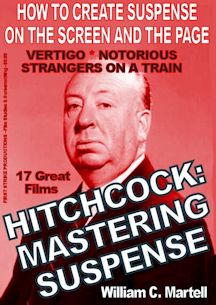
HITCHCOCK: MASTERING SUSPENSE


LEARN SUSPENSE FROM THE MASTER!

Alfred Hitchcock, who directed 52 movies, was known as the “Master Of Suspense”; but what exactly is suspense and how can *we* master it? How does suspense work? How can *we* create “Hitchcockian” suspense scenes in our screenplays, novels, stories and films?

This book uses seventeen of Hitchcock’s films to show the difference between suspense and surprise, how to use “focus objects” to create suspense, the 20 iconic suspense scenes and situations, how plot twists work, using secrets for suspense, how to use Dread (the cousin of suspense) in horror stories, and dozens of other amazing storytelling lessons. From classics like “Strangers On A Train” and “The Birds” and “Vertigo” and “To Catch A Thief” to older films from the British period like “The 39 Steps” and “The Man Who Knew Too Much” to his hits from the silent era like “The Lodger” (about Jack The Ripper), we’ll look at all of the techniques to create suspense!

Films Included: NOTORIOUS, SABOTAGE, STRANGERS ON A TRAIN, THE 39 STEPS, REBECCA, TO CATCH A THIEF, FRENZY, FOREIGN CORRESPONDENT, THE LODGER, THE BIRDS, TORN CURTAIN, SABOTEUR, VERTIGO, THE MAN WHO KNEW TOO MUCH (1934), THE MAN WHO KNEW TOO MUCH (1955), SUSPICION, and NUMBER SEVENTEEN. 17 Great Films!

Only 125,000 words!

Price: $5.99

Click here for more info!

OTHER COUNTRIES:


UK Folks Click Here.

German Folks Click Here.

French Folks Click Here.

Espania Folks Click Here.

Canadian Folks Click Here.

And....

HITCHCOCK: EXPERIMENTS IN TERROR


USA Readers click here for more info!

HITCHCOCK DID IT FIRST!

We all know that Alfred Hitchcock was the Master Of Suspense, but did you know he was the most *experimental* filmmaker in history?

Contained Thrillers like “Buried”? Serial Protagonists like “Place Beyond The Pines”? Multiple Connecting Stories like “Pulp Fiction”? Same Story Multiple Times like “Run, Lola, Run”? This book focuses on 18 of Hitchcock’s 52 films with wild cinema and story experiments which paved the way for modern films. Almost one hundred different experiments that you may think are recent cinema or story inventions... but some date back to Hitchcock’s *silent* films! We’ll examine these experiments and how they work. Great for film makers, screenwriters, film fans, producers and directors.

Films Examined: “Rear Window”, “Psycho”, “Family Plot”, “Topaz”, “Rope”, “The Wrong Man”, “Easy Virtue”, “Lifeboat”, “Bon Voyage”, “Aventure Malgache”, “Elstree Calling”, “Dial M for Murder”, “Stage Fright”, “Champagne”, “Spellbound”, “I Confess”, and “The Trouble with Harry”, with glances at “Vertigo” and several others.

Professional screenwriter William C. Martell takes you into the world of The Master Of Suspense and shows you the daring experiments that changed cinema. Over 77,000 words.

UK Folks Click Here.

German Folks Click Here.

French Folks Click Here.

Espania Folks Click Here.

Canadian Folks Click Here.

Thursday, June 25, 2026

THRILLER Thursday: The Poisoner

The Poisoner

The spider web fills the screen, it's Boris Karloff's THRILLER!


Season: 1, Episode: 17.
Airdate: January 10, 1961.


Director: Herschel Daugherty
Writer: Robert Hardy Andrews
Cast: Murray Matheson, Sarah Marshall, Brenda Forbes, Jennifer Raine, Maurice Dallimore.
Music: Jerry Goldsmith, kicking ass.
Cinematography: Benjamin H. Kline.
Producer: William Frye.


Boris Karloff’s Introduction: “Thomas Edward Griffith, the man who made this lovely picture the destroyed it, really lived. He was a writer, a painter and a critic. Now, in each of these arts he displayed talent, but his real genius lay elsewhere. We have the testimony of Charles Lamb, Charles Dickens, Oscar Wilde, and other famous witnesses that Griffith was the master of the gentle art of murder. A dabbler in the occult and a connoisseur of the exotic, Griffith was far ahead of the medical men of his time in the lethal science of toxication. In simpler terms, Griffith was a poisoner. That’s the name of our play, The Poisoner. And among those threatened by sinister gentleman played by Mr. Murray Matheson, are his wife played by Miss Sarah Marshall, her mother played by Miss Brenda Forbes, her sister played by Miss Jennifer Raine, and his uncle played by Mr. Maurice Dallimore. Oh, by the way, if in the course of our story someone brings you a cup of tea or a spot of brandy... I suggest you let *them* take the first sip.”


Synopsis: A somewhat unusual *true crime* episode, also unusual because it’s an Early Victorian Era period piece which takes place on London’s foggy streets. I’m sure part of the allure of this story was that it’s a Jack The Ripper type tale about a fellow who was very well known at the time who killed just about everyone he was related to by blood or marriage... and got away with it!

Thomas Edward Griffith (the actual fellow was named Thomas Griffiths Wainewright, and more on him in the review section) (played by Murray Matheson giving an amazing performance), was a social climber. Not born into a wealthy family, both parents dead, he desired the prestige and admiration of a member of high society... so he decided to “fake it until you make it”. He lived in a luxurious house filled with pieces or art and antiques. He threw lavish parties so that he could be seen with members of society much higher up the food chain than he was. His clothes were tailored by one of the best. He drank the best brandy and dined at the finest restaurants. Even though, he was close to broke.

Although he’d inherited from his father, his Uncle George (Maurice Dallimore) was executor, and detested his lifestyle... so he was kept on a tight allowance. Uncle George thinks he should sell all of the crap in his house and get a job... but Thomas has never worked a day in his life and has no intention of starting now. He spends his days as a catty critic for a newspaper known for his clever insults, painting watercolors that are good enough for a gallery show or two, and writing witty little booklets on a variety of subjects of interest to the social set. Things a member of high society would do. The problem is, his lavish lifestyle means that he is going deeper and deeper into debt...


Enter the beautiful society woman Francis Abercrombie (Sarah Marshall) , hot and half his age. She is sophisticated, well dressed and travels in the same elite social circles. Thomas marries her before anyone else has a chance to ask... planning to live on her fortune and wait for his Uncle George to die so that he can get his hands on all of his inheritance instead of just his month allowance.

At the lavish post wedding party, his water color painting of his wife is on display over the fireplace. All of the society men think she’s hot, and are jealous of Thomas... which is everything he has ever wished for in life. To further this adoration, he introduces his beautiful wife to all of those members of high society he wants to impress... Then the door opens and these two yapping white trash women and their cat enter: his mother in law and sister in law! You see, his wife is flat broke as well; and like him, was a social climber hoping to marry into money. He ends the party before he is completely embarrassed by these uninvited guests...


Mrs. Abercrombie (Brenda Forbes) is a drunk old woman with a loud mouth and all sorts of complaints about almost everything. There’s a shot where she bends over, most unladylike, and you half expect to hear loud flatulence. Maybe that was planned but the censors said no. New sister in law Helen (Jennifer Raine) is confined to a wheelchair for some reason, and has nothing good to say about anything. If mother complains, sister is an Olympic contender... bitching about everything. And they, of course, have a cat. Oh, and Mrs. Abercrombie has sold her house and all of her belongings to move in with Francis’ new rich husband.

That night, Thomas opens an ornate cabinet exposing a selection of items, selects a “Borgia ring”, fills it with poison and puts it on his finger... then, acting like the perfect host, secretly pours some poison from the ring into a brandy decanter and offers it to his new mother in law... not realizing sister in law Helen is watching from her wheelchair upstairs. Thomas goes upstairs, into his wife’s bedroom, and tells her that everything will be alright. That’s when Mrs. Abercrombie drinks the brandy and drops dead... and Helen screams, and calls Thomas a murderer!


After the funeral, Francis and Helen return with... the family attorney. Mrs. Abercrombie’s death was ruled natural causes, even though Helen believes that Thomas poisoned her. But instead of Francis inheriting the money... it goes to invalid sister Helen. Thomas will never get his hands on a cent of it. Thomas storms out...

How could things get worse? When he returns, Francis tells him that his Uncle is here, waiting for him in the guest room upstairs... and some creditors have come and threatened to cut off his food and booze and some other things if he doesn’t pay his long overdue bills. Wonderful...

Thomas gets a lecture form his Uncle George about those creditors... and how he should sell everything and get a job and live within his means. Thomas would have liked to ask for more money, but he can’t for fear Uncle George will cut his allowance and *force* him to work. He shudders at the thought of working. Before Thomas can poison Uncle George’s brandy, the old man takes a sip and keels over! Snoopy Helen is watching this from the doorway and once again gets to scream “Murderer!”


But Uncle George is *not* dead... he’s just had a heart attack and must remain in bed resting for a few weeks. Hey, and uninvited house guest... more fun for Thomas! The doctor tells Thomas to make sure he takes a pill every so many hours and that it can be taken with a glass of brandy as a stimulant (medicine has changed over the years). Thomas is not going to be subjected to *weeks* of lectures by this old man, so he poisons the brandy decanter, and when Uncle George wakes up, tells him to take his pills with a glass of brandy as per doctor’s orders. Uncle George takes his medicine... and dies... and snoopy sister in law Helen was watching through the keyhole the entire time!

Thomas discovers her spying, and walks towards her menacingly... she backs up her wheelchair in fear... going over the edge and down the staircase (like Arbogast in PSYCHO), breaking her neck when she lands. Thomas quickly hides in the room with his dead uncle, as his wife Francis comes out of her room and sees her sister dead at the base of the stairs. When she screams, Thomas comes out of the room and asks what’s wrong... but Francis isn’t buying it, she *knows* that Thomas killer her sister. Then she spots dead Uncle George on the floor behind him. Thomas says Uncle George must have had another heart attack and died... but Francis points to the *dead cat* next to the spilled brandy and accuses Thomas of killing both of the dead humans plus the cat plus her mother.


When the police come, Thomas has a packed bag ready for jail. He explains to the policeman that it’s probably a waste of time to arrest him, since the only possible witness against him is his wife, and a wife can not testify against her husband. They take him anyway... charged with three murders.

Jail. One huge cell filled with a bunch of smelly criminals. A bucket to poop in.


Thomas is immaculately dressed, sitting at a table writing; when the officers come to take him to the court room for his arraignment hearing.

At the hearing, the Prosecutor makes his case for triple murder by poisoning. When he’s finished, Thomas asks the Judge if he may speak... and then tears apart the Prosecutor’s case. There are no witnesses, one of the victims died of a broken neck, another was ruled natural causes, the third had just had a serious heart attack and no trace of any known poison was found in his system by the medical examiner. The Prosecutor says there are poisons that are *not* known that there is no test for at this time. Thomas counters that until these poisons are discovered and there is some way to test for them, there is not a shred of evidence and to waste the court’s time any further...

And the Judge dismisses all charges.


The officer who arrested Thomas comes to the jail cell release him, saying that some day he will find the evidence that convicts him. Thomas explains that it is no longer possible for him to be convicted of those crimes... it would be double jeopardy. Before being released, Thomas writes out a check on his dead Uncle George’s account and gives it to the officer... to be split among his cellmates. Thomas says goodbye to each of the cellmates, and hopes each uses their share to follow their dreams.

When he returns home, Thomas tells his wife Francis that now only she stands between him and the inheritance from her mother and sister. He prepares two glasses of brandy and lets her see him putting poison from his ring into one of them. Then tells her she has a choice: drink up now, or continue their marriage with each’s money pooled into one happy household account. Francis runs upstairs to her room...


Thomas looks at the water color painting of Francis over the fireplace, takes the poker, and crosses it out (his marks replicating the “spider web” used in the bumpers of the show, leading me to believe at some point they planned on fading from the “spider web” to the defaced painting, then didn’t do it). Then takes the two glasses of brandy upstairs, kicks in his wife’s bedroom door, and again gives her the choice between drinking poison and living with him happily ever after.

Before she answers, someone banging on the front door. The police Officer has come to arrest him. Thomas explains that he *can not* be arrested for any of those three murders, even if he were to admit that he committed them: double jeopardy. So the Officer is wasting his time... please go away.

The Officer smiles and says he’s not being arrested for murder, but for forging his dead uncle’s signature on that check. Which the Officer witnessed, so it’s open and shut. Thomas will be shipped off to Australia to prison where he will spend the rest of his life doing hard labor...

He asks for one final drink before he’s taken away, grabs the poisoned glass of brandy and downs it... falling over dead.

Twist!


Review: Based on the true story of Thomas Griffiths Wainewright, and fairly accurate. His mother died in childbirth, so he went to live with his grandfather who was the editor of The Monthly Review, and grew up in a literary household. Thanks to a family connection he went to a private school (where that family connection was headmaster) and learned how to live amongst the wealthy, even though he was not wealthy himself.

He was a social climber on the fringe of high society and did have an exhibition of his paintings at the Royal Academy and wrote art criticism for several magazines and newspapers... as well as booklets on a variety of subjects. And he did poison all of those people and got away with it. In fact, he even poisoned at least one other person! In reality when those creditors came after him he and his wife *moved in* with Uncle George... who died shortly afterwards. He fled to France at one point, was arrested for carrying strychnine in that trick ring of his and spent six years in prison, then we he returned to England he was instantly arrested to stand trial for forgery. Instead of taking a dose of his own poison, he was sent to the Tasmanian prison colony. He worked on the road gang, later as a prison hospital orderly, and eventually was allowed to paint portraits of many important people and their family members... and those portraits exist in museums and collections today. The history of the Tasmanian Colony can be seen n his paintings. He was the subject of Charles Dickens’ “Hunted Down” and Edward Bulwer Lytton’s novel “Lucretia”, Oscar Wilde’s “Pen, Pencil, and Poison”, and pops up as a character in the Sherlock Holmes story “The Adventure Of The Illustrious Client”. The most famous poisoner in history!


Murray Matheson is perfect in this episode. He’s one of those actors who was on almost every TV show as a guest star, and you probably recognize his face. He was the bookstore owner who helped BANACEK in every episode. Here he gives an amazing performance where he’s both vain & dismissive and sympathetic. Oddly, you identify with his character and *want* him to knock off these white trash relatives by marriage. Matheson seems to have fun treating everyone as his inferior, and the audience wishes they were that clever and witty and stylish. This performance is similar to some of those great Vincent Price performances in Corman’s Poe movies. It’s a brilliant performance, and it turns this episode into one of the better ones.

All of the other performances are great, especially Brenda Forbes and Jennifer Raine as the mother and sister in law from hell. As I said, when Forbes bends over unladylike you can almost hear her loudly passing gas... even though that is not on the sound track.

The period setting and production design makes the episode seem lavish. There are horse drawn carriages and spooky foggy nights and that elegant house... it seems more like a movie than a TV episode.

The score by Jerry Goldsmith (CHINATOWN) is amazing. The Pete Rugolo scores had all been variations on the THRILLER theme music, and when Goldsmith took over it took him until this one to really leave his mark. This is a great score (on the DVD it’s an isolated track, so it may end up on my iPod eventually), and really gives us a look at the great film composer that Goldsmith would become in just a few years.

This is a fun episode that would have been at home on HITCHCOCK PRESENTS, which is a good thing... because we’re about to go back to spy novel adaptations for a while. Just when it was getting good, we go back to the ho hum!

Bill

Buy The DVD!
eXTReMe Tracker