Wednesday, April 30, 2025

Film Courage Plus: Creating Authentic Dialogue

FILM COURAGE did a series of interviews with me, around 36 (or more) segments total. That's almost a year's worth of material! So why not add a new craft article and make it a weekly blog entry? All I have to do is write that new article, right?


Nobody sets out to write stilted, contrived dialogue; yet we’re all been in some cinema wanting to scream at the screen: “Nobody talks like that!” Maybe you’ve even wanted to scream that when reading a friend’s script... or your own. So how do we create dialogue that sounds like something people might actually say?

In the clip I mention my first “realistic dialogue experiment” was to go into the wilds of Burbank armed with tape recorder to collect actual dialogue of indigenous human beings. After filling thirty minutes of tape with the conversations of authentic teenagers and businesspeople, I returned to my lab to transcribe and study this real dialogue. I discovered that I had thirty pages of pointless blathering. A meandering mess that wasn’t witty or interesting... and didn’t make any sense. In the real world, people talk a lot but say nothing. I don’t really want to spend 90 minutes of screen time hoping that someone will say something worthwhile.

My second experiment involved videotaping professional actors improvising dialogue. They were given characters and a situation. After about 20 minutes of videotape, I learned that even talented actors create dialogue that meanders around and serves no purpose. The added bonus was amazing footage of actors *thinking* about what they should say next in a way that real humans don’t really do - we jump in with whatever’s on the top of our heads, even if it sounds stupid. The actors were afraid of saying something stupid - so they thought about what their character would say. Real people don’t think about what their character would say - they are the character! They just say it! But even when the actors seemed to get in the groove, the results were mostly pointless talking that would end up on the cutting room floor.

What I learned from these experiments is that no one really wants realistic dialogue in their film, what they wants is dialogue that *appears* to be realistic, but really serves a story and character purpose. Just as we create our story instead of filming every day life, we need to create our dialogue. A writer can go over and over a dialogue exchange until everything is the very best that it can be, improvised dialogue is the rough draft that needs a lot of work. Realistic dialogue - from the wild - is just pointless jabbering most of the time. Not dramatic or even interesting.

WHAT IS DIALOGUE?

According to Webster’s, dialogue is a conversation between two or more persons. The root word of conversation is converse, meaning contrary or opposite. So dialogue requires at least two people talking who have opposing viewpoints. If both people agree with each other - what are they talking about? This doesn’t mean that every conversation needs to be a heated argument, but you do need to focus on the conflict in the conversation. You may have two people who agree on the main points but disagree on the small stuff - and that’s what the conversation is about. They agree on *what* they should do, but not *how* they should do it, or something similar. If you have a scene where two people are discussing going to the movies and both want to see the same movie, why not just cut to them watching the movie? There is no “converse” in that conversation, so it is pointless and belongs on the cutting room floor.

If only one person is talking, you no longer have dialogue. In the real world, no one just lets you talk for a paragraph or two, they cut in with their two cents. And they don’t politely wait for you to finish. Conversation is like a game of tennis, bouncing back and forth between the players. Each one trying to score their point.

Just like in tennis, every “bounce” of conversation slightly changes the direction of the conversation. Realistic dialogue doesn’t seem to be heading in a pre-determined direction; it’s evolving with every bounce. As writers we may know where the conversation will end up, but the characters don’t and the dialogue isn’t taking the obvious route to that destination.

CONFUSION

Because one character doesn’t know what the other is going to say, they don’t have that perfectly formulated response. In fact, they are likely to misunderstand what the other person says or means. In the heat of an argument, the potential for misunderstanding increases. “I love you” may sound like “I loathe you”. “Your stupid job” may sound like “You’re stupid!” - the other person’s response coming even before the sentence is finished. Real dialogue is filled with confusion and misunderstandings. Look at each line of dialogue from the listener’s perspective: how might they misconstrue the meaning? This is a great way to expose character. Characters shouldn’t respond the way you want them to, or the story needs them to; but the way their history and attitude and *character* forces them to.

I love using misunderstandings to create reversals in dialogue. Leading the audience to think one thing, then pulling the rug out from under them. In my cable film HARD EVIDENCE protagonist Ken Turner has been caught cheating by his wife Madeline and banished to the living room sofa. One morning they bump into each other in the kitchen.

MADDY
That couch can’t be too comfortable to sleep on.

KEN
What are you saying? I can come back to the bedroom, now?

MADDY
No. I think you should move out.

See how the misunderstanding creates a little twist in the story? He thought they were making up, when really they were breaking up. We want dialogue that *sounds realistic* but is crafted to give the audience information in the most interesting and entertaining way.

EXPOSITION

The best way to make dialogue sound realistic is to let it come out and play. As SCREENwriters we are writing for the screen, telling the story visually. Bad dialogue pops up when it is forced to tell the story - when it becomes exposition. I talk about this a little in the clip - you don’t want the dialogue to be stuck doing all of the heavy lifting in your story, you want it to be the icing on the cake. That way it can “come out and play” instead of shouldering the weight of plot. The way to do that is to focus on telling your story visually - allowing the actions of your characters to tell the story. We are SCREENwriters, right? No SPEAKERwriters. So we are writing for the screen first. That’s how we are telling our stories - through the image part of the screenplay. This allows our dialogue the freedom to be entertaining and add an additional layer to the story that is already being told visually.

You can have two characters *talk* about how something is done, or you can have one character demonstrate how it is done to the other. When I was working for Safeway Grocery we had a cardboard bailer. You tossed empty boxes into the machine, pressed the button, and it compressed the cardboard. I was working midnight to 9am stocking crew for a while, and I threw a lot of cardboard into the machine and pressed that button to compress it. But eventually it became full - no more compression possible. So a senior employee showed me how to tie the cardboard bail and eject it onto a pallet to be shipped out. Eventually I was shown how to stack the bails, using this claw arm that was attached to the back of the bailer. The “dialogue” in both scenes was “Watch what I do and remember, you are doing the next one.” And then he tied the bail... and I learned how it was done. That ended up in a screenplay I wrote called NIGHT STOCKERS about a wanna be stand up comic who creates a revolt against an ahole store manager who actually had a ruler to measure employees sideburns, hair, skirt hemlines, etc - and would write you up and fire you if you were over regulations. I had that manager at Safeway!

But the “lesson” of demonstrating something complex instead of having a long monologue about it carried over into my screenwriting. I have written several science fiction screenplays, and instead of some explanation of this future, I just showed how it worked. That same principle was used in my two submarine warfare movies for HBO - I just showed people on submarines accurately doing their jobs, hot bunking, and all of the other things that some bad writer might have explained with dialogue. Demonstrate! That way dialogue is free to come out and play!

Movie dialogue is different than realistic dialogue - it’s what we *wish* we had said. You’ve been in an argument or a conversation and then the next day wished you had said “___________” instead of whatever bland thing you said in the actual conversation. In a movie screenplay, you can do that! You can use all of those clever, cutting, brilliant things that you think of the next day... and make your characters look like the person that you wish you were. The magic of writing!

So take the time to come up with great dialogue... and leave the “plot heavy lifting” for the character’s actions.

Good luck and keep writing!

- Bill


bluebook

50 Tips On Dialogue!

*** DIALOGUE SECRETS *** - For Kindle!

*** DIALOGUE SECRETS *** - For Nook!

Expanded version with more ways to create interesting protagonists! How to remove bad dialogue (and what *is* bad dialogue), First Hand Dialogue, Awful Exposition, Realism, 50 Professional Dialogue Techniques you can use *today*, Subtext, Subtitles, Humor, Sizzling Banter, *Anti-Dialogue*, Speeches, and more. Tools you can use to make your dialogue sizzle! Special sections that use dialogue examples from movies as diverse as "Bringing Up Baby", "Psycho", "Double Indemnity", "Notorious", the Oscar nominated "You Can Count On Me", "His Girl Friday", and many more! Over 160 pages!

Only $4.99 - and no postage!


USA Folks Click Here.

UK Folks Click Here.

German Folks Click Here.

French Folks Click Here.

Espania Folks Click Here.

Canadian Folks Click Here.

Other countries check your Amazon websites... it's there!

Thank you to everyone!

Bill

Tuesday, April 29, 2025

Trailer Tuesday: RIVER'S EDGE

Because I saw Roebuck a week ago...

RIVER’S EDGE (1986) written by Neal Jimenez, directed by Tim Hunter.

I have called Keanu Reeves “The Luckiest Actor In Hollywood” because he has been in so many hit movies. But maybe it *isn’t* luck? Maybe Keanu actually selects roles that he finds interesting or scripts that he thinks are mind blowing page turners? Keanu has not only been in a bunch of big box office hits, he has also been in a bunch of art house favorites like MY OWN PRIVATE IDAHO and PERMANENT RECORD. Oh, and the now forgotten film RIVER’S EDGE which not only launched the career of screenwriter Neal Jimenez, it also brought back Dennis Hopper and probably paved the way for the films of David Lynch. The film is based on a true story, a murder that happened in the Sacramento area; and my friend Tom’s uncle was one of the investigating officers on the case. The story made the news because it was one of those “shocking how immoral our children have become” outrages, since all of the kids in the high school not only knew about the murder, they had visited the body for fun. Kind of like a field trip. Cool! A dead girl! Dare you to touch her!


My other odd connection to this film is the actor who plays the teen killer Samson, Danny Roebuck, is a friend of a friend of mine and I’ve met him a couple of times. Danny is one of those actors who is in *everything*, from being the cop on Matlock to the dad in the Cody Banks movies. He’s a great guy, a real fan of horror movies, and when I was trying to “earn” my producer credit on CROOKED I got my friend Duane (the pawnshop owner from PULP FICTION) to talk to him about playing suspects... except the producers decided not to hire them and to hire complete unknowns (who were their friends) instead. So, instead of a group of suspects that you recognized so that you didn’t know who the guilty party was because *all* of the suspects were recognizable actors... there were a bunch of unknowns and Gary Busey. Who do you think the killer is? I didn’t know Danny when I first saw the film, didn’t know Tom’s uncle investigated the case, and had never heard of screenwriter Jimenez. I just thought the film was great.

The movie is all about how this younger generation is desensitized and unemotional, and that carries through the film in several story threads in addition to the main story. High school kid Samson (Danny Roebuck) murders a girl in his class Jamie (Danyi Deats) after having sex with her at the edge of the (Sacramento) river, then stops to have a cigarette as if nothing has happened. Ten year old problem kid Tim (Joshua Miller) watches this happen from a bridge... but doesn’t go to the police. Later Tim tells a group of high school kids, including his older brother Matt (Keanu) and perpetually stoned Layne (Crispen Glover) plus a couple of Jamie’s friends including Clarissa (Ione Skye) about the dead body... and they take a field trip. All of the kids look at the dead girl, kick her to make sure she’s dead, etc... and even though they all knew her, none of them seems to care. It’s just kinda cool. They go back to school and their every day lives as if nothing had happened.

Except both Matt and Clarissa separately realize they feel terrible, Jamie was their friend... and even though Layne wants everyone to rally around Samson, can they really support the friend who killed over the friend who was murdered?

Matt’s home life is hell, his mother is a nurse with an unemployed boyfriend... his bother Tim makes that kid from THE OMEN seem well mannered (Tim takes baby sister Kim’s doll and chops it up) and steals cars, smokes pot, robs houses and eventually steals a gun with the intention of killing someone. This is a *ten year old*. The little sister’s “dead doll” runs an amazing parallel to the dead girl at the river’s edge, and the doll’s grave eventually triggers Matt to call the police anonymously about dead Jamie and Samson. And narking on Samson is what leads to Kid Brother Tim gunning for Matt.

The police question all of the kids, and ask Matt how he feels about Jamie’s death, and he answers: “I don’t know.” Even though he was disturbed enough to anonymously call the police, he is still desensitized to emotions. The policeman says he’s tired of hearing “I don’t know how I feel” from all of the kids he interviews. They all say the same thing: none of them feel.


Samson is hiding out at drug dealer Feck’s house (Dennis Hopper in a signature weird role), where Feck lives with his blow up doll Ellie. Yes, he has a long term romantic relationship with an inflatable girl. Feck is another parallel story: he once contributed to the death of the woman he loved and still feels guilt over it. At first Feck thinks Samson has much in common with him, but then he realizes Samson feels nothing and no longer wants to hide the killer.

Matt confesses to Clarissa that he called the police, and they realize they may be the only two people in their school who are disturbed by Jamie’s death. Both have been plagued by nightmares and guilt. This leads to romance: both care, and care about each other. While they are making love they hear gunshots...

Feck has taken Samson to the river’s edge and killed him. In the process, Feck’s inflatable doll Ellie blows into the river, later prompting one of my favorite lines in the movie when the kids spot the blow up doll in the water: “That's Ellie. Feck's girlfriend. I wonder what she's doing here?”

Talked to Danny last night, and he sent me this awesome shot from the set!


The chilling thing about this film is how what was true about the younger generation in the 80s being desensitized and not caring seems even more true today. There’s a TV commercial for mobile phones that talks about the joy of being alone... and isn’t the least bit ironic. We live in a world where people don’t interact with other people, we interact with *screens*. Think about how crazy that is for a moment. There are people today who text each other when they are sitting across from each other. Talk about desensitized! THE RIVER’S EDGE held a mirror up to the 1980s... and had no idea things would only get worse. Keanu gives a great performance, as does Danny Roebuck and Dennis Hopper and everyone else in the cast. Let me mention one of the greatest acting jobs in the film: Danyi Deats as the dead Jamie. Imagine having to play dead for an entire film! Deats is a TV and Music Video producer now (some of Sting’s videos). This is one of those lost movies where everyone gave an amazing performance, and screenwriter Jimenez would go on to adapt Tony Hillerman’s Native American cop mystery THE DARK WIND and write and direct the amazing film WATERDANCE after he became paralyzed. He was one of the team of poker playing screenwriters who contributed to the fun film SLEEP WITH ME (famous for the Tarantino speech about TOP GUN as a Gay love story). If you like gritty, edgy flicks, check out RIVER’S EDGE.

Bill

PS: That set shot has a digital watermark, so steal it and I will look for you, I will find you, and I will kill you!

Friday, April 25, 2025

Fridays With Hitchcock: HITCH 20: ARTHUR (s3e4)

This is a great new documentary series called HITCH 20 that I am a "guest expert" on. The series looks at the 20 TV episodes directed by Hitchcock and here is the fourth episode of the third season, which looks at point of view and breaking the fourth wall in Hitchcock's work and in ARTHUR...

Not the great Dudley Moore movie nor the terrible remake, but an episode of ALFRED HITCHCOCK PRESENTS directed by Hitchcock and starring that fellow who was the MANCHURIAN CANDIDATE...


Once again I am in front of Universal Studios where this episode of HITCHCOCK PRESENTS was shot... and yes, they brought hundreds of live chickens and some chicken wranglers onto the lot and into the soundstage (this episode was shot indoors with some awesome background paintings making it look as if were out on a farm in the middle of the UK somewhere). Check out the shot where the police are searching - that’s an indoor set!

The episode focuses on breaking the fourth wall, but underneath that is something pretty common in film - the use of Voice Over Narration to get us into the head of a potentially unsympathetic character. If a character may be difficult to identify with, one of the techniques often used is to allow us to see the world through their eyes by giving them a running commentary - usually funny and amusing and entertaining. Adding an extra layer of story. So in a movie like DOUBLE INDEMNITY where our protagonist is a murderer, it helps to know their motivations and understand them... and it also helps that Walter Neff is amusing so that the narration is entertaining. The example I often use is another film from the same director, SUNSET BLVD, where protagonist and narration Joe Gillis is not just a screenwriter, his narration is filled with amazingly witty lines. You could remove the narration and the film still works perfectly, but it is so much better with that added layer of entertainment... plus it turns Gillis and Neff (and Arthur) into our friends and confidants. They are telling us their secret thoughts.


As I said in the episode, having Arthur talk directly into the camera also turns this into an odd satire on cooking shows, which were popular at the time. We watch Arthur prepare some meals, his presentation is beautiful, and he’s charismatic. Because cooking shows were inexpensive to produce in studios (still are) there were a bunch of them at the time, and the narration is just part of that.

But the narration doesn’t let the writer off the hook for telling the story visually - we see the dishes in the sink, the disk as the ashtray, the broken cup... and the audience wants to kill her, too. She has disrupted his orderly life. The narration might get us closer to Arthur, but all of those images, plus Helen herself, make us fully understand the chaos she has brought to Arthur’s life.

The actress who plays Helen, Hazel Court, may look familiar to you because she was a regular in all of those Corman Poe horror flicks we looked at last year during Halloween. THE RAVEN, MASQUE OF THE RED DEATH, and PREMATURE BURIAL among others. This episode even feels a bit like a Poe story. A UK actress who came to Hollywood and played all kinds of roles in lower budget movies and TV. I love her in this role - she manages to be irritating when doing minor things.
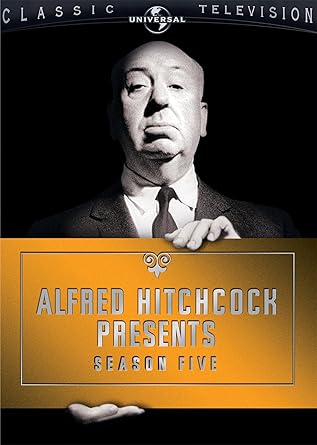


One of the fun things is the noise the chicken makes in the opening scene of the film is the same noise that Helen makes when Arthur strangles her. You can decide whether it’s the chicken or Helen’s strangulation sounds.

Which brings up strangulation - interesting, because that was the murder method in Hitchcock’s ROPE as well, and in both we side with the killers who then play a game of cat & mouse with an authority figure who is also a very close friend. In ROPE it’s their professor played by Jimmy Stewart, and here it’s the local constable played by Patrick MacNee who is his best friend. This is one of two episodes directed by Hitchcock that MacNee was in, what is that? 10% of the 20 episodes Hitchcock directed? The other episode is next up on HITCH 20, I think (this episode is Season 5 Episode 1 and that episode is Season 5 Episode 2). But the relationship between Arthur and the Constable is interesting because they are both close friends and on opposite sides of the law. There’s a great conversation about being alone, and therefor in control of your life. This gets to the core of what the story is about, aside from running your wife through an industrial strength grinder.

Hitchcock often experimented with giving the audience a walk on the wild side by telling the story from the “villain”s point of view. ROPE and PSYCHO and this episode put us in the shoes of the badguys and show us the world through their eyes, and make us worry that they will be caught be the authorities. And just for the trivia side of things, the female lead in PSYCHO, Janet Leigh, was the female lead in THE MANCHURIAN CANDIDATE which starred Lawrence Harvey... the star of this episode ARTHUR. Everything is connected!

- Bill

Now to plug my Hitchcock books...

HITCHCOCK: MASTERING SUSPENSE

LEARN SUSPENSE FROM THE MASTER!

Alfred Hitchcock, who directed 52 movies, was known as the “Master Of Suspense”; but what exactly is suspense and how can *we* master it? How does suspense work? How can *we* create “Hitchcockian” suspense scenes in our screenplays, novels, stories and films?

This book uses seventeen of Hitchcock’s films to show the difference between suspense and surprise, how to use “focus objects” to create suspense, the 20 iconic suspense scenes and situations, how plot twists work, using secrets for suspense, how to use Dread (the cousin of suspense) in horror stories, and dozens of other amazing storytelling lessons. From classics like “Strangers On A Train” and “The Birds” and “Vertigo” and “To Catch A Thief” to older films from the British period like “The 39 Steps” and “The Man Who Knew Too Much” to his hits from the silent era like “The Lodger” (about Jack The Ripper), we’ll look at all of the techniques to create suspense!

Films Included: NOTORIOUS, SABOTAGE, STRANGERS ON A TRAIN, THE 39 STEPS, REBECCA, TO CATCH A THIEF, FRENZY, FOREIGN CORRESPONDENT, THE LODGER, THE BIRDS, TORN CURTAIN, SABOTEUR, VERTIGO, THE MAN WHO KNEW TOO MUCH (1934), THE MAN WHO KNEW TOO MUCH (1955), SUSPICION, and NUMBER SEVENTEEN. 17 Great Films!

Only 125,000 words!

Accidentally still at the May Price of $3.99

Click here for more info!

OTHER COUNTRIES:

UK Folks Click Here.

German Folks Click Here.

French Folks Click Here.

Espania Folks Click Here.

Canadian Folks Click Here.


- Bill

Of course, my first book on Hitchcock...


HITCHCOCK: EXPERIMENTS IN TERROR


Click here for more info!

HITCHCOCK DID IT FIRST!

We all know that Alfred Hitchcock was the Master Of Suspense, but did you know he was the most *experimental* filmmaker in history?

Contained Thrillers like “Buried”? Serial Protagonists like “Place Beyond The Pines”? Multiple Connecting Stories like “Pulp Fiction”? Same Story Multiple Times like “Run, Lola, Run”? This book focuses on 18 of Hitchcock’s 53 films with wild cinema and story experiments which paved the way for modern films. Almost one hundred different experiments that you may think are recent cinema or story inventions... but some date back to Hitchcock’s *silent* films! We’ll examine these experiments and how they work. Great for film makers, screenwriters, film fans, producers and directors.

Films Examined: “Rear Window”, “Psycho”, “Family Plot”, “Topaz”, “Rope”, “The Wrong Man”, “Easy Virtue”, “Lifeboat”, “Bon Voyage”, “Aventure Malgache”, “Elstree Calling”, “Dial M for Murder”, “Stage Fright”, “Champagne”, “Spellbound”, “I Confess”, and “The Trouble with Harry”, with glances at “Vertigo” and several others.

Professional screenwriter William C. Martell takes you into the world of The Master Of Suspense and shows you the daring experiments that changed cinema. Over 77,000 words.

UK Folks Click Here.

German Folks Click Here.

French Folks Click Here.

Espania Folks Click Here.

Canadian Folks Click Here.

Bill

Thursday, April 24, 2025

THRILLER Thursday: The Closed Cabinet.


The spider web fills the screen, it's Boris Karloff's THRILLER!


THRILLER: The Closed Cabinet

Season: 2, Episode: 10.
Airdate: November 27, 1961

Director: Ida Lupino
Writer: Kay Lenard & Jess Carneol.
Cast: Olive Sturgess, David Frankham, Jennifer Raine, Peter Forster, Patricia Manning.
Music: Jerry Goldsmith
Cinematography: Benjamin H Kline.
Producer: William Frye.


Boris Karloff’s Introduction: “Evil begats evil. And the evil does not die. The sins of the fathers doom the children through generations yet unborn. Impossible, you say? The superstition from the dark ages. Well, perhaps our story tonight will help you change your mind. We start with a curse and a riddle, inexplicabily bound together. Somewhere in this room lies the clue that will solve the riddle and lift the curse. But 300 years have passed since Dame Alice pronounced that awful curse, and still the riddle is unsolved. Tonight we are concerned with two brothers - the last of the cursed Mervyns and the women who love them. Our players are: Olive Sturgess, David Frankham, Jennifer Raine, Peter Forster, and Patricia Manning. Turn off your lights. Close your windows. And even of the wind should rise, relax... if you can! While we pick up our story in the year 1880, during the reign of her gracious majesty Queen Victoria, and when our tale is told, you’ll believe in curses as sure as my name is Boris Karloff.”


Synopsis: A dark and stormy night. 1580. Lady Beatrice (Patricia Manning) discovers her abusive husband Hugh Mervyn is drunk, and using a dagger found in a secret drawer, murders him and then herself. The bodies are discovered by a Maid (Myra Carter), who finds the dagger next to Beatrice’s corpse and screams... Dame Alice (Doris Lloyd) comes running, takes the dagger from the Maid and then spots her son murdered on the bed... and puts a curse upon the family: “Out of evil comes death! In each generation there shall be a Mervyn who will bring shame and death to the family, for eternity... An end there shall be, but it is beyond the wisdom of man to fix it, or the wit of man to discover it. Who fathoms the riddle, lifts the curse. Pure blood, stained by the blood stained knife, heals the Mervyn shame, ends the Mervyn’s strife,” she says as she returns the dagger to its secret compartment.


1880: The Mervin Castle. A coach pulls up and Evie Bishop (Olive Sturgess) steps out and is welcomed by her cousins Lucy Mervyn (Jennifer Raine) and George Mervyn (Peter Forster) and enter the castle... where handsome Alan Mervyn (David Frankham) descends the staircase and takes Evie in her arms. Alan lives in London and avoids the castle completely, but when he heard that Evie was coming to visit he braved a stay. Eveie has heard that the castle is haunted, that there is a room in the castle that is filled with ghosts... and she would like to stay there. She has never seen a ghost. As she jokes about ghosts, George and Lucy look very uncomfortable. Evie insists on staying in the haunted room, and when Lucy shows her to the room, the two men seem less than happy.

In the “haunted room” (from the opening scene) Lucy tells Evie that several Mervyn relatives have died violent deaths in this room - which would account for the ghosts. The cabinet (where the dagger is hidden) is still there, and Lucy jokes about the legend of the curse. Though there have been a bunch of deaths in this room, Lucy believes it is due to the Mervyn men’s anger issues.


Alan and George have an argument - Alan believes that the curse is real, and staying in this castle is putting Lucy’s life at risk. George believes it’s just hokum - sure, there have been a lot of murders in the family, but whose family hasn’t had them?

As Evie looks around the castle, candles flicker where there is no breeze... and she sees the ghost of Lady Beatrice for a moment. Then the ghost vanishes. When Evie heads downstairs for dinner, she hears the two men arguing and listens in. When George leaves, she comes downstairs and talks to Alan - it’s love!

When George and Lucy come in, Evie asks if their houseguest will be joining them? Who? The woman upstairs. The ghost!


After dinner, Alan takes Evie on a tour of the castle’s hallways to look at the paintings of the family - stopping at Lady Beatrice. That’s the ghost she saw!

A dark and stormy night... awakens Evie. Blows open the windows. She gets up and closes them, and when she goes back to sleep the ghost of Lady Beatrice pops up in a doorway. Trying to communicate with her. Warning her that she is the next victim of the curse?

The next morning when Evie mentions the storm, she gets funny looks: there was no storm. Is she crazy? Alan takes Evie on a tour of the castle grounds, and she tells him that she wants to solve the mystery of the curse so that Alan will feel comfortable in his home. Evie wants to see the dungeon (doesn’t everyone?), but the door is locked to When Alan goes to get the key... the door magically opens as soon as he is gone. Nothing haunted about that at all.


Evie goes in alone - lots of cobwebs down here, but none get on her face. She manages to completely avoid all of the webs and maintain her perfect hair. Doors open one-by-one in front of her, taking her down to the crypt... where she comes face to face with Hugh Mervyn! Well, a bust of him. And finds a cat-o-nine-tails *whip* on his coffin. What’s that all about? Deeper in the crypt she finds a secret room with Lady Beatrice’s coffin... and Lady Beatrice’s ghosts makes an appearance and points at Evie. That’s when Alan runs in, and the ghost vanishes. But was the ghost pointing at her or the wall behind her? On the wall, and inscription under the cobwebs: “Where woman sinned, the maid shall win. But God help the maid who sleeps here-in.” Alan tells her that no one in the family ever knew where Lady Beatrice’s coffin was. No one had ever discovered this secret room until now.

George, with a riding crop in hand, tells Alan and Evie that they could not have found Lady Beatrice’s coffin - no one has found it for 300 years. Men in the family have looked for it and never found it, so how could Evie have found it? George loses his temper... and we get some angry exposition about how Lady Beatrice’s ghost appeared to their mother the night before she died... and now Lady Beatrice has appeared before Evie. George loses it and almost whips Alan. George’s temper is out of control! He storms out of the room.


Alan drops a few pages of exposition on Evie about the curse... and how Hugh was physically abusive to Lady Beatrice until she killed him one night during a violent storm. The storm that was brewing inside her for all of those years of abuse by a drunken husband?

That night, as Lucy plays the harp and George naps, Alan and Evie flirt... and then he sees her to her room like a gentleman... and they almost kiss. Victorian romance at its hottest! I believe this moment was put there to show that Evie was still a virgin - pure - and therefor able to lift the curse. But it’s not set up very well, and we don’t particularly care if they kiss or not - which is a mistake.

Evie does not go to bed - she sits up, waiting for the storm to come. The storm waiting or the storm without? When it comes, it blows open the windows violently. Meanwhile, Alan looks outside his window - no storm, clear skies. This is a nice moment because it shows that the haunted room really is haunted. Evie goes to sleep and the storm blasts the windows open again... and Lady Beatrice appears. She raises her hand to beckon Evie... and Evie is back in time, drunk Hugh Mervyn sleeping in the bed she just got out of. Lady Beatrice points to the cabinet, and Evie finds the secret lever to open it... And takes out the dagger! She is possessed by Lady Beatrice!


She moves to the bed, where Hugh is sleeping, raises the knife and... stops herself from stabbing him, but slices her hand in the process. She shows her bleeding hand to Lady Beatrice’s ghost, “The maid has won,” and the ghost vanishes, leaving Evie alone in the room. The bed is empty. The storm is gone.

She runs out into the hallway, yelling for Alan. He runs from his room and they embrace in the hallway. She tells him what happened, shows him her hand... and there is no blood on her hand. He thinks it might be a nightmare, but she convinces him that she has lifted the curse. In the haunted bedroom, she tells him how to open the drawer... and he finds the dagger with Hugh Mervyn’s crusted blood on it... and another drawer opens and there is a scroll with the curse and, heck, Evie did it and lifted the curse! So he finally kisses her. They can be married with very little chance that he will physically abuse her and maybe even kill her during an argument!


Review: The luck of laziness! I had intended on writing up all of these entries a couple of years ago, and had I done that I’m not sure I would have seen the subtleties in this episode or commented on them as much as will now that we’ve had the MeToo Movement. Though domestic abuse is not the same as inappropriately touching someone, they both fall under the umbrella of ahole male dominance. Though this episode doesn’t really work, I’m cutting it some slack because it’s “a very special episode pf THRILLER”, just like the alcoholism episode. It’s 1961 and domestic violence is a major problem in America (Time Magazine would do an article on the epidemic a couple of years later) and this episode is going to slyly get the message out disguised as a ghost story.


I’m sure that Ida Lupino was hired to direct this episode to give it a woman’s sensibility, but it is not one of her better episodes. I think the screenplay may be getting in the way - but I wonder about the lead actress. The scenes where she *avoids* the cobwebs just seem odd - did the actress not want to get messy? Or was that seen as “degrading” to a female and not done in this episode? Either way, it removes the spooky element from the haunted house story. One of the elements of horror is the “Eeeew!” Factor. If you think of all of those moments in horror movies where you have went “Eeeeew!” mentally (or even outloud), that feeling of revulsion is one of the things that add to the dread and creepy feeling of the film. In horror movies people *touch* gross things and *step in* gross things and *back into* gross things and maybe even sit in gross things. Horror movies are filled with rats and bats and worms and corpses and all kinds of gross things that the characters encounter. There are things that look as if they smell bad in horror films. Things that get on your hands that you need to wash off *now*, but you are miles away from running water. Horror movies put their characters through hell - even the survivors - and that is part of what makes them work, and what makes the survivors strong.

But for whatever reason, here we remove the revulsion and end up with a lead character who just wanders through a haunted castle and easily pushes aside cobwebs as if they are curtains dividing rooms. If someone thought that the women in the story have gone through enough abuse at the hands of their husbands that they needed to avoid abusing them with cobwebs, that was a mistake. It actually weakens a character if they don’t have to go through hell.


I have noted the used of cobwebs and spider webs in earlier episodes, and how sometimes they are just a piece of the background and sometimes there are the focus of the scene. Revulsion is a “no budget” special effect that packs a punch, so you want to make cobwebs part of the scene - something that can not be avoided. So removing the revulsion was a mistake - no matter what the reason.

Lupino does get a few of her creative shots in - and that’s one of the reasons why I love her in low budget films and TV work. Other directors will just do wide shot and close ups - coverage - but she gets those Hitchcock shots in there. Here we have a couple of great early shots - a nice shot through the coach windows as Evie arrives at the castle, and a creepy paranoid shot from a balcony above as Alan watches her enter the castle’s main room. Later in the episode is a great moving shot as the group relaxes in the castle main room at night, it circles them like a Brian DePalma shot. And there is a cool shot *through* the harp at George and Lucy. I suspect with so many locations, there wasn’t time for much else, and the rest is competently directed. I wish she had done more in the creepy dungeon and crypt scenes, but it’s TV. Made on a schedule with a hard deadline. They are okay.


One of the other problems with the episode is Jennifer Raine’s decidedly non-British accent. She has some sort of Southwestern twang, and every time she opens her mouth it takes you out of the episode. Though the others don’t go full-on-British accents, they have that mid-Atlantic sound that Americans can understand but still sound vaguely British.

Though I give kudos to the script for taking on an issue, the story is muddled and the curse and riddle are just a mess. Even after watching it several times, I’m not sure that either actually makes sense. And a clue to understanding the curse ends up written on a wall in Lady Beatrice’s tomb, but this is all still confusing. Too many moving parts to the curse. Too many foot notes. Instead of being something simple (and rhyming) it’s so convoluted you need to take notes through the episode... and even though I did that I’m still confused by it! The reason for the curse also is muddled - the mother of the murdered abuser curses her own family line? There was a better way to do it - having Lady Beatrice curse the family as she is being killed by her husband, but maybe the censors said no to that?


I do like that the curse of domestic abuse is “handed down” from father to son in this story. George’s anger issues are seen as the family curse. But that scene where he has the riding crop in his hand really needed to create suspense and fear that he might use it on his wife, and not in a kinky way. Again, that may have been a censors thing - we don’t want to offend all of the wide beaters in the audience! We need to protect our ratings!

So this episode isn’t very spooky or scary, even though it takes place in a nice haunted castle. Next episode works better - a “weird tales” story about people who communicate with the dead... and the dead aren’t happy with what is going on in the world of the living!

- Bill

Buy The DVD!

Tuesday, April 22, 2025

Trailer Tuesday: THE LAST OF SHEILA (1973)

Three years ago the new KNIVES OUT film GLASS ONION made me think of this film...

Directed by: Herbert Ross.
Written by: Anthony Perkins & Stephen Sondheim..
Starring: Richard Benjamin, Raquel Welch, James Coburn, Ian McShane, Dyan Cannon, James Mason, Joan Hackett.
Produced by: Herbert Ross .
Music by: Billy Goldenberg, with the song “Friends” by Bette Midler.
Production Design by: Ken Adam - all of the great James Bond films.


THE LAST OF SHEILA is one of my favorite films, and arguably the best mystery film ever made (and if you want to argue about it - head to the comments section!). Mystery films are a dead genre now, and even in those years when they were popular, they were not that popular. This film comes from a point in the 1970s where MURDER ON THE ORIENT EXPRESS and CHINATOWN were hits on the big screen (with a bunch of Agatha Christie films popping up afterwards), and shows like ELLERY QUEEN on the small screen. Whenever I say that Mystery Films Are Dead, a bunch of people chime in with the titles of cop shows... which are not mysteries. Mysteries are an audience participation genre - and the best example of that is probably the ELLERY QUEEN show, where just before the final commercial Ellery or the announcer would tell the audience that they have all of the clues to solve the crime - all of the evidence - and during the commercial break you were supposed to be the detective and explain to your family who did it and why and what all of the evidence that *proves* that they are the killer before the commercials are over and Ellery Queen brings all of the suspects together and does his version. You didn’t *guess* who did it, you *deduced* who did it using the evidence you were shown. Your job as a reader or a viewer in a mystery is to pay attention to the clues and motives and knowledge of means and each suspect’s opportunities and figure out who done it...


Which is why the genre is either dead or back for a few years and then dead again. The audience has to *work at it*... and most people don’t really want to think in the cinema. In fact, most development executives don’t want to have to think while reading a script. Every time I sell a mystery script, the first thing that happens in rewrites is a “mysterectomy” where the mystery and clues are removed and it is turned into a straight thriller. That way the director and prop guy and everyone else doesn’t have to worry how many martini glasses on the table have lipstick marks in every scene. But for some reason, in the 1970s, the genre was hot and people *wanted* to solve the puzzles... and THE LAST OF SHEILA was made.

It’s an original Screenplay by Anthony Perkins (Norman Bates) and Stephen Sondheim (a bunch of Broadway musicals like WEST SIDE STORY) who may have been a couple at the time, and if you look at the relationship between the Richard Benjamin character and the James Coburn character, you might wonder if there may be some autobiographical elements in there. I have no idea, but Sondheim *was* a puzzle nut - and so is Coburn’s character. The film was directed by Herbert Ross, FOOTLOSE, GOODBYE GIRL, PLAY IT AGAIN SAM, and a million other big hits... And the cast is amazing - you may not realize that Richard Benjamin was a *huge* movie star at the time, he was the lead in WESTWORLD! The *star*! You know who James Coburn and Raquel Welch and James Mason are, Dyan Cannon was a star - and once married to Cary Grant - she is still alive and *hot* at 81!, Joan Hackett played the “nice girl” lead in a bunch of movies like SUPPORT YOUR LOCAL SHERIFF, and the fairly young new face was some intense British actor named Ian McShane... The plot is clever, the dialogue is clever and it’s a blast to watch. And it’s a movie industry story as well as being a mystery!


Egomaniacal and cruel big shot film producer Clinton Green (James Coburn) has a party at his mansion in the Hollywood Hills... he is probably the most hated man in Hollywood, and lives to make people squirm. There’s a great shot where we start in a luxury car where the driver is smoking a joint, and it is passed from Parking Valet to Parking Valet until we can see through the mansion window, where Clinton and his wife Sheila (Yvonne Romain) are fighting... then storms out of the house and down the winding road... where she is hit and killed by a car. Great shot of her corpse reflection as the car backs up to see if she is dead or alive before speeding off. The police never find the car or discover who was driving. It is an unsolved crime, and the seed from which this whole film grows.

One year later, Clinton invites a group of Hollywood types to spend summer on his yacht in the Mediterranean playing games and soaking up the sun... all of them were at that party where Sheila was killed... all of them are suspects in her death. Clinton types the name on the invitation, and then we are introduced to the character in their natural habitat...

Big time agent Christine (Dyan Cannon) used to be fat, and this is a great performance - she *acts* fat, even though she’s hot. The role may have been written for a plump actress, but Cannon plays it as a recent Jenny Craig grad who just knows she’s going to put on all of the weight in the near future - she’s hitting on all of the men, and acting really insecure. This counters her tough-gal occupation, and she is introduced in her office barking orders followed by “Kiss, kiss” - insincere manners. Totally Hollywood!


Alice, (Raquel Welch) as the hot movie star who is no longer in her 20s, but is still a star. But for how long? Welch will remind you of Julia Roberts today - at that strange age where you don’t know what’s going to happen to her career. Is she going to play *moms*? Is she going to become a character actor? What happens when you hit your “hot babe” pull date? She is recently married to...

Anthony, (Ian McShane) is Alice’s super intense Manager/Husband and great as a brawler, an insecure slice of beefcake. They are introduced in the airport and Alice is mobbed by Paparazzi... and Anthony actually slugs a photographer and breaks his camera and then slugs someone else. This guy can not keep his temper under control, and when Alice tries to be apologetic, he scolds her - these people will ruin her image!

Philip (James Mason) a once famous film director who is now doing TV commercials and not liking it. Introduced shooting an oatmeal commercial with a bunch of bratty little girls, one of them sits on his lap... and pees on him. Philip is always aloof but never mean - and Mason is one of those actors who can deliver any line and make it sing. Philip is floating along on some higher level than everyone else - he’s a director! that’s a step down from God - but at the same time, he is afraid he might not land a job directing Clinton’s next film.

Tom (Richard Benjamin) is the screenwriter, who is broke and really needs a job... his last gig was doing on set rewrites on a low budget spaghetti western. It’s strange to think that Benjamin was a star once because he’s so unlike what we think of as a star today... but he’s an everyman when that was popular. When I first saw this film, I was a kid and wanted to be a screenwriter - so this was the perfect hero. But his character Tom is a “cautionary tale” about screenwriters. He has a stack of scripts that haven’t sold - including “Freak Show”, which he would love to sell to Clinton. He is currently living off his wife...

Lee (Joan Hackett), whose family has been in the film biz for generations and she has childhood memories of sitting on Mason’s lap. Lee’s family money ($5 million in 1973 money) has been supporting Tom while he tries to sell a script. She says paying for everything isn’t a problem... but you can see on both of their faces that it really is. Both characters are introduced at her luxurious home, where he’s laying around on the sofa instead of writing and she is drinking non-alcoholic beverages.


So those are the guests on the cruise, our suspects - each was there the night Sheila was killed by the hit and run driver, and did I mention the games? On the first day of the cruise everyone is given a card with the name of a criminal on it, like “The Shoplifter” - none of the other players knows what criminal is on your card. When the yacht docks at some exotic locale, Clinton gives the group a clue at exactly 8pm, and then each of them scrambles to follow the clue to some other clue and find the Shoplifter’s Lair before everyone else. So the clue in the Shoplifter game is a silver key marked Sterling 18k. What does it mean? This is a French port, so one of the players realizes that French for key is “Clef” - and there’s a jazz club with that name... Others think the “sterling” on a silver key is the clue. Everyone has a theory... and they follow the clue leads to a clue leads to a clue.

There’s a great bit in this game where a tourist couple wandering through the village keeps crossing paths with each of the players - connecting them with each other.


Once you find the Shoplifter’s Lair there is a clue with the identity of whoever holds The Shoplifter card. It’s a crime scene with a dead detective (dummy) and clues to the killer. You know that the criminal is a Shoplifter, because all of the clothes and other items in the room still have their price tags on them. Follow the clues and you will find which one of our players has the Shoplifter Card... and you get points. “Everything with Clinton is points,” Tom says. Once the person holding The Shoplifter card finds the Lair, the game is over - a sign is placed at the Shoplifter’s Lair that says The Game Is Over - and everyone else is a loser. No points for them! Oh, and there’s a time limit - when the boat headed back out to the yacht leaves, you’d better be on it!

There is a chart of who has won and lost each round in the yacht’s cabin, and the person who solves the most games is the ultimate winner (and may end up with a job on Clinton’s next film). If you have The Shoplifter card, you want to solve it before everyone else so that the game is over and you are the only winner of that round. A fun little game for rich Hollywood types to play, except - did I mention the cruel streak?


Each of the crimes on the cards are things a member of the group has actually been accused of. As is explained a bit later - Clinton wouldn’t give the actual shoplifter The Shoplifter card, because everyone would get angry and quit. So no one knows the cruel element of the game until enough games are played that the pattern appears. And that is when the real fun begins... because some of the crimes on the cards are more than just embarrassing, they are blackmail material.

You are a Shoplifter.
You are a Homosexual.
You are an Informant.
You are an Ex-Convict.
You are a Little Child Molester.

Oh, and one of the cards says You are a Hit And Run Killer on it.


So Clinton’s real game is to expose Sheila’s killer at the end of the cruise, while ruining everyone’s lives along the way. “That’s the thing about secrets. We all know stuff about each other, we just don’t know the same stuff,” as Alice says... she was actually once busted for shoplifting early in her career, and it was covered up. Tension builds and soon there are attempts on people’s lives - a really frightening scene where someone turns on the ship’s propellers while Christine is swimming near the rear of the yacht and she is swept towards the giant rotating blades!


But this story isn’t just a murder mystery, it’s also a showbiz story! And each of these folks being tortured by Clinton’s game also wants to be in his new movie - the story of his dead wife to be titled “The Last Of Sheila”. Each of the players is competing with each other for the attention of the most hated man in Hollywood, and backstabbing each other to climb over each other’s corpse to reach the top - a job on this proposed film about the murder victim. If you are in the business, or just a big enough movie fan to get the jokes, it’s a lot of fun as it skewers the film business... especially those second tier studio flicks with stars who are trying to hold on to their stardom and directors and writers who are no longer on their way up...

Super intense Anthony is not very good at kissing ass, but does his best...” My aspirations do run closer to the production end of things, if you know what I mean. What would you say, and please be absolutely frank, to me asking you for an associate producership on this upcoming film?” What Clinton would say is - a humiliating fake crying sound, boo-hoo-hoo, that morphs into laughter. He cuts off Anthony’s balls in front of everyone else. And that makes the others both afraid of Clinton and happy that with Anthony out of the running, maybe they will win Clinton’s favor. It’s vicious!

Buy King Kong DVDs

Okay, someone is murdered in addition to long dead Sheila (or it wouldn’t be much of a movie) at the halfway point, and the director and screenwriter partner up to solve the murder in a Holmes & Watson kind of thing. The screenwriter, Tom, leading the investigation... which only makes sense because the screenwriter is the brains of any film. But the director, Philip, actually finds the big clue at an unexpected moment. The way these two work together is great, and James Mason has played Watson a few years later in MURDER BY DECREE.

The great thing about this film is that it completely plays fair - the audience can play along and solve the murder themselves. The clues are all there. In fact, the great thing about the ending when Tom and Philip are taking it clue-by-clue explaining who did it and how, is that they show you a clip from the movie you have already seen... and this time you notice the killer picking up the murder weapon! Before, you saw the exact same piece of film and didn’t notice it. (Though the new piece of film continues to show the killer actually pocketing it... the original clip stopped just before they put it in their pocket.) But everything was right there on film and you could have easily followed the clues to the killer. Ellery Queen could have popped up before the end and said you had all of the information to solve the crime. The film clips we have already seen are the reason why I love this film because I was paying attention and missed some of the clues. In the cinema, you wonder if the clip is the same in the denouement on video you can literally zip back and compare! Dang - the killer used that amazing skill earlier in the film!

And one of the great things about how this story plays fair, is that there are three different solutions to the murder in the film - the first one makes sense if you noticed some of the clues, the second one if you noticed most of the clues, and the last if you noticed all of the clues. That way we have different prime suspects you can build a case for, and we can have an obvious suspect and a least likely suspect and still have a twist ending with the actual killer. We also have Sheila’s murder and the victim halfway through the story - they may or may not have been killed by the same person. So even if you are a mystery fan, there are all kinds of variables that have been carefully set up to throw you off the track!


There is a great scene where they lay all of their cards on the table and we see the secret crimes for the first time... and Tom asks each to pick the card that is their secret. Needless to say, no one wants to admit to being any of those things. So there are disputes over who *wants to be* the Homosexual - which isn’t nearly as bad as a Child Molester or a Hit And Run Killer. And then there’s a fight over who gets to be the Ex-Convict! These characters are all clever and witty, but none are very nice (except Welch’s Alice, who is way too sweet to be a sexy movie star... and that’s what makes the character interesting). Each character is well rounded to begin with, and once you discover who has what secret, you see realize small things in their personality have set these revelations up. They are twists, but completely logical. Once the Hit And Run Killer is revealed, you can watch the film again and if you focus on that character you not only can see all of the clues... you can see a great performance by that actor. In the background of scenes they react to discussion of Sheila differently than other characters. You don’t notice this first time through, but it’s an amazing performance.

Another great element of this screenplay is that the title, “The Last Of Sheila”, is kind of “punned” throughout the story. It has different meanings at different times. So it’s the death of Clinton’s wife, it’s the title of the movie he is planning to make, the yacht is the “Sheila” so it is where Christine is almost mangled by the propellers, and a secret clue to the killer... part of Clinton’s cruel games.


This is one of the films I use as an example in SECRETS OF ACTION SCREENWRITING along with THE VERDICT on how to not lose the audience when your identification character becomes a suspect. When the hero may be the villain. Usually in a mystery, like MURDER ON THE ORIENT EXPRESS, the detective is not a suspect. But here, both our Holmes and our Watson have great motives and enough clues to make us wonder if they are going to be revealed as the killer. And because we have a shallow suspect pool, there is a character in this story who we have grown to like... who ends up being a killer. I’m not going to spoil the ending, but the film manages to pull off the seemingly impossible task of *not losing the audience* after this killer is revealed. This story walks a dangerous tight-rope and doesn’t fall, which is a miracle. Great writing skills involved in this.

And the locations are fantastic - one of the games takes place in an abandoned monastery on a tiny island at night, with only candles to illuminate the dark spooky hallways. It's a great creepy location, and all of the players are dressed as monks so you can not tell them apart. This sequence is almost like a horror story - lots of spooky atmosphere and scares. Though most of the story is on a yacht in the Mediterranean - beautiful and fun - the games are at night and in interesting locations like the monastery.

And quotable dialogue: “The harder you try to keep a secret in, the more it wants to get out.”


What is frightening is that Hollywood wants to remake this film... as a comedy! Huge mistake! The best way to remake this film - use the original screenplay and do not change a single word. Maybe hire a typist to change any anachronisms, but DO NOT HIRE A SCREENWRITER because they may change something that is already perfect. Of course, Hollywood doesn’t do that, so they will probably hire some version of this movie’s Tom to do a rewrite that isn’t nearly as good as the original. The recent remake of MURDER ON THE ORIENT EXPRESS turned it into an action flick at times, because mysteries are a hard sell today... so maybe they should just put off any remake until mysteries come back into fashion? Then they don’t need to make it as a comedy or an action film, they can just make it as a mystery?

THE LAST OF SHEILA is a great mystery film, but if you don’t want to play along and solve the crime like Ellery Queen, it’s a vicious look at Hollywood with a bunch of great performances... and starring that guy who starred in WESTWORLD. Warner Archive has it on DVD, sold at Amazon and other fine retailers.

- Bill

Tuesday, April 15, 2025

Trailer Tuesday: THE MASQUE OF THE RED DEATH

MASQUE OF THE RED DEATH (1964)

Starring: Vincent Price, Hazel Court, Jane Asher, Patrick Magee.
Written by: Charles Beaumont and R. Wright Campbell, based on Poe's MASQUE OF THE RED DEATH and HOP FROG.
Directed by: Roger Corman
Produced by: Roger Corman
Cinematography: Nicolas Roeg


After the success of FALL OF THE HOUSE OF USHER, the next film in Roger Corman's Poe series was originally going to be RED DEATH, but the story of a hooded Death seeking out victims during the plague was deemed too much like Bergman’s THE SEVENTH SEAL about a hooded Death seeking out victims during the plague. So the project was shelved at that time, and Corman went on to make PIT AND THE PENDULUM. But a few years later, everyone had forgotten that silly Swedish film and they decided to make RED DEATH, with R. Wright Campbell rewriting Beaumont’s original screenplay. Campbell had just written SECRET INVASION which Corman made for Allied Artists in Dubrovnik for $600k. Corman was often hired by studios to make big films on a small budget. Campbell went on to become a best selling novelist, and I have a bunch of his mysteries on my shelf.

Unlike the earlier films in the series, this was shot in England (due to a production incentive) on left over sets from BECKET, which would be nominated for 12 Oscars... including sets. So they ended up with Oscar winning sets... from another movie! The film also used one of the British stars of BECKET, David Weston, as the romantic lead Gino. The cast is filled with great British actors, many before they became famous. It’s weird to see M from the James Bond movies, Robert Brown, playing a *guard* in a couple of scenes!


One of the great things about making films on a budget is that you end up hiring young talent before they become famous, and the director of photography on this film is Nicolas Roeg. This film was fairly early in his career, though he had already done 2nd unit work on LAWRENCE OF ARABIA and the next year would do some 2nd unit work on DOCTOR ZHIVAGO. Roeg would eventually become a famous cinematographer, and then a famous director - he directed another great Halloween treat DON’T LOOK NOW. He’s one of my favorite directors because his films are “unstuck in time” and often smoothly bounce between time periods using match cuts.

Though this is a beautiful movie, it is more intellectual and less visceral. Where the first two Corman Poe movies were filled with dread and spooky scenes and disturbing situations and all kinds of great scares, this film is a “thinkie”. It’s all about people’s religious beliefs and the ability for humans to be cruel. Not as much about the cruelty itself. So where PIT may have had audiences screaming in terror, this film was more likely to have them discussing the meaning of life. It really is similar to THE SEVENTH SEAL!


A desolate landscape. An old woman gathering firewood is beckoned by a Man dressed in a long red cloak - The Red Death. He holds out a white rose to her, but in his hands the rose turns blood red. “Take this to your village and tell the people: The day of their deliverance is at hand.”

In the village, Prince Prospero’s carriage roars in at high speed... almost running over a toddler playing in the road. Prospero (Vincent Price) thanks the village for their taxes of grain and meat and invites them to his annual ball... where they will be confined to the courtyard and thrown table scraps (as one villager says). Another villager (Nigel Green from IPCRESS FILES) says that an old woman met a holy man who said their day of deliverance is at hand... deliverance from Prospero’s tyranny. Prospero orders the two men killed, but a young woman, Francesca (Jane Asher) begs him to spare them. Prospero gives her a Sophie’s choice - pick one to die. One is her fiancé Gino (David Weston), the other her father. Interrupted by the old woman’s screams - she is dying of the plague... the Red Death. Her face covered with hideous bloody sores.


Prospero asks if either of the men or Francesca touched the old woman? No. So he takes the three with him and orders the village burned to the ground.

At the castle: Francesca is stripped and thrown in a bathtub. Prince Prospero orders his wife Juliana (Hazel Court and her freckled cleavage) to dress her in a fine gown and instruct her on being a lady so that she may attend the party as a guest. She shouldn’t worry - her lover and father ad safe.

In the castle’s ballroom, Alfredo (Patrick Magee from CLOCKWORK ORANGE) and Prospero discuss terror. Then Prospero introduces, for your pleasure, the dancers (both little people) Esmeralda (Verina Greenlaw) and HopToad (Skip Martin)- she does a graceful dance, but accidentally knocks over Alfredo’s wine goblet so he slaps her to the floor. HopToad goes to comfort her. Prince Prospero announces to his guests a masquerade ball at midnight Sunday... but do not wear red. He tells them that the Red Death has reached the village - the plague is just outside the castle walls - but here they are safe.


That’s when Francesca enters - she cleans up well. Prince Prospero takes her on his arm as he ridicules and insults his guests... and the other guests laugh.

Prospero takes Francesca into an apartment where she will stay and they discuss cruelty, and the cruelty of God for bringing famine and pestilence and death. Francesca believes God balances out those things with love and hope... but Prospero thinks there is little hope in this world. When Francesca moves to open a door in the apartment, Prospero blocks her - she is forbidden to go into that room. Tomorrow she can see her lover and her father.

That night, a shadow falls over Francesca as she sleeps... a noise awakens her. She lights a candle and searches the bedroom... a dark figure in the corner! Just her robe on a coatrack. She puts on the robe and follows the noise - echoes of Prospero doing some sort of incantation - through the dark, empty castle. To a pair of golden doors. She opens the doors, moving deeper and deeper into a dark room, to a final set of black doors. Beyond them - Juliana on a strange throne in a trance, Prospero seemingly dead on a slab. She goes to touch Prospero - and his eye blast open. She screams and runs out of the room, through all of the doorways, through the dark castle... where she bumps into a dark figure! Alfredo. “Did I startle you, my dear?” She runs away.


Next morning, Prospero shows Francesca how his falcon hurts and kills other birds... and explains how to turn a falcon into a slave (which is all subtext, baby!). And lets slip that where she worships God and is a Christian, he worships Satan the Lord Of Flies.

A carriage arrives - a late party guest Scarlotti and his wife. Prospero denies them entrance to the castle because the Red Death is upon the countryside. Scarlotti begs to be allowed in, tells Prospero he can screw his wife if they’d just let them in. Prospero says he’s already had that doubtful pleasure... then shoots him with an arrow and tells the wife she should kill herself before she succumbs to the Red Death and throws a sword down to her...

Great Nic Roeg match cut as the sword falls into Gino’s hand in the caste’s prison where a Knight (Robert Brown from the James Bond movies) explains that he will have to fight Francesca’s father to the death - only one will survive. So he’d better get to training. And Gino and the Knight sword fight. The Knight thinks this will be easy, but Gino has some skills. Prospero takes Francesco down to watch this sword fight. She sees that the two men in her life are alive... but for how long?


As they leave the prison, Francesca takes a wrong turn in the dark tunnels and Prospero corrects her, “This way my dear, it would be better.” She hears screaming from that wrong turn destination... the torture chamber. Prospero says his distant relative used that torture chamber during the Spanish Inquisition in the name of God (making Prospero some relative of Medina from PIT AND THE PENDULUM?). We get more discussion of religion... “I don’t want to hurt you my dear. I want to save your soul so that you can join me in the glories of Hell. I will take you by the hand, and lead you through the cruel light into the velvet darkness.”

Meanwhile, jealous Juliana decides the way to keep Prospero’s hands off Francesca is to go all the way with Satan, and gives her vows at a Satanic altar to give her soul to Satan... and seals the deal by branding her boobs with his symbol. Ouch!


In another part of the castle Alfredo and HopToad have a conversation about full sized women and HopToad’s interest in finding other employment... he fears for Prospero’s rein. HopToad is a clever and cunning man... a manipulator. He convinces Alfredo not to dress in his demon costume for the masquerade ball, but as a gorilla - there is an actual stuffed gorilla in a trophy room in the castle that no one has been in for decades. While all of the other guests are dressed in simple costumes designed to show off their bodies, Alfredo will be able to frighten them with his performance as a beast.

Francesca is awakened in the night by another noise... someone is trying to break into her room! She hides behind the curtains as the door bursts open! Juliana enters, and Francesca comes out from the curtains. Then notices Juliana’s boob brand - WTF? She says she has only one more rite and then she will be wed to Satan - and Prospero and eternal life will be hers. Then she gives Francesca a key - so that she can escape the castle. Take Gino and her father and leave now!


Francesca creeps through the dark tunnels under the castle to the prison area... sneaking past the guards to their cells. Through the spider webs, she looks through each cell door - a nice jump moment as a prisoner’s face pops into the cell window. She finds Gino and her father and rescues them... now they must sneak out of the prison. They are caught be the prison guards and there is a fight, Gino shows his sword skills - killing the three guards - and they escape. They get to the side door of the castle where Juliana has bribed the guards, and Francesca taps on the shoulder of the Guard, who spins to face her - it’s Prospero dressed as a guard!

Captured.

Francesca says that Juliana set them up, betrayed her! Prospero says Juliana betrayed *him*... and she will pay, as will Gino and her Father. She begs him, but Prospero says that Gino and her father killed three guards, that’s a sin in *her* religion, is it not? So they must pay for their sins... and fight each other to the death as an exhibition before the masquerade ball.


The big feast before the ball: Prince Prospero gives an anti-toast as he throws daggers into the massive dinner table, saying that not only will Scarlotti and his wife not be attending the celebration because they’re dead; there are people in attendance who have plotted against him... and will be punished as the party goes on. Guests begin looking at each other wondering if it’s them. Tonight’s festivities begin with two men fighting to the death. Francesca gasps as Gino and her father are brought into the room by guards. Prospero explains that these two men have refused to fight each other, since their religion tells them to love thy neighbor; but he has devised a way to allow them to save the other’s life. “There are five daggers here, one of them is impregnated with a poison that kills in five seconds. Each man in turn will cut his forearm. Shall we begin? Will you not lay down your life for your brother?”


Her father selects a knife and slices his arm... tick tick tick... five seconds later he is still alive. “Next.” Gino selects a knife and slices his arm... tick, tick, tick... everyone watches and suspense builds. Gino does not die. “Next.” Her father selects a knife and slices his arm... tick, tick, tick... guests eat and watch the show, but five seconds later her father still stands. “Next.” Gino selects one of the last two knives, sealing either his fate or Francesca’s father’s. He slices his arm... tick, tick, tick... big suspense build... but he is still standing after five seconds. All eyes are now on Francesca’s father and that last dagger. He smiles, pulls it from the table and says, “Five seconds” before stabbing the dagger at Prospero! But Prospero is faster with his sword and runs it through Francesca’s father before the poisoned blade can touch him. She screams as he father falls to the floor, dead. Prospero says the game was not played properly, so Gino will die as well. But not by Prospero’s hand, by *God’s hand* - Gino will be sent back to his plaque ravaged village. Francesca begs him to spare Gino, if Prospero does... she will do anything he wants. Anything. Prospero is pretty sure that will happen whether he saves Gino or not.

He dismisses all of the guests - return at midnight in costumes and let no one see you between now and then.

Then Juliana removes a red flower from the front of her gown to expose her branded boob and tells Prospero that she is ready.


The guards dump Gino in the woods, where he can hear the echoes of a woman’s scream coming from the castle. Francesca or Julliana? He runs through the dark and foggy woods where he bumps into... The Red Death. No chess playing, but a nice discussion with death about life, and how Gino can possibly rescue the woman he loves. The Red Death gives him a Tarot card... tells him this is the answer. But what is it? Gino hears a noise in the woods and runs towards it...

In the castle, HopToad dresses Alfredo in the gorilla’s skin. “Sure it’s hot, but after the unmasking you can take it off... the game will be over.” What is HopToad up to?

In the woods, Gino finds some surviving villagers going to the castle to beg forgiveness for whatever they have done to bring on the red death. Gino tries to stop them, fails.

In the castle, Juliana and her branded boob is in the Satanic Temple portion of the castle taking unholy communion... after she drinks the potion, she has a psychedelic dream (in tinted and warped images): Dancing Aztecs looking for a sacrifice, all kinds of other evil dudes looking for sacrifices... ending with her screaming. Waking up to Prospero’s laugh. “I am betrothed of the death, and I have seen the terror.”


She follows his echoing voice into the clock room of the castle, where a razor sharp pendulum also reminds us of PIT AND THE PENDULUM. The voice says the clock is like the beating of the heart, the footsteps of the assassin... destiny! And then the falcon attacks Juliana and tears away at her face as she screams! Since this isn’t a Hitchcock film it does not peck out her eyes (missed opportunity). She falls to the floor, dead... just as the guests show up for the masquerade ball! Much screaming ensues.

The masque begins!

The village survivors arrive at the castle gates and beg the Night Watch guards for mercy... they decide to inform Prince Prospero of this, it might amuse him. Gino tries to encourage the villagers to die like men. Gino walks away from them. Prospero listens to their pleas for sanctuary, and refuses - telling them to return to their village. “But we will die if we return.” So Prospero saves them a trip and has the archers shoot them all... except for the child.

Prospero joins the party in progress, telling the guests that only 6 people from the village survived the Red Death, but because his guests are within the castle walls there is no possibility of them contracting the plague. Francesca asks what happened to the six survivors, and Prospero said he had them killed... better than starving to death or dying of the plague, right? Now that Juliana is dead, Prospero plans on hooking up with Francesca.

Gino scales the castle walls to rescue the woman he loves... and when he drops within there is someone in the shadows watching him... Mr. Red Death himself. He orders Gino to go no further, and at the stroke of 1am, he will send Francesca to him. Gino doesn’t want to wait, but he has no choice.

In their chambers, HopToad tells Esmerelda that they will escape the castle tonight - Prospero is a larger threat than the plague. Then he leaves to accompany Alfredo to the party... as the gorilla’s trainer.


Alfredo is grabbing random women as the gorilla, he throws one to the floor and prepares too mount her. HopToad lowers the chandelier until it just over Alfredo, ties him to the chandelier and hoists him above the ballroom. Everyone laughs, HopToad splashes brandy all over Alfredo - as Alfredo splashed his wine on him once. Of course the brandy and the candles of the chandelier are a bad combination, and soon Alfredo is burning alive as the other guests watch. Prospero has the guards clear away the burned Alfredo’s corpse, and find HopToad... to give him 5 pieces of gold for providing the excellent entertainment.


Then Prospero notices a guest dressed in red, and he forbid them from wearing red! He goes to investigate - crossing the busy dance floor with Francesca. Chases him into the Satanic Temple. Prospero tries to guess the identity of the guest...
“Is my costume such a disguise that you don’t recognize me?”
Then he recognizes him, “So you have come. The Prince Of Darkness.”
“I am death.”
“Who do you come for? All?”
“Not all.”
Prospero smiles, “I knew I was right, I have won!”
“It is the time of unmasking,” Red Death returns to the ballroom, Prospero and Francesca follow. “It is time for a new dance to begin.”


In the ballroom, as Red Death walks past dancers they grow ugly red sores... until all of the guests have the sores of the plague. Prospero smiles, “Our master will be pleased. I brought all of these souls to him. I taught them his worship. I corrupted them for him. I knew he was supreme when no one else did. I built a chapel to Satan and I prayed to him and I made a pact with him and these, all of my friends, I promised them safety.” Prospero thinks his promise is the kind of joke Satan will appreciate. Red Death orders Francesca to go to the fortress wall, go now. Prospero says, “Yes, go... and I will join you when this is over,” and kisses her. Francesca leaves.


When she’s gone, Red Death says that Satan is not his master... Death has no master. Prospero tries to argue that Satan is the supreme God, but Death tells him that each man creates his own God, his own heaven, his own hell. Prospero demands to see Red Death’s face and yanks off the mask... exposing his own face covered with bloody sores. “No! No!” he runs away... across the dance floor of the damned. The dying guests reach out to grab Prospero, getting their blood all over him! When Prospero reaches the other side of the dance floor, Red Death is there waiting for him. You can’t escape death. And soon, all of the guests lay dead on the floor at Prospero’s feet.

Prospero runs back into the Satanic Temple... where Red Death waits for him. And Prospero’s face erupts in bloody sores and he falls to the floor dead.

The only survivors of the Red Death: HopToad and Esmerelda, Gino and Francesca, and the child from the village who was not shot by the castle archers.

- Bill


Buy the pit


eXTReMe Tracker