Tuesday, October 21, 2025

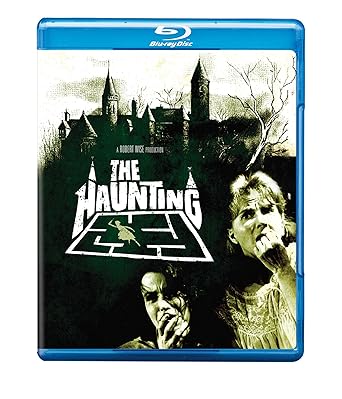
Trailer Tuesday: The Haunting (1963)

"It was an evil house from the beginning - a house that was born bad."

Director: Robert Wise.
Writers: Nelson Gidding based on the novel by Shirley Jackson.
Starring: Julie Harris, Claire Bloom, Richard Johnson, Lois Maxwell, and Rusty Tamblin.
Produced by: Robert Wise.
Cinematographer: Davis Boulton.
Music by: Humphrey Searle


Before there was the TV series, there was this brilliant film. I first saw this film in grade school on a rainy day when instead of going out to play we went to the multi-purpose room for a movie... and instead of just getting wet outside, all of us got scared to death and probably scarred for life. This film scares me *now*.


THE HAUNTING doesn't have any blood at all... yet it has regular scares throughout the film - and lots of DIRECT CONFLICT between the source of the scares and the protagonists. This is tricky, because THE HAUNTING is about ghosts and has no special effects - no guys in sheets, no double exposure FXs, nothing we can *see*.

The biggest mistake of the remake was turning it into a CGI fest... we fear the unknown, when we see a bunch of FX, it isn't unknown anymore.

"'Unknown.' That's the key word. 'Unknown.' When we become involved in a supernatural event, we're scared out of our wits just because it's unknown. The night cry of a child. A face on the wall. Knockings, bangings. What's there to be afraid of? You weren't threatened. It was harmless, like a joke that doesn't come out."

Though we can't see the ghosts in the original, we CAN see what they do. The original version of THE HAUNTING has five characters and only one of them dies - at the very end. But they are constantly in peril throughout the film, and often in conflict with each other. Even though nobody dies for 99% of the film's running time, there are a bunch of big scary scenes - it's as much fun to have a character *almost* killed as it is to have them killed.

"Haven't you noticed how nothing in this house seems to move until you look away and then you just... catch something out of the corner of your eye?"


It's a haunted house story about a team of ghostbusters who are going to "cleanse" a very haunted house. Richard Johnson is the professor leading the expedition into the world's most haunted house. Claire Bloom and Julie
Harris are two different kinds of psychics, Rusty Tamblin (from my INVISIBLE MOM movie) represents the owner of the house and the actress playing Johnson's wife (can't remember her name). The scares are (brilliantly directed) scenes with ghosts pounding on the walls or doors samming on their own or people almost being swept off balconies by the wind or spiral staircases becoming untethered and almost falling over or people having to walk down long hallways in the dark while wind or shadows chase them. The ghosts are constantly chasing our heroes! The ghosts are looking for fresh blood - and our five ghostbusters are in peril from the moment they enter that house. The ghosts don't just call on the phone and breathe heavy, they actively try to kill every member of the team!

"Look, I know the supernatural is something that isn't supposed to happen, but it does happen."

Though the most famous scary scene is probably that spiral staircase sequence, my favorite couple of minutes of absolute terror is a scene where ghosts pounding on the door to Harris and Bloom's bedroom actually begin to push the door inwards - bending it to the breaking point! The door just keeps bending inwards. Will the ghosts break through the door to get our team of psychics? This scene goes on so long you almost pass out from holding your breath in fear! And that door bows so far inwards you know it will break any minute! No blood (but the scene will drain the blood from *you*!) but scary as hell! This is the kind of "old school horror" audiences
are looking for - direct conflict between the terrifying and the protagonists... and when a movie like PARANORMAL ACTIVITY (1,2,3) comes along, the reason why it's a success is that it builds that sense of dread that gets us on a primal level...

Real suspense based on a real threat.

"When people believed the earth was flat, the idea of a round world scared them silly. Then they found out how the round world works. It's the same with the world of the supernatural. Until we know how it works, we'll continue to carry around this unnecessary burden of fear."

The best part about the original HAUNTING is that between these great bloodless scare scenes, you get to "catch your breath" with scenes of mentally unbalanced romance as Julie Harris interprets everything that Richard Johnson does as proof that he's secretly in love with her. The guy's married and doesn't even flirt with her - but she's so delusional that she's sure it's love. This is almost as creepy as the ghost attacks (just in a different way). So the "valleys" in the ghost story are "peaks" in the twisted romance story (kind of Harris's character coming of age late in life - she's been sheltered since that incident where stones rained on the family home when she was a kid... and has never been on her own or in love before). There are no slow spots in a (good) movie, just different kinds of excitement.

Robert Wise, the director, got his start as editor of a little film called CITIZEN KANE... and went on to direct CURSE OF THE CAT PEOPLE and BODY SNATCHER for Val Lewton. After that, he directed a string of great films - everything from ODDS AGAINST TOMORROW to WEST SIDE STORY to THE SOUND OF MUSIC to ANDROMEDA STRAIN. I think he kind pf blows apart the autuer theory because all of his films are just *good* - but I don't see much connection between them other than - *good*. THE HAUNTING was the height of his career - and it's a million times for frightening than the remake.

It was totally cool working with Rusty Tamblyn on INVISIBLE MOM - I made sure to show up on his days. It was totally cool.

Though THE HAUNTING is okay for kids - no sex, no blood, no gore - know that it is damned scary...

- Bill

Friday, October 17, 2025

Fridays With Hitchcock:
Robert Towne on REAR WINDOW

Robert Towne was the top screenwriter in the 1970s, doing uncredited rewrites on BONNIE AND CLYDE and THE NEW CENTURIONS before breaking out with THE LAST DETAIL in 1973, THE YAKUZA and CHINATOWN in 1974, SHAMPOO in 1975, and uncredited rewrites on a bunch of big films after that. In the 80s he gave us TEQUILA SUNRISE and then THE TWO JAKES in 1990... followed by DAYS OF THUNDER, THE FIRM, LOVE AFFAIR, and the first MISSION IMPOSSIBLE movie - which was a Hitchcock homage. A few years back he sold his remake of Hitchcock’s THE 39 STEPS for a small fortune. Though I always think of him as that 70s screenwriter who was the go to writer for both Jack Nicholson and Warren Beatty, like almost everyone in the film business he is a fan of Hitchcock. So here he is talking about one of my favorite Hitchcock films REAR WINDOW....


Of course, The Washington Post called me "The Robert Towne of made for cable movies" and I have a couple of books about Hitchcock, one that includes a hefty chapter on REAR WINDOW...

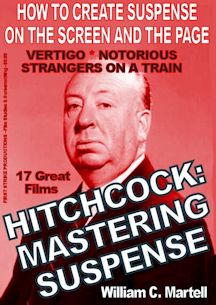
HITCHCOCK: MASTERING SUSPENSE


LEARN SUSPENSE FROM THE MASTER!

Alfred Hitchcock, who directed 52 movies, was known as the “Master Of Suspense”; but what exactly is suspense and how can *we* master it? How does suspense work? How can *we* create “Hitchcockian” suspense scenes in our screenplays, novels, stories and films?

This book uses seventeen of Hitchcock’s films to show the difference between suspense and surprise, how to use “focus objects” to create suspense, the 20 iconic suspense scenes and situations, how plot twists work, using secrets for suspense, how to use Dread (the cousin of suspense) in horror stories, and dozens of other amazing storytelling lessons. From classics like “Strangers On A Train” and “The Birds” and “Vertigo” and “To Catch A Thief” to older films from the British period like “The 39 Steps” and “The Man Who Knew Too Much” to his hits from the silent era like “The Lodger” (about Jack The Ripper), we’ll look at all of the techniques to create suspense!

Films Included: NOTORIOUS, SABOTAGE, STRANGERS ON A TRAIN, THE 39 STEPS, REBECCA, TO CATCH A THIEF, FRENZY, FOREIGN CORRESPONDENT, THE LODGER, THE BIRDS, TORN CURTAIN, SABOTEUR, VERTIGO, THE MAN WHO KNEW TOO MUCH (1934), THE MAN WHO KNEW TOO MUCH (1955), SUSPICION, and NUMBER SEVENTEEN. 17 Great Films!

Only 125,000 words!

Price: $5.99

Click here for more info!

OTHER COUNTRIES:
(links actually work now)

UK Folks Click Here.

German Folks Click Here.

French Folks Click Here.

Espania Folks Click Here.

Canadian Folks Click Here.

And...


HITCHCOCK: EXPERIMENTS IN TERROR


Click here for more info!

HITCHCOCK DID IT FIRST!

We all know that Alfred Hitchcock was the Master Of Suspense, but did you know he was the most *experimental* filmmaker in history?

Contained Thrillers like “Buried”? Serial Protagonists like “Place Beyond The Pines”? Multiple Connecting Stories like “Pulp Fiction”? Same Story Multiple Times like “Run, Lola, Run”? This book focuses on 18 of Hitchcock’s 53 films with wild cinema and story experiments which paved the way for modern films. Almost one hundred different experiments that you may think are recent cinema or story inventions... but some date back to Hitchcock’s *silent* films! We’ll examine these experiments and how they work. Great for film makers, screenwriters, film fans, producers and directors.

Films Examined: “Rear Window”, “Psycho”, “Family Plot”, “Topaz”, “Rope”, “The Wrong Man”, “Easy Virtue”, “Lifeboat”, “Bon Voyage”, “Aventure Malgache”, “Elstree Calling”, “Dial M for Murder”, “Stage Fright”, “Champagne”, “Spellbound”, “I Confess”, and “The Trouble with Harry”, with glances at “Vertigo” and several others.

Professional screenwriter William C. Martell takes you into the world of The Master Of Suspense and shows you the daring experiments that changed cinema. Over 77,000 words.

UK Folks Click Here.

German Folks Click Here.

French Folks Click Here.

Espania Folks Click Here.

Canadian Folks Click Here.

- Bill >

Thursday, October 16, 2025

THRILLER Thursday: Trio For Terror

While you are waiting for Turkey...

Trio For Terror

The spider web fills the screen, it's Boris Karloff's THRILLER!


Season: 1, Episode: 25.
Airdate: March 14, 1961


Director: Ida Lupino
Writer: Barré Lyndon (?) based on stories by August Derleth (Extra Passenger), Wilkie Collins (Strange Bed) and Nelson Bond (Medusa).
Cast: Reginald Owens, Robin Hughes, John Abbott, Michael Pate, Richard Lupino.
Music: Morton Stevens.
Cinematography: Lionel Lindon
Producer: William Frye


Boris Karloff’s Introduction: “This is an English pub. Just the place for a little something to warm the cockles of your heart... while I chill your blood. They give you a mulled claret here, guarenteed to fortify you against, well, against anything. If the people’s clothes seem strange, well it’s because we’re back in 1905. When a dollar was still a dollar and the British pound was a beautiful gold coin. We are going to see three forces of evil. Three stories, each a masterpiece of strangeness and terror.”

(First Story)

“In this room is a young man who is on his way to commit murder. She wants money, he wants her. Well, to satisfy both of these desirous young people someone will have to die. Drink your claret, you’re going to need it. You are about to meet the extra passenger in one of the eeriest tales ever told.”

(Second Story)

“You’ll take another glass of this claret, of course. It will brace you for a different force of evil. All of the night birds show up in a pub like this sooner or later. Musicians between shows, detectives looking for someone, peers of the realm, reporters, actors, men about town, floatsom of a great city. People in trouble, or looking for trouble.”

(Third Story)

“I sometimes think, perhaps you do too, how outrageous it would have seemed to anyone a hundred years ago if they had been told that someday men would be doing exactly what you’re doing now. Listening to a voice, watching a picture plucked as it were out of the air. We’ve learned a lot in the last 100 years. But how much do you suppose had been forgotten in the last five thousand? You know how scientists scoff at folklore and ancient beliefs? But every now and then they amaze themselves with a discovery that our remote ancestors were right afterall. Our third take of terror contains the echo of an ancient fable which may not be a fable at all. It begins with a manhunt, a search for a murderer, a strangler if you will.”


Synopsis: A turn of the century PULP FICTION episode, with a pub as the hub instead of that bar where Butch and Vincent Vega hang out.

THE EXTRA PASSENGER


Our first story begins in our turn of the century British pub where Simon (Richard Lupino) and Katie (Iris Bristol) plot murder. Simon’s crazy rich uncle spends all of his time studying the occult. When he dies, Simon becomes very wealthy... but Katie suggests that the old guy might need a little prodding into the grave and Simon has a perfect plan. An alibi that the police could never break. He buys out a private compartment on a train, the Conductor punches his ticket. When the train comes to the stop near his uncle’s house he sneaks off the train, races to his Uncle’s house. His Uncle (Terence de Marney) has a rooster chained to a Ouiji Board kinda thing, and is so focused on his experiment to bring a flower back to life temporarily that he doesn’t hear Simon sneak in... until it’s too late. Simon beats his Uncle to death with a pestle, wipes the blood from his hands, and leaves the house.


Outside he has a car stashed. He gets in the car and speeds to the next train station. According to his time tables, he can just make the train because the road takes a more direct route than the train. He parks the car, has to run to make the train, sneaks back into his compartment *seconds* before the Conductor checks into the compartment. Simon pretends he had dozed off, now he has the perfect alibi. He never left the train. He has gotten away with murder!

But when the Conductor leaves he notices he’s not alone in the car... there is a strange man in black sitting quietly in the corner. Simon tells him this is a private compartment, the Man In Black says his Uncle was a warlock and had the ability to send a *walking corpse* to do his bidding. When the Man In Black looks up... it’s Simon’s Dead Uncle! He attacks Simon...


The Detective examines Simon’s dead body on the train and says he was killed by a rooster’s talons.

A TERRIBLY STRANGE BED


Our second story begins at the bar of that pub, where Collins (Robin Hughes) and Ashton (Francis Bethencourt) are discussing how terribly bored they are. They’ve seen all of the plays on the West End, what is left for entertainment? An older woman (Jacqueline Squire) sitting alone at a table pipes up and suggests they go to Hussar House, which has gambling in the back room. The two men mention the establishment’s reputation: in the past dead bodies have been found in the vicinity with rumors that they were gamblers robbed of their winnings. The old woman says those are just rumors. Though Ashton pleads exhaustion, Collins decides to try his luck.


The back room at Hussar House is filled with gamblers, and Collins finds himself winning most of their money over the course of the night. He has a massive stack of chips! The Hussar himself (Reginald Owen), a war hero in full uniform, takes Collins under his wing and makes sure he is treated well. His drinks are on the house, and the Husser makes sure Collins’ glass is always full. Collins feels so lucky, he decides to bet everything on one spin of the roulette wheel... and wins! The Husser shows him how to wrap his money in an old cloth so that he won’t be robbed on the street... the cloth weighs as much as a cannon ball! But Collins has had so much to drink he’s wobbly. The Hussar comps him into a room for the night: the turn of the century version of a VIP room complete with a huge canopied bed. Collins puts his winnings under his pillow and goes to sleep.

In the middle of the night, Collins hears a noise and awakens... the canopy is lowering, about to crush him! He rolls out of the bed at the last moment and the canopy crushes the pillows... which would have been his head!


After he catches his breath, the canopy begins to rise again... and a secret door begins to open in the wall! Collins grabs his winnings and pops out the window onto the ledge, hiding. He grabs a drain pipe and starts to climb down... but the pipe breaks and he almost falls! It was never meant to hold a man. Lots of suspense generated. He finally gets to the alley, races away with his winnings wrapped in the old bit of cloth.

He gets to Ashton’s flat, tells his friend about winning all of the money and almost being killed. Then opens the old cloth to expose... one of the cannon balls that had decorated the military themed casino. And his winnings?

A yacht with the Hussar and the Old Woman from the pub sails for tropical climes.

THE MASK OF MEDUSA


A scream in the night! The Leighton Stranger has struck again! Another woman killed! But this time, the police have a clue: the killer left behind a black leather glove. The police have quadroned off the section of London where the woman was killed and are doing a house to house search for a man wearing only one glove (Michael Jackson?).

Hiding in an alley, Shanner (Michael Pate) runs his glove along the wall... the other hand is bare. As the police search, he tries to find somewhere to hide... an unlocked door. But this is the middle of the night, every door is locked... except this one! A strange shop with a sign announcing that it features statues of 12 Famous Killers. Shanner takes off his single glove and puts it in his pocket, then sneaks into the dark shop...

A group of people are *starring at him* in the darkness! Shanner freaks out! Then he realizes these are the statues. He puts his hands around the neck of a female statue... and someone *touches him* in the darkness.


The shop owner Mr. Milo (John Abbott) turns on the light and asks if Shanner would like Milo to give him a tour. Shanner acts like a customer, and Milo goes from statue to statue telling the history of this killer, his methods, his victims, and other interesting information. It’s creepy. The statues are very detailed, very lifelike... but made of stone. Milo finally comes to the notorious killer Dr. Hartwell, and Shanner is confused: how could Milo have made a statue of the man, there were no known photographs of him and his victims couldn’t very well describe him. Plus, he was never captured! In fact, the police have never captured any of these killers on display! Shanner is suspicious and asks how he came to sculpt such lifelike figures. Milo says he has methods of his own. Shanner asks if this is a model of Dr. Hartwell... or the doctor himself? “Yes. That was Dr. Hartwell.” Shanner is shocked: “You killed them and petrified them! You’re a worse murderer than any of them!” Mr. Milo says he did not kill them. It was the Gorgon’s head. He is from Greece, and was digging around and found the head of Medusa carefully kept in a case...

Shanner wants to call him crazy... but there is a knock at the door. The Police doing their house to house search! Milo opens the door... and there are now 13 statues in the collection. Shanner stands very still as a pair of detectives (Richard Peel and Noel Drayton) enter the shop. There’s some great suspense as the two detectives poke around in the shop as they tell Mr. Milo they are chasing Leighton Strangler, and for the first time they have a real clue: the black glove. One of the detectives looks at the statues, examining them closely, commenting on how detailed they are but also mentioning that if they were statues of convicted and executed killers Milo might have a bigger crowd. One of the detective comes right up to Shanner, but moments before he discovers that Shanner is *not* a statue, the other detective says they need to be getting on to find the strangler.


Once they are gone, Shanner suggests that Milo help him sneak past the police. He says he’s had some problems with the police in the past, and if Milo could put him in a crate and then hire a wagon to take him past the police, he would gladly pay. When Shanner reaches into his pocket top pull out some money, he also pulls out the single black leather glove... and it drops on the floor between the two men. Milo looks at the glove and states that Shanner is the Strangler, the killer the police are searching for!

Shanner says that Milo is by far worse, having killed all of these other killers. Milo says they were turned to stone by the Medusa, and Shanner doesn’t believe him. Milo opens an ornate case, standing behind it, and exposes the head of Medusa... and Shanner turns to stone!

The last shot has Milo changing the sign on the door from 12 statues to 13.


Review: When I think of the THRILLER TV show, I think of Ida Lupino. When I watched these as a kid when they were rerun on some non network channel, my favorite episodes were GUILLOTINE and LATE DATE (coming up) and both were based on short stories by Cornell Woolrich, one of the three fathers of Noir fiction (oddly, there are no mothers). Sometime later I tracked down Woolrich’s novels and short stories (which had just been republished) and read them all. One of my first trips to Los Angeles included a trip to the UCLA Special Collections Library which housed a bunch of ancient pulp magazines, and I spent a few days reading stories in Dime Detective and others by Woolrich and Norbert Davis and many others. But also in those closing credits of GUILLOTINE was the name of the director, Ida Lupino. Wait, that’s can’t be the actress from that Bogart film HIGH SIERRA and that awesome Noir flick ON DANGEROUS GROUND, can it? Turns out it was. Turns out Lupino reached a point in her movie star career where she realized she would someday be too old to star and decided to start working on the other side of the camera. She wrote and directed all kinds of crime films from thrillers to noir to just plain old action. And she was *great*! Probably one of the main reasons why she caught my attention was that her career intersected with that on Don Siegel, who is one of my favorite directors. He directed a little film called DIRTY HARRY you may have heard of. Lupino cowrote PRIVATE HELL 36 which Siegel directed. Lupino cowrote that film with one husband () and costarred in it with another husband (Howard Duff), probably making for a tense set. But she went from actress to screenwriter to director, and was excellent at all of them. On Trailer Tuesday a while back I featured her film THE HITCHHIKER, which is edge of the seat suspense.


Lupino treats this episode like a movie, using camera angles and movement to build suspense and create visual reveals and reversals. I mentioned that last week’s episode had a pedestrian sequence of a character climbing a spiral staircase to their possible doom, but in this episode Lupino makes scenes like climbing down the drainpipe outside of the Hussar House incredibly suspenseful. But the most amazing bit of direction in the episode is an amazing single shot in MEDUSA where we go from Shanner looking at the Medusa head and pan and dolly to the Medusa head with Milo behind it, and then after Milo closes the case we follow him back to Shanner... who is now a statue. All in one shot. No cuts. I call these “sells it shots” because without a cut Shanner the human has becomes the statue of Shanner, and that sells that it really happened and isn’t some movie trick. That guy really turned to stone! Of course, behind the scenes there was probably a great deal of careful and quiet moving of the actor off his mark and the statue onto the mark. But tricky and inventive shots like this are something unexpected on a TV show’s tight shooting schedule... and this particular episode has *three* stories with *three* different casts, which would have been difficult for anyone to pull off. But all three segments use a level of visual storytelling that most of the previous episodes never got close to.

Next up is an episode based on a Woolrich story followed by *another* episode based on a Woolrich story followed by an episode based on Robert Bloch’s second most famous piece of writing.

Bill


Buy The DVD!

Wednesday, October 15, 2025

Scene Of The Week: DIABOLIQUE (1955)

SCENE OF THE WEEK: DIABOLIQUE

Directed by: Henri Georges Clouzot (WAGES OF FEAR)
Written by: Clouzot and Jérôme Géronimi based on the novel by Narcejac & Boileau (VERTIGO).
Starring: Simone Signoret, Véra Clouzot, Paul Meurisse, and Charles Vanel (TO CATCH A THIEF).

This scene is a lesson in creating suspense, that can be used in both Thriller and Horror genres. It used to be basic film direction, but it seems to have been lost these days - people no longer know the basics!

Okay - someone is walking through dark, spooky room... what is it we (audience) want to see? The person *walking* or what might be skittering in that shadow in front of them? It's all about POV - what is important isn't the person walking, it's *what they see* (or think they see). Only an idiot director would keep the camera on the girl with the flashlight and not show us what the girl *sees* with that flashlight! If you look at 1955s DIABOLIQUE's end - there's more screen time spent on what Vera Clouzot is looking at, than on hottie Vera Clouzot looking. The long hallway, the sliver of light coming from the door - jeeze - is her dead husband in there *typing*? The key to creating suspense is to put the audience in the protagonist's shoes – and we can't be in their shoes and be looking at the shoes. The most important shots are *not* the star, but what the star is looking at. The problem with so many bad thriller and horror films is that we **never** see what the character is seeing – we only see the character looking. No suspense or dread in that at all.

That DIABOLIQUE scene works – not because we see *the star*, but because we see *what the star sees* - and by alternating those shots we feel like we are in her shoes looking through the shadows. Wait... I can describe that scene from DIABOLIQUE, but why not just show it to you and talk about it afterwords?

OKAY: MAJOR MAJOR MAJOR SPOILERS!!!!!!!
THIS IS THE **END** OF THE MOVIE!!!!!!


The story until now: Vera Clouzot is a shy (but hot) school teacher who has inherited this huge old private school. She has also inherited a heart condition, and could drop dead at any time. She's frail. Isn't supposed to get excited. And discovers that her slimy husband has found excitement outside of their marriage... with another teacher at the school played by the sultry Simone Signoret. Now usually these two would be fighting each other, but did I mention the husband is slimy? What happens is both women turn against the husband, and decide to kill him. Over a holiday break, Signoret lures him to her house where the two women drug his wine and drown him in the bathtub, and then take his corpse back to the school in a huge wicker basket and throw his corpse in the school's swimming pool that is closed for he season. A drowning accident. But the body is never discovered, and when they find an excuse to drain the pool... no corpse. WTF? The two women panic – what could have happened to his body? Did animals drag it away? If so, how can they prove that he's dead?

Which brings us to the scene....

(which appears to be missing!)


Okay, let's take a look at how it works.

1) She's sleeping and a sound wakes her up...

2) She looks out her window and there is a light on in her husband's office. Notice that she looks out the window, then we see out the window (and from her point of view – in Hitchcock/Truffaut they talk about the remake of THE 39 STEPS and how instead of using Hannay's POV looking at the two men watching on the street, they have a non-POV eye-level shot of the two men, which doesn't come from anywhere and takes us *out* of the protagonist's shoes, undercutting our identification – when people say “well, maybe the editor decided to do that”, the problem is that the editor can only work with the shots the director gives her... and if the director doesn't have a plan for the sequence and just shoots coverage, you end up with a bunch of junk shots that do not work). We see what Vera sees, then back to Vera looking, as she decides to investigate.

3) She opens the door and looks down the hallway... and WE see down the hallway from her POV. She walks down the hallway. She hears footsteps... and we see someone walking – this is a break in POV, and I think it doesn't work well. It splits us from knowing only what Vera knows and also having the additional knowledge that there is a man walking in the hallway. In the film there is a nosy cop – and I'm sure this was put here to suspect the nosy cop of setting her up... but *that* undercuts the scene. I think these shots are stumbles... but there are only a couple of them, and the rest of the scene just kicks ass.

4) She enters the next hallway. Looks down the long hallway... and WE see down the hallway from OVER HER SHOULDER at a faint light at the end of the hall. An Over The Shoulder Shot is a great combo of POV *and* Star – even though it's usually just the star's back. Sometimes there's enough of the side of their face that it's really the best of both shots.

5) The sound of the typewriter pounding away in the office. How is that possible? She walks down the long hallway, and this is the core of the scene. We cut back and forth between her cautiously walking to her husband's office and a POV shot of her getting closer to the office door... the light slicing from under it. In NORTH BY NORTHWEST we get shots of Cary Grant running and looking over his shoulder alternating with the zooming crop duster heading right at him. One of the great things in that sequence is the *pacing* - the length of the shots (in frames) becomes shorter with each shot – making the scene more and more frantic as it goes on. This was a common suspense editing technique in the days of Stienbeck Film Editors where actual physical frames of film were part of cutting. You counted frames and created a rhythm... or created an anti-rhythm to throw the audience off. Now, with editing on digital media I'm not sure editors even think in terms of frames anymore. The technique of shaving a frame or three with each shot to build tension may be lost.

6) When Vera gets halfway down the hall, the office door slowly opens sending a slice of light down the hall towards her. We cut between the light and her – as if it's searching for her... and finds her!

7) She cautiously enters the office – and again we get shots of her alternating with her POV of inside the office – this puts us in her shoes and builds suspense up the wazoo. She sees the typewriter on the desk with a piece of paper in it – and that is two shots. She moves to the typewriter (shots of her, POV shots of the dark spooky room), pulls out the paper, and reads it – and we get a POV shot of the paper so that *we* can also read it. Her husband's name over and over again.

8) Footsteps coming from the darkness in her husband's room. She runs like hell.

9) Shots of her running all the way back to her bedroom, cut with shots from her position of her husband's office.

10) In her bathroom, she splashes water on her face... sees something and clutches her heart – this is a great tease shot, because we have not yet seen what she sees... THEN we get her POV shot of her dead husband's corpse in the bathtub. How did he get there? Who put him there? The nosy cop?

11) She backs up, looks... Her POV of her husband rising up!

And that's how you create a suspense scene on film. It's not just shots of the protagonist in the haunted house holding a flashlight walking from room to room – it's WHAT SHE SEES. That flashlight's pale beam searching the shadows and things skittering in the darkness. That’s what builds suspense... and that’s what is often missing from modern films. It’s as if current horror directors have never actually seen a horror movie! They probably think the audience wants to see the $20 million star, when what the audience really wants to see is what the character is seeing - the darkness, the place where the terror may be lurking!

- Bill

Tuesday, October 14, 2025

Trailer Tuesday: Dead Of Night (1945)

One of the first horror anthology movies...

James Wan who directed SAW has a thing about killer puppet movies, and I'll bet it can all be traced back to seeing this film as a kid on TV. I know *my* fear of killer puppets stems from this, and the knowledge that Grover on Sesame Street is really a serial killer. But all of the ventriloquist dummy movies like William Goldman's MAGIC come from this creepy film.

Dead Of Night (1945)
Directed by: Cavalcanti ("Christmas Party", "The Ventriloquist's Dummy"), Charles Crichton ("Golfing Story"), Basil Dearden ("Hearse Driver", "Linking Narrative"), Robert Hamer ("The Haunted Mirror")
Written by: John Baines & Angus MacPhail.
Starring: Mervyn Johns, Michael Redgrave, Roland Culver, Basil Radford, Naunton Wayne, Googie Withers.

An architect arrives at a country estate and has a strange feeling of deja vu. The group of people at the estate each tell stories of terror... while the architect's deja vu increases. Has he been here before? He feels as if he has heard each story before... and feels like something terrible will happen when the last tale has been told. Each of the stories is frightening, but the ventriloquist and the dummy that controls him is the one most people remember...


The cast is worth noting, since most of them were in Hitchcock's LADY VANISHES. Not only do we get a variation on Caldecott & Charters, we get Bridesmaid Googie Withers and leading man Michael Redgrave! It's the whole gang! The cast is great, the film is spooky... yet realistic enough that you believe everything that happens no matter how crazy. The film was from Ealing Studios, famous for comedies... but this may be their most famous non-comedy film.


Five great stories of terror, with the "wrap" at the country house with our group. Directed by 4 different directors.
1) "Christmas Party" is about a girl at a Christmas Party who finds a hidden staircase that leads to...
2) "The Haunted Mirror" is about an newlywed couple - the wife buys a mirror that is... haunted.
3) "The Hearse Driver" is about a man who dreams a hearse drives by him and the driver says: "There's room for one more"... and then his dream seems to come true.
4) "Golfing Story" is about two golfers (Wayne & Radford) make a bet on the golf course - winner gets to marry the girl they both love, and the loser must die.
5) "The Ventriloquist" is the most frightening of all, about a ventriloquist who thinks his dummy is out to get him... and he is.
Often stories like this peter out at the end, but DEAD OF NIGHT has an ending that will give you nightmares!

"There's room for one more."

- Bill

Friday, October 10, 2025

Fridays With Hitchcock: Jonathan Coe on SABOTAGE

Novelist Jonathan Coe talks about Hitchcock's SABOTAGE in this BBC clip.

The media player is loading...


- Bill


Of course, I have a couple of books about Hitchcock, SPELLBOUND is in the one that is on sale today...

HITCHCOCK: MASTERING SUSPENSE


LEARN SUSPENSE FROM THE MASTER!

Alfred Hitchcock, who directed 52 movies, was known as the “Master Of Suspense”; but what exactly is suspense and how can *we* master it? How does suspense work? How can *we* create “Hitchcockian” suspense scenes in our screenplays, novels, stories and films?

This book uses seventeen of Hitchcock’s films to show the difference between suspense and surprise, how to use “focus objects” to create suspense, the 20 iconic suspense scenes and situations, how plot twists work, using secrets for suspense, how to use Dread (the cousin of suspense) in horror stories, and dozens of other amazing storytelling lessons. From classics like “Strangers On A Train” and “The Birds” and “Vertigo” and “To Catch A Thief” to older films from the British period like “The 39 Steps” and “The Man Who Knew Too Much” to his hits from the silent era like “The Lodger” (about Jack The Ripper), we’ll look at all of the techniques to create suspense!

Films Included: NOTORIOUS, SABOTAGE, STRANGERS ON A TRAIN, THE 39 STEPS, REBECCA, TO CATCH A THIEF, FRENZY, FOREIGN CORRESPONDENT, THE LODGER, THE BIRDS, TORN CURTAIN, SABOTEUR, VERTIGO, THE MAN WHO KNEW TOO MUCH (1934), THE MAN WHO KNEW TOO MUCH (1955), SUSPICION, and NUMBER SEVENTEEN. 17 Great Films!

369 pages packed with information!

Price: $5.99

Click here for more info!

OTHER COUNTRIES:

UK Folks Click Here.

German Folks Click Here.

French Folks Click Here.

Espania Folks Click Here.

Canadian Folks Click Here.

And...


HITCHCOCK: EXPERIMENTS IN TERROR


ON SALE!!! $2 OFF!

Click here for more info!

HITCHCOCK DID IT FIRST!

We all know that Alfred Hitchcock was the Master Of Suspense, but did you know he was the most *experimental* filmmaker in history?

Contained Thrillers like “Buried”? Serial Protagonists like “Place Beyond The Pines”? Multiple Connecting Stories like “Pulp Fiction”? Same Story Multiple Times like “Run, Lola, Run”? This book focuses on 18 of Hitchcock’s 53 films with wild cinema and story experiments which paved the way for modern films. Almost one hundred different experiments that you may think are recent cinema or story inventions... but some date back to Hitchcock’s *silent* films! We’ll examine these experiments and how they work. Great for film makers, screenwriters, film fans, producers and directors.

Films Examined: “Rear Window”, “Psycho”, “Family Plot”, “Topaz”, “Rope”, “The Wrong Man”, “Easy Virtue”, “Lifeboat”, “Bon Voyage”, “Aventure Malgache”, “Elstree Calling”, “Dial M for Murder”, “Stage Fright”, “Champagne”, “Spellbound”, “I Confess”, and “The Trouble with Harry”, with glances at “Vertigo” and several others.

Professional screenwriter William C. Martell takes you into the world of The Master Of Suspense and shows you the daring experiments that changed cinema. Over 77,000 words.

Only $5.99

UK Folks Click Here.

German Folks Click Here.

French Folks Click Here.

Espania Folks Click Here.

Canadian Folks Click Here.

- Bill

Thursday, October 09, 2025

THRILLER Thursday: Terror In Teakwood


Best Of THRILLER Thursday...

Terror In Teakwood

The spider web fills the screen, it's Boris Karloff's THRILLER!


Season: 1, Episode: 33.
Airdate: May 16, 1961


Director: Paul Henreid.
Writer: Alan Caillou from a short story by Harold Lawlor
Cast: Guy Rolfe, Hazel Court, Charles Aidman, Reggie Nalder.
Music: Awesome Jerry Goldsmith score, piano solos by Caesar Giovannini.
Cinematography: John Warren.
Producer: William Frye


Boris Karloff’s Introduction: “Cruelty has a human heart. Jealousy a human face. And Terror? Terror has the human form divine. Tonight we will see how one man’s cruelty and jealousy create a terror which can scarcely be considered human, and which waits silently, malevolently, beneath the lid of this teakwood chest. That’s the bname of our story, Terror In Teakwood. Join us now as these others did who had the misfortune to learn what it contains: Mr. Guy Rolfe, Miss Hazel Court, Mr. Charles Aidman, and Mr. Reggie Nalder. Oh, no: I can’t permit you to leave, you’ve already learned a great deal too much. I can only suggest that you get a grip on yourself.”

Synopsis: Creepy Graveyard: The Night Watchman (skull faced Reggie Nalder the assassin from Hitchcock’s remake of THE MAN WHO KNEW TOO MUCH) accepts a bribe from a well dressed Vladimir (Guy Rolfe) to break into a crypt. The Night Watchman watches as something terrible happens in the crypt... Something that frightens the night watchman at a cemetery!


Music composer Jerry Welch (the always trustable Charles Aidman) has a visit from his ex girlfriend Leonie (Hazel Court who was a regular in all of the Corman / Vincent Price horror films which were made after this) who asks for his help with her husband, famous concert pianist Vladimir, who is convinced that someone is trying to kill him. Last night she woke up to find him in torn and bloody pajamas. He won’t go to the police. And this isn’t the first time she has awoken to find him like this... and each time he tells her not to tell anyone about it. She wants Jerry to work as her husband’s assistant, live on site at their home, and find out what is happening on these bloody nights.

Jerry asks his mentor Papa Glockstein (Vladimir Sokoloff) for advice and information: does he have any idea what may be happening with Vladimir? Vladimir is obsessed with surpassing rival composer and concert pianist Carnowitz, who is dead... in fact, Vladimir took Leonie on their honeymoon to Carnowitz’s funeral to make sure he was really dead. Since then he has been afraid for some reason. Their conversation is interrupted by a panicked phone call from Leonie that Vladimir has locked himself in his room and is screaming like hell!


Leonie ties to get the doors open as her husband plays the piano and screams in agony. When he stops playing, she steps away from the doors... as he opens them and staggers out: torn up and bloody! As if he had been attacked by a maniac while playing the piano. He falls to the floor unconscious.

When Jerry gets there, Leonie has cleaned Vladimir up and he is resting on the sofa. Leonie tells Jerry that he was playing the “Carnowitz Seventh Sonata” when the episode occurred. Jerry wants to call a doctor, but Vladimir wakes up and says: “No doctor!” Leonie introduces Jerry to Vladimir as the new assistant, and Vladimir orders Jerry to forget what he has seen: he expects his employees to do exactly what he says. His second order of business: he wants Jerry to look after a teakwood box until he returns. Keep it in sight always and whatever happens, don’t open it.

The mysterious teakwood box. Like a miniature coffin. What could be inside of it? Jerry is curious, but dares not open it. He keeps it under lock and key in his room at the house. What could it be....?


At the Concert Hall: Vladimir is an amazing pianist. As he practices, Jerry asks Leonie questions about Vladimir’s odd behavior. If someone is trying to kill him, why doesn’t he want to go to the police? All of this began when Carnowitz died... except Leonie believes that Carnowitz may still be alive and has faked his death. On their honeymoon, Vladimir went to Carnowitz’s crypt and came back angry... she thinks he discovered the crypt was empty, and now Carnowitz has followed Vladimir back to New York and is behind these strange attacks. That sounds crazy, but before the attacks she hears someone playing the “Carnowitz Seventh Sonata”, and it can’t be Vladimir... because only Carnowitz could play that piece due to his oversized hands. In fact, Carnowitz composed the pieces just so Vladimir (with his smaller delicate hands) could never play it. Jerry wonders if Carnowitz is alive, is he trying to drive Valdimir crazy... and worries that Vladimir’s sanity may already on shaky ground. But why would Carowitz fake his own death just to drive Vladimir mad?


When Jerry and Leonie sneak out for a drink, Vladimir notices...

And someone follows them down the street... Carnowitz?

Jerry hears the footsteps following them in the darkness, and suspense builds. He sends Leonie into the bar and springs a trap on the man following them: not Carnowitz, but the Cemetery Night Watchman. They struggle, and when Jerry subdues him and asks what he wants, the Night Watchman says: “Money.” If he tells what he saw happen in that graveyard they will throw Vladimir in prison forever. He wants Jerry to tell this to Vladimir. When Jerry asks about Carnowitz being alive, the Night Watchman just laughs.

Jerry thinks the answers may be in that teakwood box, opens it to discover...

Carowitz’s severed hands!


Jerry goes to Music Critic Sylvia (Linda Watkins) who tells him that Vladimir has made a last minute change in his program for his big concert tonight, and will be playing the “Carnowitz Seventh Sonata”... and she can’t wait for him to fail in front of a concert hall filled with people! Vladimir and Carnowitz were bitter rivals, and Carnowitz only wrote the Seventh Sonata because he knew Vladimir would never be able to play it with his small hands. Carnowitz had the most beautiful hands in the world, and asks Jerry if he ever saw them. Jerry says he has (!).

At the concert hall, Papa Glockstein makes an emergency call to have a new piano sent over right away. When Jerry arrives, Papa shows him the piano they had planned on using for the performance: broken into a dozen pieces! Who would do such a thing? Jerry describes the Night Watchman and asks if they’ve seen him. Yes, he was looking for Vladimir and they told him to come back for the performance. Jerry says after the concert they will call the police about the vandalism, but for now they don’t want to concern Vladimir with this. He needs to concentrate on his music.

Leonie comes to the concert hall and talks to Jerry: she thinks Vladimir may have seen them together and may be jealous. He can be very violent when jealous. Jerry says he figured that out... and tells her what he found in the box. A man who would cut off his rival’s dead hands? Scary! Jerry wants Leonie to leave Vladimir now (and come away with him?)... but she must go to the concert. Jerry says he will be there with her.


The Concert: Jerry and Leonie watch Vladimir play, while Sylvia takes a smoke break outside and talks to Papa about Vladimir’s impending failure in front of a sold out crowd. Sylvia’s photographer shows up late, and she tells him to find a place and take some great photos... of Vladimir’s epic failure. Sylvia is going to kill Vladimir’s career tonight.

A hush falls over the concert hall: Vladimir prepares to play “Carnowitz Seventh Sonata”... Sylvia takes her seat inside to watch. Everyone is waiting for him to fail, but Vladimir does an amazing job! How can he possibly hit those two keys simultaneously? Has he somehow stretched his hands? When he finished there is a standing ovation! Even Sylvia stands and applauds! But when Vladimir stands up to take his bow, Leonie notices that he’s bleeding from his wrists! She passes out.

At their home: Leonie is asleep in bed after the doctor gave her a sedative. Vladimir comes home, angry at his assistant Jerry for not being there when the concert was over: he had to take a taxi home! Does he not understand what an assistant’s duties are? Vladimir eventually makes sure his wife is okay, then talks about the concert and his amazing victory over his dead rival. Jerry walks the doctor to the door and Vladimir stays in the room with Leonie...

...As the Night Watchman breaks in to the apartment through the fire escape, armed with a machete. He wants money from Vladimir, a lot of money! Vladimir fights the Night Watchman and tosses him off the fire escape. Splat!

Then Vladimir goes to his sleeping wife and caresses her face as if nothing has happened. She wakes up and freaks as the hands touch her... calling for Jerry... then goes back to sleep. Id his wife cheating on him with that assistant?


Vladimir goes to see Jerry, carrying the teakwood box. He confronts Jerry, and wants him to open the box... there is nothing inside. Vladimir also has the machete. He screams that Carnowitz was a second rate pianist with freakish large hands... but now Vladimir has conquered him. He stole his hands, and then the hands *came alive* when he put them on like gloves so that he could play the Seventh Sonata! The hands fought him at first, but soon Vladimir tamed them. Vladimir has put the severed hands on Leonie’s bed, and soon the hands will attack her and kill her! Because she cheated on him with this... assistant!

When she screams from the other room, Jerry fights Carnowitz, getting the machete away from him and knocking him out, then running to her bedroom. He breaks down the door! She is laying on the bed with *handprints* on her throat! But alive!


Then we see the severed hands crawling across the floor... towards them? Suspense as Leonie insists that Jerry take her out of the apartment, away from the hands... and Jerry just wants to make sure she’s okay. Then they hear Vladimir scream!

Jerry and Leoni go into Vladimir’s room where they find him dead on the floor... strangled by the hands of his rival! The hands still around his throat, dead now.

Review: Stephen King can have (the upcoming) PIGEONS FROM HELL, *this* is the episode that scared the crap out of me as a kid. The severed hands in the box freaked me out, and the crawling hands? Nightmares for weeks. Even watching it for this entry, and realizing the hands were cheap chromakey special effects, it’s pretty disturbing. You wonder what people though when this was beamed into their living rooms in 1961. I’ll bet there were *adults* with nightmares after this was first shown.

This also shows you how limited and inexpensive special effects can make a story shot on a limited budget work. A couple of episodes from now we’ll look at King’s favorite PIGEONS and how that episode takes the *idea* of being susceptible to an evil spirit into something terrifying. It doesn’t take money to scare people (or give a kid nightmares for weeks).

What I found interesting this time around was how well the story explored the theme of jealousy. Vladimir is jealous of Carnowitz and his large hands. Vladimir becomes jealous of Jerry and his relationship with Leoinie. Sylvia has jealousy issues with Vladimir. Everyone in this story is defined by their jealousy! Even the Night watchman is jealous of all of these people’s money... he works hard for a living and this man just plays the piano!


I think one of the great things about this episode is how it keeps topping itself. The horror escalates as the story plays out. First it’s Vladimir being torn up and bloody. Then we see the severed hands in the box (which you might think is the big scare moment). But there’s more! The crawling hands!

I also love how they keep leading us in the wrong direction. The focus on the whether Carnowitz is actually dead or not gives us a story to follow before those hands are revealed... and we are sure that the man following them in the darkness is Carnowitz... right up until the twist when it’s revealed as the Night Watchman. That’s when we shift from Carnowitz being alive to what’s in the box... and why Vladimir might have taken that particular trophy from the crypt. The story keeps surprising us by leading us in the wrong direction and then introducing information that changes what we thought was the truth. That’s how to write!

I love the idea that Carnowitz wins in the end. That the hands Vladimir cut off and wore as gloves to conquer Carnowitz are the same hands that kill him. Ironic.

Direction by actor Paul Henried (CASABLANCA) is solid. Jerry Goldsmith score is *exceptional*, one of his best for this series.

As we near the end of the first season, you may have noticed a shift in the type of stories. The series began with mostly crime stories and a few suspense tales, and later introduced horror stories... and now has dropped the crime stories completely to focus on horror and suspense. The rest of the season will focus on horror, with an antique mirror the center of the next tale of terror.

Bill


Buy The DVD!

Wednesday, October 08, 2025

I was a *Thespian* in High School!

BLAST FROM THE PAST! From 2009...

So, over the holidays I had drinks with an old friend from High School, Janet Englebert. We were both in drama class and all of the shows together. She not only had a program from one of the shows - she had *pictures*! Of me at 16 years old! When I was working almost full time, going to high school, and working on or being in all of the plays. No time to eat - so it was one of the few skinny periods in my life.


The Program...


Cast List...


The Star's Bios (I remember this play, have no memory of Gloria Mundi)...


Here is a scene with Janet and me...


And me with a very sharp knife...


And Janet and the very sharp knife...


And Patty Loveland after she sees what happens through the rear window of her apartment...


And my *favorite* part of being an actor in High School - the chance to see girls in their underwear. That's Nora in her bra reflected in the mirror.

My goal was to see every girl in class in their underwear... and maybe even topless! That could happen when there were quick changes backstage.


We did a haunted house every year to earn money to put on plays. That's my severed head...


What a strange thing to see myself that young - and people who were my closest friends at the time... now, just memories. I wonder what happened to them all?

- Bill

Tuesday, October 07, 2025

Haunted Trailer Tuesday: THE HAUNTED CASTLE

“What’s your favorite ‘80s Horror Movie?”

“1980s or 1880s?”

“What the hell are you talking about? 1980s. That’s when they started making Horror Movies, dude.”

“What about THE EXORCIST? That was made in 1973.”

“Okay, dude, there were one or two ancient Horror Movies.”

“What about THE CREATURE FROM THE BLACK LAGOON and THE THING in the 1950s?”

“What are you smokin’, dude? THE THING was made in the 80s.”

“That was the remake. The original was made in 1951.”

“You’re crazy? It wasn’t no remake!”

“Yes. It was. What about the classic Universal movies like THE WOLFMAN and FRANKENSTEIN and THE MUMMY?”

“The shitty Tom Cruise movie or the old movie with The Rock?”

“The MUMMY with Boris Karloff made in 1932. And not the WOLFMAN made last year, the one with Lon Chaney Jr made in 1941. And not the Del Toro FRANKENSTEIN they’re making now, the one with Boris Karloff from 1931.”

“You’re an old dude, but not that old.”

“This time of year, they show some of those old films in cinemas, but they’re on DVD and Blu-Ray and even streaming. You can watch every Horror Movie ever made... if you want. Well, except for LONDON AFTER MIDNIGHT. I thought you said you were a Horror Movie fan? I haven’t even mentioned any of the great foreign horror movies.”

“They in English?”

“Subtitles.”

“What are those? But, dude, be serious, you said 1800s, they didn’t even have movies back then. They sure as hell didn’t have Horror Movies.”


THE HAUNTED CASTLE (aka THE HOUSE OF THE DEVIL) 1896.


Directed by:Georges Melies
Written by:George Melies
Starring:Jehanne D’Arcy, Jules-Eugene Legris.
Produced by:George Melies
Cinematography by:George Melies
Music by: Whoever was playing the organ.


Okay, though Eadweard Muybridge sort of invented movies 1878 with THE HORSE IN MOTION to win a bet, and the first actual movie was ROUNDHAY GARDEN SCENE in 1888, we wouldn’t get the first Horror Movie until 1896... only 8 years after that movie about people walking in their garden. While others thought the idea of a motion picture was amazing on his own, Melies was a magician with a wild imagination who began using film to create illusions. You’ve probably seen that image from A TRIP TO THE MOON where a space ship pokes the Moon in the eye. Melies created all kinds of special effects, and probably even the *idea* of special effects. Creating something that does not exist in real life on screen.

Though film was brand new at the time, Melies realized he could perform magic tricks by stopping the camera and adding or removing something from the frame... and THE HAUNTED CASTLE is full of this magic. Plus it hits almost every type of horror you can think of... or at least, what they could think of back in 1896.

Here’s the entire movie:


(SYNOPSIS)

It begins with a bat fluttering into the castle and turning into the Devil (Mephistopheles), who makes a cauldron appear from nowhere, and creates a Woman assistant! A Witch! Then they vanish! So does the cauldron! The room is now empty.

A pair of Soldiers enter the castle, and the Witch appears, pokes one soldier in the butt with a pitchfork, vanishes, appears and pokes the other soldier in the back. When the soldiers turn, they are alone in the room. One of them runs away scared!

The other is confused and sits on a bench... Which vanishes, so he falls on his butt onto the floor!

A walking skeleton appears!

The last Soldier draws his sword and attacks the skeleton.

But the skeleton turns into a bat!

The soldier attacks the bat!
But the bat turns into the Devil!

The Devil conjures four ghosts... and the ghosts attack the Soldier! The Soldier can not win a battle against ghosts, and once the Soldier is subdued, the ghosts vanish...

The Devil makes his Witch assistant appear, and she hoochie coochies the Soldier. The Soldier bows and kisses her hand... but the hand is withered and old, and when he looks up - it’s an old woman!

The old Witch raises her wand and becomes six witches!

The first Soldier returns, and the Six Witches attack him! He jumps off the balcony to his death. The Six Witches dance in a circle... and then vanish!

The Devil turns to the Second Soldier, who pulls out a crucifix... and the Devil vanishes.


***


Imagine watching this in 1896 when movies were people walking in their garden and trains entering a station. I’m sure people screamed and fainted. This film was so successful, Melies remade it the following year... in COLOR!

This is the First Horror Movie and the First Haunted House Movie.

If you haven’t seen any Horror movies made before the 1980s? Or any Horror movies that weren’t made in America? Or any Horror movies made before you were born? You are missing out! All of those great films! Most are on physical media or streaming... for your screaming pleasure!

Happy Halloween Month!


Friday, October 03, 2025

The Lost Hitchcock Film

THE LOST HITCHCOCK FILM?

Not THE MOUNTAIN EAGLE, but...

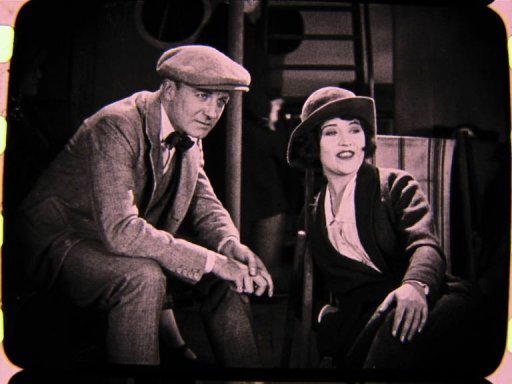
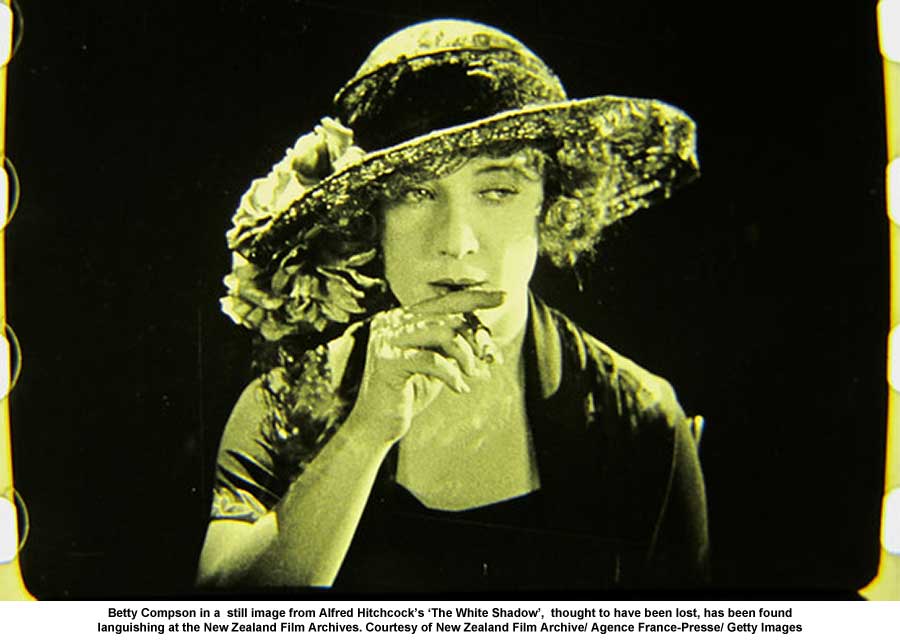
So here is some background on this “lost Hitchcock film” THE WHITE SHADOW...

When Hitchcock was 21 - the year was 1920 - he got a job with Famous Players Lasky, an American film company that opened a studio in England. That company would eventually become Paramount Pictures. Hitchcock was interested in film and studying advertizing art in college and submitted some art for title cards to the new studio... and was hired. In the silent era, movie title cards had the minimum dialogue to tell the story - hand lettered in an easy to read style - and a small illustration. Hitchcock’s example for Truffaut was: “George was living a fast life” and the illustration would be a candle burning at both ends. Writing title cards was part of post production, because often a film changed completely during production and the assembled shots might tell a completely different story. Hitchcock told the story of a drama that didn’t turn out well, so the title cards were comedy dialogue that transformed the meaning of the scenes so that the film became a crazy comedy.


Hitchcock did title cards on numerous films... and was curious about films, so he asked questions and learned about the various jobs. Part of titling a film was reading the screenplays, and he learned how to write scripts and occasionally wrote a last minute scene for the films - kind of production rewrite work.

During this time Hitchcock directed a short film, NUMBER THIRTEEN (1922) which he says was never completed.

When Famous Players Lasky left the studios, British producers took over and Hitchcock was promoted to assistant director. On a film called ALWAYS TELL YOUR WIFE (1922) the director became ill and Hitchcock and the star completed the film - Hitch was kind of coy when he told this story to Truffaut, so my guess is that the star actually directed the remaining scenes and Hitch just did his assistant directing chores and maybe made a suggestion or two.


In late 1922 producer Michael Balcon began producing films at the studio and hired young Hitchcock as his assistant director for a series of films to be directed by Graham Cutts, starting with WOMAN TO WOMAN. Hitchcock was ambitious, and when they needed a screenplay offered to write it... and had a spec script sample he had written to show what he could do. He wrote the script, was assistant director, did set design (art school background), did the title cards, and was Graham Cutts’ assistant. He performed these tasks on the entire series of films: WOMAN TO WOMAN (1922), THE WHITE SHADOW (1923), THE PASSIONATE ADVENTURE (1924), THE BLACKGUARD (1925), and THE PRUDE’S FALL (1925). Of the five, Hitchcock said WOMAN TO WOMAN was the best of the lot. Oh, the film editor and script supervisor on all of these films was Hitch’s future wife Alma - these are the projects where they met and fell in love.

Hitchcock had a falling out with Cutts on PRUDE’S FALL, but instead of being fired, producer Michael Balcon gave Hitch his first actual directing job on THE PLEASURE GARDEN (1925)... which will be the *last* entry in the Fridays With Hitchcock series.


The “lost film”, THE WHITE SHADOW, was the second in that series. Directed by Graham Cutts, screenplay co-written by Hitchcock who also did sets. Hitch had nothing to say about it to Truffaut, so I’m guessing it was just a job. These films were all melodramas, shot in 6 weeks, and none of them were very popular. This one was about twin sisters: one good, one evil. Maybe the first time they did that story, but I'm guessing not. It got bad reviews when it opened... many critics pointing to the silly script (co-written by Hitch). It would take a few more years for Hitchcock to find his footing and make BLACKMAIL (1929) before he started to become the director we now know. I suspect when these three remaining reels are restored and shown at that screening in Beverly Hills... it will be kind of a let down. Interesting to see an old film that Hitchcock did some work on, but not really a Hitchcock movie (he didn’t direct it).


The guy who *did* direct the film, Graham Cutts, basically fired Hitch... and that allowed him to begin his career as a director. Later, when Hitch was gearing up to make THE 39 STEPS (the film that would get him to Hollywood) he needed a second unit director for some odds and ends establishing shots and the producer suggested... Graham Cutts. Hitchcock said he couldn’t hire Cutts, since he had basically began as Cutts’ assistant. The producer told Hitch that Cutts had fallen on hard times and really needed a job and was willing to do the second unit stuff. Hitch hired him. So it came full circle, and Cutts sort of became Hitchcock’s assistant. Or maybe Hitch was repaying Cutts for the on-the-job-training on films like WHITE SHADOW. Maybe we should do a retrospective of Graham Cutts’ films, as the man who created Hitchcock?

And here's the film, if you're interested: THE WHITE SHADOW.

- Bill

IMPORTANT UPDATE:

TODAY'S SCRIPT TIP: How Many Stories Can One Movie Tell?
Dinner: A family New Years Meal.
Pages: No, recovery from drinking instead.
Bicycle: No. I'm in the Bay Area.

Thursday, October 02, 2025

THRILLER Thursday: The Merriweather File.

The Merriweather File

The spider web fills the screen, it's Boris Karloff's THRILLER!


Season: 1, Episode: 21.
Airdate: February 14, 1961


Director: John Brahm
Writer: John Kneubuhl based on a novel by Lionel White (Kubrick’s THE KILLING)
Cast: James Gregory, Bethel Leslie, Edward Pimms, Ross Elliott.
Music: Pete Rugolo.
Cinematography: John L. Russell.
Producer: Maxwell Shane


Boris Karloff’s Introduction: “The lady has good reason to scream. An intruder has broken into her home and made a deliberate attempt to end her life. Is this child’s rubber ball just a prop to seal the broken glass, or does it have a deeper symbolic meaning? Well, the answers to that question and many others are contained in The Merriweather File. That’s the name of our story based on the exciting story by Lionel White. Our leading players are Mr. James Gregory, Miss Bethel Leslie, Mr. Edward Pimms, and Mr. Ross Elliott. As sure is my name is Boris Karloff, this story will lead you through a most fascinating labyrinth of terror. And if you find your way out, well that’s more than I can promise for Anne and Charles Merriweather in the ensuing thriller.”

Synopsis: Night. Someone breaks into the suburban home of the Merriweathers through the kitchen door, turns on the oven and every burner on the range without lighting them, and uses a child’s ball to plug the hole they have broken in the glass of the kitchen door before leaving. The gas fills the house... and Ann Merriweather (Bethel Leslie) asleep in her bed, wakes up suddenly. Goes down to the kitchen and almost passes out before she gets the gas off, then she sees the ball in the window and screams! She runs next door to her neighbor Howard’s house and pounds on the door. Howard (James Gregory) answers in his robe, asks what happened, and Ann says someone tried to kill her. When Howard (a lawyer) wants to call the police, Ann pleads with him not to... she’s afraid it will upset her husband Charles who is away on business. You see, three years ago, after their son was killed in an accident, Ann tried to commit suicide by gassing herself in the over. She’s afraid husband Charles will just think she tried it again. Already Charles secretly blames her for the death of their son and has taken a job where he’s mostly on the road so that he doesn’t have to deal with her. Ann doesn’t want to make things any worse. Howard asks if there’s a gun in the house. Ann says Charles owns a gun, but she doesn’t know where it is and wouldn’t know how to use it. Howard suggests she get a dog for protection...

When Charles (Ross Elliott) returns from his business trip, he buys her a dog... then apologizes for not taking her out, he’s going to play cards with his buddies at the club instead. The next morning he’s back on the road. “Wish I didn’t have to go on the road so often...” Ann goes to bed, and the next morning when she wakes up, he is already gone.

Charles is driving down the highway when he gets a flat tire. Tries to open the trunk to grab the spare and jack... but his key is missing from his key ring. Odd. He flags down a police car, tells the officers the problem, and they call for a mechanic to come with skeleton keys. The mechanic comes, pops open the trunk... exposing the body of a dead guy! The police slap the cuffs on Charles and take him downtown.


Police Station: Charles is being questioned by Detective Giddeon (the ubiquitous Edward Binns) with Howard acting as family lawyer and Ann in the room. Charles says he didn’t kill that guy, had no idea he was in the trunk of his car, and no idea how he would even get into the trunk of his car. When Detective Giddeon asks him where he was the night before, Charles says he was playing cards with his buddies, then went to a bar alone after the club closed, then... well, he doesn’t have an alibi for after the bar closed. He says he was drunk and decided to sleep it off in the car. Sounds suspicious.

Howard asks if he can talk to his client in private and asks Charles about the suspicious sounding non alibi. Charles tells Howard that he wasn’t drinking in that bar alone, he was with his girlfriend... and he was also with her after the bar closed. But he doesn’t want Ann to know. Their relationship is in enough trouble without her knowing that he’s having an affair. Howard says that it may come to a choice between being arrested for murder and ruining your already rocky marriage. Charles says he’ll wait for that time to come to make his decision.

Charles remains in custody, and Howard begs Ann to stay in his house tonight. He obviously has feelings for her. She declines, says she has the dog to protect her. That night, the same gloved person in black breaks into her house again, searches for something, and when Ann wakes up and discovers the intruder, they scuffle... and the intruder escapes. Ann screams, Howard hears her and runs over from his house, and Ann tells him, “He came back, and tried to kill me!”


The next morning, Giddeon and several police officers are on the scene. Searching for clues. Giddeon suggests to Howard that Charles may have had an accomplice in the murder who came back to destroy evidence because Charles is in jail. Nobody wonders why the guard dog didn’t bark at the intruder, because no one in this film has read any Sherlock Holmes. When the garbage truck pulls up, Howard asks Detective Giddeon if he could use a cup of coffee and starts to lead him to his house... but Giddeon stops, follows the garbage men to the garbage cans and has them dump the trash. Then Giddeon searches through the rubbish... and finds a gun!

Not just any gun, Charles’ gun... and the gun that was used to kill that guy in the trunk of Charles’ car!

Giddeon grills Charles again, who keeps insisting that he’s innocent and has no idea how the dead guy got into the trunk of his car, or how his gun was used to kill the dead guy. He’s been framed... but, um, still has no alibi for the time of the murder. Oh, and the victim’s name is Jake Carver, does Charles or Ann know anybody by that name? Nope. Howard asks again to speak with Charles privately, and tells him the time has come to admit to the affair and reveal his mistress/alibi. This is *serious*. Charles reluctantly gives Howard the name of his mistress and a note to give her, and Howard goes to find her.

Virginia (K.T. Stevens from the soaps YOUNG AND THE RESTLESS and DAYS OF OUR LIVES) tells Howard that she *was* with Charles that night, will testify to it in court, and it’s a shame that this will end Charles’ marriage, but he has been trying to get a divorce for a while but Ann wouldn’t grant it. When Virginia leaves the room to get ice for her drink, Howard pokes around and finds a picture of Virginia with... Jake Carver!


Howard tells Ann about Charles affair with Virginia, while Ann plays with her wedding band, pulling it off and on (great piece of business!). Ann says she was going over her bank books and discovered that Charles withdrew $3k from their account the night before the murder. Howard assures her that they are going to get to the truth no matter how many lies Charles uses to cover it up! We get the feeling that Howard is now working against his client Charles in order to end up with Ann. Is *Howard* behind the murder and break ins?

Howard has Virginia come forward... and it backfires big time. Seems that $3k missing from Charles’ bank account ended up in Carver’s bank account, and Charles and Virginia may have worked *together* to murder Carver because Charles owed him money. Carver was an organized crime guy, who was a bookie, did loan sharking, and broke a kneecap or two. Howard pulls Charles aside and says he might as well admit to killing Carver. Charles says he *did not* kill Carver, but knew him and owed him money. Paid him the $3k, and that should have been the end of it. Howard thinks the only way to get Charles off is for him to come clean, admit he knew Carver but did not kill him. He’s guilty of cheating on his wife, guilty of owing money to a bookie, but not guilty of murder.

Charles gets on the stand, tells the truth, is found guilty and given the death penalty. He keeps insisting that he did not kill Carver, but they execute him anyway.

Three years later: Detective Giddeon stops by Howard’s house just before Christmas. He’s just come from the women’s prison, where Virginia is very ill and made a deathbed confession: she and Charlie *did not* murder Carver. But she was the burglar who broke into the house and turned on the gas, because Ann would not grant Charles a divorce. And the guard dog Charlie gave Ann was *Virginia’s* dog, which is why the dog didn’t bark when Virginia broke in again, looking for evidence that might clear Charles. Because when the gas thing didn’t work, Charles and Virginia hired Carver for $3k to *murder* Ann, but when Carver showed up that night... Ann was waiting for him with Charles’ gun and shot Carver dead! Put the body in Charles’ trunk, took the trunk key off Charles’ key ring, and framed Charles for the murder she committed. Since she could not have known that Carver was coming to kill her, she must have been waiting to murder Charles! Ann is a cold, calculating, killer! Howard is shocked by this...

Then the front door opens and Ann comes in, kisses Howard, and Howard introduces her as his wife. He’s married to a killer!


Review: This is a mystery masquerading as a thriller, with some nice twists. The issue is the bland direction (again) which removes some of the tension from scenes. That may be due to the rushed schedule of television (though the Alfred Hitchcock Hour often had some great stuff... and in four or five episodes we’re going to have some great stuff here on Thriller). This was the cinematographer of PSYCHO, so they had the skilled DP, they just had to tell him what to do. The twists seem to lose some of their impact due to this pedestrian direction, even though I have to give points for all of the action scenes with the Burglar *not* showing their face or even giving away that it was a woman.

One of the things I found fascinating was the negative characterization of the mistress. Yeah, she’s a mistress... but they purposely make her apartment messy as hell, and when Howard comes over to interview her and there’s a stack of magazines on the sofa, she tosses them *on the floor* so that he can sit down. This is obviously either network censors or the director trying to avoid the network censors. It might be characterization, but she’s in a beautifully decorated apartment.

I loved the way Ann played with her wedding band while Howard told her that her husband had been cheating on her, that was a great touch.

On the whole, not a bad episode but could really have used a more visual touch. I really thought that James Gregory’s character was going to be unmasked at the end as the killer who had set up Charles so that he could end up with Ann... but having Ann as the killer and Howard as the dupe was a nice twist. How long before she kills him?

We are now a third of the way through the episodes.

Bill

Buy The DVD!
eXTReMe Tracker