Tuesday, September 30, 2025

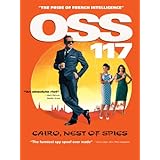
Trailer Tuesday: OSS:117 - Nest Of Spies

Directed by: Michel Hazanavicius.
Written by: Jean-François Halin and Michel Hazanavicius.
Starring: Jean Dujardin, François Damiens, Khalid Maadour.


Before there was the Oscar winning film THE ARTIST, the same team made a couple of silly spy movies starting with...


OSS 117: CAIRO - NEST OF SPIES - Imagine carefully recreating one of those 1960s James Bond rip-offs, even down to the cheesy rear-screen projection whenever anyone is in a car or on a motorcycle. The same lighting style and film stock and use of stock footage and the occasional model plane as in those old films. The same costumes and acting style and... well, it looks like a film they found in a vault somewhere and are showing it for the first time. That’s OSS 117: CAIRO - NEST OF SPIES. Because an early 60s spy movie would look silly, now, they give this film the full AIRPLANE treatment - the characters are dead serious, the film is absurd.


The OSS 117 spy series has been a staple of French cinema since 1956, when OSS 117 IS NOT DEAD was released, but really kicked into gear in the James Bond era with a film a year for a while in the 60s. OSS 117 TAKES A VACATION brought the series to an end in 1970... but this film brings back the character in a great mix of Bond parody and GET SMART. The spy (whose name goes on forever - even in the non-parody films) is this completely clueless moron who accidentally manages to save the day. His main talent seems to be saying the exactly wrong thing at the wrong time - angering everyone around him. Movie opens in WW2 where our hero and his best friend Jack steal the plans for the V2 from the Nazis in a scene that could be from one of those serials INDIANA JONES is lifted from. One of the silly things in this film are the title cards - we get a stock footage shot of the Colosseum... then the word ROME in huge letters. The Eiffel Tower stock shot lingers before we get PARIS in huge letters.


Our hero (Jean Dujardin) gives the crazy code phrase at a restaurant, gets the counter phrase, and is taken to a back booth to meet his boss, who tells him that Jack is dead! He was working in Cairo, where a militant Muslim group, the Soviets, a King’s niece, and a bunch of other bad guys are all involved in... something.

They’re sending our hero down to find out who killed Jack and what all of these bad guys are up to. But first - a flashback to our hero and Jack frolicking on the beach together... Which seems *very* Gay (not that there’s anything wrong with that... by the way, this is the 25th year anniversary of SEINFELD’s first episode). From here on, every flashback of our hero and Jack becomes more and more Gay until they are in that beach scene from FROM HERE TO ETERNITY. And later in the film, a henchman has a flashback of him and another henchman on the same beach frolicking together.

Anyway, our hero flies to Egypt, where a dozen suspicious looking guys in the airport follow him, and we get every spy movie cliche... done to the comedy extreme. The French espionage agency’s cover in Egypt is a poultry company - with a warehouse full of chickens that crow when the lights are turned on, because they think it’s morning. This isn’t just a running gag - our hero can spend hours turning on and off the lights. Unlike other spy movies where the cover job is just a cover - there are shoot outs (and fights using chickens as weapons) with other countries spy organizations over the poultry business. It’s not enough that millions of dollars in Soviet arms were stolen... the German poultry business is losing money to the French poultry business in Egypt!


My favorite gag in the film has our hero wake up with one of the hot women from the story, with a terrible case of “bed head” - hair sticking up everywhere - but when he runs his fingers through his hair it ends up *perfectly* in place. Another gag has one of the fellows following him giving him the wrong code phrase again and again - each time our hero beating the crap out of him. Eventually, the guy gets it right - he’s not some bad guy spy, but his contact from the British Secret Service. He also shows the girl how his gun cocks... um, again and again. He causes an international incident when he stops a priest from calling people to prayer (and a dozen other times he is so insensitive to the locals that you wonder why they don't kill him). The double-triple-multiple crosses. An underwater scene where our hero holds his breath for about ten minutes. Enjoying a massage wayyyyy too much. And there’s a musical number that really gets out of hand. This movie has so many silly things going on in it, I was always laughing at something. Sometimes, just the way the movie gets some 1960s cheesy spy thing dead on is funny.

Bill

Buy the border

Friday, September 26, 2025

Fridays With Hitchcock: Organic Storytelling

Jimmy Stewart in REAR WINDOW uses a camera to defend himself... He's a professional photographer, what else would he use?


I have a whole article on this, written for Script Magazine about a decade ago, called Hitchcock's Chocolates (now a chapter in one of my Hitchcock books) that gets into using the character and story to find all of the details of your screenplay. It always goes back to character - any question or problem you are having with your screenplay - think character, theme, story... and you will find the answers.

- Bill


Of course, I have my own books focusing on Hitchcock...

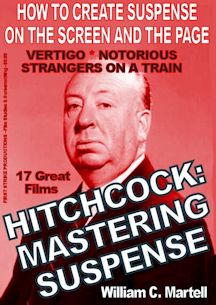
HITCHCOCK: MASTERING SUSPENSE


LEARN SUSPENSE FROM THE MASTER!

Alfred Hitchcock, who directed 52 movies, was known as the “Master Of Suspense”; but what exactly is suspense and how can *we* master it? How does suspense work? How can *we* create “Hitchcockian” suspense scenes in our screenplays, novels, stories and films?

This book uses seventeen of Hitchcock’s films to show the difference between suspense and surprise, how to use “focus objects” to create suspense, the 20 iconic suspense scenes and situations, how plot twists work, using secrets for suspense, how to use Dread (the cousin of suspense) in horror stories, and dozens of other amazing storytelling lessons. From classics like “Strangers On A Train” and “The Birds” and “Vertigo” and “To Catch A Thief” to older films from the British period like “The 39 Steps” and “The Man Who Knew Too Much” to his hits from the silent era like “The Lodger” (about Jack The Ripper), we’ll look at all of the techniques to create suspense!

Films Included: NOTORIOUS, SABOTAGE, STRANGERS ON A TRAIN, THE 39 STEPS, REBECCA, TO CATCH A THIEF, FRENZY, FOREIGN CORRESPONDENT, THE LODGER, THE BIRDS, TORN CURTAIN, SABOTEUR, VERTIGO, THE MAN WHO KNEW TOO MUCH (1934), THE MAN WHO KNEW TOO MUCH (1955), SUSPICION, and NUMBER SEVENTEEN. 17 Great Films!

Only 125,000 words!

Price: $5.99

Click here for more info!

OTHER COUNTRIES:


UK Folks Click Here.

German Folks Click Here.

French Folks Click Here.

Espania Folks Click Here.

Canadian Folks Click Here.

And....

HITCHCOCK: EXPERIMENTS IN TERROR


USA Readers click here for more info!

HITCHCOCK DID IT FIRST!

We all know that Alfred Hitchcock was the Master Of Suspense, but did you know he was the most *experimental* filmmaker in history?

Contained Thrillers like “Buried”? Serial Protagonists like “Place Beyond The Pines”? Multiple Connecting Stories like “Pulp Fiction”? Same Story Multiple Times like “Run, Lola, Run”? This book focuses on 18 of Hitchcock’s 52 films with wild cinema and story experiments which paved the way for modern films. Almost one hundred different experiments that you may think are recent cinema or story inventions... but some date back to Hitchcock’s *silent* films! We’ll examine these experiments and how they work. Great for film makers, screenwriters, film fans, producers and directors.

Films Examined: “Rear Window”, “Psycho”, “Family Plot”, “Topaz”, “Rope”, “The Wrong Man”, “Easy Virtue”, “Lifeboat”, “Bon Voyage”, “Aventure Malgache”, “Elstree Calling”, “Dial M for Murder”, “Stage Fright”, “Champagne”, “Spellbound”, “I Confess”, and “The Trouble with Harry”, with glances at “Vertigo” and several others.

Professional screenwriter William C. Martell takes you into the world of The Master Of Suspense and shows you the daring experiments that changed cinema. Over 77,000 words.

UK Folks Click Here.

German Folks Click Here.

French Folks Click Here.

Espania Folks Click Here.

Canadian Folks Click Here.

Thursday, September 25, 2025

THRILLER Thursday: COUSIN TUNDIFER

SEASON 2: COUSIN TUNDIFER

The spider web fills the screen, it's Boris Karloff's THRILLER!


Season: 2, Episode: 21.
Airdate: February 19, 1962


Director: John Brahm
Writer: Boris Sobelman
Cast: Edward Andrews, Sue Ann Langdon, Vaughn Taylor, Howard McNear, Dayton Lummis, Chet Stratton.
Music:
Cinematography:
Producer:


Boris Karloff’s Introduction: (Standing in a morgue with a table filled with every murder weapon known to man.)
“An Uncle and a Nephew. No thought of murder? Impossible! May I remind you ladies and gentleman of this sinister relationship once again: Uncles and Nephews. What a trail of blood and evil they have drawn across all the time which we have recorded. Think of the histories you’ve read, books and tales and legends. Hamlet and his uncle Claudius. Richard The Third, the cripple, putting his two little nephews to death in the Tower of London. Evil Uncles, Good Nephews. Evil Nephews, Good Uncles. What deadly poison lurks here? And how strange that even to this day, this relationship has not drawn the relationship it deserves. Our story tonight will tread this tale, with turns and twists and such sudden byways that even my head reels, and for a moment, but only for a moment, I can not even be sure if my name is Boris Karloff. The murder weapon? Well, I can assure you that it can not be found in this cheerful assortment of conventional, but none the less effective ways.
(Opens a morgue body drawer)
The title of our story is “Cousin Tundifer” and our players are: Edward Andrews, Sue Anne Langdon, Vaughn Taylor, Howard McNear, Dayton Lummis, and Chet Straton.
(Closes drawer)
So join me now while the uncle and the nephew in our story, for a contest of murders such as you never even imagined. (Lifts gun) Please don’t be nervous, this little toy isn’t really loaded.
(Aims it at audience and fires... to titles!)


Synopsis: San Francisco: Pudgy Miles Tundefer (Edward Andrews) walks down the street, stopping outside a strip club to admire the poster advertizing the headliner Miss Queenie De Lyte - showing almost all of her assets, then stops at a news stand to flip through a book titled “33 Ways To Get Away With Murder”, all of this is on the way to his Uncle’s lawyer’s office... where he complains that his wealthy Uncle is spending his eventual inheritance like crazy! Buying old houses and having them restored! Lawyer Braystone (Dayton Lummis) has sent Uncle to a psychologist Dr. Marvin... and now he is supposedly cured of buying old houses... this will be the last. What’s left of Miles Tundifer’s inheritance is safe...

(To Karloff)

Miles drives to the Old House being restored (the Munster House) and talks to the contractor (Howard McNear - Floyd the barber from THE ANDY GRIFFITH SHOW) and his assistant. The old house has been restored exactly to it’s original specifics from the 1800s - using nails and wood and a fireplace and everything else from the time period. No expense has been spared! The Contractor presents Miles with the final bill - a huge amount! When Miles says he will want to look at the books, the Contractor says that isn’t a problem and goes to talk with his assistant...

And says they will need the second set of books.


Miles looks over the house, which was in the Tundifer family at that time, and it’s like walking into the past...

The vintage rug on the floor rolls out...

And he is in the past. The 1800s! (We get a music cue here that tells the audience something magical has happened.) Period furniture where there was nothing, A table set with food. The vintage window seat box now has a cushion! Miles looks out the back door - and sees a horse drawn carriage instead of cars! How is this possible? Does insanity run in the family? He freaks out, but when he steps off the rug and out the front door - he’s back in present day. He gets in his car and gets out of there!

To a bar. Where he gets drunk. And tells the bartender about his strange experience. The bartender says it sounds like a standard case of teleportation.

Mile goes back to the house... and it changes again the moment he steps on the vintage rug. Maybe he’s not crazy? Maybe it is teleportation?


AT HOME: Miles tells his old Uncle (Vaughn Taylor - Marion's boss in PSYCHO) that he needs to make the final payment on the house restoration - and Uncle tells him that’s the last money he spends on a house. His psychiatrist has advised him to stop living in the past and live for the future! What he needed was to find a woman and fall in love... and that’s exactly what he did! His new fiancé is going to have dinner with them tonight!

If Uncle gets married, the *wife* inherits, not Miles Tundifer!

And the fiancé is... stripper Queenie De Lyte, who his Uncle met outside his psychiatrist’s office!

At dinner, Queenie (Sue Ann Langdon) notes all of the family portraits in the walls - including one that looks very much like Miles. Uncle says, like the painting, that relative was Edgemont Tundifer, who was hung 100 years ago, accused and convicted of murdering several people. The Black Sheep of the family...


Meanwhile, Miles is trying to figure out how to murder his Uncle so that he can inherit before his Uncle marries the stripper and *she* inherits the fortune.

The next day, Miles goes to get the bill for the house restoration to the contractor, and does a little experiment. Once again, when he steps on the rug he is transported back in time to the 1800s. This time, he puts his briefcase on the window seat and when he steps off the rug... the briefcase is gone! He goes outside, tells the contractor that he forgot his briefcase - it’s on the window seat, would he mind going in and getting it for him? The contractor comes back and says it’s not there. Miles makes sure that the contractor looked on the window seat. Not there. Miles enters - empty window seat - steps on the rug and is transported back in time 100 years, and there’s his briefcase on the window seat! He grabs it as well as a heavy pestle on the table and leaves... returning to the present.

Not noticing the older couple from the 1800s was watching him when he had stepped into the past.

The book “33 Ways To Get Away With Murder” says that hats should be removed before striking someone with a blunt instrument...

Miles and Uncle return to the house the next morning with the final payment in *cash*.


Miles has his Uncle remove his hat before entering the house for the final inspection... and then clobbers him with the old pestle. Once they are on the rug, they are transported to the past, and Miles hides the body in the window seat... and places the money on top of Uncle’s body. Leaves the house (and the 1800s) and chats with the contractor for a while. Tells the Contractor he should find his Uncle in the house so that he can be paid... and the Contractor searches the house - no Uncle. What?

Police come - search the house, no Uncle. Miles tells them that his senile old Uncle has $50,000 in his coat pocket and is wandering the streets of San Francisco! You must find him before something bad happens!

The lawyer breaks the bad news to Miles Tundifer - without a body they must wait 7 years before he can inherit. He can live in his Uncle’s house - it’s paid for, but can not sell the restored house due to the final payment issue. So he’s broke, but with a roof over his head. He proposes to Queenie, the stripper... who is only interested in old rich guys with a foot in the grave... but she’ll think about it.


Queenie goes to see her Psychiatrist (Chet Stratton)... and we discover that they are a con team! The Psychiatrist convinced Uncle that he needed to meet and marry a young woman, and then had Queenie waiting for him. Now that the Uncle has gone missing, they discuss the possibility of Miles. Maybe there’s a way to make this work?

Queenie agrees to marry Miles, and wants a huge engagement ring and some extra jewelry to tide her over - a small fortune! Queenie is impressed, will probably sleep with him tonight once she gets the jewelry, so Miles has the Jeweler hold the items and he will return with cash...

Miles is going to get everything he wants!

He goes to the restored house, steps onto the rug and is transported to the 1800s, goes to the window seat to get the $50k... and not only is the money missing, so is his dead Uncle! What?

That’s when the (vintage) cops jump in and arrest him! The older couple from the 1800s show up with Uncle - head bandaged, but alive! Miles is arrested as cousin Edgemont Tundifer - and we all know what happens next!

The Uncle steps off the rug, returns to present day, and goes out to the car with the $50k where Queenie is waiting. The end.


Review: Whenever Edward Andrews stars in an episode, you know that it’s going for the humorous side of horror or thriller or crime (THIRD FOR PINOCLE, A GOOD IMAGINATION). He was the 1960 version of that suburban guy who probably had a secret subscription to Playboy and a nagging wife. The great thing about an anthology show is that it can provide a variety of types of stories, and horror and thriller genres are filled with comedic takes on the genre. Though these stories aren’t my favorites in the series, they are part of the “Weird Tales” subgenre of horror where scheming characters get punished by fate... and I prefer them to the straight crime episodes from early season one.

Here we get a wonderfully cynical story where every single character seems mostly honest on the outside but has some kind of scheme going - the crazy Uncle being the only character who isn’t trying to con someone. The Contractor has a second set of books, the stripper who seems like an airhead is actually in cahoots with the Uncle psychiatrist (she might be the most clever character in the entire story), and our hero’s goal in life is to get his hands on his Uncle’s money. What a tangled web they weave when all of the schemers plans intersect.


The fantasy element - time travel via a restored house - seems related to Richard Matheson’s SOMEWHERE IN TIME, with the idea that if all we can see is the past, we can step into that past. The use of a music cue to tell the audience that we have slipped into a different time is a great low budget special effect. Though there are dissolves used in the first time jump, once we hear the music we know that Miles is going back in time without the visual effects. I wonder if the shots of horse and carriage on the streets were left over from one of the period episodes? The time loop idea is fun - with murderous Miles Tundifer looking exactly like his murderer relative... and then becoming him.

Next up, a couple down on their luck tries to live with a wealthy relative...

- Bill

Buy The DVD!

Wednesday, September 24, 2025

Film Courage Plus: Creating Suspense

FILM COURAGE did a series of interviews with me, around 36 (or more) segments total. That's almost a year's worth of material! So why not add a new craft article and make it a weekly blog entry? All I have to do is write that new article, right?


Creating suspense on screen:

Keeping the audience on the edge of their seat is the function of SUSPENSE. Suspense is not the same as action, nor is it the same as surprise, nor is it the same as mystery. Suspense is the *anticipation* of an action. The longer you draw out the anticipation, the greater the suspense. Hitchcock explained; "Two men are having an innocent little chat. Let us suppose that there is a bomb underneath the table between them. Nothing happens, then all of the sudden, BOOM! There is an explosion. The audience is surprised, but prior to this surprise, it has been an absolutely ordinary scene, of no special consequence. Now let us take a SUSPENSE situation. The bomb is underneath the table, but the audience knows it... Probably because they have seen the villain place it there. The audience is aware that the bomb is going to explode at one O'clock, and there is a clock in the decor. It is a quarter to one. In this situation, the same innocuous conversation becomes fascinating, because the audience is longing to warn the characters on the screen: 'There's a bomb beneath you, and it's about to explode!' In the first case, we have given the audience fifteen seconds of SURPRISE at the moment of the explosion. In the second case, we have provided them with fifteen MINUTES of SUSPENSE."

It’s no secret that I love thriller films and Hitchcock movies - my upcoming book is HITCHCOCK: MASTERING SUSPENSE which uses seventeen of Hitchcock’s films to illustrate different principles of suspense. But suspense isn’t confined to the thriller genre, it’s used in *every* genre to create tension. That romantic comedy where we know that one of the pair has that secret that will ruin the budding relationship if discovered... suspense is built around the anticipation of that discovery. In a movie of survival, be it THE MARTIAN or THE REVENANT suspense is built around situations where we anticipate the worst possible thing happening... and then the scene builds around that anticipation until it is resolved by the action. In REVENANT we know that bigoted fur trapper Fitzgerald (Tom Hardy) plans on harming Glass (Leonardo DiCaprio)’s son - and that scene builds tension until we get the action. Instead of the action being over in a flash, the audience has been given the information that it will happen and that makes us squirm in our seats as we see Fitzgerald’s plan unfolding. Instead of a couple of seconds of surprise we have a whole scene of tension and suspense. In dramas we often have suspense built around a secret that our protagonist doesn’t want discovered. Every genre uses suspense to build emotions before the action.

There are Four basic kinds of suspense: the "ticking clock" (or time lock) and "cross cutting" and “secrets” and “focus objects”. The Hitchcock example above is a ticking clock. We are given an event which will occur at a certain time, and our suspense builds as we get closer and closer to the time of the event. Cross Cutting takes two things we don’t want to see in the same place and gets them progressively closer to each other - like two trains hurtling towards each other on the same track. The closer they get to each other, the more suspense. A good example of this method is in Hitchcock’s REAR WINDOW where our protagonist Jeffries sends his fiancé Lisa to search the apartment of suspected murdered Lars Thorwald. Jeffries has gotten Thorwald out of the apartment on the pretext of meeting him at a restaurant down the street, but when he doesn’t show Thorwald becomes impatient and returns home. Jeffries watches through the rear window of his apartment as Lisa searches the apartment as Thorwald returns - entering the building, climbing the stairs, walking down the hallway to his front door, unlocking the door, and...

Secrets are another form of suspense which is often used in dramas and comedies and romances. A character has a secret which they do not want to have discovered, and another character gets closer and closer to discovering it. In YOU’VE GOT MAIL we know the secret of Tom Hanks’ character - he’s the big corporate bookstore owner who is putting the small independent bookstore owned by Meg Ryan out of business... but the two meet and fall in love, and now he must keep that true identity secret from her because it will kill the relationship. The audience knows that secret exists, so we are in suspense that it will be discovered. Another type of secret suspense can be found in Hitchcock’s ROPE (an experimental film which we look at in my HITCHCOCK: EXPERIMENTS IN TERROR book) - two men have murdered a friend and placed his body in a giant trunk in their livingroom... moments before having a party in that same livingroom in honor of the now dead friend. Everyone wonders where David is... but we know that he’s inside the trunk they are serving a buffet dinner from. Suspense builds as things happen which get some of the party guests looking closer at the trunk than the killers would like. Will their secret be discovered or will they get away with murder?

FOCUS OBJECTS


That trunk is what I call a “focus object”, and in the Film Courage clip I mention the middle ages sword and sex flick FLESH + BLOOD, where Princess Jennifer Jason Leigh has been kidnaped by Mercenary Rurger Hauer, and eventually becomes his mistress. Hauer is leader of a band of Mercenary soldiers - knights in rusted armor - who are raping and pillaging their way across Europe. They were double crossed by the evil Prince who Jennifer was engaged to, and now they are doing everything possible to make that Prince's life hell on earth. Eventually they capture the Prince, and chain him up near a well. Princess Jennifer, Hauer's mistress and the Prince's finace, is about to have a meal with all of the other mercenaries celebrating the capture of the Prince.

Before the other mercenaries reach the table, the Prince grabs a piece of plague infested meat from the trash and drops it in the well, poisoning the drinking water.

Jennifer sees this, and the question is - will she tell anyone? As the water is brought from the well to the table, tension builds. The water in the jug becomes the "focus object". Water is poured into glasses of several mercenaries who were not kind to her when she was kidnaped. She wants revenge against them, so she says nothing.

The Prince watches her, waiting for her to tell them that the water is poisoned. She sees the shackled Prince watching her, and she watches the mean mercenaries drink the poisoned water one-by-one.

That jug of poisoned water goes from mean mercenaries... to women and children. The poisoned water is poured into their glasses and they start to drink it... will Jennifer tell them it is poisoned? Suspense builds.

The Prince watches her, waiting for her to stop them from drinking. But both of them watch as the women and children drink the poisoned water.

Then the jug of poisoned water is passed to Rutger Hauer, her lover. He pours a glass of water. Will she let him drink it? She is torn between the man she was engaged to and the man she sleeps with every night. What will she do? Hauer is having a conversation with some of the others, and every time he grabs the glass to drink, someone says something and he responds instead of drinks. Suspense builds.

The Prince, shackled by the well smiles at her. What will she do?

As Hauer lifts the glass to his lips, she...

See how focus objects work? They create suspense by giving the protagonist and the audience the same secret information that is tied to an object... and then places that object where the secret can be discovered by characters who can not know that secret.

All of these techniques rely on *dramatic irony* - giving information to the audience that one or more characters do not have. The key is letting the audience know that the water is poisoned or that the body is in the trunk or that Tom Hanks is also that bastard with the big chain bookstore that is putting Meg Ryan out of business. If the audience is not given this information, there can be no suspense or tension... and the story is flat and dull. Our job as writers is to *lead the audience* - to use information to control what they think and feel. Hitchcock called it playing the audience like an instrument. By giving them specific story information at the perfect time we bring them inside the story - they know the secret that some other character does not and now they have a stake in the story. The audience wants that secret to remain a secret. The audience wants to warn the characters that there is a bomb under the table. The audience participates in the story and feels what the characters feel. Our job as writers is not just to tell the story, but to use techniques like suspense in order to tell that story well. To involve the reader and viewer so that it becomes their story as well.

Always be leading the audience. Always be in control of your story and when the information is given to the audience. What do you want them to know and when do you want them to know it? And *why* do you want them to know this information at this specific time in your tale?

- Bill


HITCHCOCK: EXPERIMENTS IN TERROR


Click here for more info!

HITCHCOCK DID IT FIRST!

We all know that Alfred Hitchcock was the Master Of Suspense, but did you know he was the most *experimental* filmmaker in history?

Contained Thrillers like “Buried”? Serial Protagonists like “Place Beyond The Pines”? Multiple Connecting Stories like “Pulp Fiction”? Same Story Multiple Times like “Run, Lola, Run”? This book focuses on 18 of Hitchcock’s 53 films with wild cinema and story experiments which paved the way for modern films. Almost one hundred different experiments that you may think are recent cinema or story inventions... but some date back to Hitchcock’s *silent* films! We’ll examine these experiments and how they work. Great for film makers, screenwriters, film fans, producers and directors.

Films Examined: “Rear Window”, “Psycho”, “Family Plot”, “Topaz”, “Rope”, “The Wrong Man”, “Easy Virtue”, “Lifeboat”, “Bon Voyage”, “Aventure Malgache”, “Elstree Calling”, “Dial M for Murder”, “Stage Fright”, “Champagne”, “Spellbound”, “I Confess”, and “The Trouble with Harry”, with glances at “Vertigo” and several others.

Professional screenwriter William C. Martell takes you into the world of The Master Of Suspense and shows you the daring experiments that changed cinema. Over 77,000 words.

UK Folks Click Here.

German Folks Click Here.

French Folks Click Here.

Espania Folks Click Here.

Canadian Folks Click Here.

- Bill

Tuesday, September 23, 2025

Trailer Tuesday: GOLD DIGGERS OF 1933

I always manage to get the plots to 42nd STREET and GOLD DIGGERS OF 1933 mixed up, because both have amazing Busby Berkeley dance numbers and both share the same casts and both deal with survival during the Great Depression. This is the film with the plot I remember, but always seem to think it’s 42nd STREET.

You might wonder why a guy who has a book on writing action movies is a huge fan of Warner Bros musicals from the 30s, but that would be thinking in cliches... so stop that right now! Oddly enough, the big set pieces in Busby Berkeley films have much in common with big action set pieces in today’s films... and probably even more in common with martial arts films (since both deal with graceful physical actions). My main love for these films comes from their gritty reality base... these are movies from the Great Depression *about* the Great Depression. While MGM was turning out glossy escapist fantasy musicals, Warner Brothers was known for gritty social issues film... and that extended to their musicals. Just as I love the WB long haul trucker movie THEY DRIVE BY NIGHT and their film about guys stringing power lines across the country MANPOWER, these musicals are about real people struggling to pay the rent and doing hard physical work (dancing). GOLD DIGGERS was directed by Mervyn LeRoy who may be most famous for his gangster film LITTLE CAESAR and crime film I AM A FUGITIVE FROM A CHAIN GANG, but went on to direct the film version of MISTER ROBERTS and THE FBI STORY (with Jimmy Stewart).

Choreographer Busby Berkeley basically reinvented the musical with his amazing production numbers, and went from Broadway choreographer to film choreographer to director of film musicals to... director of THEY MADE ME A CRIMINAL, one of the best crime films of the 1930s and probably John Garfield’s best film. After that, he invented Carmen Miranda’s hat of fruit before heading to MGM where he directed Ester Williams’ *underwater* dance numbers in movies like MILLION DOLLAR MERMAID, also directed by Mervyn LeRoy.


GOLDDIGGERS OF 1933.

Directed by: Mervyn LeRoy
Written by: Erwin Gelsey and James Seymour based on the play by Avery Hopwood.
Musical Numbers by: Busby Berkeley.
Songs by: Al Dubin & Harry Warren.
Starring: Dick Powell, Ruby Keeler, Ned Sparks, Guy Kibbee, Warren William, Joan Blondell, Ginger Rogers.

Hey, the gang from 42nd STREET is back in this Great Depression musical! The story begins in an apartment filled with out of work actresses, so poor that they have one good pair of shoes and one good dress between them. The have to be careful not to schedule auditions or day job interviews at the same time, or someone will have to go in clothes with patches and frayed hems. Not that anyone has an audition or job interview, we’re in the middle of the great depression and everyone is flat broke except the very wealthy who only lost part of their fortunes in the stock market crash. This pad o gals can’t even leave their apartment, because they’d have to walk past the building manager’s office, and they are months behind on their rent (the manager keeps slipping notes under the door warning of eviction). Their only entertainment comes from listening to the cute composer across the alleyway Brad (Dick Powell) work on his songs as he avoids *his* building manager. Polly (Ruby Keeler) has a crush on Brad, and often flirts with him from window to window. Nobody knows how they’re going to afford food, because all of the Broadway Theaters are closed... no one has money to put on a show and hire them.


Enter Barney (Ned Sparks, playing the same role as in 42nd STREET just with a different name) a scheming Broadway producer who has a plan. Because the theaters are broke, he’s made a deal with one to put on a show on spec. They’ll make money off ticket sales. He’s also found a potential investor to cover the hard costs of putting on a show... but he needs a cast and some songs. So he shows up at the pad o gals and convinces them to rehearse for free for pay later. Hey, it’s a chance for the gals to get out of the apartment and maybe make enough money to pay their back rent so they won’t be evicted. It’s pretty obvious that Barney has nothing but a scheme... and when he hears Brad’s music, he thinks he has a composer! (Great in joke as Barney calls the movies composers Dubin & Warren and fires them!) Basically, he puts together a show where everyone is working on spec, They have the labor, and that’s most of what’s needed.

Brad and Polly can now flirt face to face with no alley separating them, and it’s love. Barney wants Brad to play the lead, since he knows the songs (and maybe Barney can pay Brad once for two jobs), but Brad is ultra publicity shy and says he can’t be seen on stage. This causes some of the girls to wonder if he’s a criminal on the run or something.

Everything is going great, until that potential backer for the hard costs of the show backs out, leaving them in big trouble. All of this work for nothing...


Except (plot twist) Brad claims he can cover the hard costs. They set up a meeting where Brad will show up with a cashiers check for the hard costs of the show... and wait and wait and wait as Brad doesn’t show. Just when they’re sure Brad is nothing more than a schemer, maybe using this funding thing as a way to get into Polly’s pants, he shows up with the money. Where did he get it? Rob a bank? Brad doesn’t want to tell anyone where he got it, not even Polly. He *is* a bank robber, right?

When the juvenile lead gets lumbago on opening night (because he’s well over 40) they need someone to jump in and take his place... and Brad reluctantly steps in. The show is a huge hit, Brad’s face ends up in the newspapers... and the other shoe drops.


Brad *isn’t* a bank robber, he’s the black sheep son of a wealthy Boston family who disapproves of doing *any* work for a living. This is one of those families who is so rich the Stock Market crash only made a small dent in their fortune. They send older brother Lawrence (the always sleazy Warren William) and his best friend Peabody (the always pudgy Guy Kibee) to rescue Brad from the horrors of singing and dancing on Broadway. But when the two wealthy gentlemen come to the pad o gals, and Lawrence wants to know how much money it will take to buy Polly in order to release his brother from her spell. Due to some confusion they think Carol (Joan Blondell) is Polly and she insists that this conversation take place somewhere more civilized, over a bottle of champagne and a steak. So Lawrence and Peabody end up on a double date with Carol and Trixie (Aline MacMahon)... and we get to the gold digger part of our story. The gals could easily make a bunch of money by selling Polly’s love for Brad, but they would never do anything to harm Polly and the concept that love has a price offends them. This is an interesting social point, as Lawrence believes that love can be bought, and Carol and Trixie believe it has no price. When you are wealthy, everything has a price. When you are broke, you learn the true value of simple things like love and friendship.

Somewhere in here, an impossibly young Sterling Holloway (WINNIE THE POOH) show up as a bellboy and gets a single line of dialogue. Also in the cast in small roles (uncredited) are future Mrs. Ronald Reagan and Oscar Winner Jane Wyman, future tough guy and LEOPARD MAN star Dennis O’Keefe, future cowboy star Wild Bill Elliott (as a dancer!), and character actor Charles Lane (IT’S A WONDERFUL LIFE) as the snooty society reporter who blows Brad’s cover.

The two gals manage to hook Lawrence and Peabody. There’s a great scene where a passed out drunk Lawrence is stripped and put in Carol’s bed, wakes up, and once again tries to buy his way out... but realizes that maybe these actresses are not evil incarnate, and maybe he’s *in love* with “Polly” (Carol). This creates a huge problem, because he thinks that he is in love with his brother’s gal! As the show goes on, we get a great false identity farce, which ends with a triple wedding. As usual, no shortage of half naked women, because this is precode. Side boob, top boob, underboob, and lots of sheer lingerie.


Let’s talk about the musical numbers for a moment, because there are some great ones here including an amazing show stopper at the end. The film opens with “We’re In The Money” with Berkeley’s signature “Parade Of Face” where every one of the beautiful chorus girls gets a big close up. Ginger Rogers sings this number, which (because we are still pre code) features scantily clad women with giant gold coins. The most amazing thing about this number is Rogers singing in *pig latin* for a verse or two! I couldn’t talk in pig latin that fast, let alone sing it! This is the cold opening number of the show, and ends prematurely as the repo men come to take the sets and costumes and props in a very funny scene.

Next up is one of the songs from the show, “Petting In The Park”, with Ruby Keeler and Dick Powell and a bunch of scantily clad gals in very risque situations. Billy Barty plays a horny baby (you read that right) who at one point, as the chorus girls are undressing behind a shade with *naked* silhouettes of bouncing boobs, starts to slowly pull the shade up! By the time the shade is raised, the chorus girls have changed into tin (!) breastplates and panties and dance away. The number ends with Powell unable to get into Keeler’s pants or breastplate, and Barty hands him a can opener! Powell proceeds to open Keeler’s outfit and we fade out. Hey, the *subject matter* of this song is heavy petting! This is one of those scenes you can’t believe are in a film made in 1933. The silhouettes behind that shade are *nude*.

One of the most beautiful dance numbers ever put on film is the “Shadow Waltz” with Powell and Keeler and Rogers and the rest of the gals. The chorus girls have *neon violins” they play in the dark, creating amazing kaleidoscopic images when the lights turn down. If “Petting In The Park” focused on ass, this number focuses on class. It’s worth the price of admission.

View That Number Here.

But it’s not the best number in the film. That would be the closing song, “My Forgotten Man” sung by Joan Blondell and Etta Moten. This has been a film about the Great Depression, and the social and class issues that event brought to the surface in America. This number focuses on the problems of impoverished veterans... and hits hard. All of those soldiers who fought in the Great War (WW1) returned as broken men, only to be broken again by the Great Depression. The number is in stark German Expressionistic images and deals with homeless vets. So many great moments in the number, including a policeman rousting a homeless man sleeping on the street, and Blondell opening the homeless man’s lapel to display war medals. This is a heart breaker of a song that shows how poorly the country treated war veterans after the economy went south. Hey, no parallels to today, right? The number ends with an amazing Busby Berkeley dance number that combines soldiers marching off to war in the background as homeless men march in search of jobs in the foreground. This is the conclusion of a film that has mostly been a comedy look at the struggles of surviving in the Great Depression... and makes you realize how serious poverty is.


Warner Brothers cranked out musical like this throughout the depression. Berkeley choreographed dance numbers in *five* musicals in 1933 alone! These films allowed people to forget their troubles for a couple of hours without ignoring that they had those troubles. The pad of gals and it’s concept that if people work together we can get through these temporary problems gave people hope and probably kept them from fighting with each other when things got tough. These films kept Warner Brothers in the black, and maintained their identity for gritty realism... even with these lavish musical numbers!

Bill

Friday, September 19, 2025

Fridays With Hitchcock:
Tom Snyder Interviews Hitchcock

The "lost" interview Tom Snyder did with Hitchcock in 1973.

(Lost interview - wouldn't it be cool if Hitchcock explained the TV show LOST? Back in 1973?)

Would have been better if Snyder had ever seen a Hitchcock film. It gets better later, when Hitch loosens up and takes control.


Hitchcock on religion. Hitchcock on his temper... or lack of it. Hitchcock on the world & communication. Why all news is bad news.

- Bill


Of course, I have a couple of books about Hitchcock...

HITCHCOCK: MASTERING SUSPENSE


LEARN SUSPENSE FROM THE MASTER!

Alfred Hitchcock, who directed 52 movies, was known as the “Master Of Suspense”; but what exactly is suspense and how can *we* master it? How does suspense work? How can *we* create “Hitchcockian” suspense scenes in our screenplays, novels, stories and films?

This book uses seventeen of Hitchcock’s films to show the difference between suspense and surprise, how to use “focus objects” to create suspense, the 20 iconic suspense scenes and situations, how plot twists work, using secrets for suspense, how to use Dread (the cousin of suspense) in horror stories, and dozens of other amazing storytelling lessons. From classics like “Strangers On A Train” and “The Birds” and “Vertigo” and “To Catch A Thief” to older films from the British period like “The 39 Steps” and “The Man Who Knew Too Much” to his hits from the silent era like “The Lodger” (about Jack The Ripper), we’ll look at all of the techniques to create suspense!

Films Included: NOTORIOUS, SABOTAGE, STRANGERS ON A TRAIN, THE 39 STEPS, REBECCA, TO CATCH A THIEF, FRENZY, FOREIGN CORRESPONDENT, THE LODGER, THE BIRDS, TORN CURTAIN, SABOTEUR, VERTIGO, THE MAN WHO KNEW TOO MUCH (1934), THE MAN WHO KNEW TOO MUCH (1955), SUSPICION, and NUMBER SEVENTEEN. 17 Great Films!

369 pages packed with information!

Price: $5.99

Click here for more info!

OTHER COUNTRIES:

UK Folks Click Here.

German Folks Click Here.

French Folks Click Here.

Espania Folks Click Here.

Canadian Folks Click Here.

And...


HITCHCOCK: EXPERIMENTS IN TERROR


Click here for more info!

HITCHCOCK DID IT FIRST!

We all know that Alfred Hitchcock was the Master Of Suspense, but did you know he was the most *experimental* filmmaker in history?

Contained Thrillers like “Buried”? Serial Protagonists like “Place Beyond The Pines”? Multiple Connecting Stories like “Pulp Fiction”? Same Story Multiple Times like “Run, Lola, Run”? This book focuses on 18 of Hitchcock’s 53 films with wild cinema and story experiments which paved the way for modern films. Almost one hundred different experiments that you may think are recent cinema or story inventions... but some date back to Hitchcock’s *silent* films! We’ll examine these experiments and how they work. Great for film makers, screenwriters, film fans, producers and directors.

Films Examined: “Rear Window”, “Psycho”, “Family Plot”, “Topaz”, “Rope”, “The Wrong Man”, “Easy Virtue”, “Lifeboat”, “Bon Voyage”, “Aventure Malgache”, “Elstree Calling”, “Dial M for Murder”, “Stage Fright”, “Champagne”, “Spellbound”, “I Confess”, and “The Trouble with Harry”, with glances at “Vertigo” and several others.

Professional screenwriter William C. Martell takes you into the world of The Master Of Suspense and shows you the daring experiments that changed cinema. Over 77,000 words.

Only $5.99

UK Folks Click Here.

German Folks Click Here.

French Folks Click Here.

Espania Folks Click Here.

Canadian Folks Click Here.

- Bill

Thursday, September 18, 2025

THRILLER Thursday: Portrait Without A Face

SEASON 2

THRILLER: Portrait Without A Face

The spider web fills the screen, it's Boris Karloff's THRILLER!


Season: 2, Episode: 14.
Airdate: Dec. 25, 1961 (The Christmas episode?) Director: John Newland
Writer: Jason Wingreen.
Cast: Jane Greer, Robert Webber, Katherine Squire, George Mitchell, John Banner.
Music: Morton Stevens
Cinematography: Lionel Lindon
Producer: William Frye


Boris Karloff’s Introduction: “Robertson Moffat’s greatest masterpiece doomed by the shot of an assassin’s crossbow to remain just as we see it - blank, lifeless as the murdered artist himself. It is said that art is a human effort, having for its purpose the transmission to others of the highest and noblest feelings which men have risen. Well, my friends, tonight you’ll see that the activity of art can be inhuman as well. And that its purpose, at least in this case, is shall we say, unexpected. The victim’s vacant canvas should give you a hint of the title our play. It’s called Portrait Without A Face. Look closely, and it will reveal the identity of our leading players. They are: Jane Greer, Robert Webber, Catherine Squire, George Mitchell, and Brian Gaffikin. Sit back, relax if you can, while we whet your pallete with some bold strokes of terror. Oh, do you have a skylight? Be sure to bolt it securely, otherwise you won’t know that you are absolutely alone.”


Synopsis: In his studio, egotistical painter Roberston Moffat (John Newland) is strangling over-acting newspaper reporter Nat Fairchild (Brian Gaffikin) and tosses him to the floor. Fairchild says he didn’t want to come, but she begged him to try and get the painting back. Moffat laughs - says she begged him to paint her nude. Moffat pours himself a drink and pontificates on death... and says he’s going to paint the Angel Of Death, and orders Fairchild to get out. Once Fairchild is gone, the phone rings - Marie, the woman in the nude painting begs him to give it to her. He refuses.... but does ask if she wants to hook up. She hangs up instead.

As Moffat gets his brushes and paints ready, someone climbs the wall of the studio with a crossbow, opens the skylight, fires an arrow into Moffat’s *head*, killing him. Closes the window and vanishes.


Six Months Later: Art Appraiser Arthur Henshaw (Robert Webber) arrives at the Moffat house and is *greeted* by crazy old Aunt Agatha Moffat (Katherine Squire) who asks if he’s from the Janus Gallery in New York. Moffat left all of his paintings to Janus because he discovered him, but Moffat’s wife Ann keeps all of the paintings in the house until she dies... so Janus will probably be long dead before he sees any of the paintings. Crazy old Aunt Agatha is an exposition machine who rattles off information and backstory and plot points and just about anything else the story needs. She tells him the police still have no clues as to who shot the arrow into Moffat’s head.

Ann Moffat (Jane Greer from OUT OF THE PAST) descends the stairs and introduces herself, and crazy Aunt Agatha scampers away. As Ann shows him out the backdoor of the house and across the courtyard to the studio, Henshaw says he’s here to catalogue all of the paintings so Janus can decide what to show at Moffat’s last exhibition. No one has been in the studio since the murder.

She unlocks the door and shows Henshaw around, pointing out Moffat’s last canvas... which is blank. But Henshaw looks at it and says it is not blank... Ann takes a look, and there is a painting of Moffat’s head on the floor with the arrow sticking out of it in the corner of the canvas - the rest is blank. Ann faints.


Dr. Grant (Gage Clarke), who has the worst bedside manner ever, scolds Ann for fainting and yells at her to keep calm. On his way out, Dr. Grant has a conversation with Henshaw about why she fainted. Henshaw says the canvas was blank, and then there was part of a painting on it. “Do you realize what you’re saying?” Dr. Grant replies. Unfortunately, I’m not sure anyone has any idea what they are talking about - because they avoid the word “ghost” and avoid anything that might make you think that’s what they are talking about. Also, they forgot to plant that the painting of dead Moffat was in Moffat’s style. Grant scolds and yells at Henshaw, then leaves.

Ann gets out of bed, tells Henshaw that she must destroy the painting, and heads out the backdoor into a night thick with fog. They have a conversation about the key to the studio - there was only one, Ann didn’t even have a key until her husband died and she was given his. They discuss the arrow shot through the skylight - could someone have entered the studio through the skylight and painted on the canvas... maybe the killer? The fog is so think in some of these shots that the actors didn’t have to show up for work that day.

In the studio, crazy Aunt Agatha is looking at the painting a cackling. They send her away, and Henshaw closes the door. Henshaw goes to get the canvas... and looks at it for a long long long time. Anne eventually comes over and sees that someone has added to the painting - dead Moffat’s body has now been added. Henshaw wants to leave and lock the studio door behind them and call the police. Now we get Ann saying that the painting is in her husband’s style. “He’s dead, but he’s painting this picture.”


Sheriff Pete Browning (George Mitchell - the old drunk in ANDROMEDA STRAIN) shows up and says it’s crazy - Moffat can’t be painting from beyond the grave. Henshaw tells him that he’s sent for the greatest art critic in the world to authenticate the painting. Browning isn’t sure what that will prove... and that’s when Fairchild shows up unannounced. He’s heard rumor that Moffat is painting from beyond the grave, can Sheriff Browning or Henshaw verify this? Again, this guy is over-acting like crazy. Browning shows Fairchild out... then asks Ann for the key to the studio so that he can investigate this alleged ghost painting.

Henshaw helps Ann upstairs, then goes to the studio - where Browning is looking at the painting. Browning pulls up a chair to make sure no ghosts add to the painting overnight. Henshaw goes upstairs in the studio to catalogue paintings.

Crazy Aunt Agatha runs around in the thick fog cackling.

Ann looks out her bedroom window at the fog.

Fairchild looks through the gates at the fog.

Crazy Aunt Agatha makes a cup of coffee, then looks out the window at the fog... and sees a MAN! She screams!


Sheriff Browning hears this and runs out of the studio and through the fog into the kitchen, where Ann is comforting crazy Aunt Agatha... and the MAN is standing in the kitchen. He is Professor Martin Vanderhoven (John Banner, Sgt Schultz) the art expert. He explains how many times he knocked at the front door before coming around to the back and looking through the kitchen window, scaring Agatha, Then he explains exactly why he came here... to examine the painting. Browning realizes that no one is guarding the painting and races back to the studio... Everyone follows.

Browning looks at the canvas and calls for Henshaw, who has been upstairs all along, and says that no one has entered or left the studio. Except, more of the room has been painted - including a roughed out version of the ceiling and skylight!

Vanderhoven says this is definitely Moffat’s work. How is that possible? He’s been dead for six months. Vanderhoven touches the new portion of the painting - and the paint is still wet. Impossible! Vanderhoven wants to take more time to study the painting.


Meanwhile, crazy Aunt Agatha is using a Ouija Board in the livingroom and cackling... while all of the other cast members wait. For some reason, Fairchild is there.

Vanderhoven comes back from the studio and says it is Moffat’s work - but that is impossible. Everybody freaks out in their own way.

Sheriff Browning wants to take the painting to the police station, and Henshaw stops him in the fog - neither actor really needed to show up for this scene, the fog is so thick you can barely see them. Henshaw says the painting belongs to Janus Galleries, and as the representative of the owner, he can’t let Browning have it. Besides - it’s not finished. Browning goes to get a court order.


Henshaw is going to spend the night in the studio guarding the painting.

Fairchild spends the night in a bar. Someone sits across from him - unseen. Fairchild has a file on Henshaw... he was captain of the archery team in college.

Ann grabs a knife and goes into the studio to destroy the painting... but Henshaw wakes up and stops her. That’s when they notice that more of the painting has been filled in. The skylight, but not the face of the killer. Henshaw asks if she killed her husband - she says she hated him, but didn’t kill him. Dude was an a-hole, and screwed every woman who posed for him.


Henshaw says he believes that the killer will return to the scene of the crime to destroy the painting...

And a masked man climbs over the wall with a cross bow!

Henshaw tells her that *he* has been doing the painting - as an art student he learned how to mimic the styles of other painters. He is doing this to catch the killer. He couldn’t tell her until he knew that she wasn’t a suspect. That’s when they hear the noise from the skylight. Henshaw tells her to sit in the chair, and then he races upstairs to the door overlooking the skylight (um, kind of negates the locked room aspect of the mystery) and tangles with the masked cross-bow dude... throwing him through the skylight!

Outside, Fairchild grabs a screaming girl in the fog and brings her into the studio for no apparent reason, where Henshaw rolls over the dead masked man and pulls off the mask... exposing Sheriff Browning. The screaming girl is Marie, Browning’s wife (Alberta Nelson)... who was the nekkid girl Moffat painted who called him in the first scene. Browning found out and got jealous and...

Then, for no apparent reason, everyone looks at the painting as Browning’s face is painted by Moffat’s ghost! Creepy... not!


Review: Newland’s technical direction is a small step better than in his last episode, there is actually a moving shot in this hour! But still, most of his plan is to set up a camera and have actors act in front of it - zero actual direction. This stands out in scenes in the living room set and the art studio set when characters are so far away from the camera that it is like watching a stage play. In the episode’s teaser, where he plays the famous artist *and* directs, there is an awkwardly shot conversation where Fairchild is in close up talking to Moffat in long shot... and the different sizes of the characters on screen is confusing. Had this been done for some purpose it might be okay, but it just seems like Newland wasn’t thinking about how the shots would cut together.

The living room scenes often have the camera planted somewhere and characters move back and forth across a diagonal in front of it - again, making it seem like a stage play. One of the weird things about that moving shot is that it goes from two characters talking to each other on the sides of the screen in profile (flat shot), to behind one of the characters so we can only see the back of his head for the rest of the conversation. What’s that all about? Newland’s flat lack of style has been an issue with all of his episodes since Stephen King’s favorite PIGEONS FROM HELL, where he couldn’t make cobwebs creepy... here he doesn’t make fog creepy.


But the biggest problem with this episode is that it doesn’t get the creepy concept to the audience until close to the end. Whether that is the fault of the screenplay or the direction (most likely both), despite several chunks of exposition, the concept that Moffat is painting his killer’s face from beyond the grave isn’t made clear or even made creepy and strange until the episode is almost over. Yeah, someone is painting that canvas, but the critical information that the painting is in Moffat’s style is never mentioned - and never shown - until Sgt Schultz shows up. The direction is so flat that it can’t make the additions to the painting spooky - someone is just painting - and the writing seems to miss that this is important information. The writer, Wingreen, is a character actor whose face you would recognize - but this is one of 5 TV episodes he wrote, and no one ever asked him back. My guess - due to all of that clunky exposition in an early scene - is that *on the page* we are told that the painting is in Moffat’s style, but because it is never shown in any way - that information stays on the page.


One of the issues here is that for a story that hinges on the painter’s style, prop paintings all seem to be from different painters with different styles. There is never a sequence after the post-death painting has begun that shows shots of Moffat’s previous work and compares it to the post death painting to show the audience that it’s the dead guy doing the painting. One of the checks and balances in cinema is that if the writer drops the ball and the information is on the page but not the stage, the director can rectify that and come us with a visual way to show that information. Here, that wasn’t done. So the concept of a dead man painting his killer doesn’t pop up until too close to the end.


Oh, and the painting is NOT of the killer. Another big issue. The painting is of Dead Moffat with a tiny little piece of the painting being where the killer was. Prop department failure? Writer failure? Director failure? All three?

Though better than his previous entry, Newland’s theory on shooting fast for TV seems to be minimal set ups - and not in a great Stanley Kubrick’s THE KILLING way. He has one more episode coming up, let’s see if there is more camera movement and style than in his previous entries. Meanwhile, the next episode is a clever little crime story about the family that slays together...

- Bill

Buy The DVD!

Wednesday, September 17, 2025

Film Courage Plus: First Time I Got Paid To "Do It".

FILM COURAGE did a series of interviews with me at the end of 2014, and then again at the end of 2015... and that's 36 (or more) segments total. That's almost a year's worth of material! So why not add a new craft article and make it a weekly blog entry? All I have to do is write that new article, right?

The anniversary of the Big San Francisco Screening of this film is about two weeks away!

The First Time I Got Paid To "Do It":

This piece was from an interview in 2014, when my first produced film NINJA BUSTERS was a lost movie that could never be seen by an audience. As far as I knew, no prints of it existed. My skeletons were safely hidden in the closet. No one could ever see my baby steps as a screenwriter where I fell on my face *and* pooped my pants.

What a difference a year makes! In some weird version of STORAGE WARS, a film collector bought a warehouse full of old film cans, and one set of cans contained the only 35mm print of NINJA BUSTERS. More about that in this article by the director, Paul Kyriazi - the "official story". ** More backstory! So now the masochistic among you can see my first paid gig as a screenwriter, which has become a cult film playing around the country at Alamo Drafthouse Cinemas. Yikes! I was hoping this film would remain missing!

But since it’s out there, baby, it's out there! (as Kramer on SEINFELD would say) let’s talk about first films and breaking in to the business.

If you were to ask 100 screenwriters how they broke in you would get 100 different answers. There is no one way, and there are so many variables the best thing that you can do is try as many different ways as you can and eventually one will work for you. In the clip I tell the story of NINJA BUSTERS - giving a screenplay to one of the “success stories” from my community college film appreciation class who had gone on to make kung fu movies for the drive in circuit, and how that lead to my working on the set of one of his films and eventually getting the job of doing a page one rewrite on a film for him. The challenge of NINJA BUSTERS (called FALCON CLAW when I was hired to rewrite it) was that the cast and locations and even many of the props had already been locked down, and my job was to write a screenplay that used all of those things... differently.

The original screenplay was about a pair of guys who land a job at a warehouse and discover that all of the warehouse workers are hypnotized so that they work for free and don’t ask any questions. They are some form of “zombie”. Our heroes somehow break out of the hypnosis and realize they are working for evil smugglers, and end up fighting the hypnotized warehouse workers and breaking up the evil smuggling ring.


When you are trying to land an assignment, be it for a studio based producer or some guys making kung fu movies in Oakland, CA; the first thing you do is “pitch your take” - come up with a different way to tell that story and pitch it to the producer. Sometimes it’s just finding the different angle to tell the same story, sometimes it’s finding a different story. In this case, I couldn’t find a way to make the “hypnotized dock workers” story interesting, so I had to come up with something similar... that also added more action scenes... that also used all of the same locations and actors and props they had already locked down. My story was about a pair of goofy guys who join a women’s self defense class to pick up girls and instead pick up trouble when they witness a mob murder by someone they know from their day job at a warehouse. The lead mobster uses ninjas to deal with big problems, and soon our two goofy guys and their dates are on the run from *ninjas*! The ninjas could be anywhere! I was a huge fan of SILVER STREAK, the Gene Wilder / Richard Pryor comedy chase film (a Hitchcock homage) and thought that would be a fun “model” for this page one rewrite. What if the story was a chase action film with these two guys racing across town one night to escape ninjas and rescue the women they love? Using all of the cast members, locations, props and anything else - I wrote a script in a couple of weeks I took off from my day job. And that was my first paid gig.

Which lead to...

Nothing.

Sure, I wrote a couple more screenplays for local producers, but none of those got made. So I went back to working the day job. And eventually broke in again.

Now here’s the thing they never tell you: you will *always* be breaking in. You don’t just break in once, and you’re in... you break in just about every time you sell a screenplay or land an assignment. Because unlike working at my day job where I’d clock in every morning, work my shift, then clock out and go home; a movie is a “one off”. They make one movie at a time, and that movie is the job and when the job is over you are unemployed and need to look for work again. You need to break in again. Sure, there are times when you get some momentum going - and one job leads to the next. But eventually the momentum ends and you need to break in all over again.

You will always be breaking in. Get used to that idea.

After selling COURTING DEATH to a company who had a deal with Paramount for a couple of years worth of day job money, I quit the day job and moved to Los Angeles where I holed up in an apartment and wrote a stack of screenplays. Writers write! No longer strangled by that day job, I had enough time to do what I loved - and I wrote and wrote and wrote! Sometimes never leaving my apartment for days! Heaven!

But when COURTING DEATH was never made, I found myself out of money and out of work and I needed to break in all over again. And that’s the dirty little secret of this business - when this script job ends you have no job... and must find another screenwriting job. And that’s basically breaking in all over again. You send out screenplays and take meetings (job interviews) and do everything possible to land another job. Hollywood is both a small town and a vast town - and when you are looking for your next screenwriting job you are likely to be meeting with people and companies who don’t know you. The companies that do know you are the first places you go, and after that it’s all of those other companies... and that’s breaking in again.

There is also a lot of turnover in this town, so that great connection you had with production company A, may no longer be working there. Sometimes that’s a good thing, because they move to another production company and now you have connections at two places... but sometimes they just leave the business and you have no connections at all. You have to break in all over again as if you were that writer living in your home town dreaming of a Hollywood career. Except now you are in Hollywood and you’ve even had a career for a film or maybe two (or maybe ten). A friend of mine who had a great ten year run as a screenwriter found himself in trouble when a bunch of the projects he had been working on did not go to screen (only 10% of what you write will make it to screen, the rest will just collect dust on studio shelves), and a bunch of his great connections at production companies all retired at the same time. Oh, and so did his agent, and he was passed off to a new agent who didn’t know him. Suddenly, this guy who h written a huge hit film had to break in all over again! And that is *common*. Screenwriting is not like a day job, there are no regular paychecks, there is no time clock, there is no job security at all! Once you finish your “day’s work” you need to find a new job! You need to break in again and again and again.

So when you read how some successful writer sold their first screenplay, that’s how they broke in the first time.

But the first time you break in will not be the last!

Much like the film NINJA BUSTERS that kept crashing and burning again and again. The film went through 3 different directors - the last being Paul - and each one had to figure out how to finish the film... and rewrote the screenplay in order to do that. The two female leads that we began with were owed money (I think) and didn't come back... so two new female leads were hired. Confusing in the film! And locations and everything else were lost along the way. But instead of quitting, instead of giving up, Paul stuck in there and completed the film. Big chunks of my script remain, and what isn't mine still has the humor of SILVER STREAK instead of the dead serious tone of Paul's other films (check out DEATH MACHINES). As a screenwriter the finished film might be different, but it carries the tone and feel of your original screenplay. TREACHEROUS went through similar changes on the way to the screen, but the filmed version grew from my screenplay. Sometimes scripts and films have to keep breaking in as well!

Good luck and keep writing!

- Bill


bluebook
Only 418 Pages!
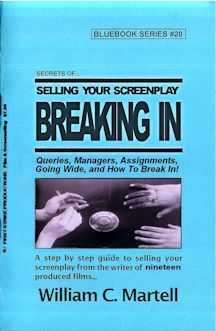
*** BREAKING IN BLUE BOOK *** - For Kindle!

Should really be called the BUSINESS BLUE BOOK because it covers almost everything you will need to know for your screenwriting career: from thinking like a producer and learning to speak their language, to query letters and finding a manager or agent, to making connections (at home and in Hollywood) and networking, to the different kinds of meetings you are will have at Studios, to the difference between a producer and a studio, to landing an assignment at that meeting and what is required of you when you are working under contract, to contracts and options and lawyers and... when to run from a deal! Information you can use *now* to move your career forward! It's all here in the Biggest Blue Book yet!
Print version was 48 pages, Kindle version is over 400 pages!
Only $4.99 - and no postage!


Tuesday, September 16, 2025

Trailer Tuesday: THE BORDER (1982)

Jack has been in the news lately, because he looks his age...

Directed by: Tony Richardson
Written by: Deric Washburn (DEERHUNTER) Walon Green (WILD BUNCH) David Freeman (not the guru, the guy who wrote STREET SMART).
Starring: Jack Nicholson, Harvey Keitel, Warren Oates, Valerie Perrine.


I saw this movie when it was first released and was shopping in Best Buys or someplace where the DVD was on sale, so I bought it... and it remained on my shelf in the shrink wrap ever since. With the news filled with stories of refugee children crossing the border illegally, I thought it might be time to break the seal on the DVD and use the film as a topical Trailer Tuesday. Yesterday’s earthquake in Guatemala made it even *more* topical (and I had to add that line to the already written blog entry).

When I first saw the film back in 1982 I thought it had some great performances and scenes, but the story was trying to do too much at the same time and suffered because of that. Seeing it again in 2014... pretty much the same. There are three different writers on this, and they reshot the end after test audiences hated it. The problem with doing any screenplay around an issue is that the issue might overshadow the story and you end up with a mess... which is probably what happened here.


The story begins in Guatemala after a major earthquake levels a city and kills the young husband of a teen mother, Maria. With aftershocks bringing down any building left standing, Maria (Elpidia Carrillo) and her newborn finds her little brother Juan and they head North with a group of others left homeless by the quake.

Meanwhile in Los Angeles, Charlie (Jack Nicholson) is an Immigration Officer tasked with busting illegal workers. When he enters a sweat shop, the owner begs him not to close him down. All of the employees are illegals, because his business model for maximum profit is to pay employees no more than $6 a day. Busting all of the illegals will put him out of business, not to mention make it impossible for his employees to feed their families. Charlie has been doing this for years, knows how things work in the real world, and says he’ll take *2* employees... and then finds two without wives and families and busts them. The Boss assures the two that their jobs will be waiting for them when they sneak back across the border... both are good employees.

Nicholson gives a great performance in this film, *not* playing Jack Nicholson... but the character. He’s subdued, stuck in a rut at work and at home... and kind of a loser. Charlie and his wife Marcy (the great Valerie Perrine, nominated for Best Actress in LENNY) live in a trailer park, but Marcy dreams of living in her dream home... and goads Charlie into asking for a transfer to El Paso where her cheerleading friend from high school Savannah (Shannon Wilcox stealing every scene she’s in) and her Border Patrol husband Cat (Harvey Keitel) have a duplex... with the other side vacant. It could be their dream home!

Buy the border

El Paso is very different than Los Angeles: it’s the front lines in the illegal immigrant war. There is a constant flow of people being smuggled in by coyotes in vans and cars and delivery trucks... plus individuals who sneak across the Rio Grande. Add to that the drug couriers and mules offered free passage into the United States by coyotes in exchange for taping drugs onto their bodies. The boring job of busting illegal workers in Los Angeles is nothing compared to the chases and shoot outs along the border in El Paso.

Cat (Keitel) is his partner, and Red (Warren Oates) is the boss. My friend Gary Grubbs plays one of the other Border Patrol Officers in his first credited film role! Early on, Cat tells Charlie that illegals are a commodity, and like any commodity, you can make a fair amount of money for delivering them to the right people. Would he like some extra cash? Charlie turns it down, he’s compassionate but not corrupt.

After picking up a group of illegals and taking them to the giant outdoor pens where they wait for processing, Cat introduced Charlie to a slimy Border Officer from Mexico, Manuel. Cat seems to have some side deal going on with Manuel...


While chasing some illegals trying to sneak across the Rio Grande, a boy steals all of the hubcaps off his patrol truck and runs back across to the Mexico side. Charlie chases the boy (who is Juan) but loses him. One of his first days on the job and he’s going to get into trouble for bringing the truck back without hubcaps! That’s when Maria and her baby shows up on the bank of the river to return the hubcaps. Her brother shouldn’t have stolen them. Charlie thanks her.

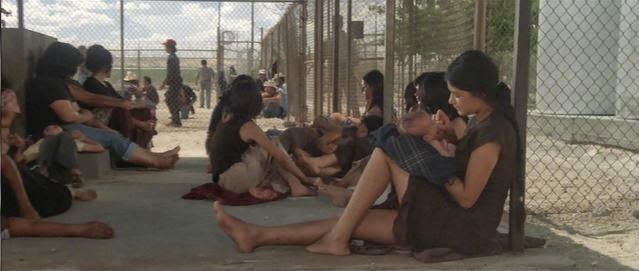
When they bust a delivery truck full of illegals, Maria, her newborn, and Juan are in the group and get sent to the outdoor pens, which are separated by sex. One of the other illegals asks Maria if she would like her to take care of the baby while she went to get water... and this ends up a ploy to steal the baby. Manuel the Mexican Border Officer has a business stealing and selling babies, smuggling in drugs and illegals, forcing any attractive women into a life of prostitution or sex slavery, and *killing* any competition. The theft of the baby starts a small riot, which is quelled in time for the buses to come and transport the illegals back to Mexico. Maria *does not* want to be taken away from her stolen baby. Maria spits in Charlie’s face: now he has become the enemy to her...


Meanwhile, Charlie’s wife is spending more than he makes turning their half of the duplex into a dream house. Charlie is drowning in debt and asks Cat if there’s still a chance he can do some of that corrupt cop work? Of course! They next bust they make, they find two drug couriers among the illegals and Cat has Charlie load up the others while he deals with the two couriers... and then Cat just shoots them dead. They were not Manuel’s couriers, and part of the corrupt gig is killing the competition. Charlie says he didn’t sign up for killing people... Cat warns him he needs to get along to go along.

Later, when a group of illegals try to escape onto a freight train, young Juan attempts to jump onto the speeding train, falls between cars, and Charlie risks his life to save him. Maria changes her mind about him, he’s not the typical Border Patrol Officer (who would have just let Juan die). Maria says she will do anything to get her baby back... and this becomes Charlie’s mission.

When he goes to Red about Cat and the corrupt border officers group... he discovers that Red is part of it! In fact, Red runs the corrupt group. Now it’s basically Charlie vs. all of the other border officers. Red and Cat set up an ambush an attack Charlie in an interesting if poorly choreographed shoot out in a lots filled with giant earth moves and construction vehicles. Charlie kills both of them, goes to Manuel’s headquarters on this side of the border, kills the toothless dude in charge and rescues the baby... but Manuel gets away. The movie ends with Charlie crossing the Rio Grand to give Maria her baby back...


The story seems scattershot at times, not knowing if it’s an action film or an issues movie or a domestic drama or a SERPICO like corrupt cop saga. All of the acting is top notch, and the scenes between Keitel and Nicholson are a million times better than anything in TWO JAKES. It’s interesting to look up the young actress who played Maria on IMDB, because her career took off big time. She’s the rebel woman in PREDATOR! (And PREDATOR 2!) She’s in SEVEN POUNDS with Will Smith! She’s in the SOLARIS remake with Clooney!

Tony Richardson was a really odd choice for director, he’s best known for costume dramas like TOM JONES and JOSEPH ANDREWS and comedies like TASTE OF HONEY and THE LOVED ONE. It makes you wonder if some early draft of this was a straight drama and they added the action scenes to turn it into the kind of movie that would sell tickets... which might account for the patchwork feel of the story. The action scenes are not well done, even though you cam see the *intentions* by what the characters do. The big “ambush” shoot out is over in a minute, even though you can see that it was written to go much longer (Cat’s death is a cool idea... that isn’t set up in the shoot out at all).


What this film shows is that there is no easy solution to any of this. A few weeks back I watched the 40s movie BORDER INCIDENT with Ricardo Montalban about the same subject, with many similar scenes. Because RKO was one of the producers of THE BORDER I wondered if it was a remake of some earlier film, and when I looked up movies with similar titles on IMDB there were Mexican/American Border movies going back to the silent era! Couldn’t find one from RKO with “border” in the title, so it may have been based on some film with a different title. But there are over 200 movies with the word “border” in the title, and most deal with the Mexican/American border. I may do the Montalban movie sometime down the road because I really liked that one.

THE BORDER is a mostly forgotten film with good performances, but a story that’s all over the place.

Bill
eXTReMe Tracker