Friday, August 29, 2025

Fridays With Hitchcock:
The Paradine Case (1947)

Screenplay by David O. Selznick.

Do I really have to say anything more?

Okay, for those of you who may not know who David O. Selznick was: He was the legendary producer who made the Best Picture Oscar winner GONE WITH THE WIND which is also the record holder for box office in adjusted dollars - yes, it even beat AVATAR. Name any film you think was a massive hit, GONE WITH THE WIND made more money in adjusted dollars. Selznick was also legendary for his ego and for micro-managing to the point of insanity. He would send lengthy memos to *everyone* involved in one of his films explaining what he wanted in minute detail. Often the memos were wacky - he once sent a 30 page telegram... and the last line of the telegram said to disregard the telegram! In the 1970s someone collected many of these crazy memos and published them in a book, MEMO FROM DAVID O. SELZNICK - I have a copy somewhere. At first, reading the memos made my brain hurt... then they became laugh-out-loud funny. He wrote memos on things so small and insignificant you wonder how he found the time to do anything else. So, imagine the lunatic, egotistical, head of production for the studio writing a screenplay...


To be fair, Selznick began in the story department at MGM - because in those good old days of Hollywood they promoted *screenwriters* and people who worked in the story department to producers and heads of production. Hollywood back then was not about deals and lawyers and agents, it was about *stories*. From the story department he worked his way up to producer at MGM, and produced a string of hits - which probably didn’t help that out-of-control ego of his. He married his boss’s daughter, Irene Mayer, and decided that he was too good for MGM, so he quit and started his own company - Selznick International. If you are ever on the Sony lot, you can still see his building. It looks much smaller than it does on film.

Selznick was the guy who brought Alfred Hitchcock over from England... and brought a bunch of European stars to the United States, including Ingrid Bergman. What he would do is sign them to a long term contract with his “studio”, which had yet to make a single film. Then he would “rent them” to another studio for more money... and make a profit. So, let’s say he was paying Ingrid Bergman $1X a month, he would rent her out to MGM for $5X and keep the difference. Bergman got paid the same no matter what. Because Selznick and Hitchcock did not get along, Selznick “rented” Hitchcock to other studios from 1941-1944 for five different movies, and basically lived off the money Hitchcock earned for him. Pimp-daddy Selznick. The director of an Oscar winning film could get top dollar... and all of that money went into Selznick’s pocket. During that period of time he made only one movie as a producer - SINCE YOU WENT AWAY... the rest of his money was from pimpin'.

Though he made a handful of successful movies at his “studio”, the film he made in 1939 was the one he’s best known for - GONE WITH THE WIND.

I think that film ruined him.

Imagine making the biggest box office film of all time *and* having it win Best Picture Oscar. What do you do for an encore?

Well, the year after he won Best Picture Oscar for producing GONE WITH THE WIND, he won Best Picture Oscar for producing REBECCA... directed by Alfred Hitchcock.


After that Selznick seemed to be *exclusively* trying to make movies that would be massive box office hits *and* win the Best Picture Oscar. Because Hitchcock was under contract to him, he was either being “rented” to some other studio or producer or making some film for Selznick. Some of these films, like SPELLBOUND, were “Hitchcock movies”, but THE PARADINE CASE is pure Selznick... a big glossy soap opera of a film that seemed created to pander to both the mass audience *and* the Academy Of Motion Picture Arts & Sciences membership. The film starred his new discovery from Europe Alida Valli (THE THIRD MAN), who he hoped to rent out as soon as she became a star, and Gregory Peck - another contract player, and a young hunky French actor he was grooming for stardom, Louis Jourdan (SWAMP THING). Hitchcock disliked the project, but was under contract and had no choice but to make it. Hitchcock brought in his own writers, and Selznick didn't send anyone to pick one of the writers up at the airport - so he flew back home. Eventually Selznick took over and wrote the screenplay himself, which Hitchcock must have loved. Hitch and Selznick were battling every day on the set. It’s hard to believe that this film falls between NOTORIOUS and ROPE on Hitchcock’s resume, because it’s so unlike either one of those films... it’s overwrought.

It was also Hitchcock’s last movie for Selznick - he walked off the set at the end of shooting. His contract was complete, and he was now a free man...

THE PARADINE CASE was a massive box office flop.


Nutshell: In London, rich and beautiful widow Mrs. Paradine (Valli) is about to sit down to dinner when the police arrive and arrest her for the murder of her husband. She gets the most respected criminal barrister in England, Anthony Keane (Peck) to represent her in his robes and powdered wig...

Okay, while you’re wondering how Peck did with his British accent, we’ll get on with the synopsis.

Because Mrs. Paradine is the most beautiful and seductive woman in the world, Keane’s wife Gay (Ann Todd) becomes jealous and worries that she will lose her man. Keane’s older law partner, Sir Simon (Charles Coburn) also worries about this, but his college girl daughter hopes that Mrs. Paradine will break up the marriage and then dump Keane so that she can swoop in and take him, because she thinks he’s a dreamy older man.

Oh, speaking of older men, the trial’s Judge (Charles Laughton) is a complete letch and keeps hitting on Keane’s wife. It’s kind of implied that if she sleeps with him, he may favor her husband in the case. Though his character doesn’t show up for a while, Louis Jourdan plays the dead Mr. Paradine’s valet Latour who may or may not have been playing hide the salami with Mrs. Paradine while her husband slept in the next room. I know that I’m leaving out some people who were either having sex with other people or at least wanted to have sex with other people, but you get the idea.


The first 2/3rds of the story takes place before the trial while all of these people are trying to get into each other’s pants. The last third is all in the courtroom - but far from Perry Mason excitement. There are only two suspects and no surprises. The story isn’t about who the killer is, it’s about who is gonna sleep with who and who already slept with who. Sex for the mass audience, powdered wigs and frilly shirts for the Academy.

Peck doesn’t even attempt a British accent.

Experiment: I’m sure that the main experiment was trying to get through the film without killing Selznick...


But the film has one amazing shot - as Mrs. Paradine sits at the defendant’s table in court, Latour enters the court room behind her and walks to the witness stand, and Hitchcock does a great composite shot with Mrs. Paradine in the foreground (one element) and Latour walking in the background (the other element) with both images moving so that it seems as if she can *feel* him entering the courtroom and - without looking back - *sense* him as he walks around her. It’s a great shot concept - she knows he is there without ever seeing him.

There is also the reverse of the shot, from Latour’s POV when he leaves the witness stand. Basically one great shot done twice.

Oh, and a nice overhead of the courtroom when Keane leaves after realizing his client is guilty.

Hitch Appearance: Leaving the train station, carrying a cello.

Great Scenes: Well, no suspense scenes, so let me talk about some of the soap opera stuff.

The opening scene where Mrs. Paradine is arrested is shocking, and managed to find a way to sneak in the victim visually. A huge painting of Mr. Paradine hangs on the wall, and is the center of much of the scene. But there is some great confusion by Mrs. Paradine about how one is supposed to get arrested - they just served dinner, will she be allowed to eat first? And what about packing a bag? She has no point of reference.


At the police station, she is searched and stripped and a matron goes through her beautiful hair with a comb searching for contraband. Hitchcock has done similar scenes that were even better - involving fingerprint ink you can’t remove. I would have gone full-force and had them delouse her with spray hoses, but it seems like everything is blanded... probably due to Sezlnick’s screenplay.

There’s a great scene with Charles Laughton as the horny old judge who sits next to Peck’s wife on the sofa and grabs her hand and puts her hand on her leg (stealing a feel) and makes it pretty clear that he wants to screw her and that it would be good for her husband’s trial if she said yes. Laughton steals every scene he is in - almost rescuing the film. Almost.


There’s kind of a spooky scene where Peck goes to the scene of the crime - the Paradine country estate - and it’s closed up, dark, spooky... and has a Mrs. Danvers-like woman showing him around... and Louis Jourdan’s valet seems to appear and disappear without ever leaving or entering a room. There’s more atmosphere in that scene than in the rest of the film.


The courtroom trial is boring because we have two suspects: Mrs. Paradine and the valet Latour, and neither tries to blame the other or has any shocking witness stand reveals. The one and only is that Mrs, Paradine may have visited Latour’s room after dark.

In HITCHCOCK/TRUFFAUT, Hitchcock complains about all of the casting - and rightly so - but spends a great deal of time explaining why Louis Jourdan was dead wrong as Latour. If that is supposed to be the big shocker in court, it doesn’t work if she was sleeping with some beefcake guy like Jourdan. He’s better looking than she is!


There’s only shock if Latour is *ugly* - and this goes back to my problems with UNDER CAPRICORN - Hollywood often makes the mistake of hiring pretty people when the role requires really ugly people. That film was another woman-who-sleeps-with-a-man-beneath-her story, and Bergman and Joseph Cotton seem like a reasonable pair. In PARADINE, Valli is a beautiful woman, but Jourdan is a beautiful man. They belong together - no shock. You can “tell us” that Jourdan is a servant and Valli is wealthy and that it is scandalous for her to sleep with him, but there is no class distinctions on screen. There are only *physical* distinctions.


Hell, she goes to his room! If the script would have made him the groom and had him sleeping in an apartment in the stables and the first time they got busy was after a ride on the floor of the stable amongst piles of hay and manure, we have something! And that is something that a *screenwriter* can do to guard against casting issues. We can create a *situation* that is shocking, so the casting won’t kill the scene.

An *idea* doesn’t show up on screen, only the execution of the idea - the image or dialogue that turns the idea into something concrete that we can see or hear. The *idea* of sleeping with a man below her class needs to be turned into something we can see or hear. Since we are not involved in casting as screenwriters, it has to be a situation or dialogue. That roll in the hay (and manure) - whether we do that with actions (visual) or with courtroom testimony (dialogue) we need to get it out there. But we do not have shocking testimony or shocking visuals... Instead we have a very dull Q&A of suspects on the stand who do not want to incriminate each other so they don’t really say anything.

Sound Track: Excellent score from the always dependable Franz Waxman.

THE PARADINE CASE is basically a big glossy soap opera with a couple of interesting shots, that Hitchcock practically disowned. He walked off after his rough cut, leaving David O’Selznick to sort out the rest. I’m sure he sent a 30 page memo to Hitchcock afterwards.

- Bill

BUY THE DVD AT AMAZON:


The other Fridays With Hitchcock.

Thursday, August 28, 2025

THRILLER Thursday: THE STORM

NEW! SEASON 2: THE STORM

The spider web fills the screen, it's Boris Karloff's THRILLER!


Season: 2, Episode: 18.
Airdate: January 22, 1962.

Director: Hershell Daugherty Writer: William D. Gordon, based on a story by MacIntoch Malmar.
Cast: Nancy Kelly, David McLean, James Griffith, Jean Carroll.
Music: Morton Stevens.
Cinematography: John F. Warren.
Producer: William Frye.


Boris Karloff’s Introduction: “George Herbert, rector of Bemerton once wrote, ‘By all means tale some time to be alone. Salute thyself. See what thy soul doth wear.’ One wonders if it is possible ever to heed that advice. Does the condition of safe solitude exist? Here, for example, we have a wide still space about us, and a curtain of heavy weather descended to cut off the rest of the world. Yes, we have the illusion of solitude. But here too are some witnesses who will attest that the illusion is grotesquely false: Janet Wilson whose character is portrayed by Nancy Kelly, Ben Wilson to be played by David McLean, and Ed Brandes played by James Griffith. And... dear ,em I think I’ve forgotten someone - of course, it’s Baba. (He picks up the black cat.) Baba who perpetuates the name of the Egyptian philosopher of the 18th Dynasty, 1600 BC. It’s a pity, wouldn’t you say, that Baba was the only witness to a murder? And such a brutal one. The victim so young, so beautiful, so helpless. The killer safe - free to roam the stormy night, perhaps to kill again. And again. As for little Baba, I suspect that only he knows the secret of solitude without danger. But the others? Seclusion will become the cradle of panic. The storm, from which the story derives its title from, has many ingredients: wind, rain, wickedness, terror. But I needn’t tell you anymore - you’ll be there to see it explode in all its glory.”


Synopsis: A storm rages. Outside a large country home - miles away from the next house - a black cat watches as a Man chases a Woman. We see neither’s face. The man catches the woman near a fence and strikes her... killing her... and she falls to the ground. Her limp arm tangled in a fence. We see that she is wearing a distinctive diamond ring.

There is a killer on the loose in the storm.

Janet Willsom (Nancy Kelly) pulls up in front of that large country home in a taxi cab driven by creepy Ed Brandes (James Griffith - more quirky than creepy) who warns her that the storm will be getting worse, there will be flooding and road closures, so maybe he should take her to the hotel in town. She says that she has been away, and just wants to get home. He offers to carry her bags inside...


Once inside, the cat (Baba) greets her... and Brandes the taxi driver continues to come on to her like a super lonely guy. You feel sorry for him. He offers to take the suitcases to the bedroom, he asks if she has anything alcoholic to drink, he asks if she wants him to spend the night to keep her safe. Janet tells him that she is expecting her husband any minute, pays him and gets him to leave.

Now she is alone in the house during the storm. Just her and the cat.

Lightning. Thunder. Wind. Rain.

The house is cold, so she turns on the furnace... but it isn’t working. Cold, So she puts on a jacket. Bundled up. She starts a fire in the fireplace, and goes to the phone to call her husband. This is a rural area, and every call goes through an operator, who Janet talks to for a while. The gossip line. She gets some information on the storm - which is getting worse - as the operator tries to connect to her husband Ben (David McLean). No answer at the office, he must already be headed home. Driving in this weather. Janet was going to warn him that she came home a day early after tending to a sick sister.

She hangs up the phone and we get an exposition filled flashback of her and Ben’s relationship. Even though both are middle aged, they have only been married a couple of years. They found each other late in life, and Ben swept her off her feet. This is the first of a couple of exposition dump flashbacks, and one major thing that it does is put a face on the offscreen husband.

The flashback ends when the power flickers... then goes out. Suddenly there is a loud banging from outside and the cat shoots across the room.

Janet looks out the window and discovers the noise is the cellar door banging open and closed. She grabs her raincoat and goes outside to secure it. Weird that it wasn’t latched closed.

Back inside the house, the power goes out. Darkness.


She grabs her coat and a flashlight, goes back outside and opens the cellar door, descending into the darkness. The cellar is creepy (but the spider webs never come into contact with the actress). She goes to the fuse box and checks the fuses - all are good. This is a downed power line somewhere. She goes back into the house, securing the cellar doors behind her. Grabs candles and hopes that Ben comes home soon.

The fire has died down, and when she stokes it with newspapers from a bin, she finds a letter addressed to her husband, and we get another flashback - this time to explain that in the past her husband kept getting letters from some woman named Agnes that he claimed was his cousin. Ben doesn’t open the letters in front of Janet and refuses to talk about them. All of this seems suspicious as hell in a brief flashback, but for some reason Janet just accepts it. We aren’t even at the first commercial and I already know who the killer and the victim are in this story.


She puts the cat outside, and then notices that the cellar window is open. It’s as if the cellar is beckoning to her. She grabs the flashlight and raincoat and goes down to close and lock the cellar window... and discovers a dead woman in a trunk! And the dead woman is wearing that distinctive diamond ring!

She races back inside the house and tries to call the police, but the storm has fouled up the phone lines - she can hear the operator but the operator can’t hear her.

She hears someone outside! She runs out to the garage, goes to the hook on the wall where the keys to the old pick up truck should be... but they are gone! She gets into the pick up, and the keys are in the ignition. She starts it up and drives away from the house, but a tree branch blocks the road. When she tries to get around it, she gets stuck in the mud. She runs back to the house, closes and locks the door, then notices an icepick on the kitchen table (earlier she had told the taxi driver that neither she nor her husband drinks, so what the heck is the ice pick for?). She grabs the ice pick to use as a weapon, and searches the house... finding the cat inside and wet shoe prints on the floor. Someone else is in the house!


The front door rattles. She goes up to the door, ice pick ready, and unlocks the door... daring the killer to come in. This does not seem like a safe thing to do, nor a sensible thing to do.

A man enters and when she tries to stab him with the ice pick, he grabs her... it’s Ben, her husband. She tells him about the dead woman in the cellar and he doesn’t believe her. He takes her down into the cellar to show her that it’s all her imagination... and there is no dead woman in the trunk. She imagined it all.

Back inside the house, she still wants to phone the police, and he talks her out of it. She mentions the letter that she found, but it isn’t where she put it. Ben says that he noticed it when he came in and put it in his pocket. When he pulls it out, that distinctive diamond ring comes with it, and falls on the floor. Ben is the killer!

Janet runs, Ben chases. She runs to the pick up truck, and we get a “cavalcade of bodies” scene when she pulls a tarp from the back and there is the dead woman! She screams, then keeps running. Ben stops chasing her for some reason, the end. Kind of a weird ending - it’s as if they ran out of film or time, so Ben just stops chasing her.


Review: This episode predates the classic Hitchcock Hour AN UNLOCKED WINDOW by a couple of years, and shows how the same idea can be a great episode and a bland one. This is the bland one. The one that keeps making mis-steps at the script stage.

Right from the beginning we get odd choices in the story. If the Taxi Driver is supposed to be our potential killer, he certainly doesn’t act like it. Though casting was a huge mistake here, James Griiffith seems like the guy at the top of the list when you look up “Taxi Drivers” in the casting directory, when the role really needs someone seriously creepy and strange; the real problem is the dialogue isn’t creepy and strange enough. He seems like a lonely guy hitting on a woman alone, instead of a potential murderer. This is where you want “two way dialogue” that has both a conversational meaning and a deeply disturbing meaning. Things that can be taken two ways. But you also want just straight out crazy stuff. If the Taxi Driver had talked about the dangers of the storm and how he once saw a new litter of puppies drown in a house basement... his house’s basement when he was a child... and he just watched them from the stairway... that would have made this guy a potential killer. He needed to be a serious threat that she must get out of her house... and then we fear that he might be waiting in the cellar for her. But he’s a lonely guy with lonely guy talk... pathetic instead of a threat.


Once he’s gone, it’s just Janet and the cat for most of the story - and it seems as if they have padded out the story instead of tried to create actual suspense and dread. Various noises keep sending her into the cellar... but because we have no idea that there is the body of a dead woman down there, it really doesn’t matter. Unlike the Hitchcock episode where we know that there is an escaped lunatic killer on the loose in the storm, here we have no constant warning that something bad might happen. Once we have negated the Taxi Driver as a threat, we just have the storm and that opening teaser where a woman is killed. Now, if that teaser had shown the killer taking the body into the cellar, where he maybe is waiting out the storm, that might have made those pointless trips to the cellar to latch a window more suspenseful... but minus a threat in the cellar, it’s just a woman in the dark securing a window - no big deal. And a huge chunk of this episode is her securing windows and being afraid of owls. They must have thought the storm was enough to be afraid of - but a storm is just rain, and it washes off.


The other issue with the script are these dead flashbacks designed to give us information that the exposition dumps on the phone with the operator didn’t cover. I’m sure in the story that this was adapted from, she sees the letter addressed to her husband and remembers their conversations about the letters... but instead of finding a way to *adapt* this scene to a visual dramatic medium, the script just does what the story does. It comes off as boring *and* an obvious exposition plant for the Husband Is The Killer Twist (which kills the twist). Instead, I would have had her read the letter and discover that her husband has a crazy admirer who is threatening to come to the house - making this mystery woman another possible killer in the storm.


If they had also made the mystery woman a threat, they could have had all sorts of fun with wet or muddy footprints in the house... a woman’s shoes... and now she tries to match her shoes to the prints. It would have given her something active to do, and built up the suspense.

It’s as if every time there is a chance to make the episode work, the script does the opposite of what it should have done.

Instead of racheting up the suspense and dread with actual things that are potential threats - things that are legitimate fears - if comes up with a bunch of excuses that just pad out the story until we get to the twist ending. This is where “poking the tiger” is important in a screenplay or story - whatever the actual physical threat is, it needs to be regularly shown in the story in order to remind the audience that it is there. Once we have that unlocked window in the Hitchcock episode, things begin to happen in the house that remind us of the crazy killer... and tell us that the killer is IN THE HOUSE. Not a potential threat, but an actual threat. Here, that noise outside is just an owl.


One of the other things that doesn’t work is that cat - which seems to exist only for scenes where she put the cat outside and then somehow the cat is inside. I didn’t even nothing this until she mentions it outloud close to the end. Was I supposed to be keeping track of the cat this whole time?

The end is also a complete let down. It seems like they just ran out of time or film and ended it with the husband in the storm. He could still have chassed and killed her. A better ending would have been to have a police car roll up (the operator had them do a check) or even the creepy Taxi Driver return because he stole something personal from the house and decided to return it an apologize. Something to actually resolve the conflict of the killer husband. But nope.

Next week we go to Hollywood for the story of a washed up old sexpot who gets one last chance at stardom... with a little help from a witch.

- Bill

Buy The DVD!

Wednesday, August 27, 2025

Fade Out Does Not Equal A Sale

RERUN AUGUST: From 14 Years Ago...

Congratulations! You have finished your screenplay! It was a lot of hard work, and you deserve to be rewarded, so do something nice for yourself. You deserve something special!

“Swell, do you have Spielberg's address? I think he'd be he perfect director!”

Okay, now to the reality check: just because you have made the major accomplishment of finishing a screenplay does not mean that that screenplay is great. It just means it's finished.

“Okay, how about Uwe Boll's address?”


Now, I'm not saying your screenplay *isn't* great – I haven't read it. I'm just saying that because it is finished is no reason to believe that it is great. It may suck. At this point, you are just so happy that you finally got to type FADE OUT that you probably are not the best judge. Later, after you have rewarded yourself for your excellent hard work, and maybe had a few days or weeks to just bask in FADE OUT, you might take a closer look at the script to see if it needs one of those rewrites you keep hearing about.

“Wait a minute! You mean once I finish it, I still have to keep rewriting it? Even for Uwe Boll?”

Lots of new writers (and probably some old ones) figure that once they type FADE OUT they have a salable screenplay – something they can send out to agents or managers or producers or their best contact. But just finishing a screenplay is like just finishing a foot race – you can come in last place and you have still finished.

“You're not going to make me run, are you? I'm, uh, a little out of shape.”

The problem is, just like that race, you aren't the only one running. There are around 75,000 scripts (etc) registered with the WGA every year, plus the things registered with the copyright office, plus the things that are not registered at all. Here's the thing – assignments and scripts adapted from other materials are usually *not* copyrighted or registered, because they are based on previously copyrighted material. So, I guess there are at least 100k scripts (etc) written every year... and it's common for a screenplay to stay in circulation for a decade – you often read about scripts like THE UNFORGIVEN that were bouncing around Hollywood for 10 years before they were finally bought... and that gives us about a million screenplays in circulation at any one time. And how many of those million sell? Well, last year it was 53.

“What you talking about? 53 total? That's impossible!”

Thanks to the brilliant Scott Myers, here is the list.

“Wow, that's all? But... well... my script might be better than those. It has a better title than some of them. BLOOD OF THE NAKED MUTILATORS. See? That's gotta be close to winning, right?”

But what that means is that if you were running that foot race and came in #54, you would still have lost. And there would be 999,946 people behind you!

“Crap.”

Wow, I probably just depressed the hell out of you. Sorry. The point is, just because you finish a screenplay does not mean what you have written is going to sell or get you an assignment or even get you noticed. Each of those things is a step. The first step is finishing your screenplay, then you keep climbing those steps getting better and better until you reach the point that you *are* one of those 53 winners. But that's probably not going to happen with your first screenplay. Might, but odds are kind of against it.

“Running, and now *steps*? This sounds like work to me.”

One of the things that frequently happens is people write their first script and become disappointed when it doesn't sell or get them work. They have unrealistic expectations.

“What is unrealistic about selling my first script to a studio for $1 million and having Spielberg direct it?”

Though Han Solo doesn't want anyone to tell him the odds, imagine how much confidence he would lose if he kept failing at something he thought was easy? When you golf, each hole is clearly marked with the level of difficulty *before* you tee off. A board gave gives you a guide for what age groups will be able to play it. So, telling you the odds is not to burst your bubble but to tell you that this isn't going to be easy, so if you try and fail a bunch of times – so did everyone else. All of your favorite screenwriters? Failed a lot. *A lot*. Part of the learning curve.

“Running, steps, now *golf*? That was bad enough, but now you are saying that I am going to *fail*? But I don't want to fail! I'm not a failure! I'm gonna be a huge success and win all of the Oscars!”

I wrote an article for Script Magazine in the 90s that took a bunch of famous Oscar Winning screenwriters and listed the number of unsold and unproduced scripts they'd written – my source was a big book called Film Writers Guide which no longer exists anymore. But once you saw how many great writers had screenplays that had “failed” - often after they were famous – you realized how tough this business is, and hopefully didn't feel so bad when your script did not sell.

“Well, I'm not feeling good about it. But if you have to fail to succeed, I guess I can do that.”

Once you write FADE OUT, you still have a lot of rewriting to do – and maybe page one rewrites where *everything* changes. Yes, everything - even that title of yours. And even then, they can't all be winners. It's a major accomplishment to finish a screenplay, but that doesn't mean it's going to be great... and doesn't mean it's going to sell. So, put off pricing the Ferraris for a while.

"Okay, but I just finished my first short film, how do I enter it in Sundance?"

- Bill

Tuesday, August 26, 2025

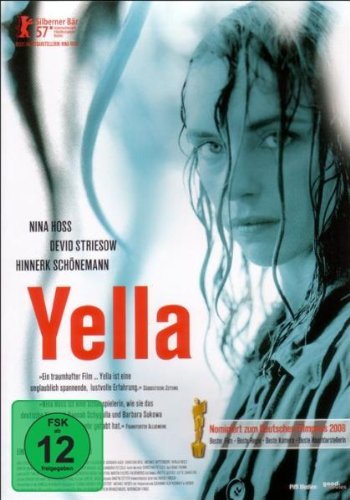
Trailer Tuesday: YELLA (2007)

YELLA (2007)

Directed by: Christian Petzold.
Written by: Christian Petzold.
Starring: Nina Hoss, Devid Striesow, Hinnerk Schönemann.
Produced by: Florian Koerner von Gustorf.
Cinematography by: Hans Fromm.
Music by: Stefan Will.


German movie star Nina Hoss is one of my movie crushes, and I stalk her whenever one of her films plays in the cinema or is released on DVD. Very soon I will have exhausted all of the USA releases and have to figure out how to see her work that hasn’t been released here. Hoss is an unbelievably beautiful woman... who looks as if she hasn’t slept for a week. I have no idea whether she looks this way in everyday life, or if it’s just a method to offset some of her beauty, but she is usually cast in roles where the look adds to the character. She is often in thriller films (why I know that she exists) and YELLA is an interesting example. It’s made with frequent collaborator writer-director Christian Petzold, and she won Best Actress at the Berlin Film Festival for the role. The last movie that I saw that both worked on was PHOENIX (2014) which had a CASABLANCA vibe... and the same year she was in a great spy flick with Philip Seymour Hoffman, Willem Dafoe, Robin Wright and Rachel McAdams: A MOST WANTED MAN based on a novel by Le Carre. I have seen several other Nina Hoss movies like BARBARA and JERICHOW and may write about them later.

YELLA is a slow burn thriller, and probably more drama than thriller - it’s a small personal story with a hint of suspense. Last year I wrote an article about slow burn horror films using MIDSOMMAR as an example, and the same principles apply to thrillers or any other genre: A slow burn is always on fire.

A “slow burn” story, instead of being action-action-action like your standard Hollywood film, has the story develop slowly and methodically towards a explosive boiling point. So all of the action is usually “back loaded” - with the story building and building and building until a big climax. Those writers with a story where nothing happens until the end may be okay, right? Probably wrong, because the main thing to remember about a slow burn story is that it is always on fire. Always. The water may not be boiling until the end, but you can still burn your finger if you put it in the pot. Things are happening from the very beginning and building. And “slow burns” usually start strong to make up for the slow burn. There are slow burns in every genre, from Horror to Thrillers to Romances to Dramas. They aren’t stories where nothing happens until the end, they are stories where things are simmering and eventually boil over, and YELLA is a good example.


Nina Hoss plays Yella Fichte, a woman from a small town who married her high school sweetheart Ben (Hinnerk Schnemann) a successful businessman who is young and handsome. But when his business goes south, he begins physically abusing her. She leaves him and files for divorce and goes into the city to look for a job so that she won’t be stuck in the same small town as him. But Ben does not accept the end of their relationship, and begins stalking her.

When she finds a job as an accountant, she returns home to pack her things and move... and Ben is waiting for her. He follows her to her father’s house - walking on the opposite side of the street (protective order) but when there is some construction he is *forced* to walk behind her on her side of the street... explaining how he has changed and that there’s no reason to go through with the divorce. He is both charming and creepy... and dangerous. With a hair-trigger temper.

The threat is set up in the very beginning of the story - the first scene or two. Ben is a violent young man and can’t accept that Yella would want to divorce him. This scene where they are walking down the street is filled with tension. It’s an explosive situation. Tension is a present but unresolved conflict - and this scene is packed with that simmering conflict just below the surface of every line of dialogue or movement that Ben makes. You are afraid that he might strike her...

She gets to her house, and Ben must walk away due to the protective order.

After packing her things and telling her Father (Christian Redl) that she will stay in a hotel until she finds an apartment, and pay for the hotel room with her first week’s earnings; her Father gives her a hidden stash of cash. She declines the money, but he sneaks it into her coat pocket. This is a great moment. It’s always important for the audience to care about the characters, and one of the techniques I look at in the Protagonist Blue Book is giving them “someone to love”. Here the father / daughter relationship is shown in a very simple moment that we can instantly understand. Widowed father loves his daughter and wants to look out for her and help her even after she moves to the big city... so we also know that he will miss her when she is gone. That “money for later” is all about the later - he is worried about her living alone. Within the first ten minutes of the film we get this great emotional moment...

STARTING WITH A BANG


Which is shattered when Yella leaves the house to find Ben waiting outside for her. He apologizes, and offers to drive her to the train station. She accepts, figuring there will be less conflict - and once she is at the train station? It’s over. She starts life new in the big city. Except all the way to the train station, she is trapped in the car with this violent man. More tension! One of the things I looked at in the MIDSOMMAR article is “poking the tiger” - frequently reminding the audience that there is conflict present to keep the tension and suspense alive. There is no suspense or tension if Ben is kept offscreen - he must be constantly pushed into the same scenes as Yella to keep the threat active. So instead of Yella just going to the train station in a taxi, she is stuck in this car with her violent ex-husband taking her to the train station... and no matter how polite the conversation, the tension is simmering away... threatening to boil over into violence.

A major part of that simmering in the car: Ben makes his last ditch effort to “win her back” (as if she’s some sort of human prize?) and when she declines... he drives his car off a bridge into the river where it sinks like a stone!

TWIST!

Shocking twist!


One of the things about Slow Burn stories, no matter what the genre, is that they tend to start with a bang. The audience gets a jolt right up front, and that “tides them over” while to suspense or horror or drama or romance or whatever the genre is continues to simmer in the background. It reassures the audience that this *is* a thriller (or horror or whatever) - and if they are patient there is much more to come. MIDSOMMAR has a big horror moment about ten minutes into the film, and then simmers until the ending’s big horror scene. You need that big jolt in the first ten minutes... it’s what shows the audience the things to come later. Here, the car crashing off the bridge and sinking doesn’t just show us how far Ben will go to get Yella back - which infuses every scene afterwards with suspense - it shocks the audience. This is a film that isn’t fooling around - it’s going to eventually get very dark. You want a big scene like this or the one in MIDSOMMAR around the ten minute mark to show that fire burning just below the surface for the rest of the film.

Yella breaks out of the sinking car and swims to shore... and moments later Ben follows, laying on the shore of the river next to her. Both are exhausted and pass out.

When Yella comes to a few moments later, she sees Ben and finds her floating suitcase and purse and races away - soaking wet - to catch her train. She needs to escape from Ben and this small town, and can’t be late for her first day at work!

Though I didn’t time the car crash, it seemed like around the first ten minutes of the movie... and it sets up most of the story as Yella tries to avoid the violent stalker she was married to and start a new life in the big city. We know that no matter how far she runs, Ben will go to extremes like this to find her. The conflict that Ben brings will always be lurking in the background of every scene.

A NEW LIFE?


She barely makes the train, is soaking wet, and when she opens her suitcase? All of her clothes are soaking wet. Great way to start out at a new job, right? When she gets to the hotel in the big city, the clerk takes one look at her - still wet and bedraggled - and insists she pay a deposit. Money that she doesn’t have... until she finds the roll of bills her Father put in her pocket. A hint of hope after the car crash and wet clothes.

After dropping off her suitcase, she rushes to work - not wanting to be late on her first day, but still looking like hell. The executive who hired her is waiting for her in the parking lot. He asks her if she will go up to his office and grab an envelope from his desk and bring it down? This request seems odd, but it’s her first day. The feeling that something is wrong with this request gives the audience that of-kilter feeling that is often part of a thriller story.

After grabbing the envelope from the desk, she is stopped by Security - it seems the Executive was fired for embezzling, barred from entering the building, and because he hired her - she has no job! She is escorted out of the building... where she finds the Executive hiding behind a tree. She hands him the envelope - which is filled with stolen money! He gives her a couple of bucks for her trouble.

Even though this is a slow burn thriller, we have escalating conflict. Her escape from Ben to the “safety” of the big city may not be safe after all! This is part of the slow burn simmering below the surface.

Jobless, in the big city, with her estranged and violent husband hunting for her, she has no idea where to go or what to do next. In the hotel’s restaurant, she’s probably eating the cheapest thing on the menu when she notices a handsome businessman Phillipp (Devid Striesow) studying spreadsheets on his laptop. He notices her and asks with a trace of anger why she is so interested in his business... again, conflict in the big city that shows how it is not the safe haven that she thought it might be.

CON-WOMAN?


The next morning, Phillipp knocks at her door and asks if she’d like to earn some money. Um, she’s not that kind of girl. He explains that he’s going to a business meeting and needs an assistant - mostly as a prop. Her job will be to pretend to study the spread sheets as if there is something wrong with them, and on his signal - whisper something in his ear so that the other businessmen become worried... and Phillipp gains the upper hand in the deal. She agrees - she needs the money.

This is kind of a con, and now she is part of it... and that creates some more simmering suspense. What if these businessmen that Phillip is trying to fool realize that something is wrong? She has already helped an embezzler steal money, now she is helping Philipp con some businessmen? What should she help this stranger? More suspense!

But in the meeting, she becomes distracted by kind of an aural flashback of Ben’s car crashing into the river and sinking. Her past - and Ben - reaching out to grab her even in the safety of this business meeting! Will she blow the deal? Will her past ruin her future? But when she snaps out of it and looks at the spreadsheets there really is something wrong with them, and she mentions it out loud, and the deal goes better than expected for Phillipp! She may have a new future working for this man!

THE PAST RETURNS


But back at the hotel, Ben is waiting in her room. Twist! Once more the threat of Ben simmers to the surface. He has found her! He wants her back - now. The divorce isn’t final, yet. She’s his wife - his property.

When she runs away from him through the maze of hotel hallways, Ben gives chase... So we get a nice little chase scene - some low key action and suspense.

Through the rest of the film, whenever Yella catches a break in life, something goes wrong and / or Ben shows up to drag her back to the small town. You just want this woman to get away from her estranged husband and find happiness - but the story keeps throwing up some great roadblocks.

Though this is more of a slow burn drama than thriller - you want things to start going Yella’s way. Instead, it seems for every step forward in her new life something happens that sets her two steps back. Hoss’ combination of beauty and that haggard look of someone who hasn’t slept in days works perfectly for this character, and in deal after deal her accounting skills save the day for Phillipp - she’s more intelligent that the big businessmen who sit across from her in these deals. There is hope for her escape from the past because she is very good at accounting and Phillipp provides a chance for a new life for her...

BOILING OVER!


But Ben keeps stalking her... and there’s a twist ending (which you may see coming from a mile away - but that just creates dread, so it still works).
The key to any Slow Burn story is that it is always on fire... and eventually that fire erupts and burns everything down. The simmering threat below the surface boils over in Act Three... and causes all kinds of serious damage. And that is what happens in this story. Yella’s escape from her violent ex husband comes to and end... and things get very very explosive and not everyone survives. I’m not going to spoil the ending, but all of this tension and suspense that have building pay off in action - and that action is big enough to satisfy an audience that has been waiting throughout the film for it. Which is another key to Slow Burn stories - when you save all of the action for the end, yoiu have to deliver as much action as there would have been had this been a conventional story with a “genre juice” scene around every ten minutes... but you need to have that all at once!

Til death do they part.

If you are looking for a conventional thriller, this probably isn’t it. If you are looking for an arthouse slow burn story, this will probably keep you interested.... and Nina Hoss gives a great performance.

- Bill

Friday, August 22, 2025

Fridays With Hitchcock: THE BEAVER? Jerry Mathers on THE TROUBLE WITH HARRY

THE TROUBLE WITH HARRY, like Hitch's MR. & MRS. SMITH, is an unusual film from the "master of suspense" because it is a comedy rather than a thriller. This was Shirley McLaine's very first film, and she played the *lead* - and is great. Jerry Mathers was on old pro with 8 previous credits when he made this film! So let's see what he has to say about the experience of working with Hitchcock and his memories of playing the role of a kid who may or may not have killed Harry with his ray gun...


- Bill

Of course, I have my own books focusing on Hitchcock...

HITCHCOCK: MASTERING SUSPENSE


LEARN SUSPENSE FROM THE MASTER!

Alfred Hitchcock, who directed 52 movies, was known as the “Master Of Suspense”; but what exactly is suspense and how can *we* master it? How does suspense work? How can *we* create “Hitchcockian” suspense scenes in our screenplays, novels, stories and films?

This book uses seventeen of Hitchcock’s films to show the difference between suspense and surprise, how to use “focus objects” to create suspense, the 20 iconic suspense scenes and situations, how plot twists work, using secrets for suspense, how to use Dread (the cousin of suspense) in horror stories, and dozens of other amazing storytelling lessons. From classics like “Strangers On A Train” and “The Birds” and “Vertigo” and “To Catch A Thief” to older films from the British period like “The 39 Steps” and “The Man Who Knew Too Much” to his hits from the silent era like “The Lodger” (about Jack The Ripper), we’ll look at all of the techniques to create suspense!

Films Included: NOTORIOUS, SABOTAGE, STRANGERS ON A TRAIN, THE 39 STEPS, REBECCA, TO CATCH A THIEF, FRENZY, FOREIGN CORRESPONDENT, THE LODGER, THE BIRDS, TORN CURTAIN, SABOTEUR, VERTIGO, THE MAN WHO KNEW TOO MUCH (1934), THE MAN WHO KNEW TOO MUCH (1955), SUSPICION, and NUMBER SEVENTEEN. 17 Great Films!

Only 125,000 words!

Price: $5.99

Click here for more info!

OTHER COUNTRIES:


UK Folks Click Here.

German Folks Click Here.

French Folks Click Here.

Espania Folks Click Here.

Canadian Folks Click Here.

And....

HITCHCOCK: EXPERIMENTS IN TERROR


USA Readers click here for more info!

HITCHCOCK DID IT FIRST!

We all know that Alfred Hitchcock was the Master Of Suspense, but did you know he was the most *experimental* filmmaker in history?

Contained Thrillers like “Buried”? Serial Protagonists like “Place Beyond The Pines”? Multiple Connecting Stories like “Pulp Fiction”? Same Story Multiple Times like “Run, Lola, Run”? This book focuses on 18 of Hitchcock’s 52 films with wild cinema and story experiments which paved the way for modern films. Almost one hundred different experiments that you may think are recent cinema or story inventions... but some date back to Hitchcock’s *silent* films! We’ll examine these experiments and how they work. Great for film makers, screenwriters, film fans, producers and directors.

Films Examined: “Rear Window”, “Psycho”, “Family Plot”, “Topaz”, “Rope”, “The Wrong Man”, “Easy Virtue”, “Lifeboat”, “Bon Voyage”, “Aventure Malgache”, “Elstree Calling”, “Dial M for Murder”, “Stage Fright”, “Champagne”, “Spellbound”, “I Confess”, and “The Trouble with Harry”, with glances at “Vertigo” and several others.

Professional screenwriter William C. Martell takes you into the world of The Master Of Suspense and shows you the daring experiments that changed cinema. Over 77,000 words.

UK Folks Click Here.

German Folks Click Here.

French Folks Click Here.

Espania Folks Click Here.

Canadian Folks Click Here.

Thursday, August 21, 2025

THRILLER Thursday: A WIG FOR MISS DEVORE

SEASON 2: A WIG FOR MISS DEVORE

The spider web fills the screen, it's Boris Karloff's THRILLER!


Season: 2, Episode: 19.
Airdate: January 29, 1962.
Director: John Brahm.
Writer: Donald S. Sanford based on the story by August Derleth.
Cast: Patricia Barry, John Baragrey, John Fiedler, Herbert Rudley, Linda Watkins, Pamela Searle.
Music: Morton Stevens - though it's really Jerry Goldsmith's score for GUILLOTINE.
Cinematography: Benjamin Kline.
Producer: William Frye.


Boris Karloff’s Introduction: “Well, that was a gruesome surprise even for a hangman. A stunningly beautiful courtesan is dropped into the pit, and a moment later, her executions discover a withered hand, claw-like, clutching a wig. Well, of course the noose usually does have a disastrous effect upon the human body, but nothing like this. (Picks up wig) How strange. I should think it must have something to do with this wig. There is something weird and frightening about it. Look my friends, look! It’s only clothe and hair. Lustrous red hair to be sure, but hardly very mysterious. At least, that’s what the characters in tonight’s story thought. Unfortunately for them. My I introduce Sheila Devore, played by Patricia Barry. George Machik, played by John Baragrey. Herbert Bleake, played by John Fiedler. Arabella Foote, played by Linda Watkins. And Max Quinke, played by Herbert Rudley. We call our story A Wig For Miss Devore, and naturally I refer to this particular wig. Now my friends, you know all about the magic that the sorcerers of the silver screen put on film for your entertainment. Well tonight, as sure as my name is Boris Karloff, you will learn that sorcery can be performed without celluloid. Behind the cameras, and perhaps even in your own livingroom.”


Synopsis: In mid-1700s England, a beautiful young woman is escorted to the gallows. No crowd of onlookers, no official doctor to pronounce the death, this execution will be in private - because this woman has been accused and convicted of witchcraft. Part of that witchcraft charge against Meg Payton (Pamela Searle) includes the murder of six men. The Man whose job is to remove the corpse after the hanging wants Payton to remove her wig - even if they were to execute the King himself, he would have to remove his wig. She refuses, and the Hangman allows her to keep it - she won’t be needing in a couple of minutes. As the Hangman prepares to pu the noose around her neck, she says: “Your hands are trembling, let me help you,” and slides the noose around her own neck. As the Hangman prepares to pull the lver, she says, “Meg Payton does not die here.” Then, the trap door opens and she does the long drops with the hard stop. Dead. The Man goes down to collect the body... and screams! The wig has fallen off, and Meg Payton has become a withered old monster.


1962 Los Angeles: Blonde Bombshell way past her pull date Miss Sheila Devore (think Marilyn Monroe if she had made it to her mid-forties - but she died 7 months after this episode aired) thinks that she has found the perfect screenplay for her comeback - the epic biography of witch Meg Payton who was hung 200 years earlier. Her loyal assistant, Herbert Bleake (the always great John Fiedler who gets a mention in our entry for “Yours Truly Jack The Ripper”) tries to talk her out of it - it’s an expensive period piece. Maybe she should look through all of the scripts one more time, just to be sure? It’s obvious that Bleake is secretly in love with her... but too shy and mousy to say so. Bleake used to be a studio production accountant who worked on all of her films. As her assistant, he knows that she’s too old for the role and the studio would never spend that kind of money on a movie starring her - his job is to always protect her. But she *insists* on doing the witch script, and for authenticity (and publicity) wants to use the actual wig that Meg Payton wore. Studio Chief Max Quinke has been regularly sending her flowers and begging for her to come back to work since she retired... Bleake says he will go to the studio and set up the deal.

Studio chief Max Quinke (Herbert Rudley) says no way! How old is she? It’s alluded to that Quinke had an affair with her... when she was younger. Bleake says Quinke has been sending her flowers regularly since she retired begging her to come back, and this script is her comeback. Quinke hasn’t been sending her flowers all of those years - Bleake has. You see, as production accountant, Bleake knows that when big star Devore and producer Quinke and director George Machik formed a production company together and made all of Devore’s biggest hits, they had him do some “Hollywood bookkeeping” so that Quinke and Machik could steal all of the profits from 32 of her films. Millions. So it would be to Quinke’s advantage to greenlight Devore’s comeback instead of deal with the police and IRS and probably end up in prison.

And that is how film deals are made.


The Comeback: On the set, director George Machik (handsome John Baragrey) warns the crew to behave when Miss Devore comes on set - she has been retired for a long time, and this is her comeback, and she may have... aged.

But when Devore comes out, dressed in the costumes and Payton’s actual red wig, she’s young and hot! She looks 25 years old! And she acts the hell out of her scene - she’s still got it! Watching from the side-lines is Hedda Hopper inspired gossip reporter Arabella Foote (Linda Watkins), who can’t believe this is the middle aged Miss Devore. Devore has been in seclusion since her retirement, but she must have had a bunch of face lifts to look this good. Foote is the villainess of the story - trying to find the secret of Devore’s good looks. She’s in the background of almost every scene.

After the day’s shooting, director Machik hits on Devore - they had an affair when she was younger as well. Maybe they could go out to dinner tonight? Devore says she can’t - there’s a party at studio chief Max Quinke’s mansion in Hollywood. Machik wasn’t invited to the party? Machik tells her that Quinke stole from her - skimmed the profits on 32 of her films. Though Machik knew about this, he was afraid to go up against the powerful producer. Maybe Devore should ditch Quinke’s party and go to dinner with Machik?

Devore arrives at Max Quinke’s marvelous mansion for the party... and she is the only guest! Quinke wants to rekindle old flames. His mansion has an indoor fountain, and he puts on music so that they can dance around the fountain. Quinke asks her why she is still wearing the wig after the day’s filming is over. Has she gone method? He’d love to see her beautiful blonde hair....


Meanwhile, assistant Bleake knocks on the door of the mansion, which is opened by a butler. Bleake has a letter that he must give to Miss Devore - very important that she read it. The butler turns him away - he’s not going to interrupt his boss when he’s trying to score.

Quinke keeps asking Devore to take off the red wig... and he gets his wish. Quinke screams in horror! She tells him she knows about skimming the profits from the 32 movies, then pushes him back... into the fountain... where he hits his head and drowns.

We never see Devore’s face without the wig - but the arm that pushes Quinke was withered and old, as if the energy keeping Devore looking young was sucking years off her life. Devore puts the wig back on... just as director Machik shows at the mansion.

Devore tells him that she and Quinke were dancing and he tripped and hit his head on the fountain. Machik says that she shouldn’t be involved because Quinke stole all of that money from her - that can be misconstrued as a motive. Also, that they need a way to keep Machik from being forced to testify against her if it ever comes to that... hey, why don’t we get married? A wife can’t be forced to testify against her husband. She agrees.


Last Day Of Production: They film the last scene of the movie, as Devore playing witch Payton is lead to the gallows, and tells the Hangman, “Your hands are trembling, let me help you,” and puts the noose around her neck. I love how we go back to the opening scene of the episode, here. After filming the scene, it’s a wrap - and the party begins!

Bleake shows at her dressing room with the letter, and she tells him that she doesn’t want to read it. When he keeps pushing, she breaks his heart by saying that she never really cared about him. He was just someone who did things for her. He leaves, practically in tears.

Gossip columnist Foote follows Bleake to a bar, and gets him drunk. A shoulder to cry on. He shows her the letter from the museum where they got the wig, claiming that it is cursed - and the previous owners murdered men who did them wrong. Foote leaves so fast Bleake’s head almost hits the bar when she pulls her shoulder away.

In director Machik’s luxurious penthouse apartment, the newlywed couple discuss their future together on the balcony overlooking the city of Los Angeles at night. Now that the film has wrapped, he wants her to take off that silly wig. She tells him she knows that he was part of embezzling profits from those 32 films, and now that they are married, she can’t testify against him on embezzlement charges. He tries to talk his way out of it, he’s good at that... but she takes off the wig. We don’t see her face, but we see his. He screams in horror and steps away from her - over the balcony railing and all the way down to the street. SPLAT! Now she has inherited all of the money he embezzled.

THE LEGEND OF MEG PAYTON is a huge hit - lines circling around the block. Devore is a big star again, sought after by every producer at every studio.

In her dressing room, a burley security guard catches ex-assistant Bleake trying to break in. She tells the security guard to let him in, and Bleake tells her about the cursed wig. He doesn’t care that she broke his heart, he just wants to help her. He truly cares about her. But she doesn’t want his help - she has everything she wants. “After a while, the wig grows on you.”

At The Wrap Party For The Next Film, Devore is twisting the night away with a much younger man. Gossip columnist Foote and a Photographer watch from the sidelines, and she explains her plan to him: she is going to enter Devore’s dressing room and confront her with the letter from the museum about the cursed wig. At a certain point, the photographer bursts into the dressing room and takes a picture of Devore without the wig...


In the dressing room, Foote confronts Devore with the letter. The wig has dark, demonic powers. Foote accuses Devore of murdering the two men, and who knows how many others, to get to where she is now. “A frowsy old bag puts on a wig and overnight mind you, becomes a ravishing beauty.” Foote manages to grab Devore’s wig and rip it off her head. Devore screams. The photographer breaks in and snaps a picture. Devore runs out of the room with a towel over her head - hiding her face. Leaving the wig on the floor.

Bleake (and everyone else) chases Devore through the studio lot between sound stages. She turns and one point, sees Bleake behind her, and tells him, “Don’t let them see me!” Bleake tries to help her get away, but she trips and falls and is surrounded by everyone else. They turn the lights on her - exposing her withered, ugly face. She looks at least 100 years old. She screams and dies in Bleake’s arms... and he still loves her.

In the dressing room, a plain-jane Maid sees the wig on the floor and snatches it up. When no one is looking she puts it on and looks at herself in the mirror - a hot young woman looks back at her. The end.


Review: An episode that takes on the issues of Ageism, sexism, and #MeToo... in 1962?

After getting off to a rocky start - I sure hope that Pamela Searle was the producer’s girlfriend and that she wasn’t chosen for her acting abilities - this turns into a great episode that combines elements of Grand Guignol and Hollywood (a marriage made in heaven, or maybe hell). This episode is fun, and skewers movies from Hollywood bookkeeping to more serious subjects like women being aged out of the business while older men are promoted. We’ll get to the serious subjects in a moment, because I think that’s what makes this one topical today.


But first, an appreciation for Patricia Barry, who only has 145 credits and was working up until 2014 - two years before her death at 93 years old. Her first film credit is in 1946 (she only made 6 films that year) and she’s in freakin’ SEA OF LOVE, one of my favorite films. She’s in a couple of other episodes of THRILLER, but this is an amazing performance. She plays both versions of Devore, and they are completely different people with completely different looks. She was 40 years old when she made this episode - basically the older Miss Devore - but perfectly played the young hot Miss Devore. Here’s the thing about those 145 credits on IMDB - her three episodes of THRILLER count as 1... and this episode alone is like playing two roles. She seemed to be one of those great dependable actors that you could hire for 6 films in the same year and she did her best work in all 6. Once TV became popular, she was doing multiple episodes on multiple shows within the same year - so she was dependable and professional. This episode made me want to binge watch a whole bunch of movies and TV stuff that she was in, just to see all of the different characters she played - because even if all of those 1946 movies were playing the love interest, I’ll bet they were different people. Her work here is great, and there could not be an episode without someone of this talent playing Devore.

There is a whole subgenre of horror movies about people who have been taken advantage of by others getting their revenge through some sort of supernatural method that they seemingly can not control. From Oliver Stone’s THE HAND (where Michael Caine’s hand lost in a freak accident tracks down those who wronged him) to CHRISTINE (which may have introduced the self driving car) and lots of other movies feature the Dr. JEKYLL AND MR. HYDE tale with a supernatural item like Miss Devore’s wig. Spielberg did a similar episode - though nuttier - on his AMAZING STORIES show in the 1980s called HELL TOUPEE and written by a couple of 12 year olds (seriously) about a hairpiece that gets revenge for the meek fellow who wears it. DEVORE does a great job of taking a powerless person and giving them the power that they need... at a price.


Okay, time to talk about that powerless person - and why this episode resonates sixty years later. Back in 1962, this was an episode about Hollywood (and the world’s) seeing women as second class citizens and how agism in Hollywood only matters if you are female. No one wants to hire Devore because she’s old... but they regularly hire male actors who are even older. When you watch a movie today and the male lead is over sixty and the female lead is half that age, something is wrong. Why do older actors get to keep working and older actresses become unemployed? Take your favorite movie from the 1980s - is the male lead still starring in movies? Is the female lead? It’s strange that Stallone still gets to play ROCKY and RAMBO, but how many 73 year old actresses are starring in movies? Sharon Stone is my age, in great shape, and still working... in small supporting roles (she steals the show in DISASTER ARTIST). Why isn’t she *starring* in big movies like (over a decade older) Stallone is? Hollywood has an ageism/sexism problem... and this episode of THRILLER is all about that. Devore is over the hill and un-hireable in her 40s. It always amazes me when an issue like this is explored on a TV series in the 1960s and is still with us today. Is nobody paying attention?

The other issue this episode explores that is still with us today is #MeToo - and maybe it ties in to the ageism/sexism thing... and that bad taste joke I made about the actress who played the witch being someone’s girlfriend. The two powerful men in this episode each had a previous relationship with Devore when she was a young, hot, actress. Though this episode never mentions casting room couches, both men had no problem sleeping with Devore when she was young... but now neither wants to touch her... until they see her in the wig. Then, they are all over her. Both men not only make passes at her, they seem to feel like it’s part of their job description to sleep with the talent. They are powerful men, and that gives them the right to make these advances. Compare those characters with Bleake her assistant - who is in love with her and even has power (the knowledge of the embezzling) but never pushes Devore into any sort of relationship. The moment Devore shows up at producer Quinke’s mansion and she is the only guest, that’s a #MeToo moment. He has lied to her with only one intention. Again, here’s a 60 year old TV episode that focuses on an issue that is still with us today. How many years have there been jokes about the casting room couch? We knew that was wrong all of those years - that’s at the core of those jokes, yet did nothing about it. Being a leacher was never a good thing. The plot of this story has these powerful men taking advantage of a woman - by ripping her off, but also by trying to control her, and by using their power to sleep with her. Yeah, this is a revenge story, so she goes along with their seduction to kill them, but the minute both the producer and director see that she is still hot - they are all over her. Assistant Bleake is kind of the “control” in this experiment - he never stops helping her. Even at the end, he is the one protecting her while all of the others *want* to out her as a disfigured old hag.

If you think older movies and older TV shows didn’t get “political”, it’s just because you were too young to notice... and maybe have a Warner Brothers movies deficiency.

But aside from exploring a couple of issues that I’m sorry to say are still with us today, this is a FUN episode.

It grows on you.

Next time, another horror tale - this one about a killer scarecrow.

- Bill

Buy The DVD!

Wednesday, August 20, 2025

California Scheming

RERUN AUGUST: From 15 years ago...

I’m sitting in a fast food place writing this, and there’s a funny slogan on the soda cup. Somebody wrote that.

Mystery writer Ron Goulart wrote a private eye series in the 70s and 80s and also wrote just about anything else that would help pay the rent - you’ve probably read some of his work because he wrote puzzles and games and stories for the back of cereal boxes. He also wrote the best non-fiction study of the golden age of the pulp magazines.

As writers, we often only see the markets we want to see - and disregard the rest... to paraphrase Simon & Garfunkle. We often miss the niche markets... and even overlook some non-niche markets that may not have any obvious appeal to us. “Who wants to write ____?”


Well, a friend of mine is in a meeting right now with a producer, involving a scheme that I am a part of, and if everything goes okay he will sell his first screenplay and I will eventually tell you all about it. There are also some lessons to be learned about working in under-served genres and ideas that you may think are dumb and opening your eyes to possibilities that are so obvious that you do not see them.

My friend was looking for producers to sell his scripts to and happened upon a producer who was not interested in his wheelhouse genres... and did a very smart thing. He asked what they were interested in. Now, most people don’t do this - I don’t do this. I take the rejection and move on. But my friend asked a simple question. And got an interesting answer. He discovered this producer was looking for a specific niche genre that is popular but no one seems to want to write it. This is kind of strange, but not unheard of. On message boards there are often people who are excited by some cool, sexy genre, but don’t even consider some fairly popular niche genre because it sounds boring. People who want to write some popular genre always go for the cool ones... and often don’t care much about the “meat and potatoes” genres. Well, this producer makes some of those boring genre films, and is looking for scripts.

My friend had never considered this genre. It had never crossed his mind. Now, this is where most writers who ask that “Well, what *are* you looking for?” question get the answer and think, “Well, I don’t write that” and walk away. But my friend thought about the genre - it’s not porn, it’s nothing with some major stigma... it’s just kind of dull. This is not the genre that people sell million dollar scripts in. This is not the genre that wins Oscars. And this particular producer is making direct to DVD movies (for budgets in the millions with actual names in the cast) so it’s not going to play film fests and win you awards. It’s a pay check on a film that will be on the shelves at Blockbusters (well, until they close them all down). Meat and potatoes stuff. He could write that - and sell the script to this producer - and get his first credit - and use it as a stepping stone to some other work. My friend came up with a great story, wrote up a treatment, and set up a meeting with this producer - using his script in his favorite genre to get the door open.

Well, my friend called me yesterday, and told me about his scheme. The scheme on top of writing the film not his his favorite genre. See, this producer makes a handful of films a year in this genre, and my friend plans on pitching them not just his story... but one of mine... and our writing services for future projects. The producer needs a half dozen scripts a year, why not provide 4 of them between the two of us? Would I be interetsed in this? I thought about it, and said "Why not?" Hey, I can quit at any time, and though I currently have work - well, that's the best time to look for more work. This is a business with no visible means of support - sell a script, do the rewrites... and you are now unemployed! The weird thing is, even though I have never considered this niche genre, I instantly came up with some ideas for stories I would want to write. If someone says: "Lesbian Love Story" to me, my mind instantly comes up with lesbian love story ideas. Hey, how about a lesbian version of STRANGERS ON A TRAIN with a strong love story element? Anyway, it's not lesbian love stories...

So far, none of this seems very schemish, right? But here’s where his idea rocks... He is pitching them on the idea of developing some film franchises - and producers love franchises because when one hits, they can just keep making them... with the last film as the advertisement for the next film. Hey, maybe we even put them in numbered DVD boxes? The films all have non-number titles, but the packaging encourages consumers to collect them all. The great thing about franchises from a writer's perspective is that you are creating future work for yourself (though this did not work for me on INVISIBLE MOM as my sequel idea was for top secret gov't scientist dad to invent a time machine and the kid plays with it and gets sent back to the 1860s Wild West, and mom has to go back and rescue him - GUNSLINGER MOM - but the producer wanted mom to just be invisible again... so they hired some other writer... and I didn't write *any* of the 4 sequels!).

Now, the next element of his scheme is also genius - one of the problems with this niche genre is that it is kind of old fashioned - it has been around forever in print fiction. Old fashioned is often thought of as a bad thing, especially if you are writing something cool. But old fashioned also means the genre has a long history... and that means public domain. Expired copyrights. My friend has found some public domain material in this genre with “brand name characters” - famous fictional characters. You’ve heard of them. The problem every low budget film company has is how to publicize their films - how do you make sure that people pick up YOUR DVD rather than the other company’s DVD when in that soon-to-be-closing Blockbuster? Well, a familiar title or famous character name is a great way to do that. Once those Blockbusters are closed and it’s all NetFlix, brand names may become even more important. But what amazed me is that no one else had exploited these characters, whose names you would instantly recognize. Maybe someone has written a script about them and I don’t know about it... but I doubt there are many floating around... and most are probably written as big budget projects. Though this is a popular niche, it’s not popular enough for some huge Hollywood tentpole. It’s a *niche*. So using this public domain material is a great idea, only if you look at the size of the audience for a film like this.

My contribution - nothing major - is the idea of doing *new* sequels to famous public domain titles in this under-served genre. Hey, if we can have Sense & Sensibility & Sea Monsters, why can’t we take some other public domain book and give the protagonist some further adventures? I came up with some ideas and gave them to him. These were off the top of my head, and sounded like things that would be fun to write... even though they aren’t exactly in my wheelhouse, either. But I’ve always wondered what happened to that character after the famous story ended... You know, all of this stuff isn’t earthshattering - but a way to harvest some basic “mental real estate” the same way Hollywood is making TRANSFORMERS and MONOPOLY and remaking every film you ever saw in the 1980s. Taking that brand name character and finding new adventures in their lives.

Back when Spielberg had just signed to make JURASSIC PARK, I was at AFM trying to sell a producer, any producer, on making A.C. Doyle’s THE LOST WORLD - a novel in public domain with dinosaurs. I even knew a guy with some great stop-motion dinosaur footage. Every single producer said no - they had never heard of the book and one producer told me the best they could do was some sort of campy knock off of the Spielberg movie... which confused me. Why was that the best we could do? Well, all of this was before JURASSIC came out... after, many of those same producers discovered that THE LOST WORLD was in public domain and made their versions of it. We had a half dozen LOST WORLDS, plus a TV series. (More of my bad timing, I guess - should have come back *after* JURASSIC came out and pitched the same exact project.)

Though it’s probably too late by now, all of those crappy video games we played when computers first came out could probably be sold as movies these days.

I may have mentioned this in a previous blog entry - a friend of mine and I have a game where we come up with the *dumbest* idea for a movie we can think of... then count the days until someone sells a script with that same dumb idea. Do you see the problem with this game? We had the same dumb idea, but we aren’t making low-six figure against $1.2 million like the guys who wrote the scripts. We would *joke* about BATTLESHIP: THE MOTION PICTURE... and now they are making it. Hey, I’ve joked about SLINKY: THE MOTION PICTURE... maybe I should actually be developing a pitch for that? The thing is, we all have some form of tunnel vision - we see where we want to go, but don’t see all of the other cool places we *could* go. My friend asked a question, opened his eyes, and realized that there was a producer who was looking for material... and figured out the very best material to sell that producer. Any of us could have done the same thing... but we did not.

Another friend, Steve, realized that there is a minority (that he is not a part of) who are under-served by Hollywood... and the scripts out there written by the minority seem to mostly be about them struggling as a minority - not genre stuff. So Steve has decided to write some genre stuff for this minority and discovered producers are really interested. Seems the ticket buyers in this minority already know what it is like to struggle, and want to escape the struggle by seeing some cool genre movie where they get to have fun - like middle class white people in movies do. They need escapism, too - but the minority writers are all writing serious stuff. Personally, I would have never considered writing for a group that I am not a part of... and that was Steve’s genius - he found a need and filled it, even if he seems like the wrong guy to do that. They were looking for *scripts* and he’s a screenwriter.

If my friend’s scheme comes through, I may have a strange side job writing films in a niche genre that isn’t the least bit sexy or cool... but I can quit when it stops being fun, and I can those paychecks to finance some time to write more specs (where things *do* explode) that I can sell for lots-o-money or snag an agent or use as writing samples for the next next-next Tom Clancy film. Funny thing about this niche genre - for all I know it’s some big name producer’s favorite genre. By doing the thing not in my wheelhouse, I might be opening the door to sell some spec script that is in my wheelhouse. And if noting happens from all of this? Hey, both of us are back where we started... but maybe my friend sells *his* project to the producer. That would be cool.

Lesson learned - keep your eyes open for *all* possibilities. Not just the ones that seem on the direct route to your career destination. When someone is looking for something in a strange genre, don’t automatically think “I don’t write in that genre”, think “Hey, they need a script, I could write one for them!” When something sounds silly, stop and look at it again - maybe it’s a genius idea? And find some schemes for yourself - some unusual ways into the business.

What’s your scheme?

What's your *clever* plan to sell a script or two?

UPDATE: Well, it's 2015 and this didn't happen. Can I tell you what the problem was? My friend wrote a treatment that had one foot in the under served genre... and the rest of its body in his favorite genre. It was as if I were to write a family film and it was full of car chases and shoot outs and explosions... The worst thing is, when he told me what he was going to pitch I said that he needed to focus it on the genre they were looking for and he said that was exactly what he was going to do. But that's not what he did. The pisser for me is that I actually came up with stuff that *actually* fit what they were looking for. Not that this was my scheme, I didn't really care that much (and was actually a bit concerned that I might be stuck writing their whole damned slate of films when my friend found some way to screw up... that happened to me once before... which is why I don't cowrite with *anyone*). But it seemed like a missed opportunity. I think the lesson here is that once you see the possibility, commit!!!! Get both feet and the rest of your body into that genre and write the absolute best screenplay in *that genre*. Don't think of it as a scheme, but as a serious shot at something. Not something you're gonna hack out to make some money. Always do your absolute best work and make sure that you deliver the screenplay that is *better* than what they expected.

- Bill
eXTReMe Tracker