Tuesday, November 18, 2025

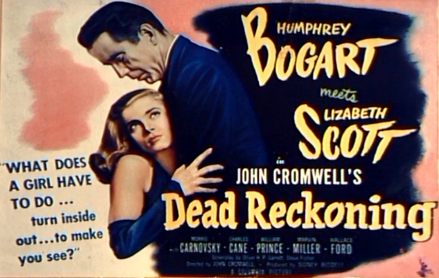
Trailer Tuesday: DEAD RECKONING (1947)

The story of a soldier looking for his friend...

DEAD RECKONING (1947)

Directed by: James Cromwell.
Written by: Oliver Garrett and Steve Fisher, and three more screenwriters including the producer.
Starring: Humphrey Bogart, Lizaberth Scott, Morris Carnovsky, Marvin Miller.
Produced by: Sidney Biddle .
Music by: Marlin Skiles.


Columbia Pictures noir films were an odd mixed bag. Where Warner Bros was gritty and real, Columbia was often glossy and trying their damnedest to look like MGM, just without the money or stars that MGM had. This could be a good thing when you had a noir film like GILDA which is about exotic night club singers and has a Gay subtext - the glossy look fit that story. It could also work when you had some crazy maverick like Orson Welles making a wacked out noir film like LADY FROM SHANGHAI. But to keep the lights on, Columbia often imitated RKO - making cheap genre films like the WHISTLER series (which I plan on looking at in the near future). So you never knew what you were going to get with this studio and the style didn’t always match the subject matter.

At times DEAD RECKONING seems like a soap opera with some shoot outs. Where a Bogart film like DARK PASSAGE from Warner Bros was gritty and real, DEAD RECKONING is glossy and seems to have way too much kissing. Also, at times it seemed to be made of leftover parts of much better movies. There's a scene from THE MALTESE FALCON, and a scene from OUT OF THE PAST and a scene from...

DEAD RECKONING was directed by the great James Cromwell (PRISONER OF ZENDA, SINCE YOU WENT AWAY) and is glossy and pretty to look at. Script by Oliver Garrett (DUEL IN THE SUN) and the great Steve Fisher (I WAKE UP SCREAMING and LADY IN THE LAKE) and some other guys. The script is kind of a mess - all over the place and making no sense at times. You get the feeling that it began as one story and was rewritten into another. I don’t know whether it began as a cheap genre film and then was turned into a soapy love story or vice versa. It does have some great snappy dialogue. It’s one of those Bogart films that you remember the good parts of and forget the strange parts of... until you see it on the big screen again. I don’t own this on DVD, and hadn’t seen it in decades before the screening.

Story starts with a beaten up Bogart confessing to a Priest - and flashback to the story with Bogart doing VO (the reason for the confession to the priest)... but we come out of flashback at end Act 2... and Bogart goes to kick ass in present time. Except - not as much ass-kicking as I wanted. Lots of kissing though - as if someone thought people went to Bogart movies to watch him kiss Liz Scott. That’s why I wonder what sort of rewrite process this went through - it’s got that DUEL IN THE SUN soap opera feel... and then some wild ass action that is pure Steve Fisher. And that VO is snappy and fun - which is probably also due to Fisher. He does great tough guy dialogue and monologues... and that might be a good reason to watch this film.

Bogart plays paratrooper Rip Murdock on his way by train with best bud "Professor" Johnny Drake (William Prince) to pick up Congressional Medals of Honor in Washington DC. Drake seems reticent to get a medal pinned on him by the President, which is odd. When he drops a gold Senior college pin on the train and Murdock picks it up to hand it back to Drake, he notices that the pin is from Yale... and has another man’s name on it. John Joseph Preston. Did Drake steal it from this Preston guy? Before they arrive in DC, Drake jumps off the train in Philly and disappears. Why? Murdock’s commanding officer orders him to find Drake and get him to the ceremony on time, and Murdock must turn detective to find his friend.

Murdock remembers the pin, calls Yale and gets the last known address for the name that was on the pin... a corrupt resort city on the Gulf of Mexico. By the way, this movie may also hold the record for phone booth scenes.

When he arrives at the local hotel, there is a reservation for him... and a note from Drake that says to wait for him. But Drake is a no show, and Murdock pokes around - discovering that an unidentified man was burned to a crisp in a suspicious single car accident. Drake? Murdock decides to investigate and get revenge for Drake’s murder...

Murdock goes to the morgue to look at the body - which has a melted gold blob like Drake’s Senior Pin from Yale - and bumps into local cop Kincaid (Charles Cane) who asks Murdock all kinds of questions, which he evades. But Murdock believes the body might be Drake’s and heads to the newspaper to look through back issues... and discovers that Drake was really John Joseph Preston... and was wanted for murder! He changed his name and enlisted in military to hide from the police!

“Dusty” Chandler (Liz Scott) - whose real name is "Coral" but Murdock will end up calling her "Mike" - was the woman whose husband Drake may have killed to hook up with... but there are also these mobsters who seemed to wander in from THE BIG SLEEP and some MALTESE FALCON femme-fatale scenes and other scenes from other movies and a story that goes all over the place... To be fair, Steve Fisher often has wacky plotting in his screenplays. HELL'S HALF ACRE and THE CITY THAT NEVER SLEEPS from 2019's Noir City Fest often seemed like he was making them up as he went along.

Murdock heads to the nightclub where she sings, to interview a bartender who was a witness to the Chandler murder (?) named Louis Ord (George Chandler - how confusing was this set when they were shooting?). Ord says that Drake gave him a letter for Murdock before he was killed in the car accident... and that's when crazy psycho club bouncer Krause (Marvin Miller) who is Moose Malloy on steroids, approaches. Ord says that he'll give Murdock the letter later. Somewhere in here are a couple of poorly dubbed songs from Dusty and Murdock stops his investigation to listen.... and later dances with Dusty. There's a freakin' brutal scene here where, after Dusty talks about how much she loved Johnny Drake, he tells her that he just saw Drake. Where? On a slap in the morgue. She misses a dance step or two. He tells her he had to break the news to her that way, so that he could gauge her reaction - he now knows that she didn't kill him. Then we get the scene from THE BIG SLEEP where Dusty and Murdock gamble together and after Dusty loses, Murdock wins big and have to go to the club’s owner to get the okay to get paid...

The club is owned by mobster Martinelli (Morris Carnovsky) who is a bad carbon copy of Eddie Mars in THE BIG SLEEP - a criminal who seems more like a business owner. Instead of a pair of comic relief henchmen like Mars had, Martinelli has a Krause. Martinelli gives Murdock and Dusty drugged drinks. Ord is the waiter who brings them, and tries to tell Murdock about the drinks in front of Martinelli and Krause - but Murdock realizes if he *doesn't* drink, Ord will be busted and he will never get the letter from Dead Drake. So he downs the drugged drink... and one of those pools of darkness from MURDER MY SWEET opens up and swallows him. Actually, the pools of darkness in this film have parachutes at night. Oh, and I forgot to mention that Murdock's catch-phrase is "Geramino!".

The next morning, Murdock wakes up in his hotel room with the corpse of Ord and Detective Kincaid knocking at his door. He manages to hide the body in a hotel laundry cart. The cops were tipped off that Murdock may have killed someone... and search his room finding nothing. But Kincaid stakes out the hotel lobby... and we get another phone booth scene as Murdock has Kincaid paged claiming to be a call from headquarters... so that Murdock can snag Dusty out of the lobby and go down to the hotel parking garage... where he puts Ord's body in the trunk of her car.

Murdock and Dusty have teamed up - which requires him to kiss Dusty a lot. Take the number of kissing scenes you would expect in a revenge movie and multiply by ten. Okay, now add two more.

Okay, that's an exaggeration. Here’s the thing about all of these kissing scenes - there may actually have been just as many kissing scenes in DARK PASSAGE (though I doubt it) but *those* kissing scenes were part of the story, part of what the characters would naturally do. In RECKONING they seem to just kiss whenever they are in the same room with each other. It’s like they were trying to make this into a love story by adding more kissing instead of actually having a love story subplot. They only kiss a handful of time, but they just kiss for no real reason and kind of unexpectedly and without motivation... and the camera lingers on the kisses. And this is his dead best friend's girlfriend who was married, so any kissing just seems wrong. Though I haven't counted the kisses in THE BIG SLEEP I only remember one at the end - maybe there was one at the gas station house, too... but that's only two. Here, they kiss for no apparent reason in the car, then there's a freakin' huge kiss a few minutes later, then a few more kissing scenes.

There's also a bit of dialogue that hasn't aged well, where Murdock thinks women should be miniaturized so that men can carry them around in their pockets and only make them full sized when men want them. "You know, the trouble with women is they ask too many questions. They should spend all their time just being beautiful."

There's a nice suspense scene here where (after kissing) they get pulled over by a cop for speeding... with dead Ord in the trunk. They have to talk their way out of a ticket - by saying they are newlyweds - which leads to a public display of affection (kissing) in front of the cop.

Murdock believes that Martinelli's goon Krause killed Ord and stole the letter and now that letter is in Martinelli's safe - it's actually more complicated than that, but we don't have 90 minutes. Murdock gets the name of a retired safe cracker through his connections and they visit him. The safe cracker's son just returned from the war, with a bunch of mementos like Japanese swords and German incendiary grenades. He teaches Murdock how to crack Martinelli's safe and gives him some incendiary grenades... and then Murdock and Dusty kiss some more.

After the kissing, Murdock breaks into Martinelli’s office to crack the safe and get the letter - which is purely a plot device. The safe is already busted open and the letter is gone and he smells Dusty’s perfume moments before *someone* knocks him out. When he wakes up, Martinelli and Krause are knocking him around to find out where the letter is. Where is Bette Davis when you need her? Murdock escapes... goes to the church where he confesses... and we are out of Act Two and into Act Three and some wild-ass action scenes including the use of napalm indoors (the grenades) - not recommended, by the way. "Scratch one hoodlum!"

The ending is so insanely convoluted that everyone was married to everyone else and everyone secretly killed everyone else and everyone was blackmailing everyone else. Seriously. Just pair up any two characters in this story and they were once married. Pair up any two characters and one of them killed the other. And everyone was blackmailing everyone else. If you though the plot of THE BIG SLEEP was confusing, this movie will make your head explode. Anyway, Dusty and Martinelli were married and she was also married to Chandler and was having an affair with Drake but now claims to be in love with Murdock... but before you can say THE MALTESE FALCON Dusty tries to kill Murdock and there’s a car crash and Dusty is fatally injured and Murdock gets to have a scene where he loves her but she dies in some weird soap opera scene.

One of the problems with DEAD RECKONING is the dialogue - something might be set up in one scene, and then the dialogue doesn't pay it back - when it seems obvious that's what was supposed to happen in this scene. I suspect the five screenwriters may have been working at cross-purposes - maybe one writing a crime film and the other writing a big soapy romance and the other three doing some version of either of those. It has big time tone problems - with some soap opera stuff and then some violent action scene. And the cute nicknames aren't that cute in this film, and many of the gags fall flat - with lots of glossy photography of kissing.

Now, when I was a little kid, I thought that kissing girls was for sissys. But the problem with the kissing in DEAD RECKONING is that it all seems so forced. Oh, and Scott's singing is so poorly dubbed you don't believe it for a second - unlike the Andy Williams (minus the bear) singing for Bacall in BIG SLEEP. Originally Rita Hayworth was to play the female lead in this flick, but she split to play the femme fatale in her husband’s movie LADY FROM SHANGHAI and they got stuck with Lizabeth Scott who looks *older* than Bogart and has no lip syncing abilities.

The weird thing about Lizabeth Scott is that I love her in other films - she’s the lead in one of my favorite films PITFALL and doesn’t seem like an older woman to Dick Powell. But here, for reasons I can’t figure out, she seems old - might be the wardrobe or the dialogue or maybe the problem is that Bogart’s character was *written* to be younger - a guy returning from WW2 is likely to be in his 20s so maybe the character was written young and Scott was supposed to be an older woman and the characterization and dialogue makes you think that she’s old. This movie - and Scott - get a shout out in Woody Allen’s PLAY IT AGAIN SAM, so maybe it’s just me and this odd hybrid of glossy soap opera and violent revenge flick works for everyone else. (Note: In reading reviews, a lot of negative reviews mention how stiff and "mannered" Scott is, so it's not just me.)

Just for fun, here’s some info on the co-screenwriter of DEAD RECKONING, Steve Fisher. I’m sure they brought in Fisher for the noir stuff, since he was one of those great noir writers you’ve probably never heard of. Like David Goodis he was a novelist who worked on and off as a screenwriter on B movies. His novel I WAKE UP SCREAMING was made into a great noir film with Victor Mature, and that probably put Fisher on the map. SCREAMING is about a hot starlet whose best friend is murdered by a maniac, and she thinks the maniac is now stalking her. She goes to the cops, and the detective in charge of the case is... the man stalking her! And he’s trying to frame Mature for the murder... and now Mature and the hot starlet have to get the proof that the detective is the killer. Um, no one wants to believe them about that. Great concept - what if you went to the police, but a policeman was the killer? Fisher’s crime novels ended up getting him back into screenwriting, where he wrote a bunch of crime films like the all POV film LADY IN THE LAKE and one of the THIN MAN series. Many of his novels have been reprinted recently by Hard Case Press. There was this period in time when Pulp Novels and Pulp Movies intersected and the guy who wrote some throw away crime novel might also write some throw away crime movie.

Anyway, DEAD RECKONING seems like a mis-fire - a movie trying to be Noir but also trying to be some glossy soap opera thing at the sale time. Not an unwatchable movie - but not the classic Noir that you might expect from the film’s reputation.. Fine for a Saturday afternoon on TCM, not as good on Saturday night on the big screen with your legs scrunched up under your neck because there is no legroom in the Billy Wilder Theater. I think the gloss worked against it - makes it seem like a big budget A movie with a sleazy B movie revenge action plot... and an interesting indoor use of napalm*.

-Bill
Dead Reckoning

*Actually incendiary grenades - but crazy Krause is burned alive while staggering around a room.

Friday, November 14, 2025

Fridays With Hitchcock:
Del Toro Talks Hitchcock.

GUILLERMO ON HITCHCOCK

This interview on CBC’s Studio Q with Guillermo Del Toro on Hitchcock and his influence on his work is great stuff, because Del Toro is as articulate about his work as Hitch was. Though the interviewer’s questions could have been much better, Del Toro wrestles the conversation away to some of the most important elements.


1) The emotional effect on the audience, and this connects to us as writers because our job is to create those emotions of the page so that the director can put them on screen. If we are not writing to create emotions in the reader, the reader will not care and not buy our screenplays in the first place. There’s a great deal of talk about Hitchcock’s control in the interview, from controlling the image to controlling the actors, and when Guillermo talks about the audience all laughing or gasping or screaming at the same time - the control of the viewer/reader. And that’s what wee need to think about as writers. It’s not just telling the story - that’s step one - it’s how we tell the story and how we use storytelling techniques to control the audience’s emotions. We are playing the audience (and the reader) like an orchestra - we know exactly where they are going to gasp, and it’s *how we write the scene* that makes them gasp. The techniques. So the most important thing that we can do as a writer or a director is to use those techniques to create emotions in the audience. What do you want them to feel in this scene? How is *your writing* or *your angle, composition, camera movement, lighting, and editing* creating those emotions. YOU need to be in control of your work.

2) Which gets us to the precision and intricate work of Hitchcock. Though he talks about Renoir (the painter) painting the same tree for his entire life later, the skill of a painter is knowing exactly what color, what texture, what brush stroke and all of the other talents and skills of a painter will create the image that you have in your mind and are trying to put on that canvas. You may work instinctively or technically, but the result is what matters - and you need to know what result you are aiming for... and you need to know the techniques that will bring about that result. I think the problem with that label of being a popular filmmaker that Hitchcock was stuck with detracts from his precision. It’s funny that Kubrick is seen as a genius due to his precision, yet Hitch didn’t need all of those takes to have possible more precision - Kubrick was a chilly filmmaker. One of the things that we need to remember as “artists” is that art is not sloppy. Whether you are Renoir with a brush or Kubrick or Hitchcock with a camera, you are doing something very specific for a very specific reason. Whether your story is summed up by an image, or a story told in a series of images. WHY are you setting this scene at this location? HOW do the specifics of this scene connect to the specifics of the other scenes in the story? One of the interesting things about film stories is that you have a limited time to tell them, so everything need to be the very best way to get this information to the audience.

3) I love the choice of these four Hitchcock films for his lecture: NOTORIOUS, FRENZY, SHADOW OF A DOUBT, and NORTH BY NORTHWEST... and how he chose them because they are all very much Hitchcock films... and completely dissimilar. He talks about MR. & MRS. SMITH - which is also completely a Hitchcock film (I look at all of the Hitchcock storytelling techniques in my old blog entry on that film) and yet a romantic comedy that would be right next to the others from the 1940s. Hitchcock could have kept going with the romantic comedies and had an entirely different (very successful) career. In my EXPERIMENTS IN TERROR book I look at what an experimental director he was - doing all kinds of crazy things that even now we think of as unusual - nobody has beat his ROPE when it comes to single shot films. But part of that experimentation was in stories - and I note that he directed a dialogue driven comedy stageplay... as a silent film. Del Toro talks about that moment at the end of the silent era where we got a ton of filmed stage plays... well, Hitchcock managed to make a *silent* filmed stage play that delivers visual laughs. He was definitely not a “one trick pony”!

4) Del Toro also talks about the primal elements of cinema - and how a director like Hitchcock can connect with the secret desires and fears of the audience in a way that many others could not. I have always said that films are dream fulfillment for the audience. The audience has a secret dream or nightmare, and our job as screenwriters is to give them that dream or nightmare for two hours. We are in the dark, and the images play on the screen - just like a dream. In a dream you can be in one place and then by magic instantly be in another place - just like editing in a film. In a dream things are often fantastic and larger than like and filled with emotions... just like in a film.

We are creating dreams and nightmares for the audience.

PS: Guillermo del Toro did write one of the important books on Hitchcock, and one of the things that ties in to Hitchcock being able to articulate his techniques and methods is that del Toro is also someone who can do that.

- Bill


Of course, I have my own books on Hitchcock...

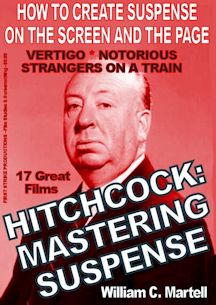
HITCHCOCK: MASTERING SUSPENSE


LEARN SUSPENSE FROM THE MASTER!

Alfred Hitchcock, who directed 52 movies, was known as the “Master Of Suspense”; but what exactly is suspense and how can *we* master it? How does suspense work? How can *we* create “Hitchcockian” suspense scenes in our screenplays, novels, stories and films?

This book uses seventeen of Hitchcock’s films to show the difference between suspense and surprise, how to use “focus objects” to create suspense, the 20 iconic suspense scenes and situations, how plot twists work, using secrets for suspense, how to use Dread (the cousin of suspense) in horror stories, and dozens of other amazing storytelling lessons. From classics like “Strangers On A Train” and “The Birds” and “Vertigo” and “To Catch A Thief” to older films from the British period like “The 39 Steps” and “The Man Who Knew Too Much” to his hits from the silent era like “The Lodger” (about Jack The Ripper), we’ll look at all of the techniques to create suspense!

Films Included: NOTORIOUS, SABOTAGE, STRANGERS ON A TRAIN, THE 39 STEPS, REBECCA, TO CATCH A THIEF, FRENZY, FOREIGN CORRESPONDENT, THE LODGER, THE BIRDS, TORN CURTAIN, SABOTEUR, VERTIGO, THE MAN WHO KNEW TOO MUCH (1934), THE MAN WHO KNEW TOO MUCH (1955), SUSPICION, and NUMBER SEVENTEEN. 17 Great Films!

Only 125,000 words!

Price: $5.99

Click here for more info!

OTHER COUNTRIES:


UK Folks Click Here.

German Folks Click Here.

French Folks Click Here.

Espania Folks Click Here.

Canadian Folks Click Here.


HITCHCOCK: EXPERIMENTS IN TERROR


Click here for more info!

HITCHCOCK DID IT FIRST!

We all know that Alfred Hitchcock was the Master Of Suspense, but did you know he was the most *experimental* filmmaker in history?

Contained Thrillers like “Buried”? Serial Protagonists like “Place Beyond The Pines”? Multiple Connecting Stories like “Pulp Fiction”? Same Story Multiple Times like “Run, Lola, Run”? This book focuses on 18 of Hitchcock’s 52 films with wild cinema and story experiments which paved the way for modern films. Almost one hundred different experiments that you may think are recent cinema or story inventions... but some date back to Hitchcock’s *silent* films! We’ll examine these experiments and how they work. Great for film makers, screenwriters, film fans, producers and directors.

Films Examined: “Rear Window”, “Psycho”, “Family Plot”, “Topaz”, “Rope”, “The Wrong Man”, “Easy Virtue”, “Lifeboat”, “Bon Voyage”, “Aventure Malgache”, “Elstree Calling”, “Dial M for Murder”, “Stage Fright”, “Champagne”, “Spellbound”, “I Confess”, and “The Trouble with Harry”, with glances at “Vertigo” and several others.

Professional screenwriter William C. Martell takes you into the world of The Master Of Suspense and shows you the daring experiments that changed cinema. Over 77,000 words.

UK Folks Click Here.

German Folks Click Here.

French Folks Click Here.

Espania Folks Click Here.

Canadian Folks Click Here.

Bill

Thursday, November 13, 2025

THRILLER Thursday: Girl With A Secret

The spider web fills the screen, it's Boris Karloff's THRILLER!


Season: 1, Episode: 9.
Airdate: 11/15/1960


Director: Mitchell Leisen.
Writer: Charles Beaumont based on a novel by Charlotte Armstrong.
Cast: Faye Bainter, Paul Hartman, Myrna Fahey, Victor Buono, Cloris Leachman.
Music: Pete Rugolo
Cinematography: Lionel Lindon


Boris Karloff’s Introduction: “An attache case. A classic ingredient in tales of cloak and dagger. Was the young lady correct? Was it switched on purpose? As sure as my name is Boris Karloff, the contents of that case will soon trap these two young people in a web of terror. Alice, the bewildered bride, doesn’t yet know that her husband’s life will depend upon her silence. She’ll become a girl with a secret. That’s the name of our story. Our principle players are Miss Faye Bainter, Mr. Paul Hartman, Miss Myrna Fahey, Mr. Rhodes Reason, Miss Cloris Leachman, and Mr. Harry Ellerbe. I assure you my friends, this is a thriller.”

Synopsis: After a couple of great episodes in a row, we go back to...


At an airport, newlyweds Anthony (Rhodes Reason) and Alice (Myrna Fahey from Corman’s HOUSE OF USHER) wait for their baggage and she talks about the pressure of meeting her (wealthy) inlaws for the first time. When Anthony sets down his attache case for a moment to grab his suitcase, a Stranger sets down his *identical* attache case to do the same and grabs Anthony’s attache case by accident when he leaves. Or was it an accident? Alice seems to think the Stranger did it on purpose. She points out the Stranger to Anthony and says to stop him before he drives away... but Anthony tells her it’s no big deal, he’ll just open the Stranger’s attache case, find his ID, and call him and swap cases later. They’ve had a long flight and Anthony just wants to get home to Pasadena and relax.

When they leave the airport, an evil looking Henchman (Rex Holman) is following them...

On a narrow, twisting road in the hills (probably where the 134 Freeway would end up) the Henchman tries to pass them on a particularly dangerous curve and “accidentally” hits their car, almost forcing them over a cliff! Alice is scared and confused, did that guy *try* to kill them or was it an accident? Seems like weird stuff is happening around her new husband! Why?


The family estate in Pasadena looks oddly like the Munster’s house from the outside (same backlot house), but the inside is a luxurious mansion where the entire family seems to hang out night and day, with Cousin Beatrice (Cloris Leachman) playing the piano for the entertainment of her boyfriend Walter (Harry Ellerbe) plus Uncle Gregory (Paul Hartman) and Aunt Hortense (Anne Seymour) and matriarch Geraldine (Faye Bainter) who is Anthony’s grandmother. The whole family meets the new daughter in law, and give her the normal third degree you would give a new wife... which kind of adds to Alice’s paranoia. Anthony excuses himself for a moment to get the luggage out of the car... but instead goes to the car to open the Stranger’s attache case... which is empty except for a cryptic note... which Anthony decodes!

He starts up the car and goes to the Stranger in a public library... where we discover that Anthony is some sort of spy and the Stranger is a fellow spy, who warns him that the bad guys are onto him. Anthony tells the Stranger that he knows: an attempt was made on his life earlier.

Cut to our evil badguy played by Victor Buono (King Tut from BATMAN), as the Henchman enters his evil lair to report that his attempt on Anthony’s life *failed*. Buono needs to know how much Anthony knows about his evil operation, and keep him from stopping whatever the heck that evil operation is. It’s kinda vague.


Anthony gets back to the Munster House, and nobody seems to notice he was missing. He and Alice are unpacking in their room... when she discovers an airplane ticket in his coat pocket. To Mexico City. She confronts her new husband... is he cheating on her? Anthony quiets her, opens the bedroom door... and there’s the Maid (Esther Dale) listening in on the conversation. He tells the Maid to please keep this little domestic dispute to herself, then closes the door and whispers to Alice... that he’s a spy! He has a secret mission to Mexico City to do things that will help foil Victor Buono’s evil operation... and while he’s gone she must keep his secret. No one can know that he has gone to Mexico City, *no one*. Not even family members. Alice will keep the secret while Anthony is away.

Anthony tells his family that he’s been called back to New York on business for a while, and to please take care of his new wife. Cousin Beatrice is already planning ways to mess with Alice in order to make matriarch Geraldine hate the new bride. And that, folks, is the set up!

And the halfway point.

After Anthony leaves on his secret mission, Alice is “alone” in the house with all of these strangers... and the Maid, who asks for some hush money or she’ll tell everyone that Anthony has gone to Mexico City. Alice gives her ear rings (which are expensive as heck) to the Maid to keep her quiet... but when Cousin Beatrice notices the Maid wearing Alice’s ear rings she accuses the Maid of stealing them, and this brings in matriarch Geraldine who insists the Maid return the ear rings... and creates a larger problem as the Maid now wants $300 to keep her mouth shut.

Alice brings the money to the Maid... and there is a knock at the Maid’s door! The evil Henchman! Alice hides in the murphy bed folded up against the wall and listens as the Henchman questions the Maid, doesn’t get any answers... so he kills her and then searches the room for some clue as to where Anthony may have flown to... almost finding Alice hiding in the folded up bed! The Henchman leaves, heading back to...


Victor Buono’s evil lair, where Buono is talking to... Walter! Cousin Beatrice’s boyfriend! They have blackmailed Walter into being part of the evil operation and spying on Anthony. It was Walter who gave the information that sent the Henchman to the Maid’s apartment. Twist!

Back at the Munster House, Alice returns and is freaked out... afraid she’ll be accused of the Maid’s murder and won’t be able to tell anyone that it’s all because her husband is really a spy. Walter hammers away at Alice about the murder of the Maid... did she do it? Why did she give the Maid those ear rings? Alice walks out... leaving the rest of the family to scheme. Walter and Uncle Gregory think Alice needs to get some rest and suggest giving her some tranquilizers... Walter wants to give her a whole bunch! Then take her to a friend of his who will give her some sodium penathol so she will tell the truth about the Maid’s murder and the family will know how to handle it. They don’t want to be harboring a murderer, do they? Think of the scandal!


A few weeks later Anthony gets back from Mexico City with all of the info to stop Victor Buono’s evil operation... and asks Grandmother Geraldine where Alice is. Geraldine says...

Alice never gave up your secret. They were going to drug her and make her talk, but Geraldine smuggled her out of the house and to a friend’s place in Los Angeles. She’s safe... and Geraldine thinks she’s a danged good wife.

Anthony gets to the address where Alice is hiding out... and it’s a drug store where she is working behind the counter. Just as they embrace, turncoat Walter and the evil Henchman come in with guns... but the Drug Store Owner shoots them both in the most boring action scene ever on television. Meanwhile Victor Buono is being arrested. Anthony and Alice live happily ever after.


Review: Actually, the problem here is the difference between what works as a thriller on that page versus what works on the screen. I can easily imagine this as a nail biter on the page, but it’s all internal... most of the suspense concerns what the character is *feeling*, and we can’t see that. In a way we have a story like REBECCA, about a shy new bride dealing with her new husband’s secret... and you’d think the hubby being a spy instead of a dreamy rich dude with a dead first wife would, but it doesn’t. Hubby is off screen doing spy stuff in Mexico City... and the only thing close to Mrs. Danvers is Leachman’s character, who is just a stuck up rich girl (instead of a foreboding frozen faced Maid who has the real power in the house). The Maid in this story is old and frail... not much of a physical threat. Also not much of any kind of threat because she knows the secret but really can’t do anything with it. And for a story that’s mostly confined to the family house, there isn’t even the sort of suspense and intrigue from REBECCA or NOTORIOUS. The family is mostly just sitting around doing nothing. None are really threats, no real suspense... Alice is just an outsider when it comes to the family rather than a target.

I suspect the story also loses something from whatever scope the novel may have had versus the confines of a TV budget and shooting schedule. This gets into my Dog Juice Theory: when the story gets smaller you need to increase the “juice” to keep it exciting, and in this case the juice would be suspense. Add to this the stiff acting and massive overacting of the villains (they’re on screen for so little time they only have time to be evil without any time for actual characterization).


So the whole episode comes off as kind of bland and boring, and that car chase scene can’t really make up for it. The suspense set piece with Alice hiding in the Murphy bed is also kinda dull... though there is a moment where she is almost discovered. And the reveal that Walter is working with the badguys is nonexistent! He’s just in a scene with Buono. No *twist* to it. Part of this is the writing isn’t finding ways to amp up the suspense and part is the director, Mitchell Leisen (who’s contract requires his *signature* as his credit), who was a famous director of big glossy studio films in the 1930s to1950s and doesn’t seem to be at home in the thriller genre... even though he directed Cornell Woolrich’s NO MAN OF HER OWN in 1950 (which ended up more soap opera than thriller). Leisen directed episode 3 and this one... and then was off to some other TV show and get that nifty signature title card.

After two good episodes in a row we go off track again with this one... but next week? Karloff takes a role in a weird tales type story!

Bill


Buy The DVD!

Wednesday, November 12, 2025

Different Characters, Different Voices

Back in 2008 I wanted to know what sort of questions about screenwriting people who read my blog might have... and answered them.

Here are more answers to those questions....

Question: How to make a character fully dimensional? How to avoid the characters sounding the same?

Answer: Movie dialogue is better than real dialogue - it's that clever come back you came up with two days after the argument.

You don't want all characters to sound the same - each should have their own *distinctive* voice, vocabulary, pet words and phrases, and sentence structure - they should all be distinctive and unique... not boring and normal.

First - each of your characters needs to be different, see the world differently, react to the world differently, and have a secret agenda that drives them... and they need to have different attitudes, likes and dislikes, different pet words and phrases.

If all of your characters sound alike, it's because you don't know them. My characters talk *through* me - and I can hear their voices in my head (which makes me crazy).

I write in various coffee shops, and in one there is a girl behind the counter who could find the silver lining in the end of the world. She is *relentlessly* positive. That's her character, and it comes out in almost everything she says. After a while, I just want to slap her... but she'd find something good to say about that.

Another coffee shop has a guy that is all about himself - no matter what he says, it's about him. If the world were going to end in 5 minutes, he's find the way to make that all about him... as if nobody else mattered.

I have a friend who takes everything personally - another form of selfishness - if you say hello to someone else first, he thinks that's a snub.

I know another guy who is ultra negative - he'll find the cloud for every silver lining. You win the lottery, he'll tell you how lottery winners end up broke and miserable. Even when he pays you a compliment, it's got a negative spin on it.

All of these things are *character* - if you really know your characters, they will speak differently because they are different people. Know what is below the surface, what secretly drives them, how the see the world around them.

Next - on a purely cosmetic level - look at pet words and phrases. Make sure no two characters use the same common words: yes, no, true, false, hello, goodbye, etc. Make sure they don't have the same favorite curse word. And take a look at sentence structure - you may have a character that says almost everything in the form of a question. Or someone who talks in long run-on sentences. Or no more than three words in a sentence. Or talks backwards like Yoda. These are the voices I hear in my head when I write.

Knowing your characters is the key to every character sounding different.

Actor Proofing Your Dialogue - Timing is everything in comedy... and one thing we can't really write. That is brought in through performance.

Things we do control are situation and the actual words within the material. So that's where I concentrate. I don't write comedy... I write movies that often end up starring non-actors who are pro athletes. So I can not depend on the acting (delivery) of any line. I have to create an "actor proof" script. A script where *I* do the acting through my writing. That means I have to create a strong emotional situation that Wilson the volleyball could win an Oscar for. Then find lines of dialogue that have double meanings or are packed with emotion - again, something that will work if the actor reads it off a cue card in a monotone. Basically, my script is carrying the actor.

And that is not easy, but I thing some of those things translate to comedy writing. The material has to be funny just sitting there on the page, not dependent on an actor to add that zing that makes it funny. That zing is the bonus.

If we want to hear real conversation, we can just walk down a street. When we pay $11.50 (what it costs to see a movie in LA) we want to see something special. We want interesting dialogue, distinctive dialogue.

Here are some interesting bits of dialogue from the same movie...


"A pocket fulla firecrackers - looking for a match!"

"Way up high, Sam, where it's always balmy. Where no one snaps his fingers and says, "Hey, Shrimp, rack the balls!" Or, "Hey, mouse, mouse, go out and buy me a pack of butts." I don't want tips from the kitty. I'm in the big game with the big players... In brief, from now on, the best of everything is good enough for me."

"The next time you want information, don't scratch for it like a dog, ask for it like a man!"

"Who could love a man who makes you jump through burning hoops like a trained poodle?"

"You're dead, son. Get yourself buried."

"It's a dirty job, but I pay clean money for it."

"What am I, a bowl of fruit? A tangerine that peels in a minute?"

"You've got more twists than a barrel of pretzels!"

"I don't relish shooting a mosquito with an elephant gun, so why don't you just shuffle along?"

"Maybe I left my sense of humor in my other suit."

"I'd hate to take a bite outta you. You're a cookie full of arsenic."

"Don't remove the gangplank, you may wanna get back onboard."

"Don't do anything I wouldn't do! That gives you a lot of leeway..."

"Crow like a hen. You have just laid an egg."

"Tell me sir, when he dies, do you think he'll go to the dog and cat heaven?"

"Start thinking with your head instead of your hips."

"This syrup you're giving out with... you pour over waffles, not over me."

Different characters in the same movie released the year I was born. Movie dialogue has always been clever, witty, interesting - that's why we quote it, instead of quoting what the clerk at Safeway said about paper or plastic.

In fact, even in "realistic" movies, nobody talks like the characters talk. Watch any Scorsese movie - that's excellent, well crafted dialogue. Realistic dialogue isn't real - it's crafted to sound real, but more clever, witty, and concise.

You want the best possible dialogue in your screenplay - dialogue that shows us the character, and is memorable enough that the reader will be talking about it for years to come... after they’ve made the movie.

- Bill

Tuesday, November 11, 2025

Trailer Tuesday: KING OF HEARTS (1966)

KING OF HEARTS (1966)

Directed by: Philippe de Broca.
Written by: Daniel Boulanger.
Starring: Alan Bates, Geneviève Bujold, Marc Dudicourt, Michel Serrault, Adolfo Celi.
Produced by: Michelle & Philippe de Broca.
Cinematography by: Pierre Lhomme.
Music by: Georges Delerue.


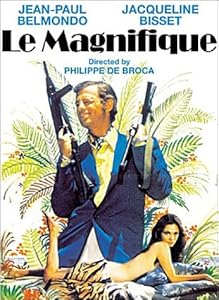
This is a charming movie that may have fallen between the cracks today, but it’s out there on DVD and has a special place in my life... because it introduced me to director Philippe DeBroca who made comedy action films like THAT MAN FROM RIO (1964) and LE MAGNIFIQUE that would influence my writing. One of the things I find interesting looking back is how many movies and novelists have influenced *my* work, and I never know if that’s because I followed them or that they clicked with who I already was. I suspect the latter: that what appealed to me about directors like DeBroca and writers like Ross Thomas was that they shared my sensibilites... funny and action. KING OF HEARTS was probably the first DeBroca movie I saw, even though it wasn’t his first hit film in the USA.


The film stars Alan Bates and one of Geneveive Bujold's first movies. It's an anti-war comedy, made in the late 60s with a British star... and kind of became an anti Viet Nam War film. Probably wasn't even intended as such. The film has a strange history, because when it came out in the 60s, it flopped big time. Big time. It killed DeBroca's career... He had become famous for his action comedy films like MAN FROM RIO and then this film came out and died... and DeBroca was a has been in the USA. But a strange thing happened during the Viet Nam War, KING OF HEARTS started popping up in college area cinemas because of its anti war story. And was one of those movies that was playing *somewhere* up until 1975 when the war ended. In fact, there was one cinema that played it non-stop for *over five years* until the Viet Nam War was over. Imagine a film playing on the same screen for five years today! First time I saw it was at the UC Theater in Berkeley... and it played *somewhere* in Berkeley through the 70s... and brought back DeBroca's career in the USA.

The story is a light comedy that takes place in France during World War 1, the “Great War”. The German army has taken over a small village in France, but when they see a larger group of British soldiers (actually Scottish - kilts are funnier on film) approaching, they decide to evacuate... but hide a booby trap bomb in the town that will explode at midnight and kill all of the Scottish soldiers and their commanders. The next day, the Germans plan to return and re-take the town from any survivors. Great plan.

Best Movie Ever Made


Well, a French underground guy radios the Scottish Army and tells them about this plan... but tells them about it in French. So things get completely lost in translation. And the bomb is set to go off at midnight... and the town has a beautiful ornate clock in town square where a mechanical knight in armor comes out to strike the midnight bell with his mace. This information really loses something in translation - nobody knows what it means. The problem with a World War is that we don’t all speak the same language... and here it creates a massive problem that could end up killing the Scottish Army in their funny kilts.

The Scottish Army sends in a man to disarm the bomb before they occupy the town. Since none of the demolitions guys speak French, they send in Alan Bates - a communications officer. A geek. A non-heroic guy. He speaks French, but has no idea how to disarm a bomb... shoot a gun... win a fist fight, etc. I could identify with this guy. A clever, literate, non action guy in an action situation.

Once he finds the bombs, they will either send in a demo guy or have a demo guy talk Bates through disarming the explosives. That sounds like a plan that is doomed to fail. It also creates a great ticking clock, in a *comedy* film. Just as movie like M*A*S*H mixed comedy and the serious horrors of war, this film is both funny and serious at the same time. That odd tone may have lead to its failure when it was first released, and its later success when we had seen the horrors of the Viet Nam War on the nightly news in the 70s.

The whole village evacuates because of the bomb.
And they accidentally leave the gates to the asylum open.
And the crazy people venture out, don clothes of the townspeople, and kind of have a looney-bin holiday.

Best Movie Ever Made


So when Bates enters the town, well... the people are acting strange. And that's the set up. The rest of the movie compares the crazy people to the soldiers and the war... and guess which is crazier? And Bates has to figure out why the townspeople are strange, then figure out where the explosives are, then stop them from blowing up, then decide if this crazy-world is more sane than the war around it...

And he falls in love with Bujold in the process, and is crowned King of the crazy people.

The movie is charming. Not laugh outloud funny. What used to be called a "gentle comedy". It's kind of like going to the circus (hey, Bujold does tight-rope walking on power lines in a scene, and there are lions and bears!) - it's also a beautiful film... really well shot. DeBroca was one of those directors who could blend comedy and action and had a great sense of the absurd. After this film came back in the 70s, it revived DeBroca’s career so that he could go on to make a bunch of great action comedies like DEAR DETECTIVE and JUPITER’S THIGH and one of my favorites LE MAGNIFIQUE (about a nerdy action writer who fantasizes that he’s his macho action hero... and then has to become him). Hard to tell if KING OF HEARTS holds up - since it's already a period film, it can't really be dated. But it's a gentle film... kind of the anti-Michael Bay. And it still charmed me when I watched it on DVD before writing this entry.

- Bill

Best Movie Ever Made


Friday, November 07, 2025

Fridays With Hitchcock:
Kim Novak on VERTIGO

VERTIGO can be an acquired taste. It’s a slow, brooding, character study with a couple of great suspense scenes and some cool plot twists. It's also darker than dark. Film noir, in living color. Because so many critics have called it “Hitchcock’s Masterpiece” many people either watch it as their first Hitchcock or have built up expectations for the film. I think it’s one of the most entertaining character studies I’ve ever seen. I think if you look at it as the story of a man who is obsessed with a woman... who dies... and that doesn’t stop him from wanting to sleep with her... Based on a novel by the guys who wrote DIABOLIQUE, who know how to twist a plot. Kim Novak plays a dual roles - two very different characters, and does it to perfection. So here’s an interview clip with her talking about filming the movie...


One of my favorite no money special effects is from VERTIGO - where she tells him about her recurring dream of where she dies and describes the location and even some odd details. Later they go to the mission and *every detail from her dream* is there: the dream comes true! It's a big spooky moment... and you feel as if her dream really has come true and this is the place and date that she will die. And then...

- Bill


Of course, I have my own books on Hitchcock...

HITCHCOCK: MASTERING SUSPENSE


LEARN SUSPENSE FROM THE MASTER!

Alfred Hitchcock, who directed 52 movies, was known as the “Master Of Suspense”; but what exactly is suspense and how can *we* master it? How does suspense work? How can *we* create “Hitchcockian” suspense scenes in our screenplays, novels, stories and films?

This book uses seventeen of Hitchcock’s films to show the difference between suspense and surprise, how to use “focus objects” to create suspense, the 20 iconic suspense scenes and situations, how plot twists work, using secrets for suspense, how to use Dread (the cousin of suspense) in horror stories, and dozens of other amazing storytelling lessons. From classics like “Strangers On A Train” and “The Birds” and “Vertigo” and “To Catch A Thief” to older films from the British period like “The 39 Steps” and “The Man Who Knew Too Much” to his hits from the silent era like “The Lodger” (about Jack The Ripper), we’ll look at all of the techniques to create suspense!

Films Included: NOTORIOUS, SABOTAGE, STRANGERS ON A TRAIN, THE 39 STEPS, REBECCA, TO CATCH A THIEF, FRENZY, FOREIGN CORRESPONDENT, THE LODGER, THE BIRDS, TORN CURTAIN, SABOTEUR, VERTIGO, THE MAN WHO KNEW TOO MUCH (1934), THE MAN WHO KNEW TOO MUCH (1955), SUSPICION, and NUMBER SEVENTEEN. 17 Great Films!

Only 125,000 words!

Price: $5.99

Click here for more info!

OTHER COUNTRIES:
(links actually work now)

UK Folks Click Here.

German Folks Click Here.

French Folks Click Here.

Espania Folks Click Here.

Canadian Folks Click Here.

And...


HITCHCOCK: EXPERIMENTS IN TERROR


Click here for more info!

HITCHCOCK DID IT FIRST!

We all know that Alfred Hitchcock was the Master Of Suspense, but did you know he was the most *experimental* filmmaker in history?

Contained Thrillers like “Buried”? Serial Protagonists like “Place Beyond The Pines”? Multiple Connecting Stories like “Pulp Fiction”? Same Story Multiple Times like “Run, Lola, Run”? This book focuses on 18 of Hitchcock’s 53 films with wild cinema and story experiments which paved the way for modern films. Almost one hundred different experiments that you may think are recent cinema or story inventions... but some date back to Hitchcock’s *silent* films! We’ll examine these experiments and how they work. Great for film makers, screenwriters, film fans, producers and directors.

Films Examined: “Rear Window”, “Psycho”, “Family Plot”, “Topaz”, “Rope”, “The Wrong Man”, “Easy Virtue”, “Lifeboat”, “Bon Voyage”, “Aventure Malgache”, “Elstree Calling”, “Dial M for Murder”, “Stage Fright”, “Champagne”, “Spellbound”, “I Confess”, and “The Trouble with Harry”, with glances at “Vertigo” and several others.

Professional screenwriter William C. Martell takes you into the world of The Master Of Suspense and shows you the daring experiments that changed cinema. Over 77,000 words.

UK Folks Click Here.

German Folks Click Here.

French Folks Click Here.

Espania Folks Click Here.

Canadian Folks Click Here.

- Bill

Thursday, November 06, 2025

Thriller Thursday: THE PURPLE ROOM

The Purple Room

The spider web fills the screen, it's Boris Karloff's THRILLER!


Season: 1, Episode: 7.
Airdate: 10/25/60


Director: Douglas Heyes
Writer: Douglas Heyes
Cast: Rip Torn, Richard Anderson, Patricia Barry.
Music: Pete Rugolo
Cinematography: Bud Thackery


Boris Karloff’s Introduction: “Don’t be alarmed. The woman who just screamed is perfectly quiet now, as sure as my name is Boris Karloff. You see, she’s been dead for nearly a hundred years. Her bed is empty, and whatever it was that seemed to frighten her so is gone. *Seems* to be. But I can tell you this much: that bed won’t be empty much longer and other screams will soon be heard. Whose? Perhaps yours. Or those who will join us here: Mr. Rip Torn, Miss Patricia Barry, Mr. Richard Anderson, and... Well, it seems the rest of our cast can not be raised. They’re dead, you know. Spend a night with us in the Purple Room, if you dare! Let me assure you my friends, this is a thriller!”

Synopsis: Born skeptic Duncan (an impossibly young Rip Torn... who you know as the gruff boss from MEN IN BLACK) has just inherited an old house in Baton Rouge which has been in the family for years... and is supposedly haunted. Duncan doesn’t care, the house is on valuable property some big company wants to buy so he figures he’ll flip it and make a fortune. Nice plan, but the will requires him to live in the house for one year before he can sell it... and stay in the house one full night along with the other heir... his cousin Oliver (Richard Anderson from SIX MILLION DOLLAR MAN) and his wife Rachel (Patricia Barry). If he can not spend the full night in the haunted house his cousin Oliver gets it. So there’s a bit of a competition involved: who can stay the whole night in the house, Duncan or Oliver? Since Duncan believes in money but not ghosts, he sees no possibility of losing.


Oliver, Rachel and Duncan drive to the house, in a remote area near a swamp... heck, it’s the PSYCHO house on the Universal backlot along with the swamp from the film... the art of using existing sets. They enter the house, which has no electricity and no phone and hasn’t been lived in for decades. Candles do little to illuminate the house. It’s spooky as heck. They climb the stairway to the bedrooms, and Oliver dares Duncan to sleep in the Purple Room... where all of the deaths have taken place including that most recent one 100 years ago. Duncan isn’t afraid of no ghosts, so he takes the room, even after Oliver relates the legend of the room...

A hundred years ago Captain Jeremy Ransom and his wife of only seven days were alone in the house on honeymoon, when they heard strange sounds from downstairs. Ransom gave his gun to his new bride for protection and then went downstairs to investigate. After more strange noises, the new bride hears footsteps coming up the stairs... a strange shuffling and dragging that was *not* her husband. As the thing came closer and closer to her in the darkness, she fired the gun again and again... killing her own husband... who had been stabbed by a burglar downstairs and was staggering upstairs for help. Then she went mad and spent the rest of her life in an asylum.

Oliver smiles: “This place is all yours... and everything it contains.”


In the middle of the night Duncan hears strange noises from downstairs and wakes up. After he lights the candle, it blows out... and all kinds of weird things begin happening in the Purple Room. Things move all by themselves. Duncan believes it’s Oliver and his wife trying to scare him, they’ve just rigged the room ahead of time. When things keep happening and he sees a picture on the wall move, he pulls the picture away... and there is just the wall behind it. The *solid* wall. WTF? He hears more noises downstairs, grabs his gun and heads downstairs.
Where something lurks in the shadows.

A knife flies at him, sticking into the floor.

The thing in the shadows moans and starts shuffling towards him. It’s Ransom’s ghost! Face rotted, knife sticking from its bloody chest. Dragging its leg as it gets closer and closer and closer to him. Duncan fires his pistol at it again and again and again... and the things keeps coming towards him!


Closer and closer and closer!

Duncan screams, clutches his chest and falls to the floor.

The rotting corpse walks right up to him... and pulls off his mask, it’s Oliver. Rachel comes out of the shadows and checks his pulse... he’s *dead*. Not part of the plan at all! They were just supposed to scare him enough that he left the house, not *kill him*. Change of plans. They carry his body out to the car, drive down the road to the swamp and drive the car off the road into the swamp, put Duncan behind the wheel, and walk back to the house. Now they can claim that Duncan got scared in the middle of the night and ran... and Oliver and Rachel had not a thing to do with his death.

Back at the house they clean up and remove all of the planted tricks and devices to scare Duncan... and then go to bed in the Purple Room. It *is* the master bedroom in *their* new house, after all. But in the middle of the night they hear strange noises from downstairs. A prowler? Oliver grabs Duncan’s gun, pours out the expended blank shells and loads it with *real* shells, then starts out of the Purple Room. But Rachel is frightened, so Oliver gives her the gun and goes downstairs to confront the prowler.


In the dark and spooky house, Oliver tries not to be afraid... but some *thing* is creeping up the stairs towards him, dragging its leg just like the Captain Ransom legend. When the thing gets closer, closer, CLOSER Oliver stumbles and falls down the stairs... the thing continues up the stairs... to the Purple Room!

Rachel is terrified as the thing opens the bedroom door and stumbles inside. She fires the gun, again and again until it clicks dry. Killing the thing. She carries the candle to the thing... and it’s *Duncan*. Not a fatal heart attack after all, he was unconscious and weak... And she has shot him six times. She goes downstairs and finds Oliver, shook up but okay. Tells him that she has shot Duncan... and that’s when the police come after finding the abandoned car and hearing the shots. Oliver and Rachel are headed to prison.

Review: Not only do we get the PSYCHO house and swamp, we get a great Weird Tales type story! After last week’s talky crime drama, the show finally seems to get on track with an episode that fulfills the promise of the series’ name. My favorite episodes of the show are thrillers filled with nail biting suspense and the Weird Tales stories that creep into horror (though usually with a twist). I want to be on the edge of my seat or scared to death, and my favorite episodes deliver on this. Though nothing from THRILLER can ever beat the Hitchcock UNLOCKED WINDOW episode for sheer terror, some get pretty close.


This one is just okay. Not enough Haunted House stuff to build our terror before Duncan comes face to face with dead Captain Ransom downstairs, it needed several more “gags” up in the Purple Room when Duncan wakes up. Since Oliver and Rachel have had plenty of time to rig the room, you’d thing they would have come up with at least as many things as in THE HOUSE ON HAUNTED HILL. I’m guessing somewhere along the line the writer/director feared there wasn’t enough time to show *how* Oliver managed to do anything really weird after Duncan supposedly drops dead. But I think the audience would have gone with it, since we went with the blown out candle gag and the moving painting with a solid wall behind it. He should have gone whole hog and had all kinds of weird stuff happening in the Purple Room. Remember, this was made at a time when film special effects where often done with thread and smoke and mirrors. The audience would accept any crazy thing happening in the room, because they really had to do it for the episode. If the writer/director thought the audience might have questioned a bunch of weird stuff, all he had to do is have Oliver say he apprenticed under a magician when he was a kid or something.

The *direction* is also not doing much to ramp up the suspense and dread. Lots of great moving camera shots, but makes the mistake of not showing the POV of the protagonist, which is where all of the suspense and dread resides. I don't understand how there can be directors out there who don't get this, but in my blog entry on THE THING prequel I noted that was the big problem with the film... and used an example of how to do it right from DIABOLIQUE. Other THRILLER episodes have some great direction that really adds suspense and dread. Ida Lupino directed a bunch of episodes and hers are awesome. That woman knew what to do with a camera! Most of the creepy stuff here is done by keeping things bathed in shadows, and that *does* work a little.


The best thing about the episode is the great twist where Oliver and Rachel’s attempt to fool Duncan into believing the Captain Ransom ghost haunts the house mostly backfires... but then they replicate the legend without thinking when they hear the noises downstairs. Oliver gives her the gun the same way Ransom gave his bride the gun a hundred years earlier. Love the irony! That’s what we expect from a Weird Tales type story, the scheme bites the schemers on the ass!

Weird Tales this week, edge of the seat thriller next week!

Bill

Buy The DVD!

Wednesday, November 05, 2025

Great Movie Moments:
Harry's Intro - THE THIRD MAN

When BAFTA - the British version of The Academy Of Motion Picture Arts And Sciences - decided to come up with a list of the 100 Greatest British Films Of All Time, the #1 position did not go to an adaptation of Shakespeare or some other classic novel, nor to any of the gritty realistic films of the 60s and 70s... but to a *thriller* that was a huge financial success - THE THIRD MAN (1949). Based on a novel by Graham Green and directed by Carol Reed, it’s fun and funny and filled with chases and action scenes and other typical genre stuff. Just done right, and about the subject of black market medicine after World War 2.

If you have not seen the film - shame on you, and I’m going to spoil the heck out of it.

The story is about American Holly Martins - a pulp western writer with a silly name - who goes to Vienna when his old pal Harry Lime offers him a job. But when he arrives he discovers that Lime is *dead* - hit by a truck in a mysterious accident. Though only two people (who claim to have been Harry’s friends) were present when Harry died... one witness claims to have seen a third man, who was not questioned by the police. Martins acts like one of his Cowboy Sheriff characters and decides to track down the truth - because maybe Harry was *murdered* and the third man is the killer. This gets Martins into all kinds of trouble, because Harry was involved in the black market and those two “friends” of his are dangerous criminals. Between the criminals and the police (British military police) people are following Martins and maybe trying to kill him. Then, one night, he sees one of the people following him...


Twist - Harry is alive!

- Bill

Tuesday, November 04, 2025

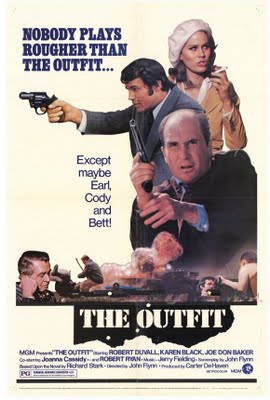
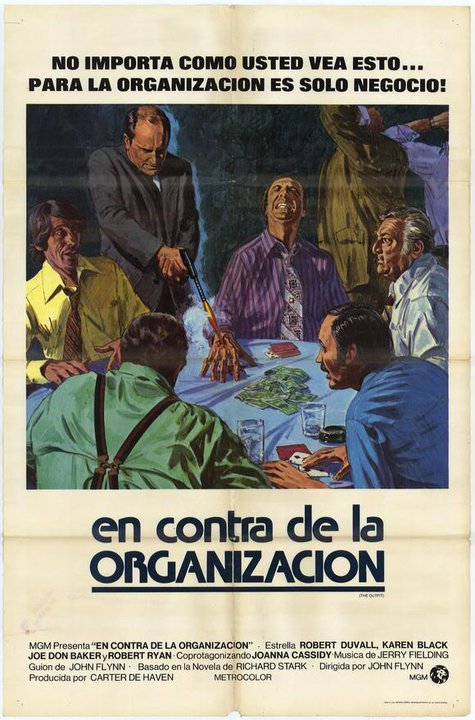
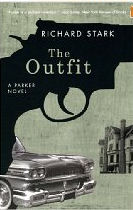
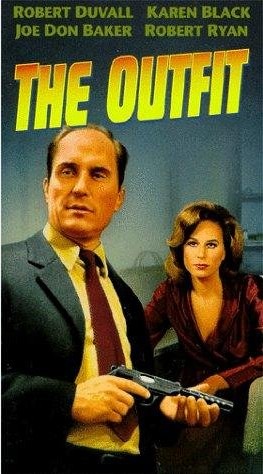
Trailer Tuesday: THE OUTFIT (1973)

How about some Richard Stark?


Directed by: John Flynn.
Written by: John Flynn (based on the novel by Richard Stark... who is really Don Westlake).
Starring: Robert Duvall, Karen Black, Joe Don Baker.


THE OUTFIT (1973, written & directed by John Flynn) is one of those no-nonsense action films from the 1970s - kind of a studio B movie. This was the tail end of the studio system, when they were still making movies just to fill screens. Studios were like giant factories with employees, and it would cost them more to shut down between movies than to just make some “programmer” movies. Now studios are just banks and distributors, and they do not have any full time employees, but in the early 70s they had actors under contract and film crews and directors who they paid a salary to whether they were working or not... so why not keep them working making B movies? Some studios, like Universal, became big TV producers with their employees on salary. But they all made “programmers” - basic meat and potatoes genre films often starring second string stars or TV guys like James Garner. Garner starred in all kinds of programmers, from the comedy-western GET TO KNOW YOUR SHERIFF movies to some action flicks like MARLOWE. The great thing about these movies is that the studios still had all of these great character actors under contract, so you’d get a bunch of familiar faces in every film.


The “programmers” served a handful of purposes - they kept the studio employees working, they filled screens with movies to watch until the studio’s next *big* film like THE STING came out, they often played as the “A feature” at rural drive ins and big city grind houses (in “second run” - after they had already played in normal cinemas as “screen fillers”) they were kind of the farm team for actors and directors and stars - grooming them for bigger and better films, they helped “amortize” the big budget films, and every once in a while one of these little studio B movies became a big hit - and the studio made a ton of money from a very small investment.

The great thing about the action films from this period is that without Paul Newman or Steve McQueen or big budgets, they had to entice the audience with what Blockbuster video used to call “Super Action” - fist fights and car crashes and hot women. In order to get you into the cinema, they’d make the fist fights more visceral, and the shoot outs might be fewer... but more savage, and you weren’t getting the car chase from BULLITT, but they’d crash some junker cars and there would be a nice explosion. These were studio exploitation films. The quality of a studio film crew, the subject matter of some drive in action flick. This time period also gave us all of the great studio Blaxploitation films like SHAFT (also from MGM).

Part of my love for these films is that they are not about rich guys with good jobs in nice office buildings, none of these guys would be caught dead as the love interest in a rom-com. These films are about guys who work for a living, and seem to either take place in the big city or somewhere rural... Charles Bronson played a *watermelon farmer* in one of these films!

THE KILLER SET UP


So THE OUTFIT stars Robert Duvall, from those GODFATHER movies, as a version of Richard Stark’s Parker named *Macklin*, who gets out of prison and discovers his brother has been murdered by the mob and wants to get himself a little revenge. The guy who wrote the novels thought Duvall was closest to his creation, and this is Duvall playing deep fried tough guy to perfection.

Film opens with a Priest in a taxi cab driven by Felice Orlandi - who you would recognize as the low level pock-marked crook in at least a dozen films (including BULLITT!), stopping at a gas station to ask for directions. So you know something is wrong...
Orlandi isn’t just playing a taxi driver like Duvall did in BULLITT, he’s some sort of bad guy. It’s like casting Gary Busey as a waiter. When they get to this house out in the middle of nowhere (rural setting), there is a guy fixing a fence with his dog... And Orlandi and the Priest show up with guns and blow him to pieces. Violently. They just keep firing at him while the dog barks and yelps. The dog is a great touch - when it howls for its dead master, we feel its pain.


Then Duvall gets released from prison, where his ex-girlfriend Karen Black is waiting for him. She tells him she has not been at all faithful, and he says that’s okay - he was away for a while. Then she tells him that his brother was killed by some mob guys...

That night in some crappy roadside motel, a bunch of mob guys including Orlandi try to kill Duvall. But he’s one tough bastard and blasts them all and gets the name of the guy behind it. But he also knows that Black set him up by picking that particular crappy roadside motel.

SOME CASUAL VIOLENCE


Duvall braces Black, she pulls back her sleeve and there are at least a dozen big infected cigarette burns. Guy who did it to her? Same guy who hired the killers who killed his brother. Seems the bank robbery that Duvall was busted for was a mob owned bank. They killed his brother for being part of it, they tried to kill Duvall, and they tried to kill the third guy in the robbery - Joe Don Baker. So Duvall and Black drive to the big city hotel where the lead bad guy is playing a 24 hour poker game...

While Black sits in the car with the motor running, Duvall walks into the hotel, goes up the elevator, pokes his gun in the face of the guard at the hotel room door, takes him out to the balcony and SLAMS him with his gun, then goes back to the hotel room, kicks open the door, slams the inside guard in the face without even slowing down, and robs the poker game - taking guns and cash. The great thing about this sequence is that it’s *suddenly violent* and the film never makes a big deal about it. If this film had been made today, they would make it a big deal... and it wouldn’t be nearly as cool. By downplaying the importance of the violence without downplaying the level of violence, it makes it seem like it is all in a day’s work for Duvall. Before Duvall slams the outside guard with his gun they have a casual conversation and the outdoor guard requests to be slammed with the pistol on his right side because of a previous injury to the left said of his head. These guys get hit with guns and shoot people for a living - no big deal.

The lead bad guy at the poker table is played by the great Timothy Carey - from THE KILLING - who is a big fat a-hole. Timothy Carey is one of those guys who shows up, gives a great sneering performance that gives you nightmares, and collects his check. There are actors who you can see working, Carey isn’t one of them. Hard to believe that this complete a-hole is the same actor who was so sympathetic in THE KILLING.

Carey taunts Duvall as he robs them - he’s got a gun pointed at him, and he’s still spouting crap. Duvall tells him that the mob has to pay $250k for the death of his uninsured brother... who leaves a widow behind.

Then, just when you think the whole thing is over and Duvall is about to leave, he calmly shoots Carey through the hand for using Black’s arm as an ashtray. Danged brutal!

Duvall connects with Joe Don Baker in some rural cabins that are owned by an ex-whore played by Marie Windsor from THE NARROW MARGIN, one of many great bit parts played by actors and actresses from classic noir and action flicks. This film is a who’s who of Noir actors... Elisha Cook Jr from THE MALTESE FALCON pops up in a bit part and Jane Greer from OUT OF THE PAST is the widow! Over some beers they decide to take the mob for $250k - even if it means they get killed. They are already on the mob hit list, right? What’s the worst that could happen? The plan is to rob every mob place they can find until they get $250k or they mob pays them. Then the $250k goes to his brother’s window.

DANGEROUS ADAPTATION


One of the interesting things about this film is how they turned what was book #3 in the Parker series into a stand alone movie. Unfortunately, THE OUTFIT is too much like POINT BLANK to be a good double bill. In the books, after Parker gets his money back from the mob there is one mobster left alive - Bronson. Bronson wants Parker dead, so in book #2 Parker gets plastic surgery. In book #3, Bronson tries to kill Parker... and Parker decides to show the mob who has more power by getting the word out to all of his armed robber friends across the USA that robbing the mob is now okay - as long as they mention Parker’s name. So in the novel THE OUTFIT, all across the USA robbery teams are knocking over mob businesses (casinos, drugs, prostitution, loan sharking, etc) and eventually Bronson decides to leave Parker alone.

The film manages to stay faithful to the book and still change the core story. One scene that’s lifted right from the book - but they completely change the location: When Duvall and Baker go to buy weapons, in the book the characters go to a hobby shop and the guns and rifles are hidden in model car kit boxes. In the movie they pick up a salesman with a sample case on the side of the road, and the sample case is filled with guns - kind of like the gun salesman in TAXI DRIVER. They drive around the highway and do some shopping at the same time.

The dead brother thing is how they make THE OUTFIT work as a stand alone, and this gets used in a great scene from the book where Parker shows up at these redneck brothers rural chop shop, and they don’t recognize him because of the plastic surgery... and there’s some tension where they may kill Parker because with that new face he’s a stranger to them. Same scene in the film, but it was Duvall’s *brother* who knew the redneck brothers, so he must convince them he’s trustworthy. In this scene there also an angry dog that’s a threat throughout the scene - I have no idea how much a growling dog costs compared to an explosion, but the dog turns even the quiet moments in the scene into potential danger... And there aren’t many quiet moments.

I love the redneck brothers in both the book and the film. These guys are moonshine hot-rodders who know more about cars and how to make them go fast than all of those NASCAR mechanics combined. They build getaway cars for a living. The idea that people like this exist as peripheral occupations in the world of professional armed robbers is really cool - it’s like being taken into the armed robber’s world and shown details that you never knew existed. One of the cool things in this scene (both book and movie) is the VW Bug getaway car with the hidden V8 - looks like it would have trouble going up hills, but can do over 120 mph. Only problem? It doesn’t *sound* like a VW... and the brothers are trying to find the right muffler combination to get the sound right.

This part is *great* in both book and film, because while Duvall is off with the brothers (played by Richard Jaeckel and Bill McKinney - the hillbilly rapist from DELIVERANCE) looking at cars, Joe Don Baker is left with McKinney’s superhot wife played by Sheree North (who was kind of a Suzanne Sarandon earthy type) who tells him they have time for some luvin’ before her husband comes back. And she does everything possible to get him interested. And it gets *us* interested too (at least, the male target audience for this film).

THOSE BRA-LESS BABES


Now, I have no idea what was going on in 1973, but bras seemed to be completely out of fashion. No woman in this film is wearing a bra. Karen Black is wiggling around, even Marie Windsor was braless. Heck, the old waitress in the coffee shop is wiggling around! That’s actually kind of gross, but I guess it’s a small price to pay because a bra-less Sheree North? Yikes! She is already a mega-busty woman (real ones, too - this was made back when all big breasts were the real thing), add the lack of bra and the tight tops and... well, um, it’s easy to forget what the plot is. Anyway, she offers Joe Don Baker a little luvin’ and he decides that is a good way to get killed and refuses...

But when Duvall and Jaeckel and McKinney return with the car, North tells her husband that Joe Don tried to screw her. McKinney goes crazy and tries to kill Baker, and there’s a big fight, and Duvall and Baker dive in the car and barely get out of there alive. One of the great throw away lines in this bit is that brother Jaeckel *did* sleep with her! These people are all sleeping with each other - it’s Tennessee Williams country!

CONFLICT ON THE SIDE


Now, the cool part about this scene is that it isn’t one of the scenes where Duvall and Baker are taking on the mob... this is a scene where they *prepare* to take on the mob, and it is filled with tension and conflict and excitement. The great thing about lots of these meat and potato action films is that they make sure that even the scenes between the action scenes are exciting. They find the conflict in the little scenes - there’s a great bit where Black and Duvall are hiding out in a another crappy roadside motel and Black goes out to call her mom from a payphone and tell her that she’s okay... and there is a man watching her the whole time. Some mob flunky posted at that motel to look out for them. So the great character scene where Black talks with her mother and we get a glimpse of her white trash past and the way she hooked up with Duvall to try and climb out of it... is an incredibly tense scene. And there’s no shoot out or car chase or giant fireball or someone outrunning an explosion... it’s just some creepy guy watching her.

So, Duvall and Baker decide to talk to the local mob guy headquartered in a bar/restaurant who hired the hitmen, with Black as their getaway driver... and it’s a really cool scene filled with all kinds of side conflicts and one kick ass line of dialogue, “I don’t talk to guys who wear aprons.” Duvall gets in to the mobster’s office pretending to be a mob guy from Timothy Carey’s crew... accompanied by the guy in an apron - the bartender, and has this conversation with the mob guy about those hit men who got killed... and the mobster just looks at him and says - you’re Macklin. Knows it right away. And that’s when the bartender attacks. Sudden violence. One moment they’re talking, the next moment the bartender is trying to club Duvall in the head.

After Duvall slams them to the floor, he robs the mob safe - this is like a regional headquarters, so there’s a bunch of money. As Duvall and Baker escape there’s this big muscular cook with a huge meat cleaver in the kitchen who tries to stop them. That cook character was established when Duvall and the guy in the apron walk past the kitchen... using that cleaver. And you just know that cleaver is gonna be used on him later... or, at least the guy will try. That’s the kind of cool thing that happens in these films - instead of being some cook frying eggs, you get a guy with a giant meat cleaver.

BAD ASS HEROES


Another thing that comes directly from the book, with a bit of a change, is Baker’s character owning a diner... it’s in Maine in the books and in Oregon... but the town name remains the same. Baker and Duvall have this great conversation in the car about the shelf life on being an armed robber... and how getting old makes it more difficult. A very realistic version of the “I’m getting too old for this shit” conversation.

Black has gone home to her mom, and Duvall and Baker just start kicking major ass. They rob a sports betting place - and Baker savagely slugs a woman at the front desk. When they get inside, they can’t get anyone to open the safe and Duvall grabs the guy in charge and says he’s gonna blow off a toe for every minute the guy doesn’t give him the combination... then has one of the other hostages take off the guy’s shoe!

The Macklin character is what I call a Bad Ass Hero - not that there’s anything defective about his hindquarters. There are two basic types of action heroes: Superman and Every Man. The Every Man type is a normal guy who ends up fighting bad guys - like John McClane in DIE HARD. The Super Man is like James Bond - someone who is our fantasy figure. This has nothing to do with spandex or capes or super powers - Tony Stark is an Every Man, as is Peter Parker. And most roles played by Steven Seagal and Chuck Norris are Super Man types - tough guy fantasies. We wish we were that guy!

Duvall’s character is a Super Man type - kind of a blue collar James Bond. He’s tough, he says clever things we wish we could think of (“Die somewhere else!”), he’s ultra-confident, he is never afraid (or never shows his fear), he never shows any sign of weakness and never shows pain. He’s the kind of guy who gets shot and takes it like a man. He’s a man of violence, who *hurts people*. Seagal swiped his character from BILLY JACK, but does a great job with it. Seagal *breaks people’s bones* in fight scenes - he’s savage. He also does the great Bad Ass Hero speech thing - where he gives his super confident warning about how, exactly, he will beat the crap out of the ten guys surrounding him. No fear - he has it all planned out. He’s a Bad Ass. He’s gonna eff those ten guys up. Duvall’s Macklin has some similar Bad Ass moments - in Act 3 he’s *way* out numbered and tells the mob henchmen that they don’t have to die, they can just walk away. Um, that takes some major cajones! Shooting Carey’s hand and clubbing guys in the head with his gun without even slowing down - all of these are Bad Ass Hero moments. This guy kicks ass!

BIG BAD GUYS


The reason why this was “too much of a good thing” when doubled with POINT BLANK is that eventually it becomes Duvall and Baker climbing the ladder of mobsters to get the $250k for the widow... and that’s not that much different. In the book they were just robbing mob places until Bronson took the price off the Duvall character’s head. When they changed it into money, they ended up in POINT BLANK territory. Robert Ryan plays a version of Bronson named Mailer - the head of the mob... and a very young Joanna Cassidy as his hot (braless) trophy wife. Ryan is one of the film’s secret weapons - he’s not only one of those guys who has been in a bunch of old noir and crime films, he’s tough as nails. He’s a bad ass, too.

At a horse auction, Duvall and Baker brace Ryan - a very public scene with Ryan’s bodyguards right there and everyone trying to be on best behavior... but seconds away from shooting each other. Duvall and Ryan have a nice little chat that is all about the world of organized crime vs the world of independents - Ryan thinks Duvall is nothing more than a stick up artist... but Duvall has been hitting them hard. It’s a good hero and villain scene - and the little guy being smarter than the big guy... just not as strong. It’s what the film is all about - the theme in a tense scene with guns and the chance for a bunch of innocent bystanders to get killed. This idea of the little guy going up against the big guy is part of the appeal of these films. They are about underdogs who kick some ass that we wish we could kick. In a strange way, THE OUTFIT is kind of a Tea Party movie - normal people standing up and taking down The Man. I don’t think it’s an accident that the bad guys in lots of these 70s films end up being big time mobsters who live in giant mansions, or big business guys who live in giant mansions, or crooked politicians who live in giant mansions. It’s blue collar workers against rich a-holes.

Where POINT BLANK turns organized crime into glass and chrome skyscrapers and the 60s version of big business with junior executives in charge, OUTFIT makes it layers of sleazy mobsters with a John Gotti type at the top. Not as interesting, but works well for a straight action flick like this. A lot of the pulp paperbacks at the time, like the EXECUTIONER series, were about Viet Nam vets who take on the mob. Ryan, as usual, is brilliant playing Mailer: barking orders and always on the verge of exploding. He’s one of my favorite tough guy actors because he always had a trace of vulnerability.

After Duvall and Ryan have their little chat, the film becomes a series of action scenes setting one against the other until we get to Act 3 where Duvall and Baker buy additional weapons and bombs and anything else they can get their hands on and storm Ryan’s country estate for an Act 3 of wall-to-wall action. Dozens of mobsters guarding Ryan means dozens of shoot outs and fight scenes... and then all kinds of ground taken and lost once they get inside the house. Though big studio films often have wall-to-wall action in Act 3, in these 70s films it tends to be more personal and visceral - shoot outs with people in the next room... close enough to smell. In one scene, a character looks in a mirror and can see something happening in the next room... and uses his gun. It’s close fighting, rather than the big explosions of today’s blockbusters. And the close fighting ends up being more personal and more emotional. Though, um, there are some explosions. And I forgot to mention the car explosions that happen before the house raid - there’s a great country road car chase and shoot out ending with an explosion when Ryan sets Tim Carey after Duvall and Baker.

ACT THREE ACTION


The Duvall & Baker team seem like a predecessor for writer-director John Flynn’s next film - ROLLING THUNDER (written by the great Paul Schrader) where William Devane & Tommy Lee Jones team up to take down some scumbags in Mexico. That’s another great B action flick that is now on BluRay. The shoot out in the whorehouse in THUNDER is much like the end shootout in OUTFIT. Two guys with guns take on a house full of trouble... and stay standing even after they have been shot multiple times. One of the great things about seeing THE OUTFIT on DVD is that you don’t get that crappy TV print where they changed the end. Somewhere along the line, some network’s Standards & Practices (censors) decided that having Duvall and Baker get away at the end was immoral. They are armed robbers! They kill a whole lotta people! The people they do not kill, they aren’t very nice to! So the network cut the end where they escape, and end with the two laying wounded on the stairs of the country estate after all of the bad guys are dead, listening to the police sirens getting closer - seemingly resigned to do prison time. The great print the New Beverly showed had them cleverly slipping past the police, laughing.

THE OUTFIT isn’t a great film, but it’s a *fun* one. It seems like real people in real situations really hurting people. Not like the fake action flicks we get these days. I miss these meat and potatoes flicks - just meant to fill some screens and provide some great little action stories. The B movies today all seem to be chasing the A movies - trying to be big event films made for a nickle. The only time we get films like this seems to be those flicks that are either almost parodies of 70s action films or *actual* parodies of B action films. It’s too bad. Some studio should start making some little no-nonsense action films on low enough budgets that they can’t lose money. Just some guys kicking ass for 90 minutes. I’d watch that...

Buy THE OUTFIT at Warner Archives.

Buy ROLLING THUNDER at Amazon.

- Bill
eXTReMe Tracker