Tuesday, July 20, 2021

Make the MISSION IMPOSSIBLE book #1!

Today, July 20, is my birthday. So I am giving YOU a gift! All three of the STORY IN ACTION books are 99 cents each today... and they are on Kindle Countdown Deals - so the price goes up a buck every couple of days over a week until it they get back to $3.99. MISSION IMPOSSIBLE, TERMINATOR, BOURNE. All 99 cents today! (USA Only, Sorry!) Tell your friends, your family, your enemies, the person sitting next to you on the bus, because....

I want to make the MISSION IMPOSSIBLE book #1 Wednesday! Or either of the other 2 books!

ALL STORY IN ACTION BOOKS ON SALE!

bluebook

THE MISSION IMPOSSIBLE MOVIES

All Six Movies analyzed! All of the mission tapes, all of the “that’s impossible!” set pieces and stunts, the cons and capers - and how these scenes work, the twists and double crosses, the tension and suspense (and how to generate it), the concept of each film as a stand alone with a different director calling the shots (broken in the sixth film), the gadgets, the masks, the stories, the co-stars and team members (one team member has been in every film), the stunts Tom Cruise actually did (and the ones he didn’t), and so much more! Over 120,000 words of fun info!

THE MISSION IMPOSSIBLE MOVIES - Only 99 cents!


NO KINDLE REQUIRED! Get the *free* app (any device, except your Mr. Coffee) on the order page on Amazon!


UK Folks Click Here.

German Folks Click Here.

French Folks Click Here.

Espania Folks Click Here.

Canadian Folks Click Here.

India Folks Click Here.

Austrailian Folks Click Here.

STORY IN ACTION BOOKS


bluebook
Over 240 pages!
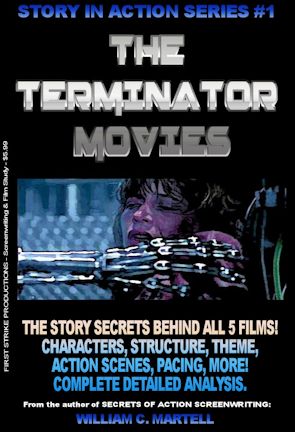
*** THE TERMINATOR MOVIES *** - For Kindle!

He's back! The release of "Terminator: Genisys" (now on BluRay) is set to begin a new trilogy in the Terminator story... 31 years after the first film was released. What draws us to these films about a cybernetic organism from the future sent back in time? Why is there a new proposed trilogy every few years? This book looks at all five Terminator movies from a story standpoint - what makes them work (or not)? What are the techniques used to keep the characters and scenes exciting and involving? How about those secret story details you may not have noticed? Containing a detailed analysis of each of the five films so far, this book delves into the way these stories work... as well as a complete list of box office and critical statistics for each film. This book is great for writers, directors, and just fans of the series.

Only 99 cents!


bourne

They Should Have Left Him Alone!

*** THE BOURNE MOVIES

All five "Bourne" movies (including "Legacy" and it's potential sequels) - what are the techniques used to keep the characters and scenes exciting and involving? Reinventing the thriller genre... or following the "formula"? Five films - each with an interesting experiment! A detailed analysis of each of the films, the way these thrillers work... as well as a complete list of box office and critical statistics for each film. This book is great for writers, directors, and just fans of the series.

SALE: 99 cents - and no postage!


UK Folks Click Here.

German Folks Click Here.

French Folks Click Here.

Espania Folks Click Here.

Canadian Folks Click Here.

"SECRETS OF ACTION SCREENWRITING is the best book on the practical nuts-and-bolts mechanics of writing a screenplay I've ever read." - Ted Elliott, co-writer "The Mask Of Zorro", "Shrek" and "Pirates Of The Caribbean".

"William C. Martell knows the action genre inside out. Read and learn from an expert!" - Mark Verheiden, screenwriter, "Time Cop" and "The Mask", head writer on "Smallville" and "Constantine".

"This book is dangerous. I feel threatened by it." -Roger Avary, Oscar winning screenwriter, "Pulp Fiction" and "Killing Zoe".

"Bill Martell is one of Hollywood's best action-adventure writers, with 19 produced films to his credit. His "Blue Books" on the art of screenplay writing are legendary and "Secrets of Action Screenwriting" is the best." - Best selling novelist Dale Brown.

"My only complaint with SECRETS OF ACTION SCREENWRITING is that it wasn't around when I was starting out. The damned thing would have saved me years of trial and error!" - Ken Wheat, screenwriter, "Pitch Black" and "The Fly 2".

"There's an art to writing for guys like Chuck Norris -- thanks to Bill Martell's book, I was prepared." - Genia Shipman, screenwriter, "Walker: Sons of Thunder".

"Finally a screenwriting book written by a working professional screenwriter. Bill Martell really knows his stuff, showing you how to write a tight, fast screenplay." - John Hill, screenwriter, "Quigley Down Under" and "Closed Encounters Of The 3rd Kind".


These links all lead to the USA store, if you are in some other country and want to write a review for your country, go to your Amazon website.

Thank you all again.

- Bill

Wednesday, June 23, 2021

Special Guest: Harry Connolly on Studying Screenwritng

From 2015...

My friend Harry Connolly has been writing guest blogs to promote his new (awesome) GREAT WAY Trilogy, and knocking it out of the park with each one. All kinds of amazing insight and information on writing that applies to novels, short stories, and screenplays. He should write a book! So my blog is privileged to host this guest blog...

2019: Harry has a new book, the first in a series - and it just came out! ONE MAN: CITY OF THE FALLEN GODS. I just bought my copy and will dive into it soon! The great thing about Harry's novels is that he creates a vivid world that you can disappear into for a couple of hours before bed (that's when I read). A whole world that is not like our own. Check out his new book or his old ones.

INT. BOOKSTORE - DAY: How Studying Screenwriting Made Me a Better Novelist (Mostly)

Way back in the misty dawn of the 1990s, I was a noob author on the internet, looking for advice.

Boy, did I find it.

One of the earliest places I went searching was from pro novelists. Nice people, but none of the advice they gave me seemed all that helpful. I wanted to know how to put together a really great book, and the responses were, essentially: "Try not to be boring."

Now, this is the ultimate advice. Really, there is no better advice than this. "Be interesting" is the only rule of writing. Everything a writer learns about their craft brings them toward this goal.

But I wasn't looking for that. I wanted to talk dialog. I wanted tips on creating characters and conflict. I wanted concrete rules. That's when I found screenwriting.

Now, this was back in the days of Syd Field, who specified actual page numbers where people should put act breaks. It was very, very rigid. Too much so, honestly.

Not that I knew about Field at first. I was just this guy writing terrible fiction. Some actor friends told me to write a script so they could be in it, and gave it a try. Had I ever seen an actual film script before? Nope. Lots of plays (I studied Modernist Drama in college, mainly because plays are so short) but no screenplays. You can imagine how good they weren't.

Then, while bumping around from one message board to another, I discovered Wordplay.

I think just about every person who goes online is searching for a peer group, even if they don't realize it. They seek out a circle of friendly voices who share their interests, enthusiasms, and ambitions. Someone to cheer them on or buck them up. Someone willing to tell them they're full of shit.

Just as important are contrasts. The horror writer has a lot to learn from the kitchen sink drama writer, and vice versa. The woman who wants her name on big budget summer tentpole movies has a lot to learn from the woman writing arch indies. They define themselves and their work by their differences. And they can argue.

God, how we argued. Antagonists, flashbacks, outlining: it was an endless competition of ideas, and while I argued passionately, I was wrong as often as I was right.

But what did I learn in all that back and forthing that I'm still using today?

1) The elegant flourish. There's an early scene in Budd Schulberg's What Makes Sammy Run where a movie producer complains about an Ivy League playwright he's hired. The script he turned in had a 20 page scene where a husband and wife argued, bickered, and fought, and the playwright insisted every line of dialog was necessary to establish the man's contempt and the dismal state of their marriage. The producer brought on another writer, a guy with barely a high school education. New guy throws out the argument entirely and writes a new scene: The husband and wife are on an elevator. A pretty young woman gets on, and the man takes off his hat.

That was it, a single moment that encapsulated the situation perfectly. Short, simple, telling. I've been searching for ways to do that in my own writing ever since.

2) Hurry up! One of the first things screenwriters at the time were told was that any dialog over three lines was too long. (And script formatting is really narrow for dialog.) Get to the point without being on the nose, then get out.

The same was true for scenes. Start late and end early. Get to the conflict, then the next, then the next. Anything that didn't move the story forward had to be cut.

Novels can be a digressive form, with characters telling little stories about their lives, or doing the dishes, or stopping for coffee with an old friend. That's not a bad thing, and I certainly don't mind reading digressive books. I don't like writing them, though. I try to keep the story moving, and I inevitably get editorial notes asking me to slow things up and take a little more down time.

3) Be the expert. This was a hard one, because it doesn't mean what a novelist would assume it means. It's not an injunction to study sword-fighting before writing a duel, or to interview a bunch of cops before writing a procedural. That advice ought to be so obvious that nobody should need it. This means to be an expert in your own storyΓÇöto know it inside and out.

In fact, this came from the Wordplay column called You're The Expert; the reason screenwriters are supposed to be experts is to effectively respond to studio notes. That's not an issue for my type of writing, but when I'm stuck on a scene, or unsure what direction the plot should go, I ask myself what a really great would do. How would [extraordinary author] write this scene?

It's a surprisingly effective way to break through a block, and research has confirmed that people are more creative when they imagine themselves to be someone else. Research requires actual expertise, but creatively it helps to have the pretend kind.

What about that "Mostly?" There's one aspect of novel writing that studying scripts didn't prepare me for, and it wasn't what I expected. If you watch the opening of The Godfather, you see an amazing outdoor wedding partyΓÇöthe people, the decorations, the food, all of it. In a script, that's covered by the words EXT. WEDDING PARTY - DAY or whatever. A novelist has to do the work of the art department, the wardrobe department, casting, and all the rest.

But I expected that. What I didn't expect was the profound difference in the way prose text operated. In a script, the text doesn't have a lot of flow because so much of it is instruction. Scene headers, dialog names and parentheticals, "legends", all of them break the flow of the narrative and dialog.

Prose has none of that. Not only is the text very linear, it comes in a flow that's largely unbroken (with the exception of chapter headers or asterisks scene breaks). That task of stringing words together into sentences, then tying sentences together into paragraphs, then arranging paragraphs properly, it a lot like beadwork, and it was the biggest hurdle I faced. While revising first drafts, I found sentences in the wrong order, paragraphs that repeated exposition, unnecessary prepositional phrases, and worse.

Learning to control the flow of text and the transitions between sentences over page after page of prose, instead of in small bursts of narration, was the skill that elevated my game to earn a publishing contract and a career.

Obviously, it isn't absolutely necessary for novelists to study screenwriting; plenty of pros have done well without it. One of the strengths of the novel format is the extraordinary variety of styles and subject matters. Nothing really matters except that one rule I mentioned at the top.

But I'll always be wedded to the stripped-down, full-speed-ahead aesthetic of the script, and I'll always be grateful to the screenwriters (including my host here) who taught me what I needed to know to become a pro novelist.

Now watch me gently segue into a note about my latest, blurbed "Epic Fantasy that reads like a Thriller" by Greywalker author Kat Richardson.
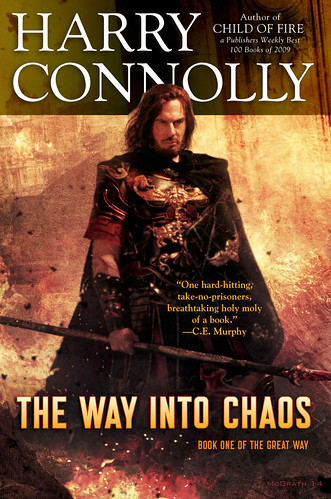
The Way Into Chaos Cover

Have I mentioned that it received a starred review in Publishers Weekly? Bill wrote a review of the entire trilogy. You can also find out more about that first book on my website.

If you want to see the fast-paced style I've been talking about, you can read the sample chapters I've posted on my blog.

Thanks for reading.

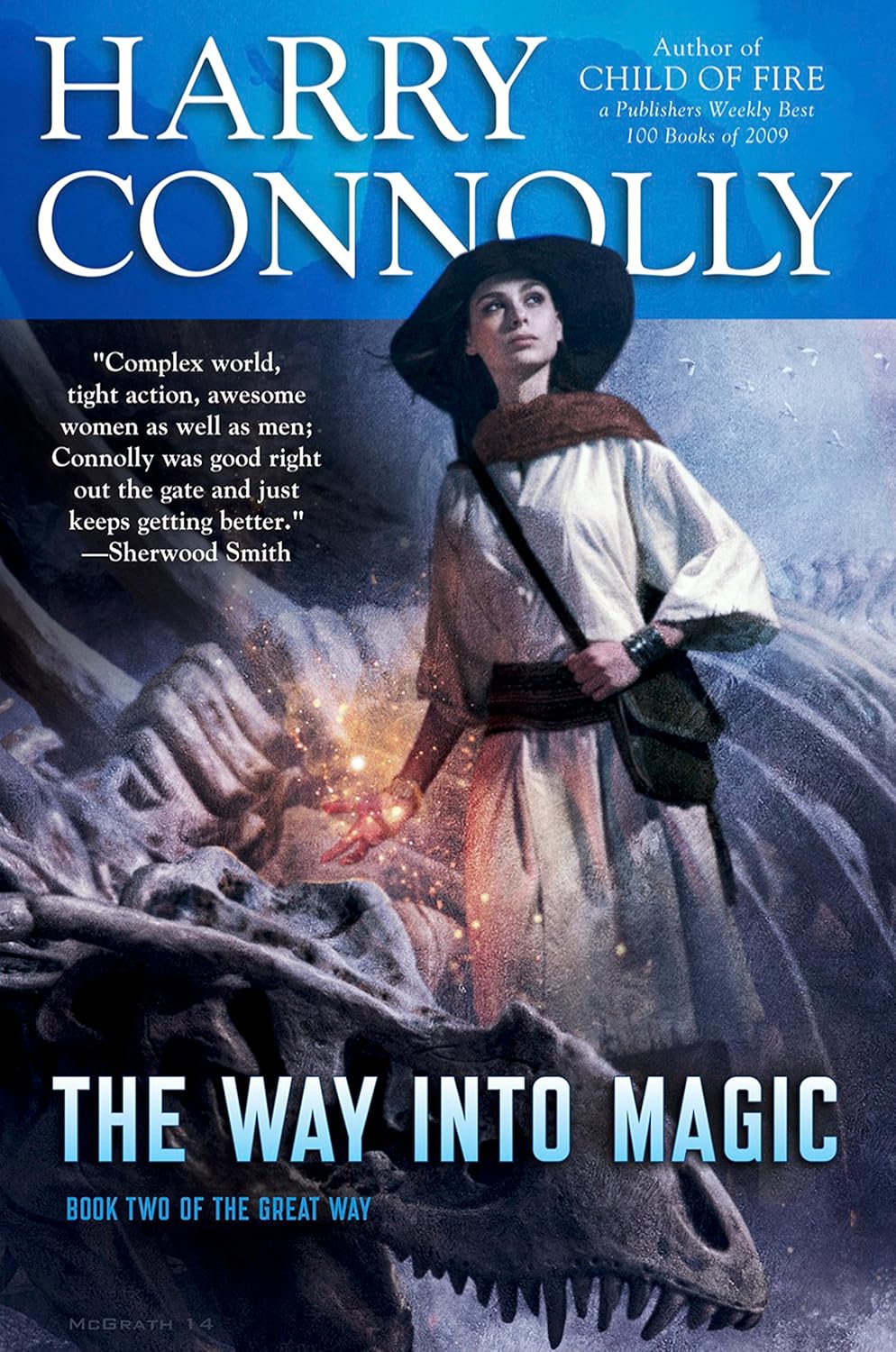
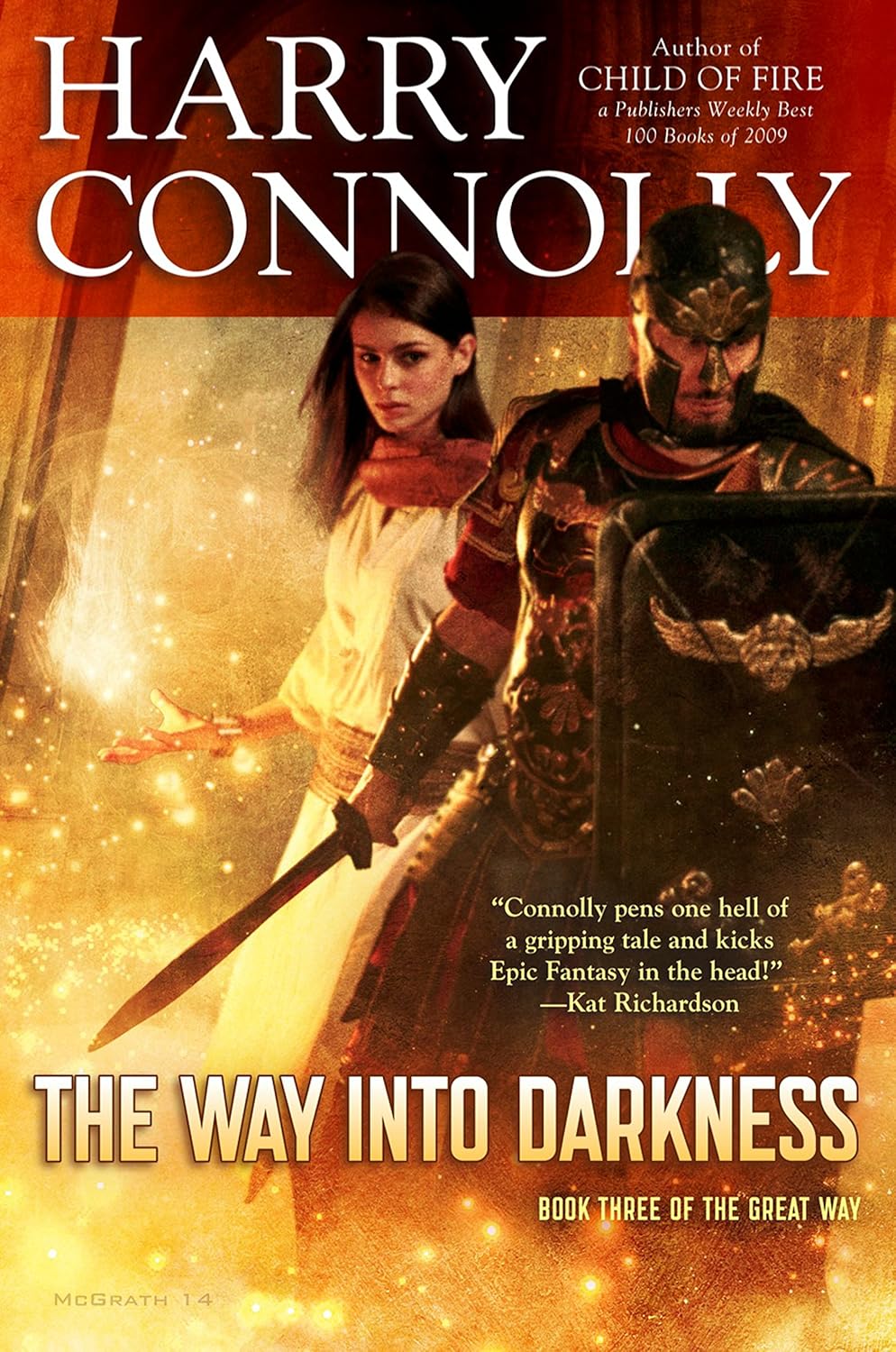
BIO: Harry Connolly's debut novel, Child Of Fire, was named to Publishers Weekly's Best 100 Novels of 2009. For his epic fantasy series The Great Way, he turned to Kickstarter; at the time this was written, it's the ninth-most-funded Fiction campaign ever. Book one of The Great Way, The Way Into Chaos was published in December, 2014. Book two, The Way Into Magic, was published in January, 2015. The third and final book, The Way Into Darkness, was released on February 3rd, 2015. Harry lives in Seattle with his beloved wife, beloved son, and beloved library system.

In case you missed any of Harry's other guest blogs...

My Favorite Bit.

Why Talent Is Evil.

My Superpower As A Writer.

It's Dangerous To Go Alone.

Failing On Your Own Terms.

The Most Difficult Part To Write.

Experts Vs. Bumpkins.

Always Blame Yourself!

And the books:

Click covers for more info!

Chaos Magic Darkness


PS: Lancelot Links will be on *Tuesday* this week!

Bill
Wednesday, June 02, 2021

Book Report: Circle Of Enemies

Because Harry is currently writing the next book in this series, I thought I would rerun this. Plus, it's a great beach read!

CIRCLE OF ENEMIES by Harry Connolly.

Though I just finished reading a new short story collection by Lawrence Block, I’ll get to that next Tuesday... because I still haven’t reported on my friend Harry’s latest book CIRCLE OF ENEMIES, which I finished reading a week ago. Took me long enough! But I did a quick rewrite on a script and read some other friend’s scripts and have been working on the Action Book rewrite. I’ve been busy!

“I’m Raymond Lilly, and I’ve lost track of the number of people I’ve killed.”


This is the third book in the 20 Palaces series - and the best so far. The first book, CHILD OF FIRE, opens with car thief Raymond Lilly getting out of jail... Ray was waiting for trial, had a crappy public defender, was guilty as hell and figured he was going to do time. But when he goes to trial, his public defender is gone and a high priced uber-slick lawyer is in his place, and the lawyer makes him a deal: If Ray never tells anyone what he saw, the lawyer will work his magic and Ray will walk. Oh, and Ray has to take a job with the organization so that they can keep tabs on him at all times. Ray agrees, and moments later he is walking out of the courtroom a free man. Sounds like the Mafia, doesn’t it? But the twist is - the high priced lawyer works for the 20 Palace Society - a group of sorcerers. What Ray saw was some sort of magic thing... and his new job is the driver for Annalise - a sorceress assassin who tracks and kills anyone who uses magic who is not a member of the society. There’s maybe a good reason for doing this - using magic often opens the door to a dark world where predators live. If those predators escape, they can kill a bunch of people and possibly destroy the world. So only members of the Society are allowed to use magic... Annalise or one of the other assassins kills anyone else, and destroys the predators. Oh, Ray has another job other than driving her around - he’s her “wooden man” - her decoy, her bait. If there is a predator on the loose looking for a human to consume, Ray’s job is to lure it into Annalise’s trap. Um, his life expectancy isn’t very long. Kind of a miracle that he made it to book #3.


Book #3, CIRCLE OF ENEMIES, opens with Ray between assassin gigs working in landscaping in the Pacific Northwest. He comes home, takes a shower... and Melly, an ex-girlfriend (it’s more complicated than that - read the book for the relationship details), appears in his apartment. She’s from his past life as a car thief in Los Angeles... how did she know where he lives? How did she get in? While Ray is wondering all of this, Melly tells him that he killed her, and killed all of his other pals in Los Angeles. That their deaths are *his* fault... and then she just vanishes. A dream?

(Melly’s real name is Carmella - Harry does a great job of giving people realistic nicknames and even creating some confusion when different people have different nicknames for the same person.)

Ray grabs his stuff and drives to Los Angeles to look up his old car thief gang... and discovers that they have been cursed with magic - and have superpowers thanks to predators living inside them... eating them from the inside out. And now Ray is faced with an impossible choice: kill them or call Annalise to come in and kill them. These people are/were his friends! The other part of this is that Ray believes he is responsible for this... and so do some of this ex-pals. Ray tries his best to find some way to solve the problem without killing his old friends, and that requires him to figures out where the magic came from and then find the sorcerer who did this and see if it can be reversed... before his friends die one-by-one when the predators are finished with them.


The reason why I like this series is that it’s a weird combination of a Dash Hammett hard boiled detective novel and H.P. Lovecraft. Violent as hell. I don’t read stuff in this genre (Urban Fantasy) but I get the feeling from looking at some of the other stuff that pops up on Amazon when I search for his books looks more whimsical and “fun” and Harry is dark and violent and hard as nails. In Book #2 GAME OF CAGES Ray is forced to kill a whole bunch of people who have been possessed - and the end of that book is relentlessly violent. Though this book is probably less violent, it is more personal - and people you like die. No punches are pulled. I get the feeling the other popular Urban Fantasy novels are BUTCH CASSIDY AND THE SUNDANCE KID and this is THE WILD BUNCH. And, um, I like THE WILD BUNCH more than BUTCH CASSIDY (which may send me to Screenwriter Hell for admitting). These three books are serious stuff.

THE GOOD STUFF

Kindle version:


Since I don’t want to spoil it for anyone who might want to read it, let me be vague about some of the stuff I liked about it - but still explain why I liked those things.

I really liked that this is Ray dealing with people from his past - that made this more than just an entertaining story. It deals with lost loves and ex-friends and guilt and remorse and every messy friendship situation you’ve ever had. I think that’s what earned this that great review in Publisher’s Weekly.

I think it’s a cool idea to give superpowers to low life small time criminals - because they don’t want to rule the world, they just want to make a few hundred more dollars. They are men (and women) of limited ambition and limited dreams - and they use these new powers in ways that totally fit who they are. Because it’s small time crime, it’s gritty and real and not some crazy Lex Luthor or James Bond villain plan.

The story takes place in Los Angeles, but is centered in the Studio City area where I live - and it’s kind of cool. Harry and I once had coffee in my neighborhood Starbucks in Studio City, and it’s kind of fun to try and figure out what real business gets a fake name for the book.

There’s a totally frightening suspense scene where Ray has to save a kid from being sucked into the world of predators that had me on the edge of my seat.

One of the great things is that Harry creates easy to understand “rules” for his magical elements, and because Ray is just a guy - Ray (narrator) often comes up with a description of these things that uses stuff we can relate to. “Drapes” is a good example.

Harry has *great* chapter ends, designed so that you can not put down the book. This makes it a great read, but also means you will be trapped reading the damned book and not get anything done. One chapter ends with Ray discovering a note threatening to murder a child... hard to just put the bookmark in and set the book down after that.


You’ll have to read the book to understand this - but the most frightening scene to me was when Ray is given some superpowers that have a side effect of maybe removing some of his soul and turning him into more monster than man. This scene works because you *care* about Ray and even though he works for an assassin and sometimes has to kill people himself - he doesn’t take any of that lightly. He does not like killing people - even if they have been possessed by predators within. He’s a thief but not a killer. And now that this has happened, I’m worried about him. Yeah, he’s fiction, but in the world of this series he seems very real.

There’s a great comparison of actual toughness and bravery when Ray works with an ex-soldier Talbot who is the “wooden man” for another sorceress-assassin. The ex-soldier is Mr. Macho and has a pile of guns (Ray doesn’t carry) and the way each reacts to the same situation tells us volumes about both of them. It’s a great way to show character - and expose how a reluctant man of action like Ray is the real hero. The same sort of comparison is used between Annalise and Csilla (Talbot’s boss) to show how Annalise - who seems to care little about collateral damage - really does have a heart. She may be a brutal killer, and she may kill people who get in her way... but she *tries* not to kill anyone who is not a target. Csilla? Um, if the whole human race got in her way, she’d just kill us all. And these are the *good guys*!


CIRCLE OF ENEMIES is just in time to expose the evil behind Google Plus “circles”... and is a fast, action packed read. Because it’s Ray dealing with the people from his past... and the “sins” of his past... the story ends up having strong emotions below the surface. Ray is a man who doesn’t let his emotions show - and he’s damned busy fighting people and *things* from the “Empty Spaces”, but the situations are filled with tough decisions and the regrets and guilt and messy relationships we all have in our pasts. Can Ray save his ex-friends... who are now his enemies?

Makes a great gift for people who like twisted violent stuff!

- Bill

THE BOOK TRAILER:

Wednesday, May 19, 2021

Random Thoughts On Art

From ten years ago...

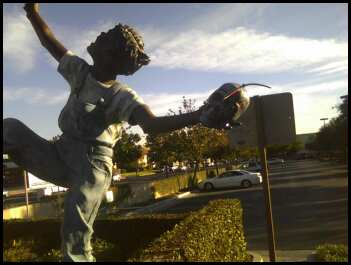
There’s this sculpture on the corner of Buena Vista and Victory in Burbank of an all American ten year old farm boy in over-alls dancing with joy hand outstretched to the sun. Kind of Norman Rockwell kitsch. Inoffensive, and 99% of the time I drive by it and don’t even notice it. The last time I went past I was on my bike and hit the stop light and had a minute to look at it and think about it. Someone had taped an American flag in the boy’s out-stretched hand. It looks like he’s celebrating America, wholesomeness, and that 1950s version of pure patriotism.


But when I thought about this Norman Rockwell piece of art I wondered if it even was art. Adding the American flag made it even more on-the-nose and obvious - even more bland and invisible. It’s expected - like a plastic pink flamingo on a suburban lawn. It doesn’t catch your eye. It’s not really interesting - you don’t really think about it. Something else you drive by at that intersection, like the sign for the Radio Shack in the strip mall or the marque for Ralph’s Groceries with this week’s deals... Actually, I often look at the Ralph’s marque, because it changes constantly. It’s *different* and often unpredictable - How can they sell ten ears of corn for 99 cents? That’s downright *provocative*! I might have to pull in and see that for myself! But the fake Normal Rockwell kid? Booooring! It’s *expected*. I don’t think art can be expected... so maybe it is not art, just decoration. Manufactured, like millions of identical Halloween skeleton decorations which are not a bit scary.

I wondered what kind of reaction this same decoration would get if someone had taped a Soviet flag in the dancing boy’s hand. Red. Hammer & Sickle.

Now, we have something interesting. Something that is probably art. It’s no longer bland. Because it forces you to think. It’s shocking. It may even offend some people. It’s different. Unexpected. No way we could drive past that without thinking about it, wondering what it means - is this a ten year old *Soviet* kid? Or some sort of innocent and idyllic traitor? I’ll bet there are hundreds of different ways this could be interpreted! Even if you are deeply offended by it, you would be *thinking* about it and *feeling something*. It would not be some passive experience - just a decoration. And I think that makes it art.

There is a conflict between our image of that dancing ten year old kid and the hammer & sickle flag. An incongruity. You can’t just absorb it - you need to process it first. To think about it. To figure out what it means, and what it means to you. We take art personally - we love it or hate it. It provokes us.

TIME WILL TELL


Now, my normal opinion is that what makes art is the test of time. If we still think the movie is great 50 years from now, it is art. There are many movies that people claim are art... that just vanish in a couple of years. Films that were called a work of genius, and a decade later we aren’t even thinking about. I think those films are often “surface art” - they seem provocative on the surface, but they don’t touch us deeply... and don’t stick with us. There are movies that I will never forget... and others that I see in the cinema and don’t remember seeing the next day! And many of those are artsie indie films where the film maker was trying to provoke me with things on the surface of the story, instead of digging deeper and *really* screwing with me. And there are mainstream studio films that seem inoffensive on the surface, but go straight for your heart and that unevolved insect part of your brain... and stick with you. One of the reason why I love those BOURNE movies is that they dig deep into the protagonist’s motivations and get into the icky things we don’t like to think of: am *I* the monster?

One of the things that makes horror films work is the connections to our subconscious. Great horror films are often completely politically/socially incorrect. They deal with the things we don’t ever want to think about - the things we fear are true, but have created this concept of society to contain and control those thoughts. I watched THE MIST on 9/11 - it seemed fitting. I think that film might have reached a much larger audience with a different ending... but would not have been nearly as powerful. The nightmares in that film aren’t what the monsters do to people, it is what people do to people. And how people think they are doing the right thing... and they are wrong, and must live with that for the rest of their lives. Good horror movies give characters impossible choices - things that haunt the characters for the rest of their lives, and haunt the audience as they leave the cinema. “What would I have done? Only 4 bullets...”

As a million people have said before me, a beloved Christmas film like IT’S A WONDERFUL LIFE sticks with us because it’s a bleak, ugly, nightmare! It’s not some bland story about nice characters who never engage in conflict with each other - it shows us both the good side of humans and the bad side... and I think the bad side gets a lot more running time! It provokes us. It challenges us. That film even *scares us* more than many pre-fab horror movies that get turned out by Hollywood. IT’S A WONDERFUL LIFE has passed that test of time - we are still watching it today.

I think there are two things required for a film to pass the test of time:


1) Enough people must have seen it so that it *can* be remembered decades later. Even though IT’S A WONDERFUL LIFE was not a box office hit, it was a big wide release movie that many people saw, and later in its life became a staple on TV at holiday season for a couple of reasons... at least one of which was that it had fallen out of copyright for a while and any TV station could show it for pocket change. The other reason being that it had a big name star and a big name director and a story that - despite its darkness - was accessible. Many arty indie films often have stories that are *not* accessible to a wide audience, and those films may become nothing but memories when one black-beret wearing audience gives way to the next. They are *temporary art* instead of something that we will be watching and talking about for decades to come - over 70 years in the case of IT’S A WONDERFUL LIFE. A movie must be seen by large numbers of people to be remembered.

2) The film must be memorable. No matter how many people see a film, if it is bland and doesn’t touch them; they will not remember it. I did not see PRINCE OF PERSIA or SORCERER’S APPRENTICE, but many people didn’t see them. The reason why *I* decided not to see either is that they seemed generic - nothing provocative or dangerous about either. Now, that may be because they failed to include those elements in the trailers, but I suspect traces of dangerous material would still show up in whatever scenes they picked for the trailer. Those things are in a story’s DNA (hey - read my article in this current issue of Script Magazine for more on this!). If cut a trailer to BOURNE IDENTITY you can’t help but put in something about how the lead is searching for his identity and is afraid he is a very bad person. You can’t cut a trailer to THE MIST without including the conflicts between the people trapped in the market - even if you were trying to make it look like a monster movie. I will eventually get around to finishing the Fridays With Hitchcock on REBECCA, and there is no way to make a trailer to that movie without Max deWinter having some dark secret... and maybe even giving away that he may have killed his first wife. These provocative elements are *part* of the story and can not be removed or hidden. The Micky Mouse cartoon of SORCERER’S APPRENTICE is more dangerous and provocative than any of the 3 minute trailers to the Nic Cage film. Cute little Micky does the forbidden - he uses magic, and it gets out of control. He’s like that Norman Rockwell 10 year old dancing with glee with a Soviet flag in his hand.


*INTELLIGENT* CAUTION
vs.
*INTELLIGENT* INNOVATION

No one wants to ride a roller coaster where the tracks just end - and the cars shoot off into the amusement park to crash into the merry-go-round.... nor do they want to ride a roller coaster that is mostly straight-aways and gentle hills. We want the thrill of danger without the actual danger. That means a good movie is going to be a little dangerous - sure, we leave the cinema with all of the limbs we came with, but we may have a little scar tissue we didn’t have before. We don’t go to the cinema for a safe and bland experience - we want to *almost die*. We want to see a movie that leaves a mark. When the roller coaster ride is over, we want our hearts to still be racing in the memory of how close to death we came... and survived.

The problem with the business side of entertainment is that it's stupid. They are afraid of doing anything that might offend some segment of the audience - they are afraid of doing anything that is too different than the norm - they are afraid of doing anything that will anger advertisers. Now, as businesspeople they want to protect their investments, and that means they need to be cautious. They need to make sure they aren't going to produce some TV show or movie that people will not watch. That makes sense...

But at the same time, they need to be intelligent about their caution. They can't just say NO to everything that is different and always play it safe - because that leads to boredom. Part of entertainment is the novelty of the show or movie. That often leads to I SURVIVED A JAPANESE GAMESHOW and crap like that... but it doesn't have to. By the way, how many of you even remember HOW I SURVIVED A JAPANESE GAME SHOW? It was a TV series on summer of 2008 - only 2 years ago. Hey, it was strange, weird, wacky... and all surface. Nothing that left a scar. Novelty without art.


But novelty can also lead to interesting and innovative shows that stretch the medium - look at how 24's concept of one hour of TV = one real hour of the story was an interesting innovation or how LOST’s concept of starting in the middle of the story - the plane crashes on an island - then zipping back in time to tell us who these survivors really are and what their secrets are... as the continue forward and things just get stranger and stranger on the island. If we rewind time and look at what network execs were thinking before the first seasons of those shows aired, I'm sure they secretly thought they would be huge failures. And screw them up big time - because if it failed after 5 episodes, they would have this dangling unfinished story. This is a business run by fear - no one wants to greenlight the unusual TV show that could flop big time, or greenlight the movie that challenges the audience or makes them feel things that might be unpleasant.

But as those suits become more conservative - more interested in *not* taking a risk... they take a greater risk by giving us either crap or shows and movies that are so tame they are not novel. They are not original. They are not interesting. They offer us nothing we haven't experienced before... and that's when networks and studios make nothing but flops. They play it safe - not realizing that safety is really dangerous. No one wants to ride on a roller coaster with only moderate hills and no big scary turns. A safe roller coaster where you never worry that you might die.

To a certain extent TV and movies needs to "color within the lines" - TV has to make shows that run a half hour or an hour and follow the basic things we expect... stories that make sense and have some sort of conclusion at the end of the episode (though in the case of shows like 24, maybe not *the* conclusion). Movies need to be something that tells a coherent story about characters that we can understand and maybe identify with, and probably stay within the basics of drama those Greek dudes identified 2,400 years ago and hopefully run under 2 hours so that we can get a 7pm and 9pm showing on weekdays and 1pm, 3pm, 5pm. 7pm, and 9pm on weekends (or 12, 2, 4, 6, 8, 10).

But just because we have a certain framework doesn't mean we can only use 8 pack of Crayolas to color our pictures... in fact, because we have that framework, we need the full 120 pack of Crayolas... and we need to find ways to combine and shade and use those crayons in ways they have never been used before to color those pictures. The more we color within the lines, the more we need to be creative about colors and do wild bold things that no one has done with Crayolas before. We have to give the audience that near-death experience of the roller coaster... even though they know they will survive intact at the end. We can’t make our Crayola drawing bland and predictable - we need to make it exciting and inventive and maybe even frightening.


And here's where things go wrong - those Studio Execs and TV Execs think they need to play it safe in all ways, when they only need to play it safe in *some* ways - and be dangerous as hell in others. But knowing where to be cautious and where to be innovative takes intelligence - not computer print outs and business plans. I think that's the thing that may be missing in Hollywood these days - the old Moguls, for whatever reason, had that strange ability to know what elements required caution and what elements required anarchy. Or maybe they didn't - maybe they just knew what required caution and didn't care about the other elements at all - and the writers and directors were allowed to go wild (as long as they colored within the lines). Whatever the case - there was that blend of popular story and innovation. And I think Robert Evans at Paramount may have been the last of that line. GODFATHER PART 2 is one of my favorite films, and it is both art and potboiler. It's a gangster soap opera and an examination of morals and family. There was a time when - for whatever reason - we could have a TV show or a movie that was both innovative and interesting *and* popular. But that required the person in charge to know what elements needed to be treated with caution and what elements needed to be innovative.

I think the big problem with the suits in current Hollywood is that they are trying to make safe choices in all things - when a movie really needs to be dangerous and frightening like that roller coaster. A movie needs to be more than “decoration”, it needs to be provocative. It needs to scare us. Challenge us. Make us think. These people use intelligent caution but have no idea what intelligent innovation is. They want to bland down anything that might offend any audience member. Instead of making “sharp” movies, they want to make dull ones... and I think the reason why movies like PRINCE OF PERSIA fail is because they are dull or seem to be dull from the trailer.

Saw what you want about INCEPTION - you may hate it - but that end sure starts a conversation doesn’t it? And when it is revealed who killed his wife... not a safe bit of plot at all! Hey, that film sold some tickets!

And so did TOY STORY 3 - the darkest of the series. A movie that left a scar on me. The amazing thing about Pixar movies is that they aren’t afraid to make the roller coaster frightening, and at times really uncomfortable. They make films where the protagonist may be completely wrong, where the protagonist may have caused the problem, where the protagonist’s problems may self-inflicted. Pixar makes dangerous movies. Movies that stick with you. Movies that leave a mark. Hey, and what film sold the most tickets this year?

One of the things that pisses me off about writing scripts is that they always want me to sand down the rough edges. That's the first rewrite - the "caution" rewrite. Anything that might snag something needs to be removed. And that's where things go wrong - because if there is nothing rough to snag on the imagination, nothing to rip into the viewer, the story becomes "harmless" and smooth and boring. The roller coaster with gentle hills and no sharp turns. Boring. And they think this makes it better!


Think of the moments in films that you remember - the scenes that snagged you - and chances are, those are the scenes with the rough edges. Think of the films that left their mark on you - chances are those are films that may have looked like entertainment on the surface, but cut deep into you... causing you pain or discomfort at times. The films you remember are the ones that made you feel something you did not expect to feel. People love CASABLANCA because he *doesn’t* get the girl (sorry - spoiler). All of the test audiences and focus groups and marketing idiots who might look at that ending and think that the film might have been more successful if Bogart and Bergman ended up together at the end are just plain wrong. The audience might have “liked” the film more when they initially viewed it... but it would never have stuck with them and it would not have survived to become art had Bogart actually *not* been good at being noble.

For something to become art, it must stand the test of time. To stand the test of time, it must be seen by enough people to be remembered, and have enough rough edges to snag their memory. A movie has to be more than a decoration that we see and forget, it must be dangerous and provocative.

I think I’m going to buy a Halloween plastic severed head, and the next time I’m stopped at that intersection near that Norman Rockwell-like sculpture, tape it in the hand of that all American ten year old farm boy in over-alls dancing with joy.

- Bill

Sunday, May 16, 2021

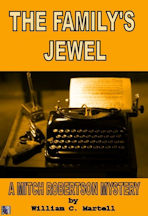
Mitch Robertson #2: THE FAMILY'S JEWEL

It's New!!

Mitch Robertson (finally) returns...

THE FAMILY'S JEWEL! (A Short Novel)

novel

*** MITCH ROBERTSON #2: THE FAMILY'S JEWEL *** - For Kindle!

"The Presidential Suite of the Hollywood Hoover Hotel looked like a bloody battlefield: bodies everywhere, furniture broken, red liquid dripping from the walls, dead soldiers littering the elegant Berber rug as clouds of smoke overhead bounced between two air conditioning vents.

Mitch Robertson stepped over the body of an ex-child star turned sex tape star turned pop star and entered the room, spotted a gun on the floor and picked it up... careful not to spill his coffee with three pumps of mocha syrup from Penny’s Coffee Shop. That coffee was gold, the only thing keeping him going in this dazed state of wakefulness. The gun felt light. Holding it, he saw the silhouette of an 80s action star sitting sideways on a tipped over chair. Motionless. Was he dead? Mitch was still hung over from the Awards Party the night before, and wondered whether this was all some sort of crazy nightmare that he would wake up from... but when he tripped over the brown legs of a bottomless Superhero, flaccid junk encased in a condom but still wearing his mask, and hit the edge of the sofa, gun skittering and coffee spilling, he realized that it was all very real. What the hell had happened here?"


Over 60,000 words!

Short Novel. $2.99 - and no postage!

The story takes place the day after the big Awards Show, the morning after the first Mitch Robertson story THROUGH THE RINGER.

This time, an $18.7 million diamond necklace, loaned to an actress for the awards by Winstone Herald Jewelry is missing the morning after a wild Awards after party. The suspects are a bunch of Stars on their way up and on their way down... but which one stole the $18.7 million diamond necklace? Mitch Robertson investigates in this 50,000 word short novel!


THE FIRST BOOK:


bluebook

Introducing...

*** MITCH ROBERTSON #1: THROUGH THE RINGER *** - For Kindle!


"When his cell phone rang, Mitch Robertson was in Penny’s Coffee Shop in Toluca Lake trying to figure out what to do with the chopped up body parts. Gone were the days when you could just scatter the severed limbs and torso all over the city, now with DNA the body would be reassembled almost immediately. And after 9-11 packages had to be under sixteen ounces or you had to mail them from the post office... where they asked you all kinds of questions about the contents. You take your, what, about 190 pound man... that means you’d need to cut him into at least 200 pieces to keep it under the weight limits, and not only would that require a lot of work and weighing, think of all of the stamps and labels! Just too much trouble. If Mitch couldn't figure out how to dispose of the body parts he would be in big trouble. And that damned cell phone continued ringing."

Novelettte. Only $.99 - and no postage!


- Bill

Wednesday, September 09, 2020

Death By.... Encoragement!

(originally posted over a dozen years ago)

Many pre-pro writers send out their scripts to agents or managers or producers and (usually as a result of hammering away for a response) get a nice rejection note saying that their masterpiece is “Well written, but not right for us”, or they “Loved it, but we have something similar in development”, or some other exciting and positive thing about how much they loved your screenplay. They celebrate how close they came to selling their script and brag to all of their friends that they are almost over that big wall that surrounds Hollywood. Everyone loved their script! They are great writers!

When I was living in my home town dreaming of Hollywood I had a chance to give a copy of one of my scripts to my idol at the time, Paul Schrader. He wrote TAXI DRIVER and OBSESSION and CLOSE ENCOUNTERS and THE YAKUZA and ROLLING THUNDER and OLD BOYFRIENDS and other films I loved... and he took a copy of my script and read it (or had someone read it) and sent me a great letter of encouragement. I sent the same script to my favorite director, Martin Scorsese, and he had someone read it, and they sent me this great letter of encouragement on Columbia Pictures stationery! My script was the greatest script on the world!

Of course, when I read that script today I cringe at how awful it is and am embarrassed that people I admired had to read it - or get their assistants to read it. That script just sucked.

Pauline Kael once said, “Hollywood’s the only town where you can die of encouragement.”

No one will ever tell you that your script sucks. The reason why is simple - they read your current script, which sucks, but what if you keep working hard at this screenwriting thing and improve and a few years later you write a great script. One of those scripts that everyone in Hollywood is fighting with each other over. There are bidding wars - and the winner not only gets to pay you a huge amount of money, they get that amazing script you have written. But if Joe’s Productions tells you that your earlier script sucks, they won’t be part of that bidding war. You will not take your script there. What Joe’s Productions wants is for you to be the *first* place you go with that great new script - so that they can maybe buy it before there is a bidding war... or at least be the friendly producer that you want to sell the script to. So, instead of saying “Your script sucks” they come up with a euphemism like “Loved it, but we have something similar in development.”

That really means your script sucks.

Here’s how to tell if they *really* loved it:

1) They buy it or option it (for real money).
2) They want to meet with you to discuss other projects.
3) They offer you a writing assignment.
4) They *request* your next script or ask to read other scripts you have written.

I have a script tip on this floating around on my website, but you should even beware of producers who want to option your script for $1 or no money. Basically, you get what they pay for. If they have a dollar invested, that is what your script is worth to them, and tells you how hard they will work to bring it to the screen. In that tip, I talk about a producer I know of who literally options every script he can get his hands on for $1 and never reads any of them. He is a “material pack rat” and his theory is that if he options 100 scripts for $1 (sight unseen) one of them has to either be good enough to set up somewhere or has some strange elements that some real producer may be looking for. This guy has you write down “keywords” about your script, then takes your script to a warehouse where it will be forgotten like the Lost Ark, and if any real producer is looking for a script with the keywords for your script - this guy tries to set up a deal. If you’ve read any of those strange script requirements in InkTip listings, you know how oddly specific some producer’s needs are. And this guy has a warehouse full of scripts he *owns*, and one may fit those strange needs. If not, he’s only out $1. The thing about options - if they pay you $1, that’s what they think your script is worth, and most likely it’s not a real option. Sure, sometimes there are underfunded legit producers looking to have control over a script when they take it into a studio... but usually the $1 option isn’t much different than no option at all. And how much can you celebrate when all you have is $1?

If they read your script and did have something just like it in development, but thought the writing was great, they will ask to read something else or want to meet with you. If they actively pursue you, you have something they want (writing). If they say nice things but don’t *do anything*, they don’t think the writing is strong enough to follow up on.

Just like in a screenplay, in real life - actions speak louder than words.

Producers will tell you all kinds of nice things, but what they *do* tells you want they really think. If they do nothing, well...

Now, that doesn’t necessarily mean your script *completely sucks*, but it’s just not there yet. Keep working at it, and eventually they *will* do something. They won’t just say, “We loved it but it’s not for us”, they will want to meet with you to discuss anything you may have that *may be* for them. Because producers need screenplays and they need screenwriters. Can’t make a movie without a script.

No matter how many great things they say about your script, look at what they *do* - that will tell you what they really think. And if they don’t do anything, all is not lost! You just need to keep writing until you get that script where they actually do something... not just tell you how much they loved it.

- Bill

Wednesday, August 19, 2020

Magic Time

From way back in April 2008. Another movie that never got made!

So, the assignment was turned in last week, and they’ve read it and like it. There’s always a certain amount of writer’s paranoia that has me worried they will drive over to my place, light the script on fire and leave it on my porch, hit the doorbell, then drive away. *I* like the script, but you never know if anyone else will. You hope they will.

Because I have a deadline, and must be able to plan out my writing so that I have a finished screenplay on time, I use an outline. I usually outline, but I’ve done a couple of experiments working without an outline... which usually serves to remind me why I need an outline. Some people think that an outline handcuffs you, but I think it frees me. I know where the story is going, I know what has to happen... but I don’t know exactly how it happens. And sometimes that means there’s some sort of magic that happens while you’re writing a scene, and the scene is exciting and entertaining to write.

Here’s an example: The script is a fun monster movie, similar to TREMORS. There’s a sequence I called the Tides Restaurant Scene (from THE BIRDS) where the monster chases a bunch of folks into a building, where they discuss where the monster came from and how the heck they’re gonna deal with it... while the monster tries to break in to eat them. Sort of a town meeting during an attack. That’s basically what I had in my outline - I knew key story points and all of the things that I was setting up for later... but I didn’t know the *how it happened*.

While writing the scene, I came up with all kinds of funny bits that entertained me as I wrote the sequence, and then I came to the halfway point, where the monster would break in and eat some people, which forces our folks to stop talking about where this monster may have come from and figure out how they’re gonna kill it. When the people run into the building to take cover from the monster, they reinforce the doors and windows, making them “monster proof”. But the monster breaks in, destroys the reinforcements, grabs a couple of people and goes outside to chow down. Our hero realizes they have nothing to reinforce the doors with - they will have to hold them closed themselves. He asks for volunteers, and one guy says he’s crazy, the monster is right out there, it’s going to break in again, and he doesn’t want to be anywhere near the doors when that happens. They hero makes the big speech (fun to write) and then...

Well, magic happened.

One of the townspeople got up, walked to the doors, and used their body to hold them closed... then another person got up, and another, and another, and another... until *everyone* was against the doors, holding them closed as a group, except the naysayer. Who didn’t want to be left out, so he joins all of the others.

Okay, this was a scene where they find something else to reinforce the doors to keep the monster out in the outline... and that’s what happens. But in the outline I was thinking it would probably be tables and chairs, right? Which is how outlines work - you just figure out the skeleton of the story and fill in the details when you write it. They barricade the doors. Once you get to the writing stage, you get creative. Hey, maybe they barricade the doors with a car or something, right? You try to come up with something that you haven't seen before in a movie. Knowing that you need to do something different *helps* you. Your subconscious knows this is coming up, and starts to work on the problem... and that leads to the magic happening. The scene idea that isn't off the top of your head, it;s been percolating in your subconscious all of this time. Well, I guess it has - hard to tell about that subconscious.

But I think this is going to be one of those “I am Spartacus” moments. One of those amazing big moments that make the audience emotional. And it just happened by magic - I created it as I was writing the script, because *something* needed to reinforce those doors. Oh, and it’s thematic, because the story is about how all species need each other to survive (the monster was created by fooling with mother nature). Look, this is a silly monster movie... no one is going to give it 4 stars, it won’t make critic’s lists... critics won’t even know it exists. It’s just a silly movie. But I still want it to be emotional, and funny, and scary and something that you watch and don’t thing was a total waste of your time (only a partial waste). So I need scenes like that. And even with an outline, even knowing what happens next and who gets eaten before the final credits, there’s still room for lightning to strike - still room for that magic to happen on the page. I live for scenes like that - the ones that come from nowhere and have me tearing up as I type them. I live for those funny lines that come right off the top of my head. I live for that one thing you invent in the fly that turns a bunch of words into a living, breathing *person*.

That’s the magic. We take a bunch of words, and turn them into emotions.

That’s what I love about writing.

- Bill
IMPORTANT UPDATE:

TODAY'S SCRIPT TIP: Adaptation
Yesterday’s Dinner: Burrito at Tortas in Studio City.

Monday, August 03, 2020

My Films Come Back To Haunt Me...

My movies on TubiTV.

TubiTV is kind of the old folks home for movies. When a film has played every cable channel and every broadcast channel (including Spanish language) and been released on DVD and Blu-ray and done it's theatrical run in every country - even the ones that show movies on a bed sheet, and every single cent has been made... They go to TubiTV. It's free streaming with lots of commercials. But R rated films are uncut.

I had 7 movies there last month, only 6 this month. You missed IMPLICATED from MGM home video. Here are the 6...

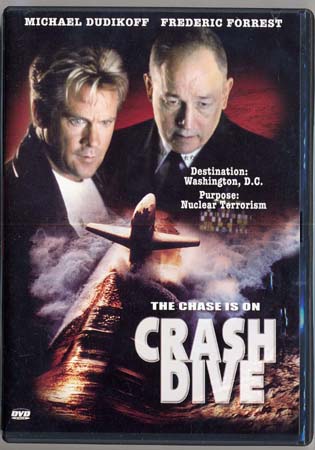
Crash Dive! HBO World Premiere Movie CRASH DIVE, made for HBO as a "World Premiere". Played theatrical overseas and was Top 10 box office in some countries. Catherine Bell's first lead role and the reason why she was cast in JAG. We originally had Scott Glenn signed and he ditched us to make a Clint Eastwood movie. Our last minute replacement from the HBO approved list was American Ninja (the theatrical films from Cannon Pictures, not the TV show) Michael Dudikoff. Last minute script rewrite turning lead from brainiac to Kung Fu guy. Oh, Chris Titus also got his own TV show after this... though I don't think this film had anything to do with it.
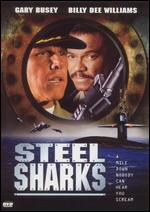
Steel Sharks, HBO World Premiere Movie STEEL SHARKS, also HBO, also theatrical overseas. Starring Billy Dee Williams and Gary Busey fresh out of rehab and some guy who was on the HBO approved list and was starring on BAYWATCH. Billy Dee told me that he had 3 scripts to choose from and chose mine... but he may say that to all the screenwriters. Also a US Navy Co-Op movie. Reason why I hate the director - we had 3 days on a real aircraft carrier with Billy Dee... and it all looks like stock footage. This guy made everything look like crap. Our pyro guy did the largest fireball on screen - going for a record - and the director forced the DP to shoot the base of the explosion - you have no idea how big the fireball was.
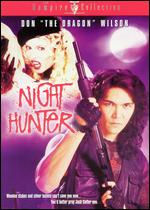
Night Hunter, Cinemax World Premiere NIGHT HUNTER, was a Cinemax Original Movie, which is what happens when an HBO movie goes wrong. This began as a cool vampire movie, but they cut out all of the horror in (my) rewrites. Star didn't want to make a horror movie. Some of the practical FX stuff we had planned was amazing - a Samurai vampire who gets sliced in half... and keeps fighting! A cool hall of mirrors chase scene (vampires don't reflect). A rooftop chase scene - where the vampires flew! More cool stuff... cut from the script! The director did a great job - very atmospheric. Made 3 years before BLADE. Oh, first shaky-cam film. Sorry.

Virtual Combat, HBO World Premiere Movie VIRTUAL COMBAT (aka GRID RUNNERS). Also HBO World Premiere and theatrical overseas. We were on the cover of Sci-Fi Entertainment Magazine a year before VIRTUOSITY script was bought. Same star as NIGHT HUNTER, same issues with the special effects scenes... but many of the FX stuff was *built* but never used! On this we had FX stuff made - crawling half formed bodies from the cloning tank... never shot. We were the 2nd film to shoot on LA subway (after that Keanu movie). Act 3 was rewritten overnight when we lost our original location.
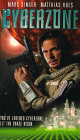
Cyberzone, Made For Showtime... the Roger Corman deal CYBERZONE (aka DROID GUNNER) - my Roger Corman robot hookers from outer space flick. Began as a female lead BLADE RUNNER ripoff about the underground railroad for androids... But Roger's Production guys asked if I could do a page one and make it about robot hookers from outer space. Sure. They had a deal with Showtime and just had a film rejected - could I write this in 9 days so the film would be finished in time to plug that hole in Showtime's schedule? Sure. Film was written to be shot in 9 days (a week plus a weekend of 35mm equipment rental). I actually like this movie despite all of its problems. I wrote it for the guys I used to work with in the warehouse. Oh, special effects by some guy named James Cameron.
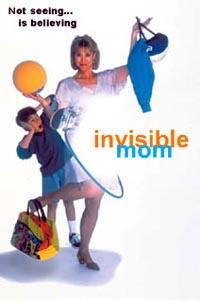
Invisible Mom, direct to vide INVISIBLE MOM - direct to video. Dee Wallace from ET played the mom. Barry Livingston, Ernie from MY THREE SONS played the dad. Rusty Tamblin from TWIN PEAKS and WEST SIDE STORY played the boss. Written as a favor - the producer, 80s heart throb Andrew Stevens had started a new company and one of his deals was with Corman's new family film video label. We called them "babysitters" - mom plugs in the video and the kids are busy for 90 minutes. Spawned 4 sequels that I didn't write. I pitched a great idea, they wanted to go in a blander direction. My nieces liked this one more than I did.
My two favorites are not here, but those 6 are free on TubiTV - use their search box to find them. I apologize in advance.

- Bill

Wednesday, July 01, 2020

Darth Vader & Storm Troopers On The NYC Subway

From A Decade Ago...

Okay, you're taking the subway to work in NYC when suddenly...


- Bill

THE NEW BLUE BOOK!

bluebook

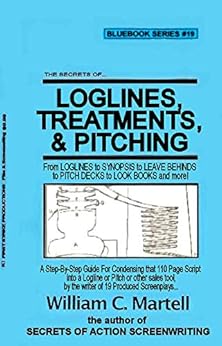
THE LOGLINES, TREATMENTS, & PITCHING Blue Book!

DISTILLING YOUR SCREENPLAY

Loglines, Treatments, Pitching, Look Books, Pitch Decks, One Pagers, Rip-O-Matics, oh my!

You have written a brilliant 110 page screenplay, but how do you get anyone to read it? You need to distill it down into some form of verbal moonshine or story rocket fuel that will ignite that bored development executive or manager or agent and get them to request your screenplay. But how do you shrink those 110 pages into a 25 word logline or a 2 minute elevator pitch or a one page synopsis or a short paragraph?

How do you take that brilliant visual told story and great characters and snappy dialogue and dramatic moments and spectacular conflict and distill it into 25 words? How is that even possible? And keep it so interesting that that bored development executive reads it and wants to buy your screenplay and turn it into a movie that will make people laugh and cry and kiss $12 goodbye? The most common way is by crafting an amazing logline – rocket fuel – that will make people in the industry want to read your screenplay. The first thing that anyone asks about your screenplay is “What's it about?” and a logline is the answer. They have been used in the film business for almost 100 years, and are the secret to breaking in.

In this just under 100,000 word book we will look at all forms of “distilled story” that you are likely to encounter as a screenwriter, and take you step-by-step through the creation. We will look at the most effective ways to pitch your screenplay, and how the pitch reveals problems with your screenplay. Just about every question that you might have is answered in this book! Including how to use Look Books as a creative tool as well as a sales tool, and why some commercial pitch platforms may be a waste of money. We look at the 4 types of pitches, how a one page synopsis is a “birth to death” element of your screenplay – you may use one to sell the screenplay, and the distributor may use that same one pager on the back of the Blu-ray box! The critical elements needed in any logline. And much more!

So, what's your logline?

THE LOGLINES, TREATMENTS, & PITCHING Blue Book! - Only $4.99!


NO KINDLE REQUIRED! Get the *free* app (any device, except your Mr. Coffee) on the order page on Amazon!


UK Folks Click Here.

German Folks Click Here.

French Folks Click Here.

Espania Folks Click Here.

Canadian Folks Click Here.

India Folks Click Here.

Austrailian Folks Click Here.

Wednesday, June 24, 2020

Just Another Day At Work...

From ten years ago....

My friends Scott and Ronson found this on YouTube and have posted this on FaceBook, and I'm swiping it from them and posting it here...

Ever wonder what Customer Service is doing at the call center when you are on hold?


- Bill

Wednesday, June 10, 2020

Jane Austen's FIGHT CLUB

Because wearing a corset is worse than working in a cubicle...


I love the shot where the blood sprays from the gal's mouth in slow-mo.

- Bill

Wednesday, June 03, 2020

Bank Fears Cool Confidence

From 2008...

"Bank Fears Cool Confidence"

I saw that headline in the business section of the paper and it confused me. Why would anyone fear cool confidence? I mean, Steve McQueen is all about his cool confidence. That’s why he was a star - he had that strength that didn’t require any machismo. McQueen could just stroll into a room, and without saying a word, you knew he was in control... and you were in trouble. And maybe that’s what the banks fear? I mean, McQueen starred in a couple of movies where he played a bank robber...

But if you are going to fear anything, wouldn’t it be the gun or the threat of violence? Why would you fear the cool confidence? Of all the possible things to fear in a bank robber, his attitude seems like it would be close to the bottom of the list of fears. Why didn’t the headline read, “Bank Fears Psychos With Guns”?

You know, Hollywood isn’t really the town for cool confidence. An actor that can project that attitude is great, but this is pretty much a town of braggarts and bullshit. If you take two screenwriters, one who has that cool confidence because they *know* they are talented and *know* they’ve had some success, and the other one is some loud hyper dude telling every one what an amazing writer they are... the odds are the loud hyper dude is believed as successful and the cool guy isn’t even noticed. Producers and studio execs are more likely to believe the hype than look for the reality. Maybe it’s a take one to be fooled by one thing, I don’t know. I do know a few writers who have PR people... and everyone seems to believe the PR... even though their scripts suck. In fact, that’s funny - they usually still believe the PR after they’ve seen the reality.

This town was built on bullshit. Bullshit is *expected*. I think everyone automatically reduces everything you say by 75%, to account for the bullshit factor... and that’s a problem for those of us with cool confidence. We don’t say much, we don’t brag, and if we do mention our accomplishments, we tend to downplay them. So after they deduct the 75% they think is bullshit, we may be left with nothing.

Clint Eastwood has that cool confidence, too - and he’s played bank robbers before...

So, maybe the banks know something that Hollywood doesn’t. Maybe the banks know that the guy who brags isn’t as dangerous as the guy with cool confidence? Maybe that’s something Hollywood *needs* to learn? I mean, they give some dude $100 million to make a movie because he *says* he’s talented, but maybe they’d be better served by skipping the bullshit and looking at what the guy does - is he really talented? Or is it all PR?

So, after thinking about cool confidence, and wondering why banks fear it so much, I re-read the headline and figured out they meant to accent different syllables. It’s not that Banks Fear Cool Confidence, it’s that confidence has been cooled due to fears about banks. To quote Emily Litella: "Oh... Well, never mind."

- Bill

Wednesday, May 27, 2020

Tales From The Script

From Ten Years Ago...

If you believe that after you win the Oscar for Best Original Screenplay you will suddenly be treated better by Hollywood and your writing will be respected and not messed with by the damned dirty apes of development... think again! You’ll have to deal with all of the same problems - you’ll just get paid more.

Two weeks ago I went to the Aero Cinema in Santa Monica to see the pre-DVD release screening of...


TALES FROM THE SCRIPT is a great documentary that all screenwriters both new and abused should see. Filmmakers Peter Hanson and Paul Robert Herman interviewed dozens of professional screenwriters about their work, the business, and how the role of the screenwriter has changed over the years. The film is broken down into chapters, with many screenwriters addressing the same issue in each chapter. Shane Black, Frank Darabont, William Goldman, David Hayter, Paul Schrader, Ron Shelton, David S. Ward, and just about any writer you can name is interviewed. You learn the truth about screenwriting - a truth you may not have wanted to know, but that will help you navigate the treacherous waters of the screenwriting business. Though the film is simple talking head interviews - these folks are all great storytellers, and when they tell a war story about the business it’s a heck of a good story! I was never bored - and usually too busy laughing or squirming with terror.

If you have seen the film on screen, the DVD has 3 big special features:
47 minutes of additional interviews.
12 minutes of William Goldman’s advice.
9 minutes of advice for new screenwriters from the pros.


There is also a companion book with *different interviews* and *different screenwriters*.

The DVD is available on Amazon and on Netflix - check it out.

After the screening there was a great panel of screenwriters doing Q&A, many of them I know. It was kind of cool. Steve DeSouza, Peter Hyams,. Stephen Susco, Bruce Joel Rubin, Adam Rifkin, and a couple of others. It was a great Q&A session - many things that probably will never see print or film or tape - because these guys want to continue to work in this town. Bruce told a horror story about a big name star who has no story sense at all - but is so big that whatever he wants in the script goes in the script... even if the resulting film sucks. The film is filled with stories like this!

POPATOPOLIS!


And Thursday May 27th at 7:30pm at the Egyptian Theater in Hollywood, the Los Angeles Premiere of POPATOPOLIS - a film I saw at the Raindance International Film Festival in London last year. The movie is being released on DVD, and this screening is a celebration...

POPATOPOLIS is a film that answers the question - can you make a feature film in 3 days with a crew of only 2, starring women with freakishly large breasts who may be too top heavy to stand? B movie director Jim Wynorski can... and this doc chronicles every crazy minute.

Here is a link to my review from London - POPATOPOLIS.

If you are in Los Angeles and like sleazy low-end Z movies, come on down and see this documentary on how they are made!

- Bill

Wednesday, May 06, 2020

John Sayles on Matewan

Screenwriter (and director) John Sayles talks about his movie MATEWAN in this clip...


Sayles is one of my favorite writers. I discovered him through PIRANHA and THE HOWLING and many other fine films that seem to be horror movies but are actually much more. I tracked down his short stories and first novel, PRIDE OF THE BIMBOS, and loved BIMBOS so much that I bought up a bunch of paperback copies decades ago and gave them to friends. The novel is about a boy with divorced parents who lives with his father for one summer and learns what it means to be a man - typical coming of age story... except the kid's father plays on an exhibition baseball team kind of like the Harlem Globetrotters (which is basketball, I know) who play in drag. So, this boy learns about being a man by hanging around men dressed as women.

Since then I've bought all of Sayles novels and short story collections and seen all of his movies. One of the things I like about him is that he comes from blue collar roots and his films and stories are full of working people. That ends up making him kind of a Leftie, because he's all for worker's rights and unions... which is what MATEWAN was all about.

- Bill

Monday, April 27, 2020

New: LOGLINES, TREATMENTS, & PITCHING

It appears that I have a new book for 2020!

NEW!

bluebook

THE LOGLINES, TREATMENTS, & PITCHING Blue Book!

DISTILLING YOUR SCREENPLAY

Loglines, Treatments, Pitching, Look Books, Pitch Decks, One Pagers, Rip-O-Matics, oh my!

You have written a brilliant 110 page screenplay, but how do you get anyone to read it? You need to distill it down into some form of verbal moonshine or story rocket fuel that will ignite that bored development executive or manager or agent and get them to request your screenplay. But how do you shrink those 110 pages into a 25 word logline or a 2 minute elevator pitch or a one page synopsis or a short paragraph?

How do you take that brilliant visual told story and great characters and snappy dialogue and dramatic moments and spectacular conflict and distill it into 25 words? How is that even possible? And keep it so interesting that that bored development executive reads it and wants to buy your screenplay and turn it into a movie that will make people laugh and cry and kiss $12 goodbye? The most common way is by crafting an amazing logline – rocket fuel – that will make people in the industry want to read your screenplay. The first thing that anyone asks about your screenplay is “What's it about?” and a logline is the answer. They have been used in the film business for almost 100 years, and are the secret to breaking in.

In this just under 100,000 word book we will look at all forms of “distilled story” that you are likely to encounter as a screenwriter, and take you step-by-step through the creation. We will look at the most effective ways to pitch your screenplay, and how the pitch reveals problems with your screenplay. Just about every question that you might have is answered in this book! Including how to use Look Books as a creative tool as well as a sales tool, and why some commercial pitch platforms may be a waste of money. We look at the 4 types of pitches, how a one page synopsis is a “birth to death” element of your screenplay – you may use one to sell the screenplay, and the distributor may use that same one pager on the back of the Blu-ray box! The critical elements needed in any logline. And much more!

So, what's your logline?

THE LOGLINES, TREATMENTS, & PITCHING Blue Book! - Only $4.99!


NO KINDLE REQUIRED! Get the *free* app (any device, except your Mr. Coffee) on the order page on Amazon!


UK Folks Click Here.

German Folks Click Here.

French Folks Click Here.

Espania Folks Click Here.

Canadian Folks Click Here.

India Folks Click Here.

Austrailian Folks Click Here.

Friday, March 27, 2020

Hitchcock Talks Terror

Here is a two part interview with Hitchcock from 1964 where he talks about all kinds of wonderful things, from fairy tale terror to "photgraphs of people talking" vs. pure cinema.

And Fairy Tales?


- Bill

Of course, I have my own books focusing on Hitchcock...

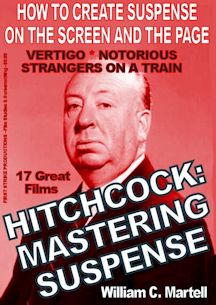
HITCHCOCK: MASTERING SUSPENSE


LEARN SUSPENSE FROM THE MASTER!

Alfred Hitchcock, who directed 52 movies, was known as the “Master Of Suspense”; but what exactly is suspense and how can *we* master it? How does suspense work? How can *we* create “Hitchcockian” suspense scenes in our screenplays, novels, stories and films?

This book uses seventeen of Hitchcock’s films to show the difference between suspense and surprise, how to use “focus objects” to create suspense, the 20 iconic suspense scenes and situations, how plot twists work, using secrets for suspense, how to use Dread (the cousin of suspense) in horror stories, and dozens of other amazing storytelling lessons. From classics like “Strangers On A Train” and “The Birds” and “Vertigo” and “To Catch A Thief” to older films from the British period like “The 39 Steps” and “The Man Who Knew Too Much” to his hits from the silent era like “The Lodger” (about Jack The Ripper), we’ll look at all of the techniques to create suspense!

Films Included: NOTORIOUS, SABOTAGE, STRANGERS ON A TRAIN, THE 39 STEPS, REBECCA, TO CATCH A THIEF, FRENZY, FOREIGN CORRESPONDENT, THE LODGER, THE BIRDS, TORN CURTAIN, SABOTEUR, VERTIGO, THE MAN WHO KNEW TOO MUCH (1934), THE MAN WHO KNEW TOO MUCH (1955), SUSPICION, and NUMBER SEVENTEEN. 17 Great Films!

Only 125,000 words!

Price: $5.99

Click here for more info!

OTHER COUNTRIES:


UK Folks Click Here.

German Folks Click Here.

French Folks Click Here.

Espania Folks Click Here.

Canadian Folks Click Here.

And....

HITCHCOCK: EXPERIMENTS IN TERROR


USA Readers click here for more info!

HITCHCOCK DID IT FIRST!

We all know that Alfred Hitchcock was the Master Of Suspense, but did you know he was the most *experimental* filmmaker in history?

Contained Thrillers like “Buried”? Serial Protagonists like “Place Beyond The Pines”? Multiple Connecting Stories like “Pulp Fiction”? Same Story Multiple Times like “Run, Lola, Run”? This book focuses on 18 of Hitchcock’s 52 films with wild cinema and story experiments which paved the way for modern films. Almost one hundred different experiments that you may think are recent cinema or story inventions... but some date back to Hitchcock’s *silent* films! We’ll examine these experiments and how they work. Great for film makers, screenwriters, film fans, producers and directors.

Films Examined: “Rear Window”, “Psycho”, “Family Plot”, “Topaz”, “Rope”, “The Wrong Man”, “Easy Virtue”, “Lifeboat”, “Bon Voyage”, “Aventure Malgache”, “Elstree Calling”, “Dial M for Murder”, “Stage Fright”, “Champagne”, “Spellbound”, “I Confess”, and “The Trouble with Harry”, with glances at “Vertigo” and several others.

Professional screenwriter William C. Martell takes you into the world of The Master Of Suspense and shows you the daring experiments that changed cinema. Over 77,000 words.

UK Folks Click Here.

German Folks Click Here.

French Folks Click Here.

Espania Folks Click Here.

Canadian Folks Click Here.

--
eXTReMe Tracker